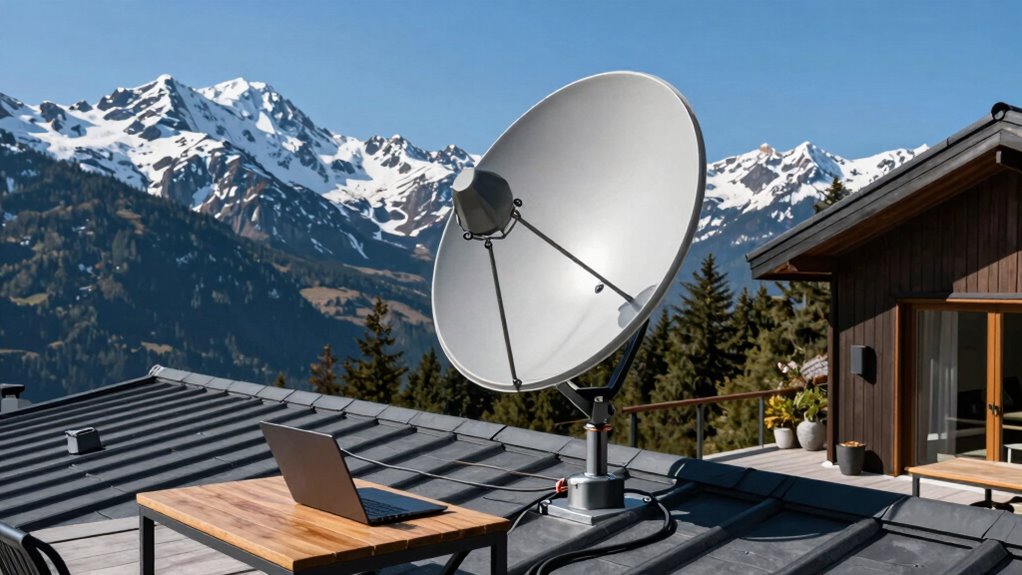

Satellite internet makes sense if you live in a rural or remote area with no access to traditional broadband, and you need quick, reliable setup for basic tasks like email or streaming. However, it’s less ideal if you have high data needs or rely on low latency activities like gaming or remote work. Weather can cause temporary disruptions, and data caps limit heavy usage. If you want to understand when satellite internet fits your needs, keep exploring the details.
Key Takeaways
- Satellite internet is ideal for rural or remote areas lacking traditional broadband options.
- It suits casual internet use like email, streaming, and social media, but less so for high-data or latency-sensitive activities.
- Weather conditions can cause significant disruptions and impact connection reliability.
- Data caps and high latency make it less suitable for households with high or real-time internet needs.
- Future tech improvements, such as low Earth orbit systems, may enhance performance and expand suitability.

Satellite internet excels in providing access where other services fail, but it’s not without drawbacks. The technology’s reliance on satellite links means it can be affected by weather conditions, such as heavy rain or snow, which might temporarily disrupt your connection. Additionally, data caps are common, and high usage can lead to throttling or extra charges. If your household consumes a lot of data daily, satellite plans may not be the most cost-effective or reliable. It’s also worth noting that data latency can be a problem for certain activities. Unlike fiber or cable connections, which transmit data almost instantaneously, satellite signals take longer to travel, causing delays that might frustrate gamers or remote workers who need quick response times. For many users, understanding the data latency involved is crucial before making a decision. Weather-related disruptions and signal interference can also impact connection quality, especially in areas prone to storms or atmospheric disturbances. Recognizing the limitations of satellite technology** can help set realistic expectations for users considering this option. It’s important to consider that advancements in satellite design, such as low Earth orbit systems**, are continuously working to reduce some of these issues.
That said, satellite internet is a game-changer for rural connectivity, offering a way to access the internet where traditional options aren’t available. If you’re in a remote area and need consistent service for basic tasks like email, streaming, or social media, satellite internet can meet those needs well. It’s also often quicker to set up than laying new cables, making it a practical solution for immediate connectivity. But if your work relies heavily on low-latency applications or you require unlimited high-speed data, you might find satellite’s limitations frustrating. In those cases, exploring other options or waiting for advancements in satellite technology—like low Earth orbit systems—could be worthwhile. Ultimately, whether satellite internet makes sense depends on your specific location, internet needs, and willingness to accept its inherent delays and limitations.

Starlink Gen 3 Standard Satellite Internet Kit – Dish with Wi-Fi 6 Router + Extra 150FT Cable – High-Speed, Low-Latency Internet for Rural and Remote Homes
- Next-Generation Satellite Kit: Faster speeds and stable connection
- Includes 50FT Extra Cable: Flexible installation options
- High-Speed, Low-Latency Internet: Ideal for streaming and remote work
As an affiliate, we earn on qualifying purchases.
As an affiliate, we earn on qualifying purchases.
Frequently Asked Questions
What Is the Average Cost of Satellite Internet Installation?
The average cost of satellite internet installation ranges from $100 to $300, depending on providers and your location. You should do a cost comparison to find the best deal. During the installation process, a technician will set up the satellite dish and modem, which can take a few hours. Keep in mind, some providers include installation costs in their monthly plans, so ask about those options.
How Does Satellite Internet Compare to Fiber or Cable Speeds?
Satellite internet generally offers slower speeds than fiber or cable, with typical download rates around 25 Mbps, compared to fiber’s gigabit speeds. You might notice higher satellite latency, which causes delays in real-time activities like gaming or video calls. Signal stability can vary due to weather or obstructions, making satellite less reliable during storms. Fiber and cable provide more consistent speeds and lower latency, ideal for demanding internet use.
Are There Data Caps With Satellite Internet Plans?
Yes, many satellite internet plans have data cap limitations, which means your usage can be restricted after a certain threshold. Satellite speed variability can also impact your experience, especially during peak times or adverse weather. You might find your speeds slow down, making it harder to stream or browse. To avoid surprises, check the data caps and note how satellite speed fluctuations could affect your daily activities.
What Are the Environmental Impacts of Satellite Internet?
Satellite internet’s environmental footprint includes concerns like satellite emissions, which can contribute to space debris and potentially affect atmospheric conditions. Manufacturing and launching satellites consume resources and emit greenhouse gases. While the service offers connectivity in remote areas, you should consider its environmental impacts, especially satellite emissions, before choosing this option. Although advancements aim to reduce these effects, understanding the balance between connectivity benefits and environmental sustainability is essential.
Can Satellite Internet Be Used Effectively for Gaming?
Think of satellite internet as a relay race where the baton takes a scenic route, causing delays. You can game, but latency issues might slow your performance, especially in fast-paced titles. While some providers improve connections, satellite internet generally isn’t ideal for competitive gaming. For the best experience, fiber or cable connections are better suited, ensuring smooth gameplay without the frustrating lag that often accompanies satellite signals.
Conclusion
While satellite internet can be a charming option for some, it’s worth considering if it’s truly your best fit. Sometimes, it offers a gentle way to stay connected in remote spots, but other times, it might feel a tad slow or cumbersome. Think of it as a reliable old friend—steady, dependable, but not always the fastest. Weigh your needs carefully, and you’ll find the perfect connection that makes your online life smooth and enjoyable.