
📊 Full opportunity report: The 14 Best AI Tools For Academic Excellence In 2026 on ThorstenMeyerAI.com — validation score, market gap, and execution plan.
TL;DR
In 2026, the top AI tools for students emphasize skill-building with ChatGPT, Gemini, and Claude. Guides focusing on workflows and integrity outperform simple app lists, shaping effective learning strategies.
In 2026, the most effective AI tools for students are those that teach durable skills and promote academic integrity, rather than just listing applications. For a comprehensive overview, see the best research planner notebooks that help organize study sessions. The top-ranked guides focus on mastering ChatGPT, Gemini, and Claude, which handle the core tasks of drafting, summarizing, and research, offering students practical workflows for immediate use.
Thorsten Meyer’s recent review identifies that skill-building guides outperform simple app directories in ranking. The guide AI Productivity for Students: Mastering ChatGPT, Gemini, and Claude is rated highest for teaching students how to develop fluency with the three major AI assistants they regularly use. For more on digital tools, see the 2026 AI tools to accelerate digital transformation. These guides emphasize transferable skills like prompt writing, research planning, and workflow design, which remain effective despite AI model updates.
Additionally, the review notes that prompt libraries, such as The AI Student Prompt Book, offer quick returns for experienced users, providing hundreds of prompts to sharpen outputs. Meanwhile, guides that incorporate academic integrity advice, like The AI-Powered College Super Student, are ranked higher because they align AI use with school policies, reducing the risk of misconduct. This approach is also discussed in AI and student planning: 15 tools to watch in 2026. Cost considerations are less significant since most guides are priced similarly to textbooks.
Why Mastering AI Tools Is Essential for Students in 2026
As AI becomes integral to academic work, students who develop skills in prompt engineering and workflow management will gain a competitive edge. Guides that combine technical proficiency with ethical guidance help students maximize AI benefits without risking violations of academic integrity policies. This shift impacts how students approach learning, research, and assignment completion, making AI literacy a core competency for academic success.
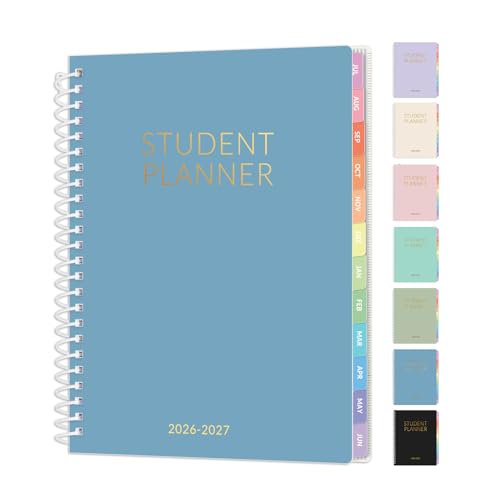
Student Planner 2026-2027, SUNEE Academic Weekly & Monthly Plan Book, Jul. 2026 – Jun. 2027, 6.5"×8.3" Middle & High School Planner, Lesson Plan Book with Week's Goals, Bookmark, Monthly Tabs, Blue
- Academic Year Coverage: July 2026 to June 2027
- Monthly and Weekly Pages: 12 months of planning pages
- Subject Sections: Dedicated space for subjects
As an affiliate, we earn on qualifying purchases.
As an affiliate, we earn on qualifying purchases.
Evolution of AI Tools and Student Workflows by 2026
Since the rise of AI assistants like ChatGPT, Gemini, and Claude, educational strategies have shifted toward skill-based learning rather than app cataloging. In 2025, many students and educators began prioritizing frameworks that teach how to use AI effectively and ethically. Recent reviews highlight that guides emphasizing workflows and integrity are more durable and valuable than those offering extensive app lists, which tend to become outdated quickly.
Thorsten Meyer’s evaluations underscore that the most successful resources focus on transferable skills, ensuring students can adapt to evolving AI models and policies. This approach reflects a broader trend toward sustainable AI literacy in academia.
“Skill-building guides that teach durable workflows outperform simple app directories, which tend to go stale quickly.”
— Thorsten Meyer
Uncertainties About Long-Term Effectiveness of Current Guides
It is not yet clear how well these guides will adapt to future AI model updates or evolving academic policies. The durability of their workflows and ethical guidance remains to be tested over time, especially as AI technology continues to advance rapidly.
Future Developments in AI Education Resources for Students
Expect ongoing updates to these guides, with an increased focus on ethical AI use and adaptive workflows. Educational institutions may also develop their own tailored AI training programs, and AI developers are likely to release new features that further enhance student productivity. Monitoring these changes will be key for students seeking sustained academic success.
Key Questions
What makes these AI tools better than simple app lists?
They focus on teaching durable skills and workflows, which remain effective despite AI updates, rather than just listing apps that may become outdated quickly.
How important is academic integrity when using AI tools?
Very important. Guides that include guidance on disclosure, citation, and ethical use help students avoid misconduct and align with school policies.
Are free AI tools sufficient for most coursework?
Many free tools cover enough functionality for typical student needs, making paid subscriptions optional in many cases, according to recent reviews.
Will these guides remain useful as AI technology evolves?
Guides emphasizing transferable skills and workflows are more likely to stay relevant, but continuous updates will be necessary to keep pace with AI advancements.
Should I prioritize skill-building guides or app directories?
Skill-building guides are generally more valuable because they teach sustainable workflows, whereas directories tend to become outdated quickly.
Source: ThorstenMeyerAI.com