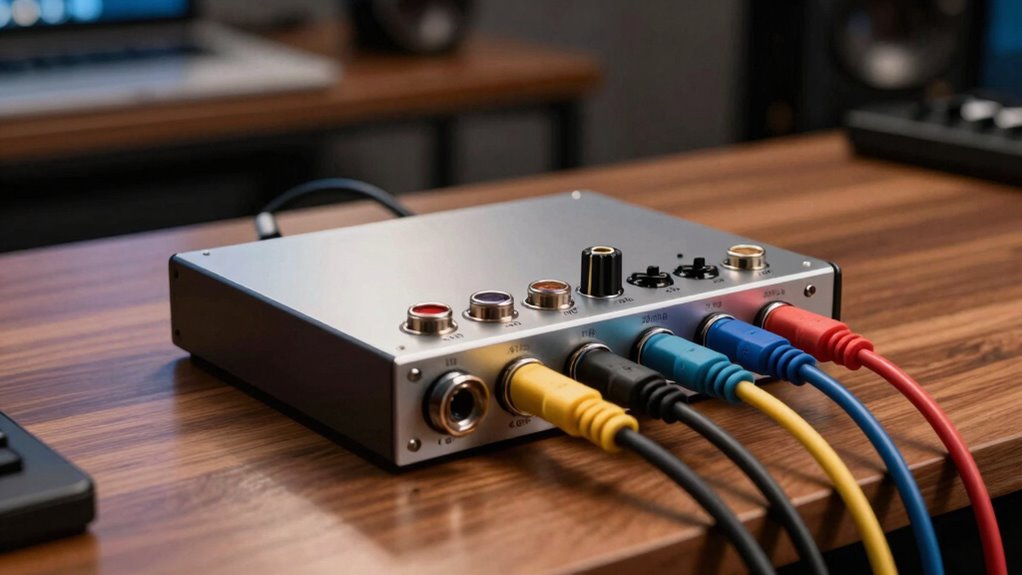

To future-proof your studio, choose an audio interface with versatile inputs like XLR, TRS, combo jacks, and expandability options such as ADAT or MIDI. These guarantee compatibility with current gear and adapt easily as your equipment and needs grow. Prioritize input quality and flexibility, so you won’t have to upgrade frequently. Focusing on this now will save you money and frustration later. Keep going to discover how selecting the right inputs can set you up for success.
Key Takeaways
- Choose interfaces with diverse input types (XLR, TRS, combo) to ensure compatibility with current and future gear.
- Prioritize expandability options like ADAT or SPDIF for seamless addition of new equipment later.
- Opt for high-quality, shielded inputs to maintain signal clarity as your setup grows.
- Consider future recording needs to select an interface supporting multiple instruments, mics, and MIDI devices.
- Invest in versatile interfaces that accommodate evolving technology and creative demands without frequent upgrades.
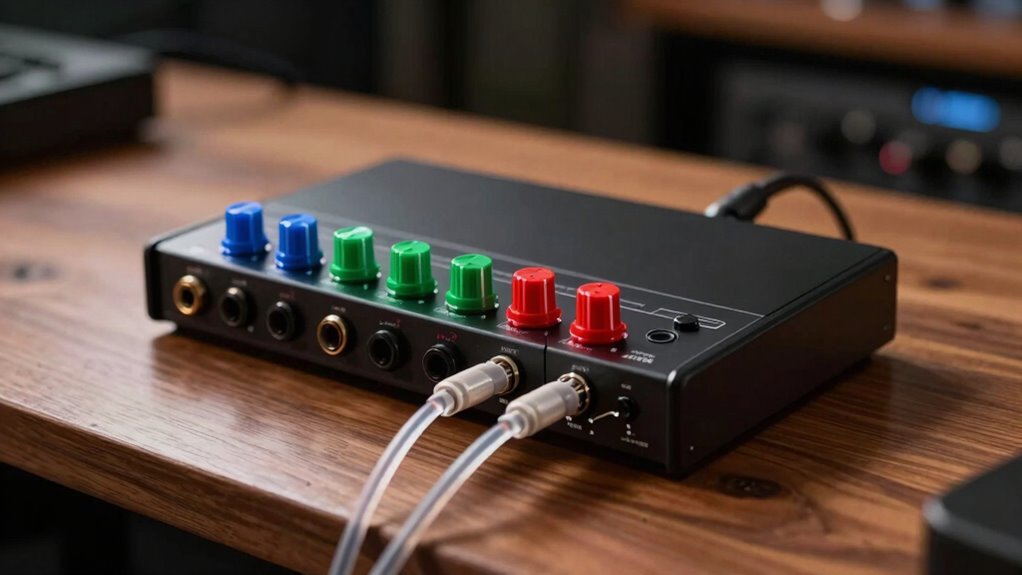
Ever wondered what types of inputs an audio interface offers and how they impact your recording setup? The inputs on an audio interface are vital because they determine what kinds of gear you can connect and how flexible your setup can be. When considering your purchase, it’s essential to think about recording compatibility—will the interface support your current instruments, microphones, and future equipment? Many interfaces offer a range of input options, which enhances input adaptability, allowing you to adapt as your needs evolve. This versatility means you can connect everything from dynamic mics, condenser mics, guitars, keyboards, and even line-level devices without constantly upgrading your gear.
Understanding your audio interface inputs helps ensure compatibility and flexibility for evolving recording needs.
The most common inputs you’ll encounter include XLR, ¼-inch TRS, and RCA jacks. XLR inputs are standard for microphones, providing a balanced connection that reduces noise and ensures clear recordings. If you’re working with multiple mics or recording a full band, having several XLR inputs becomes a priority. Quarter-inch TRS inputs are versatile because they handle line-level signals from instruments like guitars, keyboards, and mixers. Some interfaces combine these inputs into combo jacks, making it easier to connect different gear with a single port. RCA inputs are typically found on consumer-grade interfaces and are mainly used for connecting stereo sources like CD players or gaming consoles, though they’re less common in professional setups. Input types are fundamental to understanding how your equipment will connect and perform. Additionally, considering input quality can ensure that the signals are transmitted clearly without unwanted noise or interference. Moreover, the overall design and shielding of the inputs can also influence noise reduction, especially in less controlled environments.
Input versatility is a key factor when choosing an audio interface. The more types of inputs available, the more flexible your setup becomes, saving you from constantly swapping out hardware or needing additional adapters. For example, a device with combo inputs allows you to connect both XLR microphones and quarter-inch instruments, streamlining your workflow. Additionally, some interfaces include MIDI inputs and outputs, enabling you to connect keyboards or control surfaces for more complex productions. To ensure your setup remains adaptable, consider interfaces that support expandability options, such as additional ADAT or SPDIF inputs, which let you add more gear as your studio grows. Furthermore, understanding the compatibility of input types with your existing and future equipment can help prevent connection issues down the line.
Buying an audio interface with diverse inputs isn’t just about today’s needs; it’s about future-proofing your setup. Whether you’re just starting or already recording professionally, you want an interface that supports your current gear and has the potential to accommodate new equipment down the line. This way, you avoid the hassle and expense of replacing your interface as your recording needs expand. So, when you’re shopping, look for models that offer a good balance of recording compatibility and input flexibility—ensuring you’re prepared for whatever your creative projects demand tomorrow.
audio interface with XLR and TRS inputs
As an affiliate, we earn on qualifying purchases.
As an affiliate, we earn on qualifying purchases.
Frequently Asked Questions
Can I Upgrade My Audio Interface Inputs Later?
Yes, you can upgrade your audio interface inputs later, especially if you choose a model with input versatility and future expansion options. Many interfaces allow you to connect additional gear or upgrade to more advanced inputs as your needs grow. Keep in mind, though, that some upgrades might require new equipment or compatibility checks. Planning ahead for future expansion helps guarantee your setup stays flexible and meets evolving recording demands.
Are All Input Types Compatible With Professional Microphones?
In summary, not all input types are compatible with professional microphones. You need to take into account microphone compatibility and input versatility. XLR inputs are best suited for most professional mics, ensuring high-quality sound. However, some mics with different connectors may require adapters or specialized inputs. Think of your audio interface as your tech time machine—you want it to support your current mics and future upgrades, so choosing versatile inputs now is a smart move.
How Do I Choose Between Combo and Dedicated Inputs?
You should choose between combo and dedicated inputs based on input versatility and power requirements. Combo inputs offer greater versatility, allowing you to connect XLR microphones or 1/4-inch instruments without extra adapters, making them ideal for varied setups. Dedicated inputs are simpler but usually serve specific purposes. Consider your power needs too; some inputs require phantom power for condenser mics. Opt for combo inputs if you want flexibility and future-proofing.
What Are the Latency Differences Between Input Options?
When comparing latency between input options, the coincidence lies in how digital conversion and analog circuitry influence performance. Dedicated inputs often have lower latency because they use optimized analog circuitry leading directly to digital conversion, reducing delay. Combo inputs may introduce slightly more latency due to additional circuitry. Ultimately, choosing higher-quality, well-designed inputs guarantees minimal latency, giving you real-time monitoring and smoother recording sessions.
Do Different Inputs Affect Sound Quality?
Yes, different inputs do affect sound quality. When you choose higher-quality inputs, you’re benefiting from better digital conversion, which preserves audio details more accurately. Additionally, preamp quality plays a vital role; better preamps provide cleaner, warmer sound with less noise. So, investing in quality inputs guarantees your recordings sound professional and true to the original source, making your overall audio production much better.
expandable audio interface with ADAT and MIDI
As an affiliate, we earn on qualifying purchases.
As an affiliate, we earn on qualifying purchases.
Conclusion
When choosing an audio interface, remember that your needs today might change tomorrow. Investing in the right inputs now guarantees you’re prepared for future projects. Did you know that nearly 60% of musicians upgrade their gear within two years? By selecting an interface with versatile inputs, you’re not just meeting current demands—you’re setting yourself up for long-term success. Think ahead, choose wisely, and keep your creative options open.
professional audio interface for home studio
As an affiliate, we earn on qualifying purchases.
As an affiliate, we earn on qualifying purchases.
high quality versatile audio interface
As an affiliate, we earn on qualifying purchases.
As an affiliate, we earn on qualifying purchases.