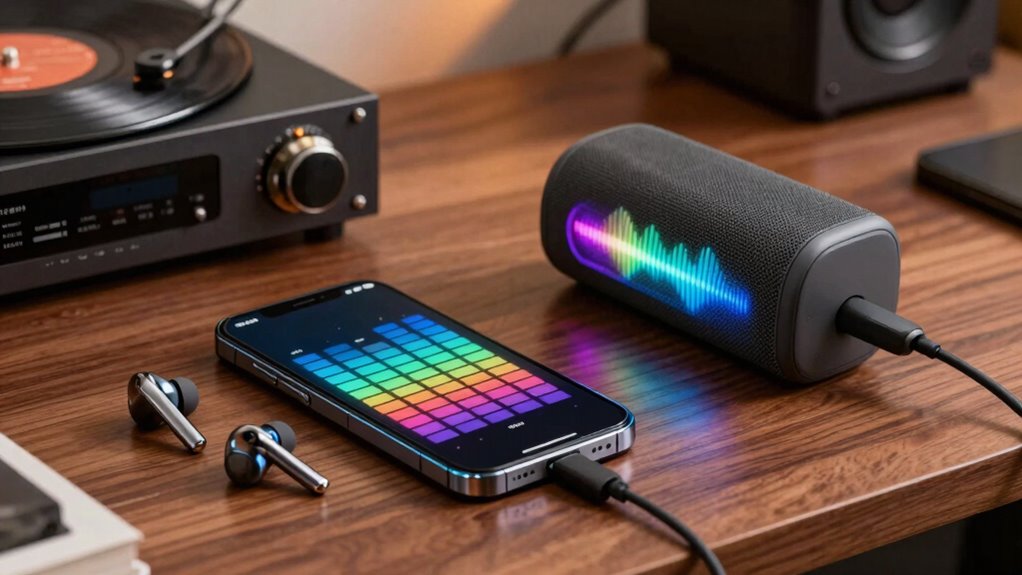

Bluetooth audio focuses on convenience by compressing sound data to stream wirelessly, which can lead to some loss of sound quality or artifacts. Lossless audio, on the other hand, preserves every nuance of the original recording for a richer, more detailed experience. While Bluetooth is great for portability and everyday use, lossless formats appeal to audiophiles who value sound accuracy. Want to discover how these differences impact your listening experience? Keep exploring to find out more.

Get the latest gadgets delivered free with Prime
- Fast, free delivery on millions of items
- Prime Video, Amazon Music and more included
- Member-only deals all year
Key Takeaways
- Bluetooth audio uses digital compression to reduce file size, which may introduce sound artifacts and lower fidelity.
- Lossless audio preserves every detail of the original recording without compression, ensuring maximum sound quality.
- Bluetooth prioritizes convenience and wireless portability, often sacrificing some audio fidelity for ease of use.
- Lossless formats deliver richer, more detailed sound but require wired connections or high-quality wireless setups.
- The hype around lossless audio emphasizes superior quality, while Bluetooth audio focuses on accessibility and convenience.
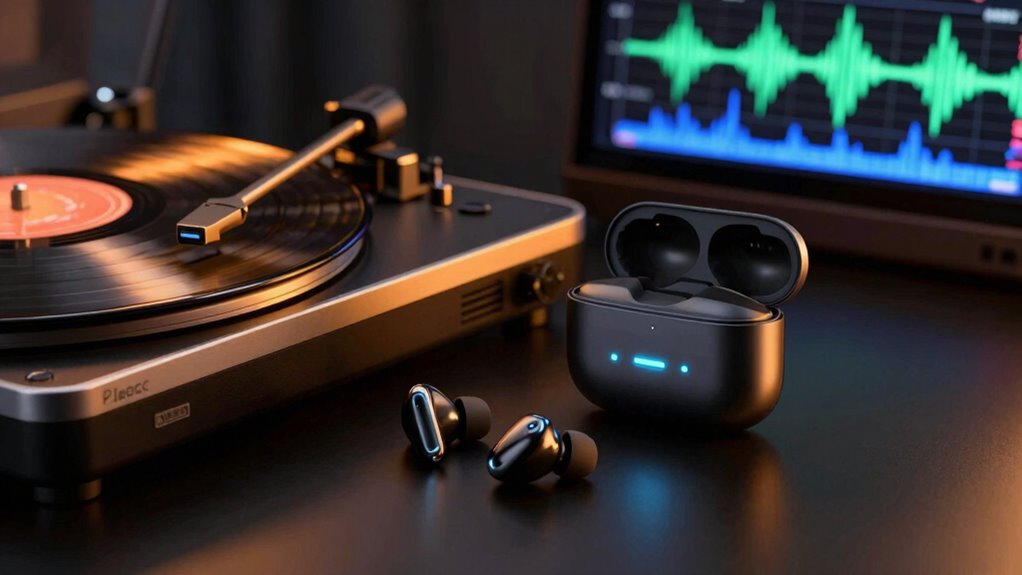
In today’s world of ever-advancing audio technology, it’s easy to get caught up in the hype surrounding both Bluetooth and lossless audio formats. You might have noticed claims about how wireless streaming can deliver studio-quality sound or how lossless formats preserve every detail of your favorite tracks. But understanding the core differences helps you cut through the noise and make informed choices. Bluetooth audio relies heavily on digital compression, which reduces the size of audio files to make wireless streaming more efficient. This compression often removes some audio data to fit the limited bandwidth, resulting in a smaller file that’s easier to transmit over Bluetooth connections. While this process allows you to enjoy music wirelessly without cumbersome wires, it also means you’re sacrificing some audio fidelity. The compressed data can introduce slight distortions or artifacts, making the sound less rich and detailed compared to the original recording. On the other hand, lossless audio formats aim to preserve every nuance and detail of the original recording. When you listen to lossless files, you get a more authentic experience, as no digital compression compromises the audio quality. These formats are often associated with high-resolution audio, and they’re best experienced through wired connections or high-quality wireless setups that can handle larger data streams. The key difference is that while Bluetooth streams are optimized for convenience, they often compromise on sound quality due to the limitations of wireless bandwidth and digital compression. Lossless formats, however, prioritize quality over convenience, requiring a more robust connection and higher storage capacity. You might find yourself choosing between the two depending on your priorities: convenience and portability or maximum fidelity. If you’re just listening on standard wireless earbuds or through your smartphone’s built-in speaker, Bluetooth’s digital compression and wireless streaming are typically sufficient. But if you’re an audiophile or want to experience music as close to the studio as possible, lossless audio provides that richer, more detailed sound. Ultimately, understanding these differences helps you decide what’s worth prioritizing in your listening experience. You don’t need to dismiss one entirely; rather, you can select the right tool for the right situation. Wireless streaming makes listening more accessible, but it’s good to remember that digital compression isn’t always about fidelity—it’s about balancing convenience and quality. Lossless audio, in contrast, champions quality, but often demands more from your devices and setup. Additionally, digital compression plays a crucial role in how audio quality is affected in wireless formats. Recognizing audio fidelity limitations in various formats can help you tailor your listening experience to your specific preferences and needs.
wireless Bluetooth earbuds with noise cancellation
As an affiliate, we earn on qualifying purchases.
As an affiliate, we earn on qualifying purchases.
Frequently Asked Questions
Can Bluetooth Audio Ever Fully Replace Wired Connections?
Bluetooth audio can’t fully replace wired connections yet, especially if you prioritize sound fidelity. While wireless convenience has improved, wired setups still offer superior audio quality and a more reliable connection. If you value crystal-clear sound, wired remains the best choice. However, for everyday convenience and mobility, Bluetooth is a solid option. Ultimately, it depends on your priorities—wireless ease or uncompromised sound fidelity.
What Devices Support Lossless Audio Streaming?
Like a vintage record player in a world of streaming, lossless audio streaming is becoming more accessible. Devices supporting it include high-end smartphones, dedicated DACs, wireless headphones, and certain streaming services that prioritize audio fidelity. These devices use advanced wireless transmission tech, like Wi-Fi or proprietary protocols, to deliver true CD-quality sound. Keep an eye on the latest gadgets, as support for lossless audio continues to grow.
How Does Compression Impact Sound Quality in Bluetooth Audio?
Compression in Bluetooth audio reduces sound quality because it simplifies the audio data to make it easier to transmit wirelessly. This process often involves audio compression, which can lead to loss of detail and clarity. Wireless interference further worsens sound quality by disrupting the signal. As a result, you might notice less richness and depth in Bluetooth audio compared to lossless formats, which preserve the original sound quality without compression.
Is Lossless Audio Worth the Extra Cost?
Lossless audio can be worth the extra cost if you prioritize audio quality and have a keen ear for detail. However, whether it’s worth it depends on your listener preference and equipment. Some might not notice a significant difference, especially on standard devices. Investigate your setup and listening habits first. If you crave the highest fidelity and quality matters to you, investing in lossless audio might be a satisfying choice.
Do All Streaming Services Offer Lossless Audio Options?
Not all streaming services offer lossless audio options. While some, like Tidal and Apple Music, prioritize high audio fidelity, others focus on wireless convenience with standard compressed formats. If you value the purest sound quality, you’ll want a service that supports lossless streaming. Keep in mind, using Bluetooth can sometimes compromise audio fidelity, so wired or high-quality wireless options are better for experiencing true lossless sound.
Conclusion
Understanding the difference between Bluetooth and lossless audio helps you make smarter choices. While only about 20% of listeners prioritize high-resolution sound, the hype around lossless formats continues to grow, driven by a 15% annual increase in high-quality streaming subscriptions. Recognizing that Bluetooth compression can substantially reduce audio quality, you can decide whether convenience or fidelity matters most to you. Ultimately, knowing these distinctions empowers you to enjoy your music exactly how you want it.
Fall Picks
fall essentials
As an affiliate, we earn on qualifying purchases.