The Sennheiser Momentum 4 Wireless is my best overall pick for its combination of wireless convenience, noise cancellation, and long listening time. For open-back listening at home, the HD 560S offers a more accessible route into detailed, spacious sound, while the RS 175-U is built for watching TV without being tethered to a phone or stereo. The right choice depends on whether you need isolation and portability, an open design for focused listening, or a dedicated TV setup. These headphones differ just as much in use case and fit as they do in sound. Read on for the full comparison and guidance on choosing the pair that fits your routine.

Get the latest gadgets delivered free — and shop member deals
- Fast, free delivery on millions of items
- Access to Prime Big Deal Days deals on October 6–7
- Prime Video, Amazon Music and more included
Complete the kit


Key Takeaways
- Momentum 4 Wireless leads as the most versatile everyday choice, while Momentum 5 models are a separate newer option worth comparing for their features and fit.
- Open-back headphones dominate the wired listening and studio options, but their sound leakage and lack of isolation make them poor companions for shared spaces or commuting.
- HD 560S gives beginners a practical entry into open-back listening; the HD 600, HD 650, and HD 660S2 serve more focused audiophile preferences rather than replacing a portable all-rounder.
- RS 175-U and RS 120-W address TV listening with a transmitter and charging setup, a more relevant distinction for television than Bluetooth features alone.
- HD 280 Pro and HD 490 PRO suit work and studio use differently: one prioritizes closed-back isolation, while the other uses an open design suited to mixing in a quiet room.
| Sennheiser HD 600 Open-Back Wired Headphones |  | Best for Natural, Detailed Listening | Design: Open-back, over-ear | Connectivity: Wired | Impedance: 300 ohms | VIEW LATEST PRICE | See Our Full Breakdown |
| Sennheiser RS 175-U Digital Wireless TV Headphones |  | Best for TV Sound Effects | Design: Over-ear | Connectivity: Digital wireless | Intended use: TV listening | VIEW LATEST PRICE | See Our Full Breakdown |
| Sennheiser HD 280 Pro Wired Over-Ear Headphones |  | Best for Noise Isolation on a Budget | Design: Closed-back, over-ear | Connectivity: Wired | Noise attenuation: Up to 32 dB | VIEW LATEST PRICE | See Our Full Breakdown |
| Sennheiser RS 120-W On-Ear Wireless Headphones with Transmitter and Charging Dock |  | Best for Simple Wireless TV Listening | Type: On-ear wireless headphones | Sound modes: Speech, Music, Neutral | Battery life: Up to 20 hours | VIEW LATEST PRICE | See Our Full Breakdown |
| Sennheiser Momentum 4 Wireless Noise-Canceling Headphones, Black |  | Best for Travel and Everyday Use | Connectivity: Bluetooth | Transducer size: 42 mm | Audio codec: aptX Adaptive | VIEW LATEST PRICE | See Our Full Breakdown |
| Sennheiser Momentum 5 Wireless Headphones, White |  | Best for Long-Haul Wireless Listening | Driver size: 42 mm | Noise cancellation: Hybrid adaptive ANC | Bluetooth codecs: aptX Lossless, aptX Adaptive, AAC | VIEW LATEST PRICE | See Our Full Breakdown |
| Sennheiser HD 660S2 Open-Back Audiophile Headphones |  | Best for Spacious Home Listening | Design: Open-back, over-ear | Transducer size: 42 mm | Frequency detail: Piano lows to 27.5 Hz; bass drums at 45–60 Hz | VIEW LATEST PRICE | See Our Full Breakdown |
| Sennheiser Momentum 4 Wireless Headphones, White | 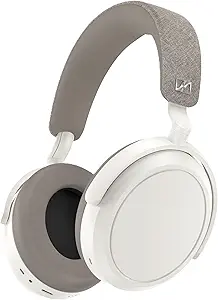 | Best Value Wireless Pick | Connectivity: Bluetooth 5.2 | Bluetooth range: 10 m | Audio drivers: 42 mm dynamic transducers | VIEW LATEST PRICE | See Our Full Breakdown |
| Sennheiser Momentum 5 Wireless Over-Ear Headphones, Black |  | Best for Codec Flexibility | Driver size: 42 mm | Battery life: Up to 57 hours with ANC on | Noise cancellation: Adaptive hybrid ANC | VIEW LATEST PRICE | See Our Full Breakdown |
| Sennheiser HDB 630 Wireless Audiophile Headphones with BTD 700 Adapter |  | Best for Wireless Audio Tuning | Driver size: 42 mm | Connectivity: Wireless Bluetooth and USB-C | Bluetooth codecs: aptX HD, aptX Adaptive | VIEW LATEST PRICE | See Our Full Breakdown |
| Sennheiser HD 560S Open-Back Over-Ear Wired Headphones |  | Best for Reference Listening | Model: HD 560S | Design: Open-back, over-ear | Connectivity: Wired | VIEW LATEST PRICE | See Our Full Breakdown |
| Sennheiser HD 650 Open-Back Audiophile Headphones | 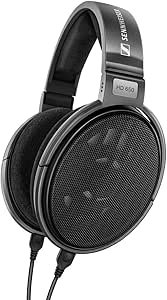 | Best for Extended Home Listening | Model: HD 650 | Model number: 508825 | Design: Open-back, dynamic | VIEW LATEST PRICE | See Our Full Breakdown |
| Sennheiser Momentum 4 Wireless Noise-Canceling Headphones, Black/Copper |  | Best for Travel | Type: Over-ear wireless headphones | Color: Black/Copper | Transducer size: 42 mm | VIEW LATEST PRICE | See Our Full Breakdown |
| Sennheiser HD 490 PRO Open-Back Studio Headphones |  | Best for Mixing and Production | Design: Open-back | Frequency response: 5–36,000 Hz | Cable: Detachable, 1.8 m | VIEW LATEST PRICE | See Our Full Breakdown |
| Sennheiser HD 599 Open-Back Wired Headphones, Ivory |  | Best for Comfortable Everyday Home Listening | Model: HD 599 | Model number: 506831 | Type: Over-ear, open-back headphones | VIEW LATEST PRICE | See Our Full Breakdown |
| Sennheiser headphone | Connectivity | Design |
|---|---|---|
| Sennheiser HD 600 Open-Back Wi | Wired | Open-back, over-ear |
| Sennheiser RS 175-U Digital Wi | Digital wireless | Over-ear |
| Sennheiser HD 280 Pro Wired Ov | Wired | Closed-back, over-ear |
| Sennheiser RS 120-W On-Ear Wir | — | — |
| Sennheiser Momentum 4 Wireless | Bluetooth | — |
| Sennheiser Momentum 5 Wireless | — | — |
| Sennheiser HD 660S2 Open-Back | Wired | Open-back, over-ear |
| Sennheiser Momentum 4 Wireless | Bluetooth 5.2 | — |
| Sennheiser Momentum 5 Wireless | — | — |
| Sennheiser HDB 630 Wireless Au | Wireless Bluetooth and USB-C | Over-ear, folding |
| Sennheiser HD 560S Open-Back O | Wired | Open-back, over-ear |
| Sennheiser HD 650 Open-Back Au | — | Open-back, dynamic |
| Sennheiser Momentum 4 Wireless | — | — |
| Sennheiser HD 490 PRO Open-Bac | — | Open-back |
| Sennheiser HD 599 Open-Back Wi | Wired | — |
More Details on Our Top Picks
Sennheiser HD 600 Open-Back Wired Headphones
The HD 600 is the lineup’s pick for listeners who want a natural presentation and an open sense of space from a wired headphone. Its open-back design helps music feel less enclosed than it can on closed-back models such as the HD 280 Pro, while the light frame and plush pads suit long sessions. The 300-ohm impedance makes a capable headphone output a sensible match, so it is less convenient with basic portable devices than the HD 280 Pro. Sound also travels both ways: nearby people may hear your music, and room noise remains audible. With no microphone or wireless features, this is focused on listening rather than calls or commuting. The detachable reinforced cable adds a practical advantage for home setups.
Pros:- Detailed sound with natural spatial imaging
- Lightweight frame and plush ear pads suit extended sessions
- Detachable Kevlar-reinforced cable
- Includes 1/4-inch or 1/8-inch connector options
Cons:- Open backs leak sound and let room noise through
- The 300-ohm impedance can require a capable headphone output
- No built-in microphone or wireless connectivity
Best for: Home listeners with a suitable headphone output who prioritize natural sound and long listening sessions
Not ideal for: Commuters, shared-room listeners, and buyers who need a microphone or closed-back isolation
- Design:Open-back, over-ear
- Connectivity:Wired
- Impedance:300 ohms
- Frequency response:12–39,000 Hz
- Total harmonic distortion:0.1%
- Weight:260 g
- Cable:Detachable, Kevlar-reinforced oxygen-free copper
- Connectors:1/4-inch or 1/8-inch
Our verdict“Choose the HD 600 for focused home listening and a natural open presentation, provided your source can drive it and sound leakage is acceptable.”
Sennheiser RS 175-U Digital Wireless TV Headphones
The RS 175-U is the TV-focused choice for listeners who want wireless freedom and selectable sound modes from the couch. Bass boost can give films and games more low-end weight, while surround sound modes offer a more expansive presentation than the straightforward Speech, Music, and Neutral profiles on the RS 120-W. That makes the RS 175-U a better fit for varied entertainment; the RS 120-W may suit viewers who want clearly named modes for different content. The supplied information does not specify battery life, wireless range, or TV connections, so I would not rank it over the RS 120-W for those practical details. It is also less versatile than the Momentum 4 for everyday portable listening, since its stated purpose is TV use.
Pros:- Digital wireless design frees the listener from a headphone cable
- Bass boost mode adds a selectable low-end emphasis
- Surround sound modes provide an option for a wider TV presentation
Cons:- The provided product data does not specify battery life or wireless range
- The provided product data does not specify TV connection options
- TV-focused features are less suited to portable everyday use than the Momentum 4
Best for: TV viewers who want to move around without a cable and adjust bass or surround effects for entertainment
Not ideal for: Buyers who need documented connection details or one pair of headphones for both TV and everyday Bluetooth listening
- Design:Over-ear
- Connectivity:Digital wireless
- Intended use:TV listening
- Bass feature:Bass boost mode
- Spatial audio feature:Surround sound modes
- Microphone:Not specified in product data
Our verdict“Pick the RS 175-U for wireless TV listening with bass and surround options, but compare its connection and range details before choosing it over the RS 120-W.”
Sennheiser HD 280 Pro Wired Over-Ear Headphones
The HD 280 Pro suits listeners who want a wired over-ear headphone that reduces surrounding noise without relying on active noise cancellation. Its stated up to 32 dB of attenuation makes it a more practical fit for noisy rooms than the open-back HD 600, though it cannot offer that model’s open presentation. The foldable design helps it pack down for transport, and replaceable pads, headband padding, and cable give it a repair-friendly edge over the more feature-rich Momentum 4. That durability comes with a tradeoff: the coiled cable limits movement and makes this less convenient for commuting or calls. It is a straightforward choice for monitoring, practice, or focused listening when isolation and serviceable parts matter more than wireless convenience.
Pros:- Closed-back design attenuates outside sound by up to 32 dB
- Collapsible construction packs more compactly for transport
- Earpads, headband padding, and cable are replaceable
- Includes a 1/4-inch screw-type adaptor
Cons:- Wired connection limits mobility compared with the Momentum 4
- No built-in microphone or wireless features are listed
- Closed-back presentation feels less open than the HD 600
Best for: Musicians, students, and focused listeners who want closed-back isolation and replaceable wear parts
Not ideal for: Commuters and call-heavy users who want wireless playback, active noise cancellation, or a built-in microphone
- Design:Closed-back, over-ear
- Connectivity:Wired
- Noise attenuation:Up to 32 dB
- Cable length:3.3–9.8 ft
- Included adaptor:1/4-inch screw-type
- Replaceable parts:Earpads, headband padding, and audio cable
- Warranty:2 years
Our verdict“Choose the HD 280 Pro for isolation and replaceable parts in a dependable wired setup, and skip it if untethered listening is a priority.”
Sennheiser RS 120-W On-Ear Wireless Headphones with Transmitter and Charging Dock
The RS 120-W makes sense for viewers who want TV audio without managing a phone app or a portable Bluetooth setup. Its transmitter doubles as a charging dock, and the RCA and 3.5 mm inputs give it clear ways to connect to a television. Speech, Music, and Neutral modes let listeners adjust the presentation to what is on screen; the RS 175-U takes a different route with bass boost and surround effects. The RS 120-W’s listed battery life of up to 20 hours and range of up to 60 meters help with moving around at home, though actual use can vary. The on-ear fit may press more than the RS 175-U’s over-ear design, and rechargeable AAA batteries are a less familiar arrangement than a built-in battery.
Pros:- Transmitter serves as a charging dock
- Speech, Music, and Neutral modes suit different types of TV content
- Up to 20 hours of playback and up to 60 meters of range
- RCA and 3.5 mm TV connections are specified
Cons:- On-ear fit may be less comfortable for listeners who prefer over-ear headphones
- Uses two rechargeable AAA NiMH batteries
- Dedicated TV transmitter setup is less portable than the Momentum 4
Best for: TV viewers who want a dedicated transmitter, physical charging dock, and simple sound profiles around the home
Not ideal for: Listeners who prefer over-ear cups, a built-in rechargeable battery, or headphones for commuting and calls
- Type:On-ear wireless headphones
- Sound modes:Speech, Music, Neutral
- Battery life:Up to 20 hours
- Wireless range:Up to 60 m
- Battery type:Two rechargeable 1.2 V AAA NiMH batteries
- TV connections:RCA or 3.5 mm
- Transmitter:Included; also functions as a charging dock
Our verdict“Pick the RS 120-W for a straightforward home TV setup with a dock and useful listening modes, if its on-ear fit suits you.”
Sennheiser Momentum 4 Wireless Noise-Canceling Headphones, Black
The Momentum 4 Wireless is the most versatile pick here for listeners moving between travel, music, and calls. Its adaptive noise cancellation helps reduce surrounding sound, while transparency mode lets outside audio back in without removing the headphones. Up to 60 hours of playback supports long stretches away from a charger, and four microphones with wind noise suppression give calls a stated hardware advantage over the HD 600, which has no built-in microphone. The tradeoff is that sound customization depends partly on the Smart Control Plus app, so setup is less direct than choosing a mode on the RS 120-W. For dedicated open-back listening at home, the HD 600 has the more focused role; the Momentum 4 earns its place through flexibility rather than that model’s wired, open design.
Pros:- Up to 60 hours of playback with fast charging
- Adaptive noise cancellation and transparency mode
- Sound can be customized with equalizer, presets, and sound modes
- Four digital beamforming microphones include wind noise suppression
Cons:- Some sound customization features require the Smart Control Plus app
- Wireless and noise control add features that are unnecessary for dedicated wired listening
- Over-ear headphones may be less compact to carry than smaller listening options
Best for: Frequent travelers and commuters who want noise control, long battery life, customizable sound, and call support in one pair
Not ideal for: Listeners focused on open-back wired home listening or buyers who want sound settings without an app
- Connectivity:Bluetooth
- Transducer size:42 mm
- Audio codec:aptX Adaptive
- Battery life:Up to 60 hours
- Noise control:Adaptive noise cancellation and transparency mode
- Microphones:Four digital beamforming microphones
- Color:Black
- Included accessories:Carry case, USB-C charging cable, 3.5 mm to 2.5 mm audio cable, airplane adapter
Our verdict“Choose the Momentum 4 for travel and daily use when noise control, long battery life, and call features matter more than an open wired listening setup.”
Sennheiser Momentum 5 Wireless Headphones, White
The Momentum 5 pairs adaptive noise cancellation with up to 57 hours of playback with ANC on, making it a strong fit for travelers who want fewer charging stops. Its support for aptX Lossless and aptX Adaptive gives compatible devices more codec options than the Momentum 4, though both models offer wireless listening, noise control, and transparency. A replaceable battery is a practical advantage for buyers hoping to keep headphones in service longer. The tradeoff is a two-hour charge time, and this model’s wireless convenience comes with less open, airy listening than the wired HD 660S2. I’d choose the Momentum 5 for commutes and trips; listeners focused on a spacious home setup should look to the open-back model instead.
Pros:- Up to 57 hours of playback with ANC enabled
- Supports aptX Lossless, aptX Adaptive, and AAC
- Adaptive noise cancellation and Natural Transparency mode
- Replaceable battery can extend useful service life
Cons:- A full charge takes two hours
- Closed-back wireless listening lacks the open presentation of the HD 660S2
Best for: Frequent travelers who want adaptive noise cancellation, long playback, and a replaceable battery
Not ideal for: Home listeners seeking a spacious open-back presentation or buyers who need wired headphones
- Driver size:42 mm
- Noise cancellation:Hybrid adaptive ANC
- Bluetooth codecs:aptX Lossless, aptX Adaptive, AAC
- Battery life:Up to 57 hours with ANC on
- Battery charge time:2 hours
- Battery:Replaceable
- Controls:Touch
- Color:White
Our verdict“Choose the Momentum 5 if you want feature-rich wireless headphones for long trips and value a replaceable battery.”
Sennheiser HD 660S2 Open-Back Audiophile Headphones
For listeners who want a natural, spacious presentation at home, the HD 660S2 has a clear advantage over wireless closed-back models such as the Momentum 4: its open-back design lets sound feel less contained around the ears. The 42 mm transducers are described as delivering detailed highs, rich mids, and controlled bass, while the frequency detail down to 27.5 Hz points to extended low notes. Breathable cushions and two included cables support long sessions across compatible equipment. That openness has a real cost: sound can escape and outside noise can enter, so it is poorly suited to public spaces or shared rooms. It is also wired, unlike the Momentum 4, and offers no stated noise cancellation or battery-powered convenience.
Pros:- Open-back design supports a spacious presentation
- Described as offering detailed highs, rich mids, and controlled bass
- Breathable plush cushions suit extended listening
- Includes two cables, an adapter, and a carry pouch
Cons:- Open-back construction provides little isolation from outside noise
- Wired connection limits mobility compared with the Momentum 4
Best for: Home listeners with a quiet space who prioritize a spacious soundstage and wired headphone use
Not ideal for: Commuters, office users in shared spaces, and anyone who needs wireless playback or noise isolation
- Design:Open-back, over-ear
- Transducer size:42 mm
- Frequency detail:Piano lows to 27.5 Hz; bass drums at 45–60 Hz
- Connectivity:Wired
- Included cable:6.3 mm, 1.8 m
- Additional cable:4.4 mm, 1.8 m
- Included accessories:6.3 mm to 3.5 mm adapter and carry pouch
- Warranty:2 years
Our verdict“Pick the HD 660S2 for focused listening in a quiet room; choose the Momentum 4 for wireless use and noise control.”
Sennheiser Momentum 4 Wireless Headphones, White
The Momentum 4 earns its place as a practical wireless all-rounder: it combines adaptive noise cancellation, transparency mode, customizable sound settings, and up to 60 hours of playback. That rated battery life edges past the Momentum 5’s 57 hours with ANC on, while aptX Adaptive and a wired audio cable give it useful listening options. The newer Momentum 5 adds aptX Lossless support and a replaceable battery, so it may suit buyers who put codec flexibility and battery serviceability first. The Momentum 4’s case and airplane adapter are handy for travel, but its warranty is one year and the supplied details do not establish fit or sound quality from reviewer assessments. It makes more sense as a versatile everyday pick than as a dedicated audiophile headphone like the HD 660S2.
Pros:- Up to 60 hours of playback with fast charging
- Adaptive noise cancellation and transparency mode
- Customizable equalizer, presets, and sound modes
- Includes a carry case, audio cable, and airplane adapter
Cons:- Does not list aptX Lossless, which the Momentum 5 supports
- One-year warranty is shorter than the HD 660S2’s two years
- Provided product details do not specify comfort performance
Best for: Wireless headphone buyers who want long rated playback, adjustable sound, and travel accessories
Not ideal for: Listeners who require a replaceable battery, aptX Lossless support, or an open-back design
- Connectivity:Bluetooth 5.2
- Bluetooth range:10 m
- Audio drivers:42 mm dynamic transducers
- Audio codec:aptX Adaptive
- Noise control:Adaptive noise cancellation and transparency mode
- Battery life:Up to 60 hours
- Weight:293 g
- Warranty:1 year
Our verdict“Choose the Momentum 4 for flexible wireless listening and long playback, unless you need the Momentum 5’s replaceable battery or newer codec support.”
Sennheiser Momentum 5 Wireless Over-Ear Headphones, Black
The black Momentum 5 brings aptX Lossless, aptX Adaptive, and AAC support to a 290 g wireless over-ear design with adaptive hybrid ANC. That codec range is a step beyond the Momentum 4, whose listed Bluetooth codec is aptX Adaptive, and can appeal to listeners with compatible sources who want more playback options. It also offers up to 57 hours with ANC on and a replaceable battery, useful features for regular travel. The tradeoff is that its stated playback time is shorter than the Momentum 4’s up to 60 hours, and the listing gives fewer specifics about charging and included accessories than the white Momentum 5 listing. Like other closed-back wireless picks, it is less suited to buyers seeking the airy presentation of the wired HD 660S2.
Pros:- Supports aptX Lossless, aptX Adaptive, and AAC
- Up to 57 hours of playback with ANC enabled
- Adaptive hybrid ANC and transparency mode
- Replaceable battery
Cons:- Rated playback is shorter than the Momentum 4’s up to 60 hours
- Provided listing does not detail charge time or included accessories
Best for: Listeners with compatible devices who want broad Bluetooth codec support in a travel-ready ANC headphone
Not ideal for: Buyers whose main priority is the longest listed playback time or an open-back wired sound
- Driver size:42 mm
- Battery life:Up to 57 hours with ANC on
- Noise cancellation:Adaptive hybrid ANC
- Bluetooth codecs:aptX Lossless, aptX Adaptive, AAC
- Fit:Over-ear
- Weight:290 g
- Color:Black
- Warranty:1 year
Our verdict“Choose this Momentum 5 if codec options and a replaceable battery matter more to you than the Momentum 4’s longer listed playback time.”
Sennheiser HDB 630 Wireless Audiophile Headphones with BTD 700 Adapter
The HDB 630 is the lineup’s most configurable wireless choice, pairing neutral-tuned 42 mm transducers with a parametric EQ and USB-C audio up to 24-bit/96 kHz. That makes it a better fit for listeners who want to shape or fine-tune playback than the Momentum 4, which offers customizable sound settings but does not list a parametric EQ or high-resolution USB-C audio. Adaptive ANC and Transparency Mode keep it useful beyond a desk, and fast charging adds up to seven hours of playback in ten minutes. The tradeoff is that the provided details do not describe fit or comfort, making a long-wear decision less certain. The HD 660S2 remains the simpler choice for a wired open-back presentation, while the HDB 630 prioritizes wireless flexibility.
Pros:- Parametric EQ supports detailed sound customization
- USB-C audio supports up to 24-bit/96 kHz
- Up to 60 hours of playback with fast charging
- Adaptive ANC and Transparency Mode support travel and everyday use
Cons:- Provided details do not describe fit or comfort
- High-resolution USB-C audio depends on using a compatible wired source
Best for: Wireless listeners who want detailed EQ control and USB-C audio for compatible devices
Not ideal for: Buyers who need documented fit guidance or prefer a wired open-back headphone for home listening
- Driver size:42 mm
- Connectivity:Wireless Bluetooth and USB-C
- Bluetooth codecs:aptX HD, aptX Adaptive
- USB-C audio:Up to 24-bit/96 kHz
- Battery life:Up to 60 hours
- Fast charging:10 minutes provides up to 7 hours of playback
- Noise control:Adaptive ANC and Transparency Mode
- Design:Over-ear, folding
- Controls:App control
Our verdict“Pick the HDB 630 if you want wireless convenience with fine-grained EQ and USB-C audio options.”
Sennheiser HD 560S Open-Back Over-Ear Wired Headphones
The HD 560S is the clearest fit here for listeners who want a natural, spacious presentation for focused music listening. Its open-back design and angled drivers create a sense of depth, while the extended low end keeps bass present without making this a bass-first pick. Compared with the more comfort-oriented HD 599, the HD 560S is positioned around accurate, revealing sound; the HD 650 is another home-listening alternative, with matched drivers and a stated low-distortion design. The tradeoff is practical: this model is wired, and its open ear cups let surrounding noise in and sound out. I’d choose it for a quiet desk or listening room, but skip it for commuting, shared offices, or anyone who needs wireless freedom.
Pros:- Natural, accurate sound suited to focused listening
- Wide soundstage and lifelike depth from the open-back design
- Extended low-end response adds clear bass
- Includes a 1/4-inch connector
Cons:- Wired connection restricts movement
- Open-back cups provide little isolation from surrounding sound
Best for: Listeners who want open, natural sound for focused music sessions at a quiet desk or in a home listening room
Not ideal for: Commuters and people in shared or noisy spaces who need wireless convenience or sound isolation
- Model:HD 560S
- Design:Open-back, over-ear
- Connectivity:Wired
- Connector:1/4-inch
- Weight:600 g
- Included components:Headphones, cable, user manual
- Warranty:2-year manufacturer warranty
Our verdict“Choose the HD 560S for spacious, reference-oriented listening at home if you can accept a cable and minimal isolation.”
Sennheiser HD 650 Open-Back Audiophile Headphones
The HD 650 earns its place as a home-listening option built around natural sound and low distortion. Its matched drivers and acoustic silk damping are intended to keep reproduction controlled, while the comfortable ear cups suit longer sessions. Against the more reference-focused HD 560S, the HD 650 makes a stronger case for settling in with music over time; the HD 490 PRO, by contrast, is explicitly equipped for studio work with two switchable ear-pad sets and a mixing plugin. The HD 650 is less versatile outside a quiet room: its open cups leak sound and admit ambient noise, and the product guidance says not to cover them for best sound. I’d shortlist it for home listening, but not for travel or environments where isolation matters.
Pros:- Natural sound for audiophile listening
- Matched drivers and optimized magnets are designed to reduce distortion
- Comfortable ear cups suit extended listening
- Includes both 3.5 mm and 1/4-inch connector options
Cons:- Open-back cups provide little isolation in noisy settings
- Designed for home listening rather than mobile use
- Ear cups should not be covered for best sound
Best for: Home listeners seeking natural-sounding open-back headphones for long, quiet music sessions
Not ideal for: Travelers, office workers, and studio users who need isolation or dedicated production accessories
- Model:HD 650
- Model number:508825
- Design:Open-back, dynamic
- Frequency response:10–41,000 Hz
- Total harmonic distortion:0.05%
- Connectors:3.5 mm jack and 1/4-inch connector
- Warranty:2 years
Our verdict“Pick the HD 650 for comfortable, natural listening at home if you have a quiet space and do not need isolation.”
Sennheiser Momentum 4 Wireless Noise-Canceling Headphones, Black/Copper
For buyers who need one Sennheiser pair for commutes and long trips, the Momentum 4 Wireless is the practical contrast to open-back models such as the HD 599: it adds adaptive noise cancellation, transparency mode, and wireless playback. Its stated battery life of up to 60 hours means fewer charging interruptions on extended trips, while four beamforming microphones support calls. The 42 mm transducers, aptX Adaptive, and app-based sound customization add listening flexibility; the included case, audio cable, and airplane adapter also make the package travel-ready. That convenience comes with a software dependency for sound adjustments, and this model is less suited to buyers seeking a simple wired setup or an explicitly open, spacious presentation like the HD 560S. I’d pick it for mobility and noise control.
Pros:- Up to 60 hours of playback with fast charging
- Adaptive noise cancellation and transparency mode
- Customizable sound through the companion app
- Includes a carry case, audio cable, and airplane adapter
Cons:- Sound customization requires the companion app
- Wireless operation depends on keeping the headphones charged
Best for: Frequent travelers and commuters who want wireless listening, noise cancellation, and long stated battery life
Not ideal for: Home listeners seeking an open-back wired setup or buyers who do not want to use a companion app for sound customization
- Type:Over-ear wireless headphones
- Color:Black/Copper
- Transducer size:42 mm
- Bluetooth audio:aptX Adaptive
- Noise control:Adaptive noise cancellation and transparency mode
- Battery life:Up to 60 hours
- Microphones:Four digital beamforming microphones
- Included accessories:Carry case, USB-C charging cable, 3.5 mm to 2.5 mm audio cable, airplane adapter
Our verdict“Choose the Momentum 4 Wireless for travel-ready noise control and long playback, provided app-based sound adjustments suit you.”
Sennheiser HD 490 PRO Open-Back Studio Headphones
The HD 490 PRO is the specialist in this group: its wide soundstage and precise localization are aimed at hearing where sounds sit in a mix. Two switchable ear-pad sets give producers a choice of sound signatures for different tasks, and the included dearVR MIX-SE plugin extends the production-focused package. That makes it more purpose-built than the HD 650, which emphasizes comfortable home listening, and more studio-oriented than the HD 560S reference-listening pick. A detachable cable and washable, replaceable pads are useful for a work setup that sees regular use. The main compromise is its open-back design: it offers little barrier to room noise or sound leakage. I’d choose it for a quiet production space, not for commuting or recording beside a live microphone.
Pros:- Wide soundstage and precise sound localization support mixing decisions
- Two ear-pad sets offer distinct sound signatures
- Washable, replaceable ear pads support ongoing studio use
- Detachable cable and dearVR MIX-SE plugin are included
Cons:- Open-back design offers little isolation from surrounding noise
- Sound leakage makes it less suitable near live microphones
Best for: Music producers and mixers who work in a quiet room and want precise spatial placement plus task-specific ear pads
Not ideal for: Commuters, noisy-room listeners, and recording setups where sound leakage could reach a microphone
- Design:Open-back
- Frequency response:5–36,000 Hz
- Cable:Detachable, 1.8 m
- Ear pads:Two washable, replaceable sets
- Included ear pads:Mixing ear pads and producing ear pads
- Included software:dearVR MIX-SE plugin
Our verdict“Choose the HD 490 PRO for focused mixing and production in a quiet room, where its open-back design is workable.”
Sennheiser HD 599 Open-Back Wired Headphones, Ivory
The HD 599 is the comfort-led choice among these wired open-back headphones. Its velour ear pads and padded headband are suited to long sessions, while natural spatial sound gives music room to breathe. The two detachable cables make it easier to connect to different home equipment: a shorter 3.5 mm lead for compatible devices and a longer 6.3 mm lead for setups with that jack. Compared with the more reference-oriented HD 560S, this model puts a clearer emphasis on comfort and flexible cable options; the HD 650 is another natural-sounding home choice, with matched drivers designed to reduce distortion. The HD 599 remains wired and open-backed, so it cannot provide wireless freedom or much isolation. I’d favor it for relaxed home listening, not busy commutes.
Pros:- Natural spatial sound from the open-back design
- Velour ear pads and padded headband suit long listening sessions
- Two detachable cables provide 3.5 mm and 6.3 mm connector options
- Ivory finish offers a distinct look
Cons:- Open-back design provides little sound isolation
- Wired connectivity limits freedom of movement
- The listed warranty is 1 year
Best for: Home listeners who prioritize comfortable long sessions and need detachable cables for different headphone jacks
Not ideal for: Commuters and listeners in noisy shared spaces who need wireless playback or sound isolation
- Model:HD 599
- Model number:506831
- Type:Over-ear, open-back headphones
- Connectivity:Wired
- Cable options:3 m detachable cable with 6.3 mm jack; 1.2 m detachable cable with 3.5 mm jack
- Color:Ivory
- Ear pad material:Velour
- Warranty:1 year
Our verdict“Choose the HD 599 for comfortable, natural-sounding home listening when its two wired cable options match your setup.”

How We Picked
I ranked these headphones by how well their design and features serve distinct buyer needs: everyday wireless listening, travel, TV, studio work, and home audiophile use. I weighed sound approach, isolation, connectivity, comfort implications, build and upkeep, and how much flexibility each model offers. Open-back designs can create a spacious presentation, but they leak sound and admit room noise; closed-back and noise-canceling models are more practical around other people.
The order favors useful breadth for the widest range of listeners, then gives specialized models their place where their strengths solve a specific problem. Duplicate color variants remain separate products in the supplied lineup, but color alone does not create a meaningful performance distinction. I treated Momentum 4 and Momentum 5 as distinct models and avoided assuming specifications not established by their product names. No single sound signature suits everyone, so the rankings reflect fit for purpose and tradeoffs rather than a claim that one headphone is best for every listener.
| Sennheiser headphone | Design | Connectivity |
|---|---|---|
| Sennheiser HD 600 Open-Back Wi | Open-back, over-ear | Wired |
| Sennheiser RS 175-U Digital Wi | Over-ear | Digital wireless |
| Sennheiser HD 280 Pro Wired Ov | Closed-back, over-ear | Wired |
| Sennheiser RS 120-W On-Ear Wir | — | — |
| Sennheiser Momentum 4 Wireless | — | Bluetooth |
| Sennheiser Momentum 5 Wireless | — | — |
| Sennheiser HD 660S2 Open-Back | Open-back, over-ear | Wired |
| Sennheiser Momentum 4 Wireless | — | Bluetooth 5.2 |
| Sennheiser Momentum 5 Wireless | — | — |
| Sennheiser HDB 630 Wireless Au | Over-ear, folding | Wireless Bluetooth and USB-C |
| Sennheiser HD 560S Open-Back O | Open-back, over-ear | Wired |
| Sennheiser HD 650 Open-Back Au | Open-back, dynamic | — |
| Sennheiser Momentum 4 Wireless | — | — |
| Sennheiser HD 490 PRO Open-Bac | Open-back | — |
| Sennheiser HD 599 Open-Back Wi | — | Wired |
Factors to Consider When Choosing Best Sennheiser Headphones
Before choosing, decide where the headphones will be used and what you need them to block or connect to. The same open design that works well at a quiet desk can frustrate a commuter or anyone sharing a room. These broader checks can help narrow Sennheiser’s very different wired, wireless, and TV-oriented options.
Choose Open-Back or Closed-Back for Your Room
Open-back headphones let air and sound pass through the ear cups, which can make music feel less confined during quiet-room listening. That design also lets other people hear your audio and allows outside noise in, so it is usually a poor match for an office, bus, or shared living room. Closed-back models are a better starting point when you need privacy or want fewer distractions. Noise cancellation can help with steady environmental sound, but it does not turn headphones into hearing protection or guarantee silence. A common mistake is to choose on sound reputation alone and only later discover that the design does not fit the listening environment. Match the cup design to the room you use most often.
Think About the Whole Listening Chain
Wired audiophile headphones need a suitable source, and some listeners may prefer a headphone amplifier depending on the model and their equipment. Check the source’s output and the headphone’s requirements before assuming a phone or laptop will deliver the listening level you want. Wireless models simplify the setup, but their codec support, battery, controls, and device compatibility matter more than a cable specification. TV headphones with a dedicated transmitter can solve a different problem: dependable listening from a television without relying on the TV’s Bluetooth implementation. Consider every connection between the headphones and the content. A capable headphone can still be inconvenient if it does not connect cleanly to the devices you use.
Set Expectations for Wireless Features
Noise cancellation, microphone quality, app controls, and battery endurance affect everyday use as much as sound does for a travel headphone. Think about whether you need to take calls, switch among devices, or wear the headphones for long stretches. Do not treat the newest generation as automatically better for your routine; compare its actual features, controls, fit, and compatibility with the earlier model. Wireless headphones also depend on a battery and may need app or firmware support, while wired options avoid charging but can restrict movement. For frequent travel, the convenience of isolation and wireless controls may justify paying more than a wired home model. For stationary listening, that extra convenience may add little value.
Match Comfort to Session Length
Comfort is personal, and details such as clamping force, ear cup depth, headband pressure, and weight can matter more than a short try-on suggests. If possible, check the return policy and try a fit over the kind of session you expect to have. Glasses, warm rooms, and sensitive ears can change how a headphone feels over time. Replaceable pads and readily available parts can extend a headphone’s useful life, especially for studio or home use. A light model is not automatically comfortable if its pads press on your ears, and plush padding can still feel hot. Make fit a deciding factor rather than assuming a familiar brand shape will suit you.
Pay for the Difference You Will Use
Moving up within a headphone family can bring changes in tuning, construction, connectivity, or features, but those changes matter only if they address your priorities. A more specialized open-back model may make sense for careful listening at home and be a poor use of your budget if you need one pair for travel. Beginners often gain more from selecting the right type and fit than from choosing the most advanced model in a series. Studio users should prioritize reliable monitoring and a design suited to their room, while TV listeners should check transmitter compatibility and range. Compare the concrete benefit of an upgrade with the compromise it asks you to accept. Pay for a clear use-case improvement, not just a higher position in a product family.
Account for Upkeep and Long-Term Use
Wired headphones have fewer electronic parts to maintain, but cables and ear pads can wear and may need replacement. Wireless headphones add battery aging and charging to the ownership picture. Studio and audiophile models are often used for long sessions, making replaceable pads, cable availability, and repair support especially relevant. Keep the accessories you need in mind too: a TV setup may depend on its transmitter and dock, while a wireless model may need its charging cable or adapter. Check what is included and whether replacement parts are available where you live. A little attention to maintenance can make the choice more practical over years of use.
Frequently Asked Questions
Which Sennheiser headphones make the best single pair for music, commuting, and calls?
I would start with the Momentum 4 Wireless because its wireless design, noise cancellation, and everyday feature set cover more situations than an open-back wired model. Check the Momentum 5 listings as well, since they are presented as a newer family and may better match your desired features. The right choice between generations depends on the specific fit, controls, and device support you want. If call quality or switching between devices is a priority, confirm those details for the exact model before buying. Neither option is as suited to critical wired listening as the dedicated open-back models.
Are open-back Sennheiser headphones suitable for commuting or a shared office?
Usually not: open-back designs allow sound to escape and room noise to enter, which can disturb people nearby and make listening harder in noisy places. Models such as the HD 600, HD 650, HD 660S2, HD 560S, HD 490 PRO, and HD 599 are better suited to quieter listening environments. For commuting or a shared workspace, a closed-back or noise-canceling model is the more practical direction. Do not rely on louder playback to overcome background noise, since it can make listening uncomfortable. If you want one pair for home and travel, prioritize isolation and wireless convenience.
Do I need a headphone amplifier for the HD 600, HD 650, or HD 660S2?
It depends on your source and how loudly you listen. Check the headphone’s electrical requirements against your computer, audio interface, or amplifier and confirm that your setup reaches a comfortable level without distortion. A dedicated amplifier may be useful when a source struggles to provide enough output, but it is not automatically required for every listener. Try your existing source first if you can, and avoid buying extra equipment based only on a model’s audiophile label. If you need simple phone connectivity and portability, a wireless Momentum model is a more direct fit.
Should I choose the RS 175-U or RS 120-W for watching television?
Both are designed around a transmitter and charging setup, so compare their compatibility with your television and the listening features you need. Check the available audio outputs on your TV before choosing; an included transmitter cannot help if it does not connect to your source. Consider whether you want an over-ear fit, how far you sit from the transmitter, and whether other household members need to use the television at the same time. Bluetooth headphones may work for some TVs, but pairing and audio delay can vary by device. A dedicated TV set can be the simpler option when you want headphones that live near the screen.
What should I choose as my first open-back Sennheiser headphone?
The HD 560S is a sensible first place to look if you want open-back listening for music, games, or focused desk use. It offers a more straightforward entry point than the HD 600, HD 650, or HD 660S2, which are more specialized choices for listeners comparing audiophile tuning. The HD 599 is another option if you prefer its fit and presentation, while the HD 490 PRO is aimed more directly at studio work. Before choosing any of them, confirm that sound leakage and the lack of isolation suit your room. If you need a single pair for outside use too, begin with a closed-back or wireless model instead.
Conclusion
For one flexible pair, I recommend the Momentum 4 Wireless as best overall, with the Momentum 5 models worth a direct feature and fit comparison. The HD 560S is my best value and beginner choice for quiet-room open-back listening; choose the HD 600, HD 650, or HD 660S2 when you have a clearer audiophile preference and suitable source. For a premium wireless audiophile direction, the HDB 630 pairs wireless listening with its BTD 700 adapter, while the HD 490 PRO is the focused studio pick. Choose the RS 175-U or RS 120-W for television, and the HD 280 Pro when closed-back isolation for work matters more than wireless convenience. The best Sennheiser headphones are the pair whose design fits where and how you listen.
Fall Picks
fall essentials
As an affiliate, we earn on qualifying purchases.