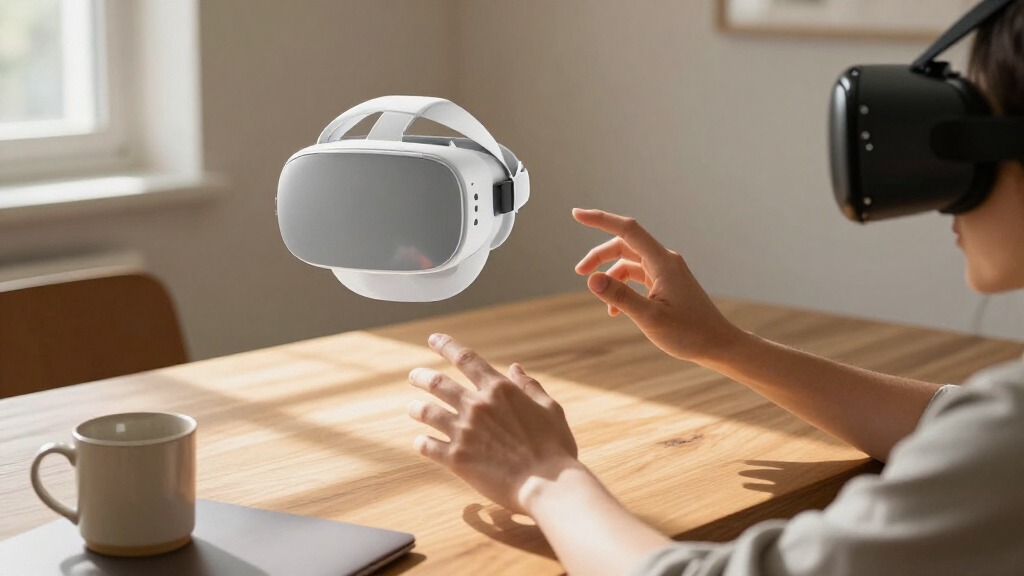
The Meta Quest 3 is my best overall pick among these mixed reality headsets because it pairs standalone use with color passthrough and a broad range of mixed reality and VR experiences. The Meta Quest 3S is a more accessible entry point, while the Pimax Crystal Super targets PC users who put visual detail first. The main tradeoffs are standalone convenience versus PC performance, display clarity versus comfort, and current software support versus older hardware. A headset’s tracking, fit, and compatibility can matter as much as its display specifications. Continue reading for the full breakdown and help matching a headset to your setup.

Get the latest gadgets delivered free — and shop member deals
- Fast, free delivery on millions of items
- Access to Prime Big Deal Days deals on October 6–7
- Prime Video, Amazon Music and more included
Complete the kit

Key Takeaways
- Quest 3 is the most balanced choice in this lineup: it combines standalone operation and color passthrough, while Quest 3S makes a stronger case for a lower-cost entry point but uses a less advanced display design.
- PC-focused headsets serve narrower needs. Pimax Crystal Super prioritizes high resolution, while Valve Index and HP Reverb G2 depend on PC setups and older platform ecosystems.
- Product names can hide important differences. Renewed Quest 3 and Quest 3S units, bundles, and storage versions may differ in condition or included extras, so check the exact listing.
- Not every XR-labeled device is a room-scale headset. VITURE Pro 2 is glasses-style personal viewing, which favors portability over the immersive tracking and spatial interaction of a headset.
- Legacy Windows Mixed Reality models need extra compatibility checks. Odyssey+, Lenovo Explorer, and Reverb G2 may suit existing owners, but their age and platform support make them less straightforward new purchases.
| Meta Quest 3S 128GB VR Headset with Gorilla Tag Bundle |  | Best for Mixed Reality on a Starter Budget | Storage: 128GB | Processor: Snapdragon XR2 Gen 2 | RAM: 8GB | VIEW LATEST PRICE | See Our Full Breakdown |
| Meta Quest 3S 128GB VR Headset (Renewed Premium) |  | Best Renewed Standalone Pick | Storage: 128GB | Processor: Snapdragon XR2 Gen 2 | Memory: 8GB RAM | VIEW LATEST PRICE | See Our Full Breakdown |
| Meta Quest 2 All-in-One Virtual Reality Headset, 128 GB |  | Best for Entry-Level VR Basics | Storage: 128GB | Connectivity: Wireless | Audio: 3D positional audio | VIEW LATEST PRICE | See Our Full Breakdown |
| Pimax Crystal Super VR Headset with 3840 × 3840 Resolution per Eye |  | Best for High-Detail PC Simulation | Resolution: 3840 × 3840 per eye | Field of view: 140 degrees | Display: QLED with Mini-LED local dimming | VIEW LATEST PRICE | See Our Full Breakdown |
| HTC Vive Focus Vision Mixed Reality and PC VR Headset with Controllers |  | Best for Expandable Standalone and PC VR | Resolution: 2448 × 2448 pixels per eye | Field of view: Up to 120 degrees | Refresh rate: 90Hz | VIEW LATEST PRICE | See Our Full Breakdown |
| Samsung HMD Odyssey+ Windows Mixed Reality Headset with 2 Wireless Controllers |  | Best for PC Gaming on Windows Mixed Reality | Display: AMOLED, 2880 × 1600 | Field of view: 110° | Audio: Built-in AKG headphones with 360° spatial sound and microphone | VIEW LATEST PRICE | See Our Full Breakdown |
| Galaxy XR Mixed Reality Virtual Reality Headset |  | Best for Adjustable Comfort | Display: High-resolution; exact resolution not specified | Audio: Spatial audio | Tracking: Head and hand tracking | VIEW LATEST PRICE | See Our Full Breakdown |
| Valve Index VR Full Kit (Renewed) |  | Best for Knuckles Controller Interaction | Resolution: 1440 × 1600 per eye | Refresh rate: 60 Hz | Screen size: 6 inches | VIEW LATEST PRICE | See Our Full Breakdown |
| Meta Quest 3 128GB Mixed Reality Headset (Renewed Premium) |  | Best Standalone All-Rounder | Storage: 128GB | Display: 4K+ Infinite Display | Audio: Enhanced 3D audio | VIEW LATEST PRICE | See Our Full Breakdown |
| HTC VIVE Focus Vision Wired Bundle XR Headset |  | Best for Expandable PC and Tracking Options | Display resolution: 2448 × 2448 pixels per eye | Field of view: Up to 120° | Refresh rate: 90 Hz | VIEW LATEST PRICE | See Our Full Breakdown |
| VITURE Pro 2 XR Glasses with Adjustable Myopia Focus |  | Best for Personal Big-Screen Viewing | Virtual display size: 146 inches | Resolution: 1080p | Refresh rate: 120Hz | VIEW LATEST PRICE | See Our Full Breakdown |
| HP Reverb G2 VR Headset with Controllers |  | Best for High-Resolution PC VR | Display: 2160 × 2160 LCD panels per eye | Tracking: 4 built-in cameras | Audio: Spatial audio | VIEW LATEST PRICE | See Our Full Breakdown |
| Lenovo Explorer Mixed Reality Headset |  | Best Lightweight Windows VR Pick | Model: G0A20001WW | Display resolution: 2880 × 1440 | Weight: Less than 1 lb | VIEW LATEST PRICE | See Our Full Breakdown |
| Meta Quest 3 512GB VR Headset with Gorilla Tag Bundle |  | Best Standalone Mixed Reality Pick | Storage: 512GB | Processor: Snapdragon XR2 Gen 2 | Memory: 8GB RAM | VIEW LATEST PRICE | See Our Full Breakdown |
| HTC Vive XR Elite Mixed Reality and PC VR Headset with Deluxe Pack |  | Best Convertible Premium Headset | Combined resolution: 3840 × 1920 | Pixel density: 19 pixels per degree | Field of view: Up to 110° | VIEW LATEST PRICE | See Our Full Breakdown |
More Details on Our Top Picks
Meta Quest 3S 128GB VR Headset with Gorilla Tag Bundle
The Quest 3S is a practical entry point for buyers who want standalone VR and color mixed reality without connecting a PC. Its Snapdragon XR2 Gen 2 chip, 8GB of RAM, and dual RGB cameras support a broad mix of games, workouts, and room-aware experiences. Compared with the Meta Quest 2, color passthrough makes it better suited to experiences that blend digital objects with your surroundings. The included Gorilla Tag items and three-month games catalog trial add a clear gaming angle, though trial terms apply. Its 128GB storage and listed battery life of just over two hours make it a more limited fit for large libraries or long sessions than the 512GB Quest 3 bundle. Choose it for accessible mixed reality and included game content; skip it if you want extended battery life or more storage.
Pros:- Standalone wireless use requires no PC or console.
- Dual RGB cameras enable color passthrough for mixed reality.
- Snapdragon XR2 Gen 2 processor and 8GB RAM.
- Includes Gorilla Tag items and a three-month games catalog trial.
Cons:- 128GB storage can constrain larger game libraries.
- Battery life is listed at just over two hours.
- Trial eligibility and renewal terms apply.
Best for: First-time VR buyers who want wireless mixed reality, a modest game library, and Gorilla Tag content in one bundle.
Not ideal for: Players who keep many large games installed or expect long sessions away from a charger.
- Storage:128GB
- Processor:Snapdragon XR2 Gen 2
- RAM:8GB
- Connectivity:Wireless
- Cameras:Dual RGB color cameras
- Battery life:More than 2 hours
- Bundle:Gorilla Tag items
- Trial subscription:3 months of games catalog access
Our verdict“Pick the Quest 3S bundle for an approachable wireless mixed reality headset with bundled Gorilla Tag content, provided its storage and battery limits suit your sessions.”
Meta Quest 3S 128GB VR Headset (Renewed Premium)
This renewed Meta Quest 3S retains the standalone headset’s main draw: wireless access to VR and color-passthrough mixed reality, with no computer required. Its Snapdragon XR2 Gen 2 processor, 8GB of RAM, and hand tracking give it a capable feature set for gaming, exercise, and room-based apps. Against the older Meta Quest 2, its dual RGB cameras support full-color passthrough, which makes mixed reality experiences more usable. The listed 2064 × 2208 pixel resolution, 90Hz refresh rate, and 96-degree field of view clarify what to expect from the display, while the 128GB capacity favors a selective library. The Amazon Renewed Guarantee offers recourse, but a renewed unit may show condition differences from a new headset. This pick suits buyers comfortable with renewed hardware; those who want a new unit or longer sessions should look elsewhere.
Pros:- Standalone wireless play for VR and mixed reality.
- Dual RGB passthrough cameras and hand tracking.
- Snapdragon XR2 Gen 2 processor with 8GB RAM.
- Touch controllers and Amazon Renewed Guarantee.
Cons:- Renewed condition can differ from a new unit.
- 128GB storage may limit a large installed library.
- Battery life is about 2–3 hours.
Best for: Buyers seeking a standalone headset for mixed reality and VR who are comfortable purchasing renewed electronics.
Not ideal for: Shoppers who require new condition or need more than 128GB of onboard storage.
- Storage:128GB
- Processor:Snapdragon XR2 Gen 2
- Memory:8GB RAM
- Display:LCD, 2064 × 2208 pixels
- Refresh rate:90Hz
- Field of view:96 degrees
- Battery life:About 2–3 hours
- Controls:Touch controllers; hand tracking
Our verdict“Choose this renewed Quest 3S if you want standalone color-passthrough mixed reality and accept the condition uncertainty of renewed hardware.”
Meta Quest 2 All-in-One Virtual Reality Headset, 128 GB
The Meta Quest 2 offers the straightforward all-in-one setup that makes standalone VR approachable: it runs without a PC or console and includes hand tracking, controllers, and a built-in battery. Its 3D positional audio can make games and social spaces feel more spatial without needing separate audio equipment. Compared with the Quest 3S, though, the supplied product data does not list color passthrough, so buyers focused on blending virtual content with their room should favor the newer model. Quest 2 remains suited to VR gaming, fitness, entertainment, and social apps, but its description gives fewer technical details than the 3S and notes that some experiences may target more mature audiences. The 128GB capacity also asks users to manage their installed library. It makes most sense for buyers whose priority is basic untethered VR rather than mixed reality features.
Pros:- Works without a PC or console.
- Wireless design with a built-in battery.
- Supports hand tracking and controller input.
- 3D positional audio for spatial sound.
Cons:- Product details do not specify color passthrough for mixed reality.
- Some apps and experiences may be intended for more mature audiences.
- 128GB storage can require users to manage installed content.
Best for: Families and new VR users seeking a simple standalone headset for VR games, fitness, and social apps.
Not ideal for: Buyers specifically seeking color-passthrough mixed reality or detailed display specifications.
- Storage:128GB
- Connectivity:Wireless
- Audio:3D positional audio
- Controls:Hand tracking and controllers
- Power:Built-in battery
- Setup:Works without a PC or console
- Age guidance:Accounts for ages 10+
Our verdict“Choose Quest 2 for basic standalone VR activities, while mixed reality buyers should favor the Quest 3S with its listed color cameras.”
Pimax Crystal Super VR Headset with 3840 × 3840 Resolution per Eye
The Pimax Crystal Super takes a very different route from standalone headsets: it is a PC-connected system built around visual detail and immersion. Its 3840 × 3840 resolution per eye, 50 PPD, QLED and Mini-LED display, and aspherical lenses target buyers who want fine image detail for simulation and PC VR. A 140-degree field of view is wider than the HTC Vive Focus Vision’s listed 120 degrees, giving this model a broader view, while eye tracking and adjustable IPD add tools for fit and interaction. That focus comes with a firm limitation: DisplayPort and USB tether it to a Windows PC, unlike the wireless Quest 3S. Passthrough is listed, but the supplied details do not describe a standalone mixed reality platform. This is a specialist choice for PC users, not a flexible headset for casual untethered use.
Pros:- 3840 × 3840 resolution per eye and 50 PPD.
- 140-degree field of view.
- QLED with Mini-LED local dimming and aspherical lenses.
- Inside-out tracking, eye tracking, and adjustable IPD.
Cons:- Requires a Windows PC connection through DisplayPort and USB.
- Less suited to untethered use than standalone options such as Quest 3S.
- The product description does not specify headset weight.
Best for: PC simulation enthusiasts who prioritize high visual detail, a wide field of view, and eye tracking.
Not ideal for: Buyers who want a standalone headset or primarily want wireless mixed reality around the home.
- Resolution:3840 × 3840 per eye
- Field of view:140 degrees
- Display:QLED with Mini-LED local dimming
- Lens technology:Aspherical
- Pixel density:50 PPD
- Refresh rate:Up to 90Hz
- Tracking:Inside-out tracking; eye tracking
- Connectivity:DisplayPort and USB
Our verdict“Pick the Crystal Super for PC-based simulation where visual detail and field of view matter more than wireless freedom.”
HTC Vive Focus Vision Mixed Reality and PC VR Headset with Controllers
The HTC Vive Focus Vision is the flexible pick for buyers who want a standalone mixed reality headset that can also connect to a PC. Its DisplayPort streaming provides a wired PC VR path, while Wi-Fi streaming and standalone use offer other ways to play. Compared with the PC-only Pimax Crystal Super, this HTC model does not require a computer for every session; it also adds built-in eye and hand tracking, expandable storage up to 2TB, and a hot-swappable main battery with a reserve front battery. The tradeoff is setup complexity for PC streaming: the supplied details require a direct Ethernet connection between the PC and Wi-Fi router. Full-body tracking also depends on separately acquired trackers. With 12GB RAM and 5K resolution, it suits users who will take advantage of its broader modes, but it is more involved than a Quest 3S for simple standalone play.
Pros:- Supports standalone mixed reality and PC VR.
- Built-in eye and hand tracking.
- Storage expands up to 2TB via MicroSD.
- Hot-swappable main battery with a reserve front battery.
Cons:- PC streaming setup requires a direct Ethernet connection between the PC and Wi-Fi router.
- Full-body tracking requires additional trackers.
- More involved than a Quest 3S if only basic standalone use is needed.
Best for: Mixed reality users who want standalone play, PC VR streaming, expandable storage, and the option to add full-body tracking.
Not ideal for: Buyers who want simple wireless setup or do not plan to use its PC streaming and tracking options.
- Resolution:2448 × 2448 pixels per eye
- Field of view:Up to 120 degrees
- Refresh rate:90Hz
- RAM:12GB
- Storage expansion:Up to 2TB via MicroSD card
- Tracking:Built-in eye and hand tracking; supports up to 5 VIVE Ultimate Trackers
- Audio:Open-back dual-driver speakers; noise- and echo-cancelling microphones
- Battery:Hot-swappable main battery with reserve front battery
- Connectivity:DisplayPort PC streaming; Wi-Fi PC VR streaming
Our verdict“Choose the Vive Focus Vision if you will use both standalone mixed reality and PC VR and value expandable storage and battery swapping.”
Samsung HMD Odyssey+ Windows Mixed Reality Headset with 2 Wireless Controllers
The Samsung HMD Odyssey+ pairs a 2880 × 1600 AMOLED display with a 110° field of view, giving PC players a broad view across supported games and experiences. Its built-in AKG headphones provide spatial audio and a microphone, so there is less extra gear to arrange than with a headset that leaves audio to a separate accessory. Two wireless controllers are included, and compatibility spans Windows Mixed Reality and Steam libraries. Compared with the standalone Meta Quest 3, this headset depends on a compatible Windows PC, which makes setup less flexible but ties the experience to PC software. The product data also does not establish current software support or the availability of any subscription offer, so buyers should check compatibility with their PC and intended apps before choosing it.
Pros:- 2880 × 1600 AMOLED display
- 110° field of view
- Built-in AKG headphones with spatial audio and microphone
- Two wireless controllers included
Cons:- Requires a compatible Windows PC
- Tied to Windows Mixed Reality and PC-based use rather than standalone operation
Best for: Windows PC owners who want an AMOLED headset with included controllers for compatible Steam and Windows Mixed Reality experiences
Not ideal for: Buyers seeking a standalone headset or who do not own a compatible Windows PC
- Display:AMOLED, 2880 × 1600
- Field of view:110°
- Audio:Built-in AKG headphones with 360° spatial sound and microphone
- Included controllers:2 wireless controllers
- Compatibility:Windows Mixed Reality and Steam
- PC requirement:Compatible Windows PC required
Our verdict“Choose the Odyssey+ if you have a compatible Windows PC and want a wide-view AMOLED headset with audio and controllers built in.”
Galaxy XR Mixed Reality Virtual Reality Headset
The Galaxy XR is aimed at buyers who want a headset for several kinds of use, from gaming and entertainment to virtual meetings, education, and fitness. Its listed head and hand tracking supports both virtual and mixed reality interactions, while spatial audio adds sound without relying on a stated external headphone setup. The adjustable strap and soft facial cushion make fit a clear part of its pitch. Compared with the Samsung HMD Odyssey+, this model emphasizes a lightweight, adjustable design and broader use cases; the Odyssey+ provides more concrete display details, including its AMOLED panel and 110° field of view. Galaxy XR’s supplied product data does not state a resolution, battery life, or platform compatibility, so buyers seeking those specifics should verify them before deciding.
Pros:- Head and hand tracking for virtual and mixed reality experiences
- Lightweight design with adjustable head strap
- Soft facial cushion
- Spatial audio and a broad set of stated use cases
Cons:- Product data does not state display resolution
- Product data does not specify battery life or platform compatibility
Best for: Buyers prioritizing adjustable fit for a mix of gaming, virtual meetings, learning, entertainment, and fitness
Not ideal for: Spec-focused PC VR buyers who need stated resolution, battery-life, and platform compatibility details before purchase
- Display:High-resolution; exact resolution not specified
- Audio:Spatial audio
- Tracking:Head and hand tracking
- Design:Lightweight, adjustable head strap, soft facial cushion
- Color:Silver
- Use cases:Gaming, entertainment, productivity, virtual meetings, education, fitness, and mixed reality
Our verdict“Pick Galaxy XR if adjustable comfort and varied activities matter more to you than having every display and compatibility detail specified up front.”
Valve Index VR Full Kit (Renewed)
The Valve Index VR Full Kit is the clearest fit here for buyers who value its included Knuckles controllers and listed hand tracking. Its 1440 × 1600 resolution per eye is specified, but the listing gives a 60 Hz refresh rate, which is a tradeoff for buyers comparing visual smoothness with options such as the HTC VIVE Focus Vision, listed at 90 Hz. This is a renewed kit, so its professionally inspected condition and Renewed Guarantee eligibility may appeal to buyers who accept refurbished hardware. The product data lists Linux compatibility and USB connectivity, while the description does not establish mixed reality features. I would treat it as a controller-focused PC VR option and confirm platform and setup compatibility before purchase.
Pros:- Includes Knuckles controllers
- Hand tracking is listed
- 1440 × 1600 resolution per eye
- Professionally inspected with Renewed Guarantee eligibility
Cons:- Renewed condition means it is pre-owned or refurbished
- Listed 60 Hz refresh rate is lower than the VIVE Focus Vision’s stated 90 Hz
- Product data does not specify mixed reality features
Best for: PC VR buyers who specifically want Knuckles controllers and are comfortable considering a renewed kit
Not ideal for: Mixed reality shoppers seeking clearly specified passthrough features, newer display specs, or a standalone headset
- Resolution:1440 × 1600 per eye
- Refresh rate:60 Hz
- Screen size:6 inches
- Controller type:Knuckles
- Tracking:Hand tracking
- Connectivity:USB
- Platform:Linux
- Condition:Renewed; professionally inspected and tested
Our verdict“Consider this renewed Index kit if Knuckles interaction is your priority and you have confirmed its Linux and PC setup suits your system.”
Meta Quest 3 128GB Mixed Reality Headset (Renewed Premium)
The Meta Quest 3 is the most flexible everyday pick in this group: it combines mixed reality and VR with Touch Plus controllers and controller-free hand tracking, without a PC requirement in the supplied specs. Its 4K+ display and access to more than 500 immersive apps give buyers a defined starting point for gaming and other headset activities. Compared with the PC-dependent Samsung HMD Odyssey+, Quest 3 is easier to place in a room and use across different settings; compared with the VIVE Focus Vision, the listed storage is fixed at 128GB and the battery averages up to 2.2 hours. This is a Renewed Premium unit, so condition differs from a new headset. Short sessions suit it better than long outings without a recharge plan.
Pros:- Supports mixed reality and controller-free hand tracking
- 4K+ display with enhanced 3D audio
- Access to more than 500 immersive apps
- Slimmer profile than Quest 2
Cons:- Average use is listed as up to 2.2 hours, with actual battery life varying by settings and use
- 128GB storage may limit buyers with large app libraries
- Renewed Premium condition differs from a new unit
Best for: Buyers who want a standalone mixed reality headset with controller and hand tracking and a large stated app library
Not ideal for: People who need long sessions without recharging or want more than the listed 128GB storage
- Storage:128GB
- Display:4K+ Infinite Display
- Audio:Enhanced 3D audio
- Controllers and tracking:Touch Plus controllers; supports hand tracking
- App library:500+ immersive apps
- Average usage time:Up to 2.2 hours
- Included power adapter:18W
- Condition:Renewed Premium
Our verdict“Choose the Quest 3 if you want a standalone headset with mixed reality, hand tracking, and broad app access, and can work around its listed battery runtime.”
HTC VIVE Focus Vision Wired Bundle XR Headset
The HTC VIVE Focus Vision Wired Bundle suits buyers who want one headset for standalone use and PC VR, with DisplayPort streaming and Wi-Fi PC VR streaming both listed. Its 2448 × 2448 pixels per eye, up to 120° field of view, and 90 Hz refresh rate give PC-focused shoppers more display detail than the Valve Index listing specifies, while built-in eye and hand tracking make it better equipped for varied interactions. Optional face and body tracking add room to expand, though they require separate trackers. The hot-swappable main battery and reserve front battery support longer sessions than the Meta Quest 3’s stated average runtime, but PC streaming setup may involve wired Ethernet. That extra connectivity and tracking flexibility makes this a more involved choice than Quest 3’s straightforward standalone approach.
Pros:- Supports standalone use and PC VR streaming
- 2448 × 2448 resolution per eye with up to 120° field of view
- Built-in eye and hand tracking
- Hot-swappable main battery with reserve front battery
Cons:- PC VR streaming setup may require wired Ethernet to the router
- Optional face and body tracking require separately purchased trackers
Best for: PC VR users and XR enthusiasts who want standalone operation, DisplayPort streaming, and room to add tracking hardware
Not ideal for: Buyers seeking a simple setup or who do not want to purchase optional face or body trackers separately
- Display resolution:2448 × 2448 pixels per eye
- Field of view:Up to 120°
- Refresh rate:90 Hz
- Memory:12GB RAM
- Expandable storage:Up to 2TB via MicroSD card
- Tracking:Built-in eye and hand tracking; supports optional face and body trackers
- Audio:Open-back dual-driver speakers, noise- and echo-cancelling microphones, 3.5 mm audio jack
- Battery:Hot-swappable main battery with reserve front battery
- Connectivity:DisplayPort PC streaming and Wi-Fi PC VR streaming
Our verdict“Choose the VIVE Focus Vision if you want flexible PC and standalone use with expandable tracking and are prepared for a more involved setup.”
VITURE Pro 2 XR Glasses with Adjustable Myopia Focus
The VITURE Pro 2 is the most display-focused pick here: its 146-inch virtual screen and 120Hz refresh rate suit private video viewing and compatible gaming without the bulk of a full headset. At 63 g, it is far lighter than the HTC Vive XR Elite, and its independently adjustable focus dials can help some glasses wearers avoid prescription inserts. That compact design comes with a narrower 50-degree field of view, so it does not provide the room-scale immersion or standalone mixed reality of the Vive XR Elite or Meta Quest 3. USB-C video output also limits easy connection to some consoles and older devices, while spatial viewing and 2D-to-3D conversion depend on compatible software. Choose it for a wearable private display, not as a general-purpose room-scale headset.
Pros:- 146-inch virtual display with 1080p resolution and 120Hz refresh
- Independent focus adjustment from 0 to -5.00D per eye
- Lightweight 63 g frame with seven nose-pad sizes
- Compatible 2D-to-3D conversion and spatial viewing features
Cons:- USB-C video output excludes some devices without separately sold adapters
- 50-degree field of view feels less immersive than full VR headsets
- Spatial features and 2D-to-3D conversion depend on compatible software and devices
Best for: USB-C device owners who want a lightweight personal screen for video or compatible gaming, especially users who need adjustable myopia focus.
Not ideal for: Buyers seeking standalone room-scale mixed reality, broad console compatibility, or a wide field of view.
- Virtual display size:146 inches
- Resolution:1080p
- Refresh rate:120Hz
- Display panels:Sony Micro-OLED
- Field of view:50 degrees
- Myopia adjustment:0 to -5.00D, independently adjustable per eye
- Weight:63 g
- Connectivity:USB-C video output
Our verdict“Pick the VITURE Pro 2 for a light, personal virtual screen, but choose the Meta Quest 3 or Vive XR Elite for room-scale mixed reality.”
HP Reverb G2 VR Headset with Controllers
The HP Reverb G2 earns its place for PC users who value sharp visuals: its 2160 × 2160 LCD panels per eye provide more detail than the Lenovo Explorer’s listed 2880 × 1440 total resolution. Four built-in cameras handle tracking without requiring external base stations, and the included controllers make it a more complete VR kit than the display-only VITURE Pro 2. Spatial audio and cushioned materials add to its appeal for seated simulations and longer sessions. The tradeoff is a firm dependence on a compatible PC, plus a wired setup involving a long cable and adapters. Its Windows Mixed Reality and SteamVR compatibility also makes it more tied to PC software than standalone options such as the Meta Quest 3. This is a PC VR choice, not a portable mixed reality headset.
Pros:- 2160 × 2160 LCD panels per eye
- Four built-in cameras support headset tracking
- Spatial audio and cushioned materials
- Includes two motion controllers and a 6 m cable
Cons:- Requires a compatible PC
- Wired setup uses multiple cables and adapters
- Less portable than standalone headsets such as Meta Quest 3
Best for: PC VR users who prioritize per-eye display detail and want included motion controllers for simulations or room-scale play.
Not ideal for: Buyers who want standalone mixed reality, wireless freedom, or a simple setup without a compatible PC and cables.
- Display:2160 × 2160 LCD panels per eye
- Tracking:4 built-in cameras
- Audio:Spatial audio
- Compatibility:SteamVR and Windows Mixed Reality
- Included controllers:2 motion controllers
- Included cable:6 m
- Lens adjustment:Adjustable for different eye distances
Our verdict“Choose the Reverb G2 if PC VR image detail matters more to you than portability or untethered mixed reality.”
Lenovo Explorer Mixed Reality Headset
The Lenovo Explorer is a straightforward option for buyers already set up for Windows Mixed Reality who want a lighter headset for home VR. It weighs less than 1 lb and supports several ways to interact, including motion controllers, keyboard and mouse, and Xbox controllers. That flexibility separates it from the HP Reverb G2, which targets sharper PC VR visuals with its higher per-eye resolution, while the Explorer’s 2880 × 1440 display resolution is a more modest specification. Its motion controllers are tracked by headset sensors, so the listed kit does not call for external tracking equipment. Still, setup and compatible Windows Mixed Reality hardware are required, and the supplied details do not position it as a standalone mixed reality system. Choose it for lightweight Windows-based VR rather than modern untethered use.
Pros:- Lightweight design at less than 1 lb
- Adjustable, balanced fit
- Supports motion controllers, keyboard and mouse, and Xbox controllers
- Headset sensors track the included motion controllers
Cons:- Requires setup and compatible Windows Mixed Reality equipment
- 2880 × 1440 resolution is less detailed than the HP Reverb G2’s per-eye display specification
- Not a standalone headset
Best for: Windows Mixed Reality owners seeking a lightweight home VR headset with multiple controller options.
Not ideal for: Buyers who need standalone operation, current broad mixed reality features, or high per-eye resolution for detailed PC VR.
- Model:G0A20001WW
- Display resolution:2880 × 1440
- Weight:Less than 1 lb
- Interaction:Motion controllers, keyboard and mouse, Xbox controllers, or Cortana
- Tracking:Headset sensors track motion controllers
- Included items:Headset, cable, motion controllers, battery, quick start guide, and warranty
Our verdict“The Lenovo Explorer suits Windows VR buyers who value a light headset and flexible controls over sharper displays or standalone mixed reality.”
Meta Quest 3 512GB VR Headset with Gorilla Tag Bundle
The Meta Quest 3 is the most balanced standalone mixed reality option in this batch: dual RGB cameras bring full-color passthrough into play, while the Snapdragon XR2 Gen 2 chip and 8GB RAM support untethered VR without a PC. Its 512GB storage gives game-focused buyers room for a broader installed library than a headset with less capacity. Compared with the HTC Vive XR Elite, this bundle pairs standalone use with Gorilla Tag items and a three-month game catalog trial, though the Vive offers adjustable diopter settings and a hot-swappable battery. Quest 3’s listed battery life is just over two hours, so longer sessions may need breaks or charging. It is a more flexible everyday choice than the PC-dependent HP Reverb G2, but remains centered on gaming and apps.
Pros:- Standalone, untethered VR gameplay
- Snapdragon XR2 Gen 2 processor and 8GB RAM
- Dual RGB cameras enable full-color passthrough
- 512GB storage plus Gorilla Tag bundle and three-month game trial
Cons:- Listed battery life is just over two hours
- Game trial and Gorilla Tag content may have limited value to non-players
- Does not list the hot-swappable battery offered by the HTC Vive XR Elite
Best for: Players who want a cable-free headset for full-color mixed reality, VR games, and a large installed game library.
Not ideal for: Users who need long uninterrupted sessions or prioritize optical adjustment and PC VR streaming features.
- Storage:512GB
- Processor:Snapdragon XR2 Gen 2
- Memory:8GB RAM
- Battery life:2+ hours
- Cameras:Dual RGB color cameras
- Included content:Gorilla Tag bundle with Gorilla Space Program Suit, Helmet, and 2,000 Shiny Rocks
- Game trial:3 months
Our verdict“Choose the Quest 3 bundle for versatile standalone mixed reality and game storage, provided its short listed battery runtime fits your sessions.”
HTC Vive XR Elite Mixed Reality and PC VR Headset with Deluxe Pack
The HTC Vive XR Elite is the most flexible hardware pick here for buyers who want one headset to cover standalone VR, mixed reality, and PC VR streaming. Its full-color passthrough and depth sensor support mixed reality, while stepless IPD and diopter adjustments offer a fit option the Meta Quest 3 does not list in its supplied specs. The 3840 × 1920 combined resolution, up to 110-degree field of view, and 90Hz refresh rate make it a more immersive full-headset experience than the compact VITURE Pro 2 glasses. The tradeoffs are a listed battery life of up to two hours and a separately sold USB streaming cable. Hand tracking also depends on the title, so the broad feature set does not guarantee every experience will use it.
Pros:- Supports standalone VR, mixed reality, and PC VR streaming
- Full-color passthrough camera and depth sensor
- Stepless IPD and diopter adjustments
- Hot-swappable battery and included Deluxe Pack accessories
Cons:- Battery life is listed as up to two hours
- USB streaming cable is sold separately
- Hand-tracking features depend on the VR title
Best for: Mixed reality and PC VR enthusiasts who want a convertible headset, adjustable optics, and replaceable battery.
Not ideal for: Buyers seeking long untethered sessions, a USB streaming cable in the box, or a simpler gaming-first setup.
- Combined resolution:3840 × 1920
- Pixel density:19 pixels per degree
- Field of view:Up to 110°
- Refresh rate:90 Hz
- Tracking cameras:4 wide field-of-view cameras
- Battery:Up to 2 hours; hot-swappable and replaceable
- Adjustments:Stepless IPD and diopter adjustments
- Mixed reality:Full-color passthrough camera and depth sensor
Our verdict“Pick the Vive XR Elite if you want adjustable optics and multiple VR modes in one convertible headset, and can work around its short battery runtime.”
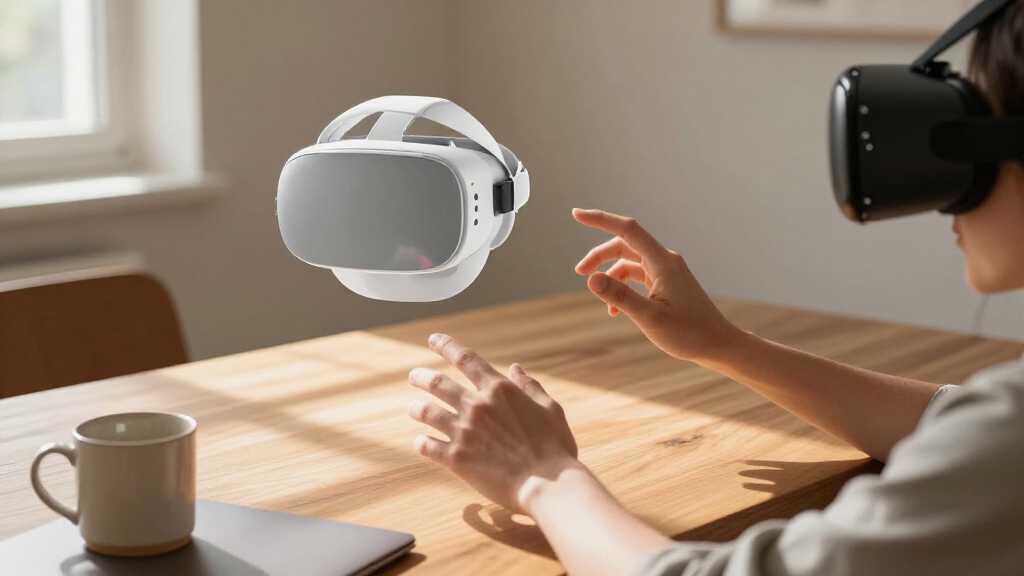
How We Picked
I compared these 15 listings by how well they serve mixed reality buyers across standalone use, PC VR, visual clarity, comfort, tracking, and practical setup. I gave more weight to color passthrough and accessible mixed reality features for a general-purpose pick, while recognizing that PC tethering can make sense for buyers who prioritize demanding simulations or sharper visuals. I also considered portability and whether a product is a full immersive headset or a glasses-style display, since those formats solve different problems.
The order reflects those differences: versatile, current standalone options lead, followed by headsets for specific PC or premium needs, then older or narrower-use models. Bundle contents, renewed condition, compatibility, and platform age affect the buying decision, so I treat them as meaningful tradeoffs rather than assuming every listing is equivalent. Specifications and bundle names can vary by seller; buyers should confirm the exact configuration and supported software before ordering.
Factors to Consider When Choosing Best Mixed Reality Headsets
Before choosing, decide how you expect to use the device and what equipment you already own. A headset that excels as a standalone gaming system may not suit a PC simulation setup, and a compact viewing display is a different proposition from room-scale mixed reality.
Choose Standalone or PC-Connected Use
Standalone headsets run apps on the device, so you can start without a gaming computer or external tracking stations. PC VR can deliver access to computer-based titles and heavier graphics, but it adds setup, compatibility checks, and often a cable or wireless network dependency. A common mistake is to buy for a hypothetical future PC rather than the equipment and games you have now. Check whether the titles you care about run natively, require a PC, or support both modes. If you move between rooms or want occasional sessions, standalone flexibility can be more useful than maximum PC rendering power.
Understand Passthrough and Mixed Reality
Mixed reality depends on how the headset shows and maps your physical surroundings, not just whether a listing uses the words “XR” or “MR.” Color passthrough makes nearby objects easier to recognize than monochrome imagery, while stable tracking helps virtual content stay anchored as you move. These features can support room-aware games, virtual screens, and practical awareness of your space. They do not make every headset equally suited to spatial apps, and glasses-style displays may focus on a personal screen rather than interactive room mapping. Check the specific passthrough and tracking capabilities for the apps you intend to use.
Prioritize Fit Alongside Resolution
A sharper display can make text and distant details easier to see, but it does not guarantee a comfortable session. Weight distribution, face interface, eye adjustment, lens clarity, and how easily the headset stays aligned all affect what you see and how long you can wear it. Buyers often compare resolution numbers while overlooking whether the headset fits their face or accommodates glasses. If possible, review the adjustment range and accessory options before choosing. For longer sessions, a balanced fit may matter more than a headline pixel count.
Check Platform Support Before Buying Older Models
Older headsets can still suit a buyer who already owns compatible hardware, but platform support changes the ownership experience. Confirm that the operating system, drivers, controllers, and apps you need still work together. Windows Mixed Reality models deserve particular scrutiny because the software ecosystem and future support may differ from newer standalone platforms. Renewed listings add another check: inspect the seller’s condition terms, included accessories, return window, and warranty. A low-friction setup can be more valuable than a technically capable headset that needs troubleshooting.
Match the Form Factor to Your Main Activity
A full headset is built for immersive VR and, on some models, spatial interaction with the room. XR glasses are lighter and easier to carry, but are generally aimed at viewing a virtual screen rather than replacing a room-scale headset. Think about whether you want movement and tracked controllers, seated simulation, media viewing, or a display for travel. Buying glasses for room-scale games, or a large headset for quick portable viewing, can lead to disappointment even if the product is well made. Pick the form factor around the activity you will do most often.
Pay More for a Specific Advantage
Higher-end hardware makes sense when its advantage solves a real problem, such as visual detail for simulation or stronger standalone versatility for mixed reality. It is less compelling when your main use is occasional casual play and a simpler headset already supports the apps you want. Account for the full setup, including a capable PC, comfort accessories, storage needs, and any required cables. Bundles can add useful content or accessories, but the named extras may not be central to your use. Compare the complete configuration and intended workload before choosing a premium model.
Frequently Asked Questions
Is the Meta Quest 3 a better mixed reality choice than the Quest 3S?
For buyers who want mixed reality to be a major part of their use, I would favor the Quest 3 because its display and passthrough experience make it the more capable all-round option in this group. The Quest 3S keeps standalone access to the Meta ecosystem and can suit newcomers who want a simpler starting point. Their display designs differ, so the cheaper entry model is not simply the same experience in a different bundle. Compare the exact storage and included accessories in each listing. Choose based on how often you expect to use spatial features, not just the product name.
Do I need a gaming PC for these mixed reality headsets?
No, several options here are designed for standalone operation, including the Quest models and Galaxy XR. PC-connected headsets such as Pimax Crystal Super and Valve Index are aimed at buyers with a compatible computer and a reason to use PC VR. Some devices support more than one mode, so check the exact model and connection requirements. A gaming PC alone does not guarantee a smooth experience; graphics capability, ports, and software support also matter. If you do not already own a suitable computer, a standalone model is the more direct starting point.
Are renewed or refurbished headsets a safe choice?
A renewed headset can be a reasonable way to access hardware such as Quest 3 or Valve Index, but condition and included parts vary by listing. Check the seller’s definition of renewed, the return period, warranty coverage, and whether controllers, chargers, and face interfaces are included. Battery health matters for standalone devices, while PC headsets need working cables, sensors, and controllers. Do not assume a bundle or “Renewed Premium” label means the same inspection process across sellers. Buy only when the listing spells out the condition and recourse clearly.
Can I buy a Windows Mixed Reality headset for a new PC setup?
I would only choose an older Windows Mixed Reality model after checking current operating system and driver compatibility for the exact headset. Odyssey+, Lenovo Explorer, and HP Reverb G2 may still appeal to owners with a working setup, but their age can make software support and replacement parts harder to manage. Confirm that the apps you plan to use support the headset and its controllers. Also account for setup time and any tracking requirements. For a first headset, a current standalone platform is usually the less complicated path.
Are XR glasses like VITURE Pro 2 a substitute for a VR headset?
They can substitute for a headset when your priority is a portable personal display for media or screen viewing. They are not a like-for-like replacement for a full headset designed for tracked movement, immersive VR, or room-scale interaction. Check device compatibility, connection method, and whether the display adjustment suits your vision before buying. This distinction matters because an “XR” label can describe very different experiences. Choose glasses for compact viewing and a full headset for immersive play and spatial apps.
Conclusion
For most buyers, I recommend the Meta Quest 3 as the best overall choice for its mix of standalone use and mixed reality features. The Quest 3S is my best value and beginner pick for someone entering the ecosystem, while the Pimax Crystal Super is the premium choice for PC users focused on visual detail. Choose VITURE Pro 2 for portable personal viewing, and consider the HTC Vive Focus Vision when its PC and standalone flexibility fits your setup. I would reserve the older Windows Mixed Reality and renewed options for buyers who have verified compatibility, condition, and included hardware.
As an affiliate, we earn on qualifying purchases.Fall Picks
fall essentials