
For most buyers seeking the best 16-inch MacBook Pro laptops, I’d start with the M5 Pro model with 48GB memory and a 1TB SSD: it pairs strong creative-work performance with room for demanding apps. The M4 Pro is a sensible choice for buyers who want a newer Apple silicon system with a more modest configuration, while the M5 Max is aimed at workloads that can use its substantial graphics power and memory. The key tradeoffs are chip generation, memory, storage, and whether a renewed Intel model’s older platform fits your needs. I weighed those factors alongside usability and configuration value to make the ranking clear. Read on for the full breakdown and advice by buyer type.

Get the latest gadgets delivered free — and shop member deals
- Fast, free delivery on millions of items
- Access to Prime Big Deal Days deals on October 6–7
- Prime Video, Amazon Music and more included
Complete the kit



Key Takeaways
M5 Pro is the strongest all-around fit: the 48GB configurations pair substantial memory with a capable CPU and GPU, while the 1TB version leaves less storage headroom than the 2TB alternatives.
The M5 Pro choices are mostly configuration decisions: 1TB versus 2TB storage, and 48GB versus 64GB memory, matter more to everyday buyers than the small differences in listed screen size.
M5 Max is a specialized step up: its 40-core GPU and 128GB memory target graphics-heavy work, but that capacity is unnecessary for many general creative and office workloads.
M4 Pro and M2 Pro provide Apple silicon alternatives: they suit buyers who do not need the newest Pro configuration, though their listed memory and storage are more modest.
Renewed Intel models are the biggest compromise: the 2019 i7 and i9 options offer familiar MacBook Pro hardware, but their older Intel platform makes them less compelling for buyers prioritizing long-term software support and efficiency.


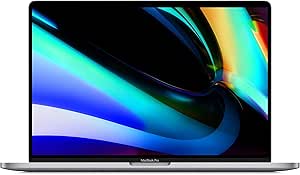





| 16-inch MacBook Pro laptop | Storage | Display | Memory | Condition |
|---|---|---|---|---|
| Apple 16-inch MacBook Pro with | 2TB SSD | 16.2-inch Liquid Retina XDR | — | — |
| Apple MacBook Pro 16-inch | 512 GB SSD | 16-inch Retina, 3072 × 1920 pixels | 16 GB DDR4, 2666 MHz | Renewed |
| Apple MacBook Pro 16-inch | 512GB SSD | 16-inch Retina, 3072 × 1920 | 16GB 2666MHz DDR4 | Renewed |
| Apple 2021 MacBook Pro 16-inch | 1TB SSD | 16.2-inch Liquid Retina XDR, 3456 × 2234, up to 120Hz | 32GB unified memory | Renewed |
| Apple 16.2-inch MacBook Pro wi | 1TB SSD | 16.2-inch Liquid Retina XDR | 48GB unified memory | — |
| Apple 16-inch MacBook Pro | 512GB SSD | 16-inch Retina with True Tone | 32GB | Renewed |
| Apple 2023 MacBook Pro 16-inch | 1TB SSD | 16.2-inch Liquid Retina XDR, 3456 x 2234 pixels | 16GB | Renewed |
| Apple 2024 MacBook Pro 16-inch | 1TB SSD | 16.2-inch Liquid Retina XDR, up to 1600 nits peak brightness | 36GB unified memory | — |
| Apple 2019 MacBook Pro 16-inch | 1TB | 16 inches | 16GB RAM | Renewed |
| Apple 16-inch MacBook Pro | 512GB SSD | 16 inches, 3072 x 1920 pixels | 16GB RAM | Renewed |
| Apple MacBook Pro 16.2-inch wi | 2TB SSD | 16.2-inch Liquid Retina XDR | — | — |
| Apple 16-inch MacBook Pro | 512GB SSD | 16.2-inch Liquid Retina XDR | 24GB | Renewed |
| Apple MacBook Pro 16-inch | 1TB SSD | 16-inch Liquid Retina XDR | 16GB unified memory | — |
| Apple MacBook Pro 16.2-inch wi | 2TB SSD | 16.2-inch Liquid Retina XDR | 48GB unified memory | — |
| Apple MacBook Pro 16-inch with | 1TB SSD | 16-inch Standard Display | 64GB unified memory | — |
More Details on Our Top Picks
Apple 16-inch MacBook Pro with M5 Pro, 18-core CPU, 20-core GPU, 48GB Memory, 2TB SSD, Space Black
The 2TB SSD gives this M5 Pro configuration the clearest advantage over the otherwise similar 1TB M5 Pro MacBook Pro: it can keep more large media projects, sample libraries, and active work files on the laptop. Its 48GB of unified memory and 18-core CPU also suit demanding creative work, while the 20-core GPU helps with graphics-heavy tasks. Both M5 Pro models share a 16.2-inch Liquid Retina XDR display, so the extra storage, rather than screen quality, is the main reason to choose this one. The tradeoff is that this much capacity may be unnecessary for people who rely on external drives or cloud storage. It is also a large, 16-inch system, so portability takes a back seat to workspace and performance.
Pros:- 2TB SSD provides room for large active projects and media libraries
- 48GB unified memory supports demanding multitasking
- M5 Pro combines an 18-core CPU and 20-core GPU
- 16.2-inch Liquid Retina XDR display offers high brightness and contrast
Cons:- Extra internal storage may go unused by buyers who work from external drives
- The 16-inch form factor is less convenient for frequent travel
Best for: Video editors, musicians, and designers who keep large active project libraries on their MacBook
Not ideal for: Traveling professionals with light storage needs who prefer a smaller, lighter laptop
- Chip:Apple M5 Pro
- CPU:18-core
- GPU:20-core
- Unified memory:48GB
- Storage:2TB SSD
- Display:16.2-inch Liquid Retina XDR
- Peak brightness:1600 nits
- Power adapter:140W USB-C
Our verdict“Choose this M5 Pro configuration if keeping large creative projects on the laptop matters more than minimizing its size or storage capacity.”
Apple MacBook Pro 16-inch (2019), Core i9 2.4 GHz, 16 GB RAM, 512 GB SSD, Space Gray (Renewed)
This renewed 2019 MacBook Pro suits buyers who need a 16-inch Intel Mac for software or equipment tied to Intel-era workflows. Its Core i9 processor, Radeon Pro 5300M graphics, and four Thunderbolt 3 ports provide a capable foundation for older creative setups. Compared with the Late 2019 Core i7 MacBook Pro in this roundup, this listing identifies a Core i9 processor, though its product information has conflicting processor-core details, so buyers should verify the exact configuration. Both are renewed Intel models with 16GB of memory and 512GB SSD storage, while the newer M1 Pro option brings a different Apple silicon platform and a Liquid Retina XDR screen. The key tradeoffs here are the older Intel generation, renewed condition, and less memory than newer alternatives.
Pros:- 16-inch Retina display with 3072 × 1920 resolution
- Core i9 processor and dedicated Radeon Pro 5300M graphics
- Four Thunderbolt 3 ports plus a headphone jack
- Magic Keyboard and Touch ID
Cons:- Renewed condition may include signs of prior use
- Listing has conflicting processor-core details
- 16GB memory and 512GB storage are modest beside newer configurations
Best for: Mac users who need an Intel-based 16-inch laptop for legacy apps, peripherals, or established workflows
Not ideal for: Buyers seeking newer Apple silicon, more memory, or a Liquid Retina XDR display
- Model year:2019
- Processor:Intel Core i9, 2.4 GHz
- Memory:16 GB DDR4, 2666 MHz
- Storage:512 GB SSD
- Display:16-inch Retina, 3072 × 1920 pixels
- Graphics:AMD Radeon Pro 5300M
- Ports:Four Thunderbolt 3 (USB-C), 3.5 mm headphone jack
- Condition:Renewed
Our verdict“Consider this renewed Core i9 model if your work depends on Intel Mac compatibility and you accept the uncertainty and age of the configuration.”
Apple MacBook Pro 16-inch (Late 2019), 2.6GHz Intel Core i7, 16GB RAM, 512GB SSD, Space Gray (Renewed)
The 2.6GHz six-core Core i7 makes this renewed 2019 model a defined fit for buyers who need an Intel Mac for older creative apps or peripherals. Its Radeon Pro 5300M graphics and P3 color gamut screen add useful support for image and video work, although the 16GB of memory and 512GB SSD limit how much heavy work it can comfortably keep active. Compared with the renewed 2019 Core i9 model, this listing gives a specific six-core processor description, which makes its configuration easier to identify; the Core i9 model claims a higher-tier processor but has conflicting core details. The 2021 M1 Pro model is a stronger fit for demanding current work, with more memory and a brighter XDR display. Renewed condition and inconsistent resolution details are the main cautions.
Pros:- 2.6GHz six-core Intel Core i7 processor
- Radeon Pro 5300M graphics with 4GB GDDR6
- 16-inch Retina display with P3 color gamut
- 512GB SSD and 16GB memory
Cons:- Renewed condition may involve prior wear
- Listing gives inconsistent maximum display resolutions
- 16GB memory can constrain demanding modern creative workloads
Best for: Users who need a clearly specified Intel Core i7 Mac for legacy creative software and existing peripherals
Not ideal for: Buyers editing large projects or seeking current-generation performance, higher memory, or a newer display
- Processor:2.6GHz 6-core Intel Core i7, 9th generation
- Memory:16GB 2666MHz DDR4
- Storage:512GB SSD
- Display:16-inch Retina, 3072 × 1920
- Graphics:AMD Radeon Pro 5300M, 4GB GDDR6
- Battery life:Up to 11 hours
- Weight:4 pounds
- Condition:Renewed
Our verdict“Pick this model for Intel-era compatibility when the specified Core i7 configuration matters more than newer performance and display features.”
Apple 2021 MacBook Pro 16-inch with M1 Pro, 32GB RAM, 1TB SSD, Space Gray (Renewed)
This 2021 M1 Pro model is the most balanced renewed option in this batch: 32GB unified memory and a 1TB SSD give creative applications more headroom than either 2019 Intel model, while the Liquid Retina XDR display adds HDR contrast and adaptive refresh rates up to 120Hz. Its built-in HDMI, SDXC, and MagSafe ports can also reduce the need for adapters compared with the older Intel laptops. Against the newer M5 Pro MacBook Pro, it gives up the newer chip generation and the larger 48GB memory capacity, but retains a strong port selection and a high-quality screen. The main compromise is its renewed condition, which can mean signs of prior use; its older chip generation also makes it a less future-facing choice than the M5 Pro configurations.
Pros:- 32GB unified memory suits demanding multitasking
- 1TB SSD provides working space for large files
- Liquid Retina XDR display with up to 120Hz refresh rate
- Includes Thunderbolt 4, HDMI, SDXC, and MagSafe 3 ports
Cons:- Renewed condition may include signs of prior use
- M1 Pro generation is older than the M5 Pro options
- Less memory than the 48GB M5 Pro configurations
Best for: Creative professionals who want a capable Apple silicon Mac with substantial memory and built-in ports at a renewed condition
Not ideal for: Buyers who require a new device, the latest M5 Pro generation, or 48GB of memory
- Model year:2021
- Processor:Apple M1 Pro, 10-core CPU
- Graphics:16-core GPU
- Display:16.2-inch Liquid Retina XDR, 3456 × 2234, up to 120Hz
- Memory:32GB unified memory
- Storage:1TB SSD
- Ports:3 Thunderbolt 4, HDMI, SDXC, MagSafe 3, 3.5mm headphone jack
- Condition:Renewed
Our verdict“Choose this renewed M1 Pro if you want substantial memory, a strong display, and useful built-in ports without needing the newest chip generation.”
Apple 16.2-inch MacBook Pro with M5 Pro, 18-core CPU, 20-core GPU, 48GB Memory, 1TB SSD, Wi-Fi 7, Space Black
This M5 Pro configuration earns the broadest recommendation here through its mix of 48GB unified memory, an 18-core CPU, and a 20-core GPU. That combination is suited to demanding creative and professional work, while the 16.2-inch Liquid Retina XDR display, Thunderbolt 5, HDMI, and SDXC slot make it a capable workstation without a dock for every connection. Compared with the other M5 Pro MacBook Pro in this batch, it has half the SSD capacity but adds specified Wi-Fi 7, Bluetooth 6, and a 12MP Center Stage camera. That makes it the more rounded choice for mixed desk and video-call use; buyers with large local project libraries may prefer the 2TB model. At 4.71 pounds, it remains a substantial laptop to carry.
Pros:- M5 Pro chip with 18-core CPU and 20-core GPU
- 48GB unified memory for demanding multitasking
- Thunderbolt 5, HDMI, and SDXC connectivity
- 12MP Center Stage camera and Wi-Fi 7
Cons:- 1TB SSD offers less room than the 2TB M5 Pro configuration
- 4.71-pound weight makes frequent carrying less convenient
Best for: Video editors, developers, and other professionals who want current-generation performance, generous memory, and versatile ports
Not ideal for: Frequent travelers prioritizing low weight or professionals who need more than 1TB of built-in storage
- Processor:Apple M5 Pro with 18-core CPU
- Graphics:20-core GPU
- Display:16.2-inch Liquid Retina XDR
- Memory:48GB unified memory
- Storage:1TB SSD
- Wireless:Wi-Fi 7, Bluetooth 6
- Camera:12MP Center Stage
- Weight:4.71 pounds
Our verdict“Choose this M5 Pro as the all-around professional pick if you want 48GB of memory and strong connectivity more than maximum internal storage.”
Apple 16-inch MacBook Pro (2019), Intel Core i9, 32GB RAM, 512GB SSD, Space Gray (Renewed)
This 2019 MacBook Pro is the strongest Intel option in this batch for memory-heavy creative work: its 8-core Core i9 and 32GB RAM can handle large projects and sustained multitasking more comfortably than the 16GB Intel models. Compared with the newer 2023 MacBook Pro with M2 Pro, it gives up the newer XDR display and longer stated battery life, while keeping an Intel platform that may suit workflows tied to Intel software. Its 16-inch Retina display, four Thunderbolt 3 ports, and Magic Keyboard make it a capable desk-based workstation. The tradeoffs are its older Intel generation, modest 512GB SSD, and renewed condition, which may be less appealing to buyers seeking newer hardware or a larger project library.
Pros:- Eight-core Intel Core i9 suits demanding multithreaded workloads
- 32GB memory supports larger projects and heavier multitasking
- 16-inch Retina display includes True Tone
- Four Thunderbolt 3 ports plus Touch ID
Cons:- Renewed condition may mean visible wear or variable battery health
- 512GB storage can constrain large media libraries
- Older Intel platform lacks the newer XDR display and stated battery life of the 2023 M2 Pro model
Best for: Creative professionals with Intel-dependent software who need 32GB of memory for large projects
Not ideal for: Buyers prioritizing newer Apple silicon performance, long battery life, or more than 512GB of storage
- Model:2019 MacBook Pro
- Display:16-inch Retina with True Tone
- Processor:2.4GHz 8-core Intel Core i9
- Memory:32GB
- Storage:512GB SSD
- Ports:Four Thunderbolt 3 (USB-C)
- Condition:Renewed
Our verdict“Choose this renewed model for 32GB memory and an Intel workflow; pick the 2023 M2 Pro if newer silicon and battery life matter more.”
Apple 2023 MacBook Pro 16-inch with M2 Pro, 16GB RAM, 1TB SSD, Space Gray (Renewed)
The 2023 M2 Pro model makes the clearest case for buyers who want a modern 16-inch MacBook Pro for mobile work: it is listed for up to 22 hours of battery life and pairs that endurance with a bright Liquid Retina XDR display. Its 1TB SSD doubles the capacity of the 2019 Core i9 model above, giving photographers and editors more room for active files without relying as quickly on external storage. The 1080p camera, three-mic array, and six-speaker system also make it a more rounded choice for calls and media than the older Intel models. Its 16GB memory is the key limit beside the 32GB Core i9 and M4 Max options, and the listing’s 9-pound weight is unusually high, so verify that figure before choosing it for frequent travel.
Pros:- Up to 22 hours of stated battery life
- Liquid Retina XDR display supports HDR content
- 1TB SSD offers more built-in space than the 2019 Core i9 model
- 1080p camera, three microphones, and six-speaker audio
Cons:- 16GB memory is less suited to large, memory-heavy projects than the 32GB options
- Listed weight of 9 pounds is a substantial portability concern
- Renewed condition may mean variable battery health or cosmetic wear
Best for: Mobile professionals who want long stated battery life, a high-quality screen, and 1TB of built-in storage
Not ideal for: Users with memory-intensive creative workloads or anyone who needs a lightweight laptop for daily commuting
- Model:2023 MacBook Pro
- Chip:Apple M2 Pro
- CPU / GPU:12-core CPU / 19-core GPU
- Memory:16GB
- Storage:1TB SSD
- Display:16.2-inch Liquid Retina XDR, 3456 x 2234 pixels
- Battery life:Up to 22 hours
- Condition:Renewed
Our verdict“Pick this for endurance, XDR visuals, and 1TB storage, provided the listed weight and 16GB memory fit your needs.”
Apple 2024 MacBook Pro 16-inch with M4 Max, 14-Core CPU, 32-Core GPU, 36GB Memory, and 1TB SSD (Space Black)
For demanding creative workloads, this M4 Max configuration is the most capable pick in this batch. Its 14-core CPU, 32-core GPU, and 36GB unified memory give video editors, 3D artists, and developers more headroom than the 16GB M2 Pro or the older Intel models. The 16.2-inch Liquid Retina XDR display reaches a listed peak of 1600 nits, while Thunderbolt 5, HDMI, SDXC, and MagSafe 3 support a varied workstation setup without making every connection depend on adapters. Compared with the 2023 M2 Pro, this is better suited to graphics-heavy tasks and up to four external displays, but its 4.73-pound weight and substantial capabilities may be unnecessary for everyday office work. It also has 1TB storage, so large media collections may still call for external drives.
Pros:- M4 Max with 32-core GPU targets demanding graphics workloads
- 36GB unified memory supports complex creative projects
- XDR display has up to 1600 nits peak brightness
- Thunderbolt 5, HDMI, SDXC, and MagSafe 3 provide flexible connections
Cons:- At 4.73 pounds, it is less convenient for frequent travel than a smaller laptop
- 1TB storage may be limiting for extensive video or 3D asset libraries
- Its high-end processing and graphics capacity may go unused in basic workflows
Best for: Video editors, 3D creators, and developers who need strong graphics capability, 36GB memory, and extensive connectivity
Not ideal for: Students and office-focused buyers who do not need high-end GPU performance or a 16-inch workstation
- Model:MX303LL/A
- Chip:Apple M4 Max
- CPU / GPU:14-core CPU / 32-core GPU
- Memory:36GB unified memory
- Storage:1TB SSD
- Display:16.2-inch Liquid Retina XDR, up to 1600 nits peak brightness
- Ports:Three Thunderbolt 5, MagSafe 3, SDXC, HDMI, headphone jack
- Weight:4.73 pounds
Our verdict“Choose this M4 Max for graphics-heavy production and a built-in workstation port selection; the M2 Pro is a more suitable fit for lighter workloads.”
Apple 2019 MacBook Pro 16-inch with Intel Core i9, 16GB RAM, 1TB Storage, Space Gray (Renewed)
This renewed 2019 model pairs an Intel Core i9 listing with 1TB of storage, making it appealing to buyers who need room for files and want to stay with an older Intel MacBook Pro. Its largest drawback is also its main uncertainty: the title identifies a 2.3GHz Core i9, while the description names a ninth-generation six-core Core i7. I would verify the processor with the seller before buying, since that conflict makes it difficult to judge performance against the 32GB Core i9 2019 model in this roundup. Even if the title is accurate, its 16GB RAM is half that model’s capacity, though the doubled SSD space may suit a less memory-intensive workflow. Renewed condition adds another variable for buyers weighing battery and cosmetic state.
Pros:- 1TB storage provides more room than the 512GB 2019 Core i9 model
- 16-inch display suits multiwindow work
- 16GB RAM supports everyday multitasking
- Intel-based configuration may suit legacy software needs
Cons:- Processor conflicts between the title and description
- 16GB memory is limited for large creative projects
- Renewed condition may mean variable battery health or cosmetic wear
Best for: Buyers seeking 1TB of storage in a renewed 16-inch Intel MacBook Pro for moderate workloads
Not ideal for: Professionals who need confirmed processor details or more memory for demanding creative projects
- Model year:2019
- Display:16 inches
- Processor in title:2.3GHz Intel Core i9
- Processor in description:Ninth-generation 6-core Intel Core i7
- Memory:16GB RAM
- Storage:1TB
- Color:Space Gray
- Condition:Renewed
Our verdict“Consider this only if 1TB storage is a priority and the processor specification is confirmed before purchase.”
Apple 16-inch MacBook Pro (Late 2019), 2.6GHz 6-Core Intel Core i7, 16GB RAM, 512GB SSD, Silver (Renewed)
This Late 2019 MacBook Pro is the straightforward Intel pick for office work, coursework, and moderate creative tasks. Its 2.6GHz six-core Core i7 and 16GB RAM are a more clearly specified combination than the conflicting processor details on the other 2019 renewed listing, though the 512GB SSD leaves less room than that model’s listed 1TB drive. Against the 32GB Core i9 option, this i7 configuration has less memory and fewer processor cores, making it a more modest fit for heavy rendering or large projects. The 16-inch, 3072 x 1920 display gives room for side-by-side documents, and the stated 4.3-pound weight is easier to assess for carrying than the 9-pound figure listed for the M2 Pro model. It remains renewed Intel hardware, not a newer Apple silicon system.
Pros:- Clearly specified ninth-generation six-core Core i7
- 16-inch, 3072 x 1920 display supports side-by-side work
- 16GB RAM and 512GB SSD suit everyday productivity
- Listed weight is 4.3 pounds
Cons:- Six-core i7 and 16GB RAM offer less headroom than the 32GB Core i9 model
- 512GB SSD is smaller than the 1TB drive in the other 2019 renewed listing
- Renewed Intel hardware lacks the newer XDR display and Apple silicon of the M2 Pro
Best for: Students and office users who need a clearly specified 16-inch Intel MacBook Pro for everyday productivity
Not ideal for: Video editors and developers running large workloads who would benefit from more memory, storage, or newer silicon
- Model:Late 2019 MacBook Pro
- Display:16 inches, 3072 x 1920 pixels
- Processor:2.6GHz ninth-generation 6-core Intel Core i7
- Memory:16GB RAM
- Storage:512GB SSD
- Graphics:Integrated graphics
- Weight:4.3 pounds
- Condition:Renewed
Our verdict“Choose this for defined Intel specifications and everyday 16-inch productivity, while demanding creators should look to the M4 Max or a 32GB model.”
Apple MacBook Pro 16.2-inch with M5 Max, 18-core CPU, 40-core GPU, 128GB Memory, 2TB SSD, Space Black
For buyers whose 16-inch MacBook Pro workload leans heavily on graphics, the M5 Max with a 40-core GPU gives this configuration a clear place above the M5 Pro models in this lineup. Its 128GB of unified memory also leaves room for large creative projects and demanding AI workloads without making memory capacity the first constraint. The 2TB SSD offers more working space than the 512GB M4 Pro configuration, while the Liquid Retina XDR display and broad port selection support a desk setup with several connected displays and peripherals. That capability comes with a tradeoff: this is more machine than routine office work or lighter coding needs. The supplied description also does not specify weight or a precise battery runtime, so buyers who prioritize portability or predictable unplugged hours have less detail to go on.
Pros:- 40-core GPU is suited to graphics-intensive professional workloads.
- 128GB unified memory supports large projects and demanding multitasking.
- 2TB SSD provides room for substantial local media and project files.
- Three Thunderbolt 5 ports, HDMI, and SDXC simplify peripheral connections.
Cons:- Its GPU and memory capacity are unnecessary for many everyday workloads.
- The supplied product details do not state its weight or a specific battery runtime.
Best for: Video editors, 3D artists, and AI practitioners who need high GPU capacity, substantial memory, and room for large project files.
Not ideal for: Office users and students whose work is mostly browsing, documents, and light coding; the M5 Max graphics and 128GB memory exceed those needs.
- Chip:Apple M5 Max
- CPU:18-core
- GPU:40-core
- Display:16.2-inch Liquid Retina XDR
- Unified memory:128GB
- Storage:2TB SSD
- Ports:Three Thunderbolt 5, MagSafe 3, SDXC, HDMI, headphone jack
- Wireless:Wi-Fi 7, Bluetooth 6
Our verdict“Choose this M5 Max configuration for graphics-heavy work that can use its 40-core GPU and 128GB memory.”
Apple 16-inch MacBook Pro (2024) with M4 Pro, 24GB RAM, 512GB SSD, QWERTY English, Space Black (Renewed)
This renewed 2024 M4 Pro is the lineup’s practical choice for buyers who want a recent 16-inch Pro configuration with a stated condition and keyboard layout. Its 24GB of memory and M4 Pro chip suit demanding everyday work, while the Liquid Retina XDR display, six-speaker system, and 12MP Center Stage camera make it a capable work and media machine. Compared with the M5 Pro models here, it uses an older chip generation and has less memory and storage than the 48GB, 2TB configuration. Its defining compromise is the 512GB SSD, which can fill quickly with video, photo libraries, or large development projects. Renewed condition also makes it a less straightforward pick for buyers who want a new device. The extensive ports reduce the need for adapters at a desk.
Pros:- M4 Pro chip is designed for demanding work.
- 16.2-inch Liquid Retina XDR display reaches up to 1600 nits peak brightness.
- 12MP Center Stage camera and six-speaker system support calls and media.
- Thunderbolt 5, HDMI, SDXC, and MagSafe 3 provide versatile connectivity.
Cons:- 512GB SSD can constrain large local projects and media libraries.
- Renewed condition may not suit buyers who want a new laptop.
Best for: Buyers seeking a renewed 16-inch MacBook Pro for mixed professional work, video calls, and media, with projects kept mostly in cloud or external storage.
Not ideal for: Creators with large local media libraries or buyers who require a new device; its 512GB storage and renewed condition may not fit.
- Model year:2024
- Chip:Apple M4 Pro
- Display:16.2-inch Liquid Retina XDR
- Memory:24GB
- Storage:512GB SSD
- Camera:12MP Center Stage
- Keyboard layout:QWERTY English
- Condition:Renewed
Our verdict“Pick this renewed M4 Pro if you want a capable 16-inch workstation and can work within 512GB of storage.”
Apple MacBook Pro 16-inch (2021, M1 Pro, 16GB RAM, 1TB SSD, Space Gray)
The 2021 M1 Pro remains a distinct option for buyers who value 1TB of listed storage and a known battery-life figure over newer-generation features. Its 10-core CPU and 16-core GPU, paired with 16GB of unified memory, target professional work, while the Liquid Retina XDR display and six-speaker audio make the large screen useful for creative tasks and media. Apple lists up to 21 hours of battery life, a concrete point of comparison that the supplied descriptions for the M5 models do not provide. Against the 2024 M4 Pro renewed model, this one offers twice the SSD capacity but an older chip and a lower-resolution 1080p camera. Its age is the key tradeoff: buyers seeking the latest chip generation or a Center Stage camera should look at the newer M4 and M5 options instead.
Pros:- 1TB SSD offers more listed storage than the renewed M4 Pro’s 512GB.
- 10-core CPU and 16-core GPU are suited to professional workloads.
- Liquid Retina XDR display and six-speaker audio support creative and media use.
- Listed battery life is up to 21 hours.
Cons:- M1 Pro is an older chip generation than the M4 and M5 options in this roundup.
- The 1080p FaceTime HD camera lacks the newer model’s 12MP Center Stage feature.
- 16GB unified memory is lower than the newer configurations listed here.
Best for: Budget-conscious creative professionals who want a 16-inch display, 1TB SSD, and a stated battery-life figure for general editing and office work.
Not ideal for: Buyers who need the latest chip generation, a 12MP Center Stage camera, or the larger memory capacity available in newer configurations.
- Model year:2021
- Chip:Apple M1 Pro
- CPU:10-core
- GPU:16-core
- Memory:16GB unified memory
- Storage:1TB SSD
- Display:16-inch Liquid Retina XDR
- Battery life:Up to 21 hours
Our verdict“Choose this 2021 M1 Pro if 1TB storage and its listed battery life matter more to you than newer-generation features.”
Apple MacBook Pro 16.2-inch with M5 Pro, 18-core CPU, 20-core GPU, 48GB Memory, 2TB SSD, Space Black
This M5 Pro configuration balances substantial memory and storage with a newer chip, making it a strong fit for professionals who need room for demanding projects but do not have a stated need for the M5 Max’s 40-core GPU. Its 48GB unified memory and 2TB SSD give it a useful capacity advantage over the renewed M4 Pro’s 24GB and 512GB, while its 20-core GPU is less graphics-focused than the M5 Max. That distinction helps make the choice clearer: choose the Max for especially GPU-heavy work, or this Pro for a broad mix of professional tasks and large local files. The 16.2-inch XDR screen reaches up to 1600 nits peak brightness, and the ports support up to three external displays. The supplied description does not provide a weight or a precise battery runtime.
Pros:- 48GB unified memory supports demanding multitasking and large projects.
- 2TB SSD offers substantial local project storage.
- M5 Pro chip pairs an 18-core CPU with a 20-core GPU.
- Liquid Retina XDR display and ports support up to three external displays.
Cons:- Its 20-core GPU has fewer cores than the M5 Max’s 40-core GPU.
- The supplied details do not state weight or a specific battery runtime.
Best for: Developers, designers, and video professionals who want generous memory and local storage for varied workloads without prioritizing the M5 Max GPU.
Not ideal for: 3D artists or other buyers whose work depends on the strongest graphics configuration in this roundup; the M5 Max has a 40-core GPU.
- Chip:Apple M5 Pro
- CPU:18-core
- GPU:20-core
- Display:16.2-inch Liquid Retina XDR
- Memory:48GB unified memory
- Storage:2TB SSD
- Ports:Three Thunderbolt 5, MagSafe 3, SDXC, HDMI, headphone jack
- Wireless:Wi-Fi 7, Bluetooth 6
Our verdict“Choose this M5 Pro for a capable all-around professional setup with 48GB memory and 2TB storage.”
Apple MacBook Pro 16-inch with M5 Pro, 18-core CPU, 20-core GPU, 64GB memory, and 1TB SSD
Where the other M5 Pro configuration in this batch pairs 48GB of memory with 2TB of storage, this one shifts the balance to 64GB unified memory and a 1TB SSD. That makes it the more appealing fit for buyers who keep many demanding apps, large datasets, or virtual machines active at once, while accepting less room for local files. The M5 Pro 18-core CPU and 20-core GPU keep it in the same broad performance tier as the 48GB model; the extra memory is the differentiator, not a higher stated graphics core count. Its 16-inch standard display suits a spacious work area, though the supplied product details omit resolution and other display specifics. Battery runtime and weight are also unspecified, leaving less information for buyers comparing portability or screen characteristics.
Pros:- 64GB unified memory supports heavy multitasking and memory-intensive applications.
- M5 Pro chip combines an 18-core CPU and 20-core GPU.
- 1TB SSD provides local space for applications and project files.
- Includes a 140W USB-C power adapter and a 6.5-foot USB-C to MagSafe 3 cable.
Cons:- Its 1TB SSD offers half the capacity of the other M5 Pro configuration in this batch.
- Display resolution and further display details are not provided.
- Battery life and device weight are not specified.
Best for: Developers and technical professionals who run memory-intensive applications or many workloads at once and can manage projects within 1TB of storage.
Not ideal for: Video editors and media collectors who need more local project space; the 48GB M5 Pro configuration in this batch includes a 2TB SSD.
- Processor:Apple M5 Pro, 18-core CPU
- Graphics:20-core GPU
- Memory:64GB unified memory
- Storage:1TB SSD
- Display:16-inch Standard Display
- Color:Space Black
- Included accessories:140W USB-C power adapter; 6.5-foot USB-C to MagSafe 3 cable
- Warranty:Apple limited warranty support
Our verdict“Choose this M5 Pro if your workload benefits more from 64GB of memory than from the 2TB storage in its sibling configuration.”

How We Picked
I compared the 15 listed configurations by the needs that most affect ownership: processor and graphics capability, memory capacity, storage, platform generation, and suitability for sustained creative work. I gave more weight to recent Apple silicon Pro configurations for their broader fit across demanding apps, then separated close contenders by the practical value of their memory and storage combinations. The M5 Max ranks as the premium specialist rather than the default recommendation because its graphics and memory capacity are more than many buyers need.
Older Apple silicon models remain relevant where their listed configuration can cover a buyer’s workload, while the renewed 2019 Intel systems rank lower because they come from a substantially older platform generation. I treated renewed status as a point for buyers to verify carefully: condition, battery health, included accessories, and return terms can vary by seller. The ranking favors configurations that balance capability and flexibility, rather than treating the largest specification as automatically best.
Factors to Consider When Choosing Best 16-inch MacBook Pro Laptops
I’d choose a 16-inch MacBook Pro by matching the workload to the configuration, then checking the details that shape ownership over time. These decisions matter beyond the differences between individual listings.
Match the chip to sustained workloads
Start with the work you expect the Mac to do for long stretches, not the most demanding task you might perform once. Video effects, 3D work, and large machine-learning projects can benefit from stronger graphics and higher memory ceilings. Writing, development, photo editing, and general production work often have less to gain from the most powerful chip. A common mistake is to buy a Max configuration for apps that mainly depend on CPU speed or memory capacity. Check the requirements of your actual software and whether its demanding features use the GPU. That makes the Pro-versus-Max choice more grounded than a chip-name comparison.
Choose memory for the life of the laptop
Memory affects how comfortably a Mac can keep large projects and many apps active at once. If you work with complex timelines, virtual machines, large codebases, or high-resolution media, extra memory can reduce the need to close tasks as you work. Buyers with lighter workloads may get little benefit from choosing the largest available capacity. Since memory is not a routine upgrade after purchase, think about how your workload could grow during the years you plan to keep the computer. Avoid treating memory as a substitute for a suitable chip or storage setup. The best choice is the capacity that gives your real work room to expand without paying for unused headroom.
Plan storage around active projects
Internal storage holds the operating system, apps, current projects, and files you need away from a desk. A larger drive is useful when video footage, sample libraries, or photo catalogs must stay local. External drives can handle archives and shared projects, but they add equipment to carry and depend on available ports and a cable. One frequent buying mistake is comparing capacity only with the size of files today; apps and active project libraries also take space. Consider whether your work is often mobile or whether a fast external drive fits your routine. That decision can make a 1TB configuration practical for one buyer and restrictive for another.
Treat renewed condition as part of the specification
A renewed Mac’s listed chip and memory do not describe its full condition. Battery health, display condition, keyboard wear, repair history, and seller return terms all affect whether the machine will fit your needs. Check which seller is responsible for support and what the listing says about battery replacement or cosmetic wear. Older Intel models call for extra attention because battery aging and software compatibility can have greater effects on a long-term purchase. A low-specification gap between two models may matter less than a large difference in condition. Keep the original listing and confirm the exact model identifier before buying.
Think about software support and useful lifespan
MacBook Pro generations differ in more than raw speed: architecture affects power use, software support, and access to newer platform features. Buyers choosing an Intel model should check that their essential apps and any planned macOS upgrades support it. Apple silicon models offer a newer platform, but a newer chip alone does not guarantee a meaningful improvement for every task. Consider how long you want to keep the laptop and whether your work depends on a particular app, plug-in, or peripheral. For professional use, a shorter period of compatibility can outweigh a lower upfront commitment. This is one reason I rank recent Apple silicon choices above the renewed 2019 configurations for most buyers.
Account for the 16-inch size in daily use
The larger display gives creative timelines, side-by-side documents, and detailed projects more room, which can reduce reliance on an external monitor. That benefit comes with a larger laptop to carry and a footprint that may feel awkward on small desks or tray tables. Think about how often you travel with the computer and whether you usually work at a fixed location. Buyers who value portability above screen area may be happier with a smaller laptop, even if it means using an external display at home. Also check your bag’s laptop compartment dimensions rather than assuming every 16-inch sleeve fits. The 16-inch choice is most rewarding when you will regularly use the extra screen space.
Frequently Asked Questions
Which of these 16-inch MacBook Pro configurations is the best choice for most people?
I’d choose an M5 Pro configuration with 48GB memory for a broad mix of creative and professional work. The 1TB option makes more sense if current projects can live on external storage, while the 2TB version offers more space for active files. Buyers who do mostly office work or lighter editing can look at the M4 Pro or older Apple silicon listings instead. The M5 Max is better reserved for work that can use its larger graphics and memory capacity. Match the configuration to your apps before paying for extra capability.
Should I choose 1TB or 2TB of storage?
Choose 2TB if you keep large active projects, video footage, or sample libraries on the laptop and need them available while traveling. A 1TB drive can work well if you use external storage for archives and do not need every project locally. Remember to leave room for apps, macOS, and working files rather than calculating from your finished project size alone. External storage adds flexibility, though it can be inconvenient during mobile work. Your routine matters more than a general rule about which capacity is enough.
Is an M5 Max configuration worth choosing over an M5 Pro?
The M5 Max is a stronger fit when your regular workflow can use its 40-core GPU and high memory capacity, such as demanding graphics-heavy production. For many users, an M5 Pro already provides more than enough capability, and extra GPU resources will not improve every app. Check whether your software uses GPU acceleration and whether your projects regularly exceed the memory needs of a Pro configuration. If not, the M5 Pro may leave you with a more balanced system. Choose Max for a specific workload advantage, not just because it sits higher in the lineup.
Does a renewed 2019 Intel MacBook Pro still make sense?
It can suit someone who depends on Intel-specific software or needs a particular configuration at a lower commitment. Before choosing one, confirm that the applications and macOS versions you need still support the exact model. Renewed condition also calls for checking battery health, physical wear, seller support, and return terms. The listed i9 and i7 variants differ, but both belong to a much older platform generation than the Apple silicon options here. For a laptop intended to serve for years, I’d generally favor a recent Apple silicon model.
Which configuration is a good fit for a first-time MacBook Pro buyer?
I’d point most first-time buyers toward an Apple silicon Pro configuration with enough memory and storage for their regular work, rather than the Max model by default. The M4 Pro listing offers a more modest entry to a recent 16-inch generation, while the M5 Pro options provide more capacity for buyers with heavier workloads. Think about which apps you use, how much project data you keep local, and how long you expect to keep the laptop. If you are unsure whether you need Max-level graphics, you probably benefit more from choosing sensible memory and storage. First check that the 16-inch size suits your travel and desk setup.
Conclusion
For the best overall balance, I’d pick an M5 Pro with 48GB memory and 1TB storage; move to the 2TB version if active projects need the space. The best value for less demanding workloads is the M4 Pro configuration, while the best premium choice is the M5 Max for buyers whose graphics-heavy work can use its added capacity. For beginners, the M4 Pro is a straightforward recent Apple silicon starting point, provided its memory and storage fit the plan. For specific Intel software needs, consider a renewed 2019 model only after checking compatibility and condition. Choose by workload, storage habits, and intended lifespan, and the right 16-inch MacBook Pro becomes much clearer.
Fall Picks
fall essentials
As an affiliate, we earn on qualifying purchases.