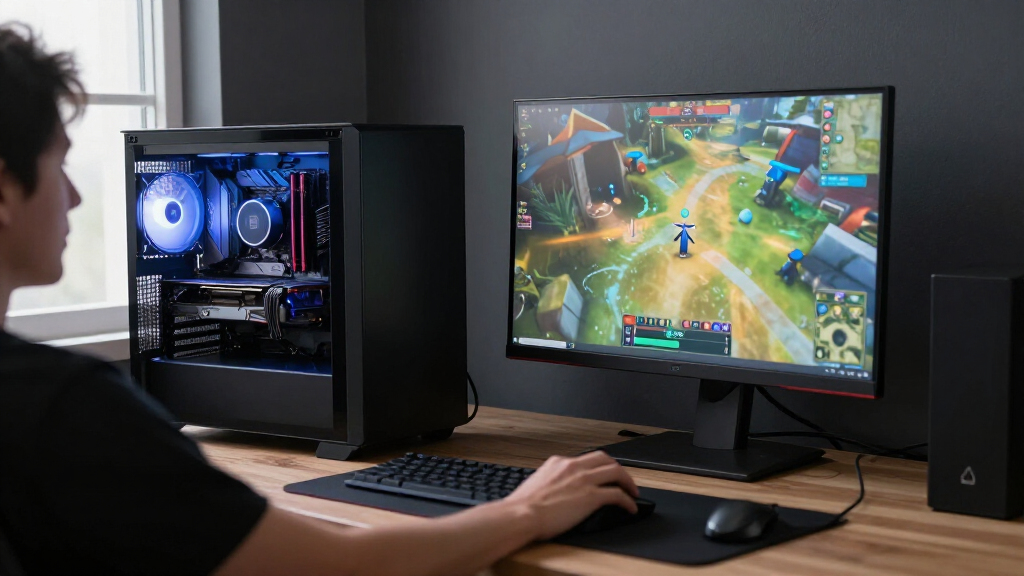

The ASUS ROG G1000 is my best overall pick among these high-end gaming PCs, pairing a Ryzen 7 9800X3D with an RTX 5080, 32GB of DDR5, and a 2TB SSD. For buyers focused on maximum graphics headroom, the Corsair Vengeance a5100 stands apart with an RTX 5090, while the Skytech King 95 offers an RTX 5070 Ti at a lower performance tier. The main tradeoffs are graphics performance, cooling and case design, storage, and how much detail each listing provides about upgrade access and support. A more powerful GPU can suit demanding resolutions, but it may matter less than fit, noise, and service for everyday use. Read on for my full comparison and guidance on choosing the right system for your priorities.

Get the latest gadgets delivered free — and shop member deals
- Fast, free delivery on millions of items
- Access to Prime Big Deal Days deals on October 6–7
- Prime Video, Amazon Music and more included
Complete the kit



Key Takeaways
RTX 5080 systems form the core of this roundup: the ASUS ROG G1000, several Skytech and STORMCRAFT models, the ZOTAC MEK, Alienware Aurora, and Corsair Vengeance i7500 pair that GPU tier with different processors, cases, and storage configurations.
The Corsair Vengeance a5100 has the highest listed GPU tier: its RTX 5090 makes it the clearest fit for buyers who prioritize graphics headroom, though the listing alone does not establish its cooling, noise, or upgrade experience.
Some lower GPU tiers bring useful configuration tradeoffs: the Horizon Autherium Dragon lists 64GB of RAM and 5TB of storage, while the Lenovo Legion Tower 5i and Skytech King 95 use RTX 5070 Ti graphics.
Processor choice is not the only distinction among similarly equipped PCs: RTX 5080 systems with the Ryzen 7 9800X3D sit beside Intel Core Ultra 9 and Core i9 alternatives, so buyers should compare the whole system and intended workload.
Product listings leave important comparison gaps: details such as power supply, cooler, motherboard, case dimensions, warranty, and upgrade access are not consistently supplied, making those checks part of the purchase decision.
| ASUS ROG G1000 Gaming Desktop PC, Ryzen 7 9800X3D, GeForce RTX 5080, 32GB DDR5, 2TB SSD |  | Best for Showpiece Builds | Processor: AMD Ryzen 7 9800X3D | Graphics: NVIDIA GeForce RTX 5080 | Memory: 32GB DDR5 | VIEW LATEST PRICE | See Our Full Breakdown |
| Skytech Gaming Azure 3 Desktop Gaming PC with AMD Ryzen 7 9800X3D and NVIDIA RTX 5080 |  | Best Ready-to-Play Bundle | Processor: AMD Ryzen 7 9800X3D, up to 5.2GHz | Graphics: NVIDIA GeForce RTX 5080, 16GB GDDR7; brand may vary | Memory: 32GB DDR5 6000 | VIEW LATEST PRICE | See Our Full Breakdown |
| Skytech Gaming PC Desktop – Ryzen 7 9850X3D, RTX 5080, 32GB DDR5, 2TB NVMe SSD |  | Best for CPU-Heavy Gaming | Processor: AMD Ryzen 7 9850X3D, 4.7GHz base and up to 5.6GHz Turbo | Graphics: NVIDIA GeForce RTX 5080, 16GB GDDR7; brand may vary | Memory: 32GB DDR5 6000 RGB | VIEW LATEST PRICE | See Our Full Breakdown |
| STORMCRAFT Valkyrie Gaming PC with RTX 5080 and Ryzen 7 9800X3D |  | Best Warranty and Connectivity | Processor: AMD Ryzen 7 9800X3D | Graphics: NVIDIA GeForce RTX 5080 | Memory: 32GB dual-channel DDR5 6000MHz RGB, expandable to 256GB | VIEW LATEST PRICE | See Our Full Breakdown |
| Skytech King 95 Gaming PC Desktop – Ryzen 7 9800X3D, RTX 5070 Ti 16GB, 32GB DDR5, 2TB NVMe SSD |  | Best High-End Step-Down | Processor: AMD Ryzen 7 9800X3D, 4.7GHz and up to 5.2GHz Turbo | Graphics: NVIDIA GeForce RTX 5070 Ti, 16GB GDDR7; brand may vary | Memory: 32GB DDR5 6000 RGB | VIEW LATEST PRICE | See Our Full Breakdown |
| Horizon Autherium Dragon RGB Gaming PC Desktop (Intel Core i9, RTX 5070 OC, 64GB RAM, 5TB Storage, Windows 11 Pro) |  | Best for Multitasking and Large Game Libraries | Processor: Intel Core i9 unlocked, up to 5.4GHz | Graphics: NVIDIA GeForce RTX 5070 OC, 12GB | Memory: 64GB | VIEW LATEST PRICE | See Our Full Breakdown |
| ZOTAC MEK Gaming Desktop PC, Ryzen 7 9800X3D, GeForce RTX 5080 16GB |  | Best for High-End Gaming Performance | Processor: AMD Ryzen 7 9800X3D, 8 cores, 16 threads, up to 5.2GHz | Graphics: NVIDIA GeForce RTX 5080, 16GB GDDR7 | Memory: 32GB DDR5-6000 | VIEW LATEST PRICE | See Our Full Breakdown |
| Lenovo Legion Tower 5i Gaming PC with Intel Core Ultra 7 265F and NVIDIA GeForce RTX 5070 Ti |  | Best for Straightforward Upgrades | Processor: Intel Core Ultra 7 265F | Graphics: NVIDIA GeForce RTX 5070 Ti | Memory: 32GB 5600MHz DDR5, expandable to 128GB | VIEW LATEST PRICE | See Our Full Breakdown |
| Skytech Gaming O11 Vision Gaming PC with AMD Ryzen 7 9850X3D and NVIDIA RTX 5070 Ti |  | Best for a Display-Focused Build | Processor: AMD Ryzen 7 9850X3D, up to 5.6GHz | Graphics: NVIDIA GeForce RTX 5070 Ti, 16GB GDDR7; brand may vary | Memory: 32GB DDR5-5600 | VIEW LATEST PRICE | See Our Full Breakdown |
| MSI Aegis R2 AI Gaming Desktop (C2NVR9-1452US) |  | Best for CPU-Heavy Gaming and Creative Work | Processor: Intel Core Ultra 9 285 | Graphics: NVIDIA GeForce RTX 5070 Ti, 16GB GDDR6 | Memory: 32GB DDR5 | VIEW LATEST PRICE | See Our Full Breakdown |
| MSI Codex Z2 Gaming Desktop |  | Best High-End Pick for Balanced Gaming | Processor: AMD Ryzen 7 8700F, 8 cores, 16 threads, up to 5.0 GHz | Graphics: NVIDIA GeForce RTX 5070, Blackwell architecture | Memory: 32GB DDR5 | VIEW LATEST PRICE | See Our Full Breakdown |
| Alienware Aurora Gaming Desktop (RTX 5080, Intel Core Ultra 9) |  | Best for Alienware Design and Support | Processor: Intel Core Ultra 9 | Graphics: NVIDIA GeForce RTX 5080, Blackwell architecture | Chassis finish: Matte basalt black | VIEW LATEST PRICE | See Our Full Breakdown |
| Corsair Vengeance i7500 Gaming PC |  | Best for Liquid-Cooled Intel Performance | Processor: Intel Core i9-14900KF | Graphics: NVIDIA GeForce RTX 5080 | Memory: 32GB Corsair Vengeance RGB DDR5 | VIEW LATEST PRICE | See Our Full Breakdown |
| Corsair Vengeance a5100 Gaming PC with Ryzen 7 9800X3D and GeForce RTX 5090 |  | Best for Flagship Graphics | Processor: AMD Ryzen 7 9800X3D | Graphics: NVIDIA GeForce RTX 5090 | Memory: 64GB CORSAIR Dominator Titanium RGB DDR5 | VIEW LATEST PRICE | See Our Full Breakdown |
| STORMCRAFT Phantom Gaming PC |  | Best for Ryzen 7 9800X3D and Warranty Coverage | Processor: AMD Ryzen 7 9800X3D, 8 cores, 16 threads, up to 5.2 GHz | Graphics: NVIDIA GeForce RTX 5080, 16GB GDDR7, 256-bit | Memory: 32GB DDR5-6000 RGB | VIEW LATEST PRICE | See Our Full Breakdown |
| high-end gaming PC | Processor | Graphics | Memory | Storage |
|---|---|---|---|---|
| ASUS ROG G1000 Gaming Desktop | AMD Ryzen 7 9800X3D | NVIDIA GeForce RTX 5080 | 32GB DDR5 | 2TB PCIe Gen4 M.2 SSD |
| Skytech Gaming Azure 3 Desktop | AMD Ryzen 7 9800X3D, up to 5.2GHz | NVIDIA GeForce RTX 5080, 16GB GDDR7; brand may vary | 32GB DDR5 6000 | 2TB NVMe M.2 SSD |
| Skytech Gaming PC Desktop | AMD Ryzen 7 9850X3D, 4.7GHz base and up to 5.6GHz Turbo | NVIDIA GeForce RTX 5080, 16GB GDDR7; brand may vary | 32GB DDR5 6000 RGB | 2TB NVMe M.2 SSD |
| STORMCRAFT Valkyrie Gaming PC | AMD Ryzen 7 9800X3D | NVIDIA GeForce RTX 5080 | 32GB dual-channel DDR5 6000MHz RGB, expandable to 256GB | 2TB NVMe SSD |
| Skytech King 95 Gaming PC Desk | AMD Ryzen 7 9800X3D, 4.7GHz and up to 5.2GHz Turbo | NVIDIA GeForce RTX 5070 Ti, 16GB GDDR7; brand may vary | 32GB DDR5 6000 RGB | 2TB Gen4 NVMe M.2 SSD |
| Horizon Autherium Dragon RGB G | Intel Core i9 unlocked, up to 5.4GHz | NVIDIA GeForce RTX 5070 OC, 12GB | 64GB | 5TB total: 1TB M.2 NVMe SSD and 4TB 7200RPM HDD |
| ZOTAC MEK Gaming Desktop PC | AMD Ryzen 7 9800X3D, 8 cores, 16 threads, up to 5.2GHz | NVIDIA GeForce RTX 5080, 16GB GDDR7 | 32GB DDR5-6000 | 2TB NVMe M.2 SSD |
| Lenovo Legion Tower 5i Gaming | Intel Core Ultra 7 265F | NVIDIA GeForce RTX 5070 Ti | 32GB 5600MHz DDR5, expandable to 128GB | 1TB; storage type not specified |
| Skytech Gaming O11 Vision Gami | AMD Ryzen 7 9850X3D, up to 5.6GHz | NVIDIA GeForce RTX 5070 Ti, 16GB GDDR7; brand may vary | 32GB DDR5-5600 | 2TB Gen4 NVMe M.2 SSD |
| MSI Aegis R2 AI Gaming Desktop | Intel Core Ultra 9 285 | NVIDIA GeForce RTX 5070 Ti, 16GB GDDR6 | 32GB DDR5 | 2TB M.2 NVMe SSD |
| MSI Codex Z2 Gaming Desktop | AMD Ryzen 7 8700F, 8 cores, 16 threads, up to 5.0 GHz | NVIDIA GeForce RTX 5070, Blackwell architecture | 32GB DDR5 | 2TB SSD |
| Alienware Aurora Gaming Deskto | Intel Core Ultra 9 | NVIDIA GeForce RTX 5080, Blackwell architecture | — | — |
| Corsair Vengeance i7500 Gaming | Intel Core i9-14900KF | NVIDIA GeForce RTX 5080 | 32GB Corsair Vengeance RGB DDR5 | 2TB M.2 NVMe SSD |
| Corsair Vengeance a5100 Gaming | AMD Ryzen 7 9800X3D | NVIDIA GeForce RTX 5090 | 64GB CORSAIR Dominator Titanium RGB DDR5 | 2+2TB M.2 SSD |
| STORMCRAFT Phantom Gaming PC | AMD Ryzen 7 9800X3D, 8 cores, 16 threads, up to 5.2 GHz | NVIDIA GeForce RTX 5080, 16GB GDDR7, 256-bit | 32GB DDR5-6000 RGB | 2TB NVMe Gen4 SSD |
More Details on Our Top Picks
ASUS ROG G1000 Gaming Desktop PC, Ryzen 7 9800X3D, GeForce RTX 5080, 32GB DDR5, 2TB SSD
The ASUS ROG G1000 pairs a Ryzen 7 9800X3D with an RTX 5080, 32GB of DDR5, and a 2TB SSD, making it a strong fit for high-end gaming without stepping up to a more specialized workstation. Its three AniMe Holo fans give it a distinctive display feature that the more restrained STORMCRAFT Valkyrie does not offer. The tri-zone cooling system and liquid cooler suit sustained gaming loads, while the preconfigured Windows 11 setup reduces initial setup work. That visual emphasis takes space and adds components to keep clean, so buyers seeking a simple, low-profile tower may prefer the Skytech King 95 with its RTX 5070 Ti. The G1000 makes most sense when both strong gaming hardware and a customizable case centerpiece matter.
Pros:- Ryzen 7 9800X3D and RTX 5080 provide a high-end gaming hardware pairing
- 32GB DDR5 memory and a 2TB PCIe Gen4 SSD give room for demanding games and everyday multitasking
- Three customizable AniMe Holo fans make the case more visually distinctive than the STORMCRAFT Valkyrie
- Tri-zone cooling includes a tri-fan AIO liquid cooler
Cons:- The feature-rich case may need more space than a simpler gaming tower
- Multiple lighting and fan features add components that require cleaning and upkeep
Best for: Enthusiast gamers who want RTX 5080 performance and customizable visual effects as part of a prominent gaming setup
Not ideal for: Buyers with limited desk or floor space, or those who prefer a plain case with fewer visible components to maintain
- Processor:AMD Ryzen 7 9800X3D
- Graphics:NVIDIA GeForce RTX 5080
- Memory:32GB DDR5
- Storage:2TB PCIe Gen4 M.2 SSD
- Operating system:Windows 11 Home
- Cooling:Tri-zone thermal engineering with tri-fan AIO liquid cooler
- Lighting:Three customizable AniMe Holo fans
- Model:GM1000TY-DS787
Our verdict“Choose the ASUS ROG G1000 if you want RTX 5080 gaming power in a large, visually expressive desktop.”
Skytech Gaming Azure 3 Desktop Gaming PC with AMD Ryzen 7 9800X3D and NVIDIA RTX 5080
The Skytech Azure 3 combines a Ryzen 7 9800X3D and RTX 5080 with a keyboard and mouse included, which makes it a convenient route into high-end PC gaming. Its 32GB of DDR5-6000 memory, 2TB NVMe SSD, and 360mm liquid cooler put it in the same performance class as the ASUS ROG G1000, but the white tempered-glass case gives the Azure a cleaner showcase style instead of ASUS’s holographic fan displays. The included peripherals and one-year parts-and-labor warranty add practical value for someone setting up a complete system. There are caveats: the graphics card brand may vary, and 802.11ac Wi-Fi is an older wireless standard than the Wi-Fi 6 listed for the STORMCRAFT Valkyrie. Buyers who want clearer component consistency or newer wireless should compare those options.
Pros:- Ryzen 7 9800X3D and RTX 5080 offer high-end gaming hardware
- Includes a gaming keyboard and mouse for a more complete initial setup
- 360mm AIO cooler and 32GB DDR5-6000 memory support demanding gaming sessions
- White tempered-glass case gives the build a bright showcase appearance
Cons:- Graphics card brand may vary from the pictured card
- 802.11ac Wi-Fi is older than the Wi-Fi 6 connectivity specified for the STORMCRAFT Valkyrie
- Additional port configurations may vary
Best for: First-time high-end desktop buyers who want an RTX 5080 system with basic peripherals included
Not ideal for: Buyers who require a specific graphics card maker or want Wi-Fi 6 built into the system
- Processor:AMD Ryzen 7 9800X3D, up to 5.2GHz
- Graphics:NVIDIA GeForce RTX 5080, 16GB GDDR7; brand may vary
- Memory:32GB DDR5 6000
- Storage:2TB NVMe M.2 SSD
- Cooling:360mm AIO liquid CPU cooler with ARGB fans
- Connectivity:802.11ac Wi-Fi
- Power supply:850W Gold ATX 3
- Included accessories:Gaming keyboard and mouse
Our verdict“Pick the Azure 3 if you want an RTX 5080 desktop that arrives with basic gaming peripherals and a white showcase case.”
Skytech Gaming PC Desktop – Ryzen 7 9850X3D, RTX 5080, 32GB DDR5, 2TB NVMe SSD
The Skytech Ryzen 7 9850X3D build stands out in this group through its newer listed processor: a Ryzen 7 9850X3D with boost speeds up to 5.6GHz, paired with an RTX 5080. That distinction may appeal to buyers prioritizing processor headroom alongside high-end graphics, while its 32GB DDR5-6000 RGB memory and 2TB NVMe SSD match the core capacity offered by the Skytech Azure 3. The King 95 case and 360mm AIO cooler give the system a showcase orientation, and the listing specifies no preinstalled bloatware. However, the graphics card brand may vary, and its Wi-Fi 5 connection and variable additional ports are less reassuring than the STORMCRAFT Valkyrie’s specified Wi-Fi 6 and USB-C motherboard. Choose this model for the listed CPU upgrade; choose the Valkyrie if connectivity and warranty coverage weigh more heavily.
Pros:- Ryzen 7 9850X3D is listed with boost speeds up to 5.6GHz
- RTX 5080 16GB GDDR7 pairs high-end graphics with the newer listed processor
- 32GB DDR5-6000 RGB memory and 2TB NVMe storage provide useful gaming capacity
- 360mm AIO cooler, King 95 case, and no preinstalled bloatware are specified
Cons:- Graphics card brand may vary from the pictured model
- Wi-Fi 5 is older than the Wi-Fi 6 specified for the STORMCRAFT Valkyrie
- Additional video and USB ports may vary
Best for: Enthusiast players who want the listed Ryzen 7 9850X3D processor alongside RTX 5080 graphics
Not ideal for: Buyers who need Wi-Fi 6, a fixed GPU brand, or detailed certainty about the included ports
- Processor:AMD Ryzen 7 9850X3D, 4.7GHz base and up to 5.6GHz Turbo
- Graphics:NVIDIA GeForce RTX 5080, 16GB GDDR7; brand may vary
- Memory:32GB DDR5 6000 RGB
- Storage:2TB NVMe M.2 SSD
- Cooling:360mm AIO liquid CPU cooler with ARGB fans
- Case:King 95, black
- Connectivity:Wi-Fi 5 (802.11ac)
- Operating system:Windows 11 Home 64-bit
Our verdict“Choose this Skytech if the Ryzen 7 9850X3D is your priority and you can accept variable GPU branding and Wi-Fi 5.”
STORMCRAFT Valkyrie Gaming PC with RTX 5080 and Ryzen 7 9800X3D
The STORMCRAFT Valkyrie offers the same Ryzen 7 9800X3D and RTX 5080 core pairing as the ASUS ROG G1000, but its strongest case is the support and connectivity package. It specifies Wi-Fi 6, Bluetooth, and a B850 motherboard with USB-C, while its three-year labor and two-year parts warranty plus lifetime technical support go beyond the one-year coverage listed for the Skytech Azure 3. The 32GB DDR5-6000 memory, 2TB NVMe SSD, and 360mm ARGB liquid cooler keep it suited to high-end gaming and other demanding workloads. Its panoramic glass case with included keyboard and mouse makes it a polished all-in-one setup, though the accessory models are unspecified. Buyers mainly seeking visual novelty may prefer ASUS’s holographic fans; those who value defined support terms and modern connectivity have a clearer reason to choose this build.
Pros:- Ryzen 7 9800X3D and RTX 5080 provide a strong high-end gaming foundation
- Wi-Fi 6, Bluetooth, and motherboard USB-C are specified
- Three-year labor and two-year parts warranty with lifetime technical support
- Fully modular 850W Gold ATX 3.0 power supply and 360mm AIO cooler
Cons:- The specific keyboard and mouse models are not identified
- Panoramic tempered-glass tower may take more space than a compact setup
- Does not include the customizable holographic fan displays found on the ASUS ROG G1000
Best for: High-end PC buyers who value specified Wi-Fi 6, USB-C, and longer warranty coverage
Not ideal for: Buyers who want a compact system, named peripheral models, or a distinctive fan display feature
- Processor:AMD Ryzen 7 9800X3D
- Graphics:NVIDIA GeForce RTX 5080
- Memory:32GB dual-channel DDR5 6000MHz RGB, expandable to 256GB
- Storage:2TB NVMe SSD
- Cooling:360mm ARGB AIO liquid cooler
- Power supply:850W 80 Plus Gold, fully modular, ATX 3.0
- Connectivity:Wi-Fi 6 and Bluetooth
- Warranty:3-year labor, 2-year parts, and lifetime technical support
Our verdict“Choose the Valkyrie if you want RTX 5080 performance backed by specified Wi-Fi 6 and longer support coverage.”
Skytech King 95 Gaming PC Desktop – Ryzen 7 9800X3D, RTX 5070 Ti 16GB, 32GB DDR5, 2TB NVMe SSD
The Skytech King 95 keeps the Ryzen 7 9800X3D, 32GB DDR5-6000 memory, 2TB Gen4 NVMe SSD, and 360mm liquid cooler found in several RTX 5080 systems here, but pairs them with an RTX 5070 Ti. That makes it the sensible choice for buyers whose target is the listed 1440p Ultra gaming use rather than matching the higher graphics tier of the ASUS ROG G1000 or STORMCRAFT Valkyrie. It also includes a keyboard and mouse, Windows 11 Home, and no bloatware, reducing setup friction. The tradeoff is clear: its GPU sits below the RTX 5080 options, and the listing does not identify the graphics card brand. Wi-Fi is 802.11ac, and additional ports may vary. This is a capable high-end entry point, not the pick for those seeking the roundup’s strongest GPU class.
Pros:- Ryzen 7 9800X3D and RTX 5070 Ti are suited to demanding 1440p gaming
- 32GB DDR5-6000 memory and 2TB Gen4 NVMe storage
- 360mm AIO liquid cooler and King 95 case
- Includes keyboard and mouse, and the listing specifies no bloatware
Cons:- RTX 5070 Ti is a lower graphics tier than the RTX 5080 systems in this roundup
- Graphics card brand may vary from listing images
- 802.11ac Wi-Fi and variable additional ports limit connectivity certainty
Best for: Gamers targeting high-refresh 1440p play who want a strong X3D processor and a lower graphics tier than RTX 5080 systems
Not ideal for: Buyers focused on RTX 5080-class graphics or who need a specified GPU maker and newer Wi-Fi
- Processor:AMD Ryzen 7 9800X3D, 4.7GHz and up to 5.2GHz Turbo
- Graphics:NVIDIA GeForce RTX 5070 Ti, 16GB GDDR7; brand may vary
- Memory:32GB DDR5 6000 RGB
- Storage:2TB Gen4 NVMe M.2 SSD
- Cooling:360mm AIO liquid CPU cooler with ARGB fans
- Case:King 95, black
- Connectivity:802.11ac Wi-Fi
- Operating system:Windows 11 Home 64-bit
Our verdict“Choose the Skytech King 95 if 1440p gaming is your target and you do not need an RTX 5080.”
Horizon Autherium Dragon RGB Gaming PC Desktop (Intel Core i9, RTX 5070 OC, 64GB RAM, 5TB Storage, Windows 11 Pro)
The Horizon Autherium Dragon pairs an unlocked Core i9 with an RTX 5070 OC, but its strongest distinction in this group is the supporting hardware: 64GB of RAM and 5TB split between a fast SSD and a roomy hard drive. That capacity suits players who keep a large library installed while streaming, editing, or running other demanding applications. Compared with the ZOTAC MEK, it has more memory and total storage, while the ZOTAC has the stronger RTX 5080 for graphics-heavy gaming. The 360mm liquid cooler and 11 fans provide substantial cooling capacity, though the large fan count adds maintenance and cleaning. Its boutique build also has less independent review information, and firmware updates may require help from the support team.
Pros:- 64GB RAM supports demanding multitasking and creative workloads.
- 5TB hybrid storage combines a fast NVMe boot drive with ample hard drive capacity.
- 360mm liquid cooler and 11 fans provide extensive cooling capacity.
- Windows 11 Pro and a long parts and labor warranty are included.
Cons:- RTX 5070 OC is a step below the RTX 5080 in the ZOTAC MEK for graphics performance.
- The 11-fan setup adds cleaning and maintenance work.
- Limited independent build information and possible support-assisted firmware updates may concern hands-on owners.
Best for: PC players who keep many large games installed and also stream, edit, or run memory-heavy workloads.
Not ideal for: Buyers prioritizing the strongest graphics performance in this group, or those who want a simpler system to maintain and update.
- Processor:Intel Core i9 unlocked, up to 5.4GHz
- Graphics:NVIDIA GeForce RTX 5070 OC, 12GB
- Memory:64GB
- Storage:5TB total: 1TB M.2 NVMe SSD and 4TB 7200RPM HDD
- Operating system:Windows 11 Pro
- Cooling:360mm AIO liquid cooling, 11 total fans
- Power supply:850W 80+ Gold
- Warranty:3-year parts, 5-year labor
Our verdict“Choose the Horizon for its unusually generous memory and storage when multitasking and keeping a large game library matter more than having an RTX 5080.”
ZOTAC MEK Gaming Desktop PC, Ryzen 7 9800X3D, GeForce RTX 5080 16GB
The Ryzen 7 9800X3D and RTX 5080 make the ZOTAC MEK the clearest choice here for buyers who want a high-end gaming-focused configuration. Its 16GB graphics card gives it an advantage over the RTX 5070 Ti systems such as the Lenovo Legion Tower 5i, while the 32GB of DDR5 and 2TB NVMe SSD form a capable ready-to-play setup. The Legion offers expandable memory and a tool-less side panel; the MEK instead brings 360mm liquid cooling, Wi-Fi 6E, and 5-Gigabit LAN. That combination suits players who value fast networking and a strong graphics platform. The tradeoffs are a comparatively modest one-year system warranty and return-shipping service limited to U.S. addresses.
Pros:- RTX 5080 with 16GB GDDR7 provides stronger graphics capability than the RTX 5070 Ti options here.
- Ryzen 7 9800X3D is a gaming-focused processor.
- 360mm liquid cooling and an 850W 80+ Gold power supply are included.
- Wi-Fi 6E and 5-Gigabit LAN offer fast network connections.
Cons:- The complete system warranty lasts one year, with a separate three-year GPU warranty.
- Warranty return shipping is available only to U.S. addresses.
- The 2TB SSD offers less total capacity than the Horizon Autherium Dragon’s 5TB.
Best for: Enthusiast gamers seeking an RTX 5080 system for demanding games, high-resolution displays, and fast wired networking.
Not ideal for: Buyers who need a longer whole-system warranty, live outside the U.S. and may need return service, or want more than 2TB of included storage.
- Processor:AMD Ryzen 7 9800X3D, 8 cores, 16 threads, up to 5.2GHz
- Graphics:NVIDIA GeForce RTX 5080, 16GB GDDR7
- Memory:32GB DDR5-6000
- Storage:2TB NVMe M.2 SSD
- Operating system:Windows 11 Pro
- Cooling:360mm AIO liquid cooler with three 120mm fans
- Networking:Wi-Fi 6E, Bluetooth 5.3, 5-Gigabit LAN
- Warranty:1-year system warranty; 3-year GPU warranty
Our verdict“Pick the ZOTAC MEK if gaming graphics performance is your priority and its limited system warranty fits your support needs.”
Lenovo Legion Tower 5i Gaming PC with Intel Core Ultra 7 265F and NVIDIA GeForce RTX 5070 Ti
The Legion Tower 5i is a practical pick for buyers who expect to expand their system over time. Its tool-less transparent side panel makes access less fussy, and memory can grow from 32GB to 128GB as creative projects or other workloads demand more. The RTX 5070 Ti gives it a strong gaming foundation, though the ZOTAC MEK steps up to an RTX 5080 for buyers placing graphics performance first. Lenovo takes the simpler air-cooled route, which avoids a liquid-cooling loop but leaves cooling capacity and noise less clearly specified. The listed 1TB storage is also the smallest known SSD capacity among these five PCs, and the storage type is not specified. Its included PC Game Pass and EA Play subscriptions add a useful starting library.
Pros:- Memory can be expanded up to 128GB.
- Tool-less transparent side panel makes internal access more convenient.
- RTX 5070 Ti supports high-end gaming and creative workloads.
- Three months of PC Game Pass and EA Play are included.
Cons:- The listed 1TB storage is less than the 2TB drives in the ZOTAC MEK and Skytech O11 Vision.
- Storage type is not specified.
- Air-cooling details and noise levels are not fully described.
Best for: Gamers who want an accessible desktop they can open and upgrade, especially those planning to add memory later.
Not ideal for: Players who want an RTX 5080, a liquid cooler, or a clearly specified, larger NVMe drive from the outset.
- Processor:Intel Core Ultra 7 265F
- Graphics:NVIDIA GeForce RTX 5070 Ti
- Memory:32GB 5600MHz DDR5, expandable to 128GB
- Storage:1TB; storage type not specified
- Cooling:Air cooling, up to 180W
- Networking:Wi-Fi 6E, 2.5G Ethernet
- Included subscriptions:Three months of PC Game Pass and EA Play
Our verdict“Choose the Legion Tower 5i if easy access and future memory expansion matter more than a higher-tier GPU or generous included storage.”
Skytech Gaming O11 Vision Gaming PC with AMD Ryzen 7 9850X3D and NVIDIA RTX 5070 Ti
The Skytech O11 Vision pairs an RTX 5070 Ti with a Ryzen 7 9850X3D in a white Lian Li case suited to buyers who want the PC itself to stand out in a gaming setup. Its 32GB of DDR5 and 2TB Gen4 NVMe drive make for a balanced starting configuration, while the 360mm AIO adds liquid cooling absent from the Lenovo Legion Tower 5i. The Legion may be the more convenient choice for memory upgrades, but the Skytech supplies twice its listed storage and includes a keyboard and mouse. Wi-Fi 5 is an older wireless standard than the Wi-Fi 6E on both the Legion and ZOTAC MEK. The graphics card brand and some ports may vary, so buyers seeking precisely specified components should look elsewhere.
Pros:- Ryzen 7 9850X3D and RTX 5070 Ti provide a high-end gaming configuration.
- 2TB Gen4 NVMe SSD offers more included capacity than the Legion Tower 5i.
- 360mm AIO liquid CPU cooler and ARGB fans are included.
- White Lian Li case, keyboard, and mouse provide a coordinated starting setup.
Cons:- Wi-Fi 5 is older than the Wi-Fi 6E offered by the Lenovo Legion Tower 5i and ZOTAC MEK.
- Graphics card brand and some ports may vary.
- One-year parts and labor warranty is shorter than the Horizon Autherium Dragon’s coverage.
Best for: Gamers building a coordinated white setup who want a liquid-cooled RTX 5070 Ti PC with peripherals included.
Not ideal for: Buyers who need Wi-Fi 6E, fixed component brands and ports, or a longer warranty than one year.
- Processor:AMD Ryzen 7 9850X3D, up to 5.6GHz
- Graphics:NVIDIA GeForce RTX 5070 Ti, 16GB GDDR7; brand may vary
- Memory:32GB DDR5-5600
- Storage:2TB Gen4 NVMe M.2 SSD
- Cooling:360mm AIO liquid CPU cooler with ARGB fans
- Wireless:Wi-Fi 5 (802.11ac)
- Operating system:Windows 11 Home
- Warranty:1 year on parts and labor
Our verdict“Pick the Skytech O11 Vision for its white showcase case, liquid cooling, and included peripherals, provided its variable components and Wi-Fi 5 suit your setup.”
MSI Aegis R2 AI Gaming Desktop (C2NVR9-1452US)
The MSI Aegis R2 pairs an Intel Core Ultra 9 285 with an RTX 5070 Ti, making it a balanced choice for gamers who also run processor-heavy creative applications. Its 2TB NVMe SSD gives it more stated storage than the Legion Tower 5i, while its four system fans and RGB air cooler keep the design simpler than the 360mm liquid-cooled Skytech O11 Vision. That simpler setup may suit buyers who prefer conventional air cooling, though the listing does not give detailed cooling or noise measurements. The RTX 5070 Ti sits below the ZOTAC MEK’s RTX 5080, so graphics-first buyers have a stronger option in this lineup. At nearly 27 pounds, the MSI is also a substantial tower to move around.
Pros:- Intel Core Ultra 9 285 pairs a high-end CPU with RTX 5070 Ti graphics.
- 2TB M.2 NVMe SSD and 32GB DDR5 provide a capable starting configuration.
- Four system fans and an RGB CPU air cooler provide active air cooling.
- HDMI, DisplayPort, USB Type-C, Ethernet, and Bluetooth are listed.
Cons:- RTX 5070 Ti is a graphics tier below the ZOTAC MEK’s RTX 5080.
- Air cooling may appeal less to buyers seeking a liquid-cooled setup like the Skytech O11 Vision.
- At 26.9 pounds, the tower is relatively heavy to relocate.
Best for: Gamers who also run CPU-heavy creative workloads and prefer a 2TB SSD with an air-cooled desktop.
Not ideal for: Buyers seeking RTX 5080 graphics, liquid cooling, or a lightweight system they can move frequently.
- Processor:Intel Core Ultra 9 285
- Graphics:NVIDIA GeForce RTX 5070 Ti, 16GB GDDR6
- Memory:32GB DDR5
- Storage:2TB M.2 NVMe SSD
- Operating system:Windows 11 Home
- Cooling:RGB CPU air cooler and four system fans
- Dimensions and weight:19.4 × 9.1 × 19 inches; 26.9 pounds
- Video outputs:HDMI and DisplayPort
Our verdict“Choose the MSI Aegis R2 if you want a Core Ultra 9 and 2TB SSD for mixed gaming and creative work and are comfortable with air cooling.”
MSI Codex Z2 Gaming Desktop
The MSI Codex Z2 pairs an RTX 5070 with a Ryzen 7 8700F, making it a more measured choice than the RTX 5080 systems in this roundup. Its 32GB of DDR5 and 2TB SSD leave room for a broad game library and everyday multitasking without requiring an immediate memory or storage upgrade. Four system fans and an ARGB air cooler provide a straightforward cooling setup, while the customizable lighting adds visual flair. Compared with the Alienware Aurora, the Codex has a lower graphics tier and less emphasis on premium cooling options, but its listed configuration is easy to understand. Buyers focused on the most demanding 4K workloads should look higher in the lineup; this MSI makes more sense for high-end gaming without flagship-level components.
Pros:- RTX 5070 graphics with Blackwell architecture
- Ryzen 7 8700F has 8 cores and 16 threads for gaming and multitasking
- 32GB DDR5 memory and a 2TB SSD
- Four system fans plus an ARGB air cooler
Cons:- RTX 5070 sits below the RTX 5080 and RTX 5090 options in this roundup
- Air cooling is less elaborate than the liquid cooling offered by several competing PCs
Best for: PC gamers who want a capable current-generation graphics card, 32GB memory, and ample SSD space in a ready-to-use desktop.
Not ideal for: Buyers targeting the highest graphics performance for demanding 4K or ray-traced workloads, who should compare RTX 5080 or RTX 5090 systems.
- Processor:AMD Ryzen 7 8700F, 8 cores, 16 threads, up to 5.0 GHz
- Graphics:NVIDIA GeForce RTX 5070, Blackwell architecture
- Memory:32GB DDR5
- Storage:2TB SSD
- Operating system:Windows 11 Home
- Cooling:ARGB air cooler and four system fans
- Lighting:Customizable RGB via MSI LED button or MSI Center
Our verdict“Choose the Codex Z2 if you want a well-equipped gaming desktop with generous memory and storage but do not need the roundup’s top graphics tier.”
Alienware Aurora Gaming Desktop (RTX 5080, Intel Core Ultra 9)
The Alienware Aurora combines an RTX 5080 with an Intel Core Ultra 9, giving it a strong fit for demanding games alongside livestreaming or creation workloads. Its matte basalt black chassis and AlienFX lighting zones make it the most distinctly branded option here, while Alienware Command Center brings lighting and performance controls together. The included one-year Dell onsite service may also appeal to buyers who value support from a large manufacturer. Compared with the Corsair Vengeance i7500, the Aurora offers the same stated GPU tier and a newer-sounding CPU family, but its 240mm liquid cooling is optional; the Corsair specifies liquid CPU cooling in its configuration. Check the exact Aurora build before choosing it if sustained heavy workloads and liquid cooling are priorities.
Pros:- RTX 5080 graphics paired with an Intel Core Ultra 9 processor
- AlienFX lighting zones and centralized Alienware Command Center controls
- Optional 240mm liquid CPU cooling
- One year of Dell onsite service
Cons:- 240mm liquid cooling is optional rather than standard
- The provided configuration details omit memory and storage capacity
Best for: Buyers who want RTX 5080-class gaming in an Alienware chassis and value Dell onsite service and integrated lighting controls.
Not ideal for: PC builders who require liquid CPU cooling as standard or want every component detail specified before choosing a configuration.
- Processor:Intel Core Ultra 9
- Graphics:NVIDIA GeForce RTX 5080, Blackwell architecture
- Chassis finish:Matte basalt black
- Lighting:Customizable AlienFX lighting zones with stadium lighting
- Cooling:Optional 240mm heat exchanger for CPU liquid cooling
- Software:Alienware Command Center
- Service:One year of Dell onsite service
Our verdict“Pick the Aurora if Alienware’s design and Dell service matter to you, after confirming the cooling, memory, and storage in the exact configuration.”
Corsair Vengeance i7500 Gaming PC
The Corsair Vengeance i7500 is built around a liquid-cooled Intel Core i9-14900KF and RTX 5080, pairing a high-end graphics card with a processor suited to gaming and demanding multitasking. Its 32GB of RGB DDR5 and 2TB M.2 NVMe SSD make the listed configuration practical for a substantial game collection and quick loads. The Corsair 3500X ARGB case has wraparound tempered glass, so the illuminated components remain a visible part of the setup. Compared with the Alienware Aurora, the i7500 specifies liquid CPU cooling as part of its configuration, while the Aurora lists it as optional. The tradeoff is a large mid-tower footprint and a 14th-generation Intel processor; buyers seeking the newer Ryzen 7 9800X3D gaming platform could compare the STORMCRAFT Phantom.
Pros:- RTX 5080 graphics paired with an Intel Core i9-14900KF
- Liquid CPU cooling is specified in the configuration
- 32GB Corsair Vengeance RGB DDR5 and a 2TB M.2 NVMe SSD
- 3500X ARGB case with wraparound tempered glass
Cons:- Mid-tower case takes up substantial desk space
- The Intel 14th-generation CPU may not suit buyers who prefer the Ryzen 7 9800X3D options
Best for: Enthusiasts who want an RTX 5080 desktop with specified liquid cooling, fast NVMe storage, and a glass-sided RGB case.
Not ideal for: Buyers with limited desk space or those specifically seeking a Ryzen 7 9800X3D processor.
- Processor:Intel Core i9-14900KF
- Graphics:NVIDIA GeForce RTX 5080
- Memory:32GB Corsair Vengeance RGB DDR5
- Storage:2TB M.2 NVMe SSD
- Cooling:Corsair Nautilus RS ARGB liquid CPU cooler
- Case:Corsair 3500X ARGB mid-tower
- Color:Black
Our verdict“Choose the Vengeance i7500 if you want RTX 5080 graphics and specified liquid cooling in a showcase Corsair build and have room for a mid-tower.”
Corsair Vengeance a5100 Gaming PC with Ryzen 7 9800X3D and GeForce RTX 5090
The Corsair Vengeance a5100 takes the highest graphics tier in this group, pairing an RTX 5090 with the gaming-focused Ryzen 7 9800X3D. That combination is the clearest fit here for buyers prioritizing top-end graphics capability, while 64GB of DDR5 and two 2TB M.2 SSDs provide substantial memory and listed storage capacity for games and creative projects. Corsair’s dual-chamber 2500X RGB case, iCUE LINK liquid cooler, and nine RGB fans give cooling and lighting a prominent role in the build. Compared with the RTX 5080-based Corsair Vengeance i7500, this system moves up to RTX 5090 and doubles the listed memory, though it is a more elaborate configuration. The 2+2TB storage notation is not explained, so clarify the drive arrangement if that matters to your setup.
Pros:- RTX 5090 paired with the Ryzen 7 9800X3D
- 64GB Corsair Dominator Titanium RGB DDR5
- Two listed 2TB M.2 SSDs
- iCUE LINK liquid CPU cooler and nine RGB fans
Cons:- The listed 2+2TB storage configuration does not explain the drive arrangement
- Nine fans and a dual-chamber case make this a complex build for buyers seeking a simpler desktop
Best for: Enthusiast gamers and creators seeking an RTX 5090 system with a Ryzen 7 9800X3D, 64GB memory, and extensive cooling.
Not ideal for: Buyers who do not need RTX 5090-class graphics or who want clearly documented drive layout and simpler cooling hardware.
- Processor:AMD Ryzen 7 9800X3D
- Graphics:NVIDIA GeForce RTX 5090
- Memory:64GB CORSAIR Dominator Titanium RGB DDR5
- Storage:2+2TB M.2 SSD
- Case:CORSAIR iCUE LINK 2500X RGB dual-chamber case
- CPU cooling:CORSAIR iCUE LINK TITAN RX RGB liquid cooler
- Fans:Nine CORSAIR iCUE LINK RX120 RGB fans
Our verdict“Pick the Vengeance a5100 if you want the roundup’s RTX 5090 tier and substantial memory, and are comfortable confirming its storage layout.”
STORMCRAFT Phantom Gaming PC
The STORMCRAFT Phantom pairs the Ryzen 7 9800X3D with an RTX 5080, making it a strong gaming-focused alternative to the Corsair Vengeance i7500, which uses an Intel Core i9-14900KF with the same stated GPU tier. The Phantom’s 360mm AIO cooler and seven ARGB fans specify a substantial cooling setup, and its 32GB DDR5-6000 memory and 2TB Gen4 NVMe SSD give the system a clear, ready-to-use configuration. Its standout distinction is the stated coverage: two years for parts, three years for labor, one year for shipping, plus lifetime technical support. That support structure may matter to buyers choosing a prebuilt. The RTX 5090-based Corsair Vengeance a5100 sits above it in graphics tier, but the Phantom offers a more clearly detailed warranty and component list.
Pros:- Ryzen 7 9800X3D paired with RTX 5080 16GB GDDR7 graphics
- 32GB DDR5-6000 memory and 2TB Gen4 NVMe SSD
- 360mm AIO liquid cooling and seven ARGB fans
- Two-year parts, three-year labor, one-year shipping warranty, and lifetime technical support
Cons:- RTX 5080 is a tier below the RTX 5090 in the Corsair Vengeance a5100
- The listed video output information mentions HDMI only
Best for: Gamers who want the Ryzen 7 9800X3D and RTX 5080 combination in a prebuilt with clearly stated parts, labor, and technical support coverage.
Not ideal for: Buyers who need RTX 5090 graphics or want detailed video output options confirmed beyond the listed HDMI connection.
- Processor:AMD Ryzen 7 9800X3D, 8 cores, 16 threads, up to 5.2 GHz
- Graphics:NVIDIA GeForce RTX 5080, 16GB GDDR7, 256-bit
- Memory:32GB DDR5-6000 RGB
- Storage:2TB NVMe Gen4 SSD
- Motherboard:AMD B850 chipset
- Cooling:360mm AIO liquid cooling and seven ARGB fans
- Power supply:850W Gold certified
- Operating system:Windows 11 Home
- Warranty:2-year parts, 3-year labor, 1-year shipping, and lifetime technical support
Our verdict“Choose the Phantom if you want a Ryzen 7 9800X3D and RTX 5080 prebuilt with extensive cooling and clearly described support coverage.”

How We Picked
I compared the 15 listed desktops using the details provided for each: GPU and processor tier, memory capacity, storage, and stated cooling or case features. For a high-end gaming PC, I gave the most weight to the graphics configuration and the balance between GPU and CPU, then considered whether memory and storage look ready for a large game library and demanding use. I also treated clearly stated component and service information as a practical advantage, since it helps buyers judge ownership beyond headline specifications.
The ranking gives priority to systems with strong, balanced gaming configurations and useful listed specifications. The RTX 5090 Corsair is the standout for maximum graphics capability, while the many RTX 5080 models compete on their accompanying processors and the details available to compare them. RTX 5070 Ti and RTX 5070 systems remain relevant where their configurations better suit a buyer’s workload or priorities, but they sit below the higher GPU tier for graphics-focused buyers. Where listings omit details, I avoid assuming build quality, acoustics, or service advantages and recommend verifying those points before purchase.
| high-end gaming PC | Operating system |
|---|---|
| ASUS ROG G1000 Gaming Desktop | Windows 11 Home |
| Skytech Gaming Azure 3 Desktop | — |
| Skytech Gaming PC Desktop | Windows 11 Home 64-bit |
| STORMCRAFT Valkyrie Gaming PC | — |
| Skytech King 95 Gaming PC Desk | Windows 11 Home 64-bit |
| Horizon Autherium Dragon RGB G | Windows 11 Pro |
| ZOTAC MEK Gaming Desktop PC | Windows 11 Pro |
| Lenovo Legion Tower 5i Gaming | — |
| Skytech Gaming O11 Vision Gami | Windows 11 Home |
| MSI Aegis R2 AI Gaming Desktop | Windows 11 Home |
| MSI Codex Z2 Gaming Desktop | Windows 11 Home |
| Alienware Aurora Gaming Deskto | — |
| Corsair Vengeance i7500 Gaming | — |
| Corsair Vengeance a5100 Gaming | — |
| STORMCRAFT Phantom Gaming PC | Windows 11 Home |
Factors to Consider When Choosing Best High-end Gaming PCs
Choosing a high-end gaming desktop involves more than selecting the largest GPU number. I would match the system to the resolution and games I play, then check whether its cooling, case, power supply, and upgrade path support that configuration. These checks matter especially when product listings provide only partial component details.
Match the GPU to Your Display
Start with your monitor’s resolution, refresh rate, and the games you actually play. Higher GPU tiers can help with demanding settings and high resolutions, but a fast esports title at 1080p may benefit less than a visually demanding game at 4K. Ray tracing and image upscaling can change performance needs, so compare independent benchmarks for the specific games and settings that matter to you. Do not assume every game benefits equally from a flagship GPU. If you expect to upgrade your monitor soon, buying more graphics headroom now may make sense; otherwise, a lower tier can leave room in your budget for a better display or peripherals.
Check Cooling, Noise, and Case Fit
Powerful components produce heat, and a compact or poorly ventilated case can affect fan noise and sustained performance. Look for clear information about the CPU cooler, number and placement of case fans, and front and top ventilation. Liquid cooling can be effective, but it still depends on radiator size, airflow, and installation quality. Check the desktop’s dimensions against your desk, shelf, and room for cable routing before ordering. A glass-heavy case may show off components while making airflow details especially relevant. When listings leave these points unclear, seek the exact model specification rather than inferring performance from marketing images.
Compare the Whole Configuration, Not One Headline Spec
A GPU label draws attention, but the processor, memory, storage, motherboard, and power supply shape the full ownership experience. A system with a large memory or storage allowance may suit content creation or a broad game library, while a different configuration may direct more of its component budget toward graphics. Check whether the listed memory is arranged in a configuration that supports the platform well, and whether storage includes one drive or multiple drives. Confirm the power supply model and capacity against the installed GPU and future upgrade plans. Avoid assuming that two desktops with the same GPU have equivalent parts elsewhere; the supplied model details should support that comparison.
Decide How Much Upgrade Flexibility You Need
Prebuilt desktops vary in how easily owners can replace memory, storage, cooling, and graphics cards. Before buying, look up the motherboard model, available M.2 slots, memory slots, case clearance, and power connectors. Proprietary cases or boards can narrow future options, even when the computer is powerful at purchase. If you expect to keep the system for many years, a standard layout and accessible components can matter more than a small difference in current specifications. If you prefer a ready-to-use PC and do not plan to open it, prioritize clear warranty terms and support details instead. Ask the seller for the exact component list when the listing does not identify these parts.
Weigh Support and Warranty Alongside Performance
A high-end desktop is a substantial purchase, so the process for getting help can affect ownership as much as a component upgrade. Compare warranty length, whether support is handled by the system builder or a component manufacturer, and what happens if a part fails. Check return terms and whether the system arrives with a clear record of its installed components. Large brands and specialist builders can differ in service channels, but a brand name alone does not tell you how fast or useful support will be. Save the listing and full configuration at purchase in case the advertised parts and delivered system need to be compared. Where terms are not visible, confirm them before checkout.
Frequently Asked Questions
Is an RTX 5090 desktop worth choosing over an RTX 5080 system?
I would choose the RTX 5090 class if my priority is maximum graphics capability for demanding resolutions, high visual settings, or a longer period before a GPU upgrade. The Corsair Vengeance a5100 is the only listed model here with an RTX 5090, while the RTX 5080 options offer a broad range of other configurations. The GPU tier alone does not establish a system’s cooling, noise, or build quality, so I would check those details before deciding. If my display and games do not make use of the extra headroom, an RTX 5080 desktop may be a more balanced fit. Compare benchmarks for your games and resolution before paying for graphics capacity you may not use.
Should I pick an RTX 5080 PC or a model with an RTX 5070 Ti and more memory?
I would start by identifying whether graphics performance or memory capacity is the tighter limit for my workload. The RTX 5080 models in this roundup target buyers who place more weight on the GPU tier, while the Horizon Autherium Dragon lists 64GB of RAM and 5TB of storage with an RTX 5070 OC. The Lenovo Legion Tower 5i and Skytech King 95 pair an RTX 5070 Ti with different processors and configurations. Extra RAM and storage can help with large projects and libraries, but they do not make a lower-tier GPU perform like an RTX 5080. Check the exact games, applications, and memory needs that define your use before choosing.
What should I verify when a prebuilt listing omits the power supply or cooler?
I would request the exact part models and specifications before ordering. The power supply’s capacity and connectors need to match the installed graphics card, while the cooler and case airflow affect heat and fan noise. Also check the motherboard, case dimensions, and available space if you expect to upgrade later. A broad label such as liquid cooled or high performance does not tell you radiator size, fan layout, or component quality. If the seller cannot provide a complete configuration, I would factor that uncertainty into the decision rather than treating missing details as a positive.
How much memory and storage should I target in a high-end gaming PC?
The 32GB DDR5 configurations listed across several RTX 5080 and RTX 5070 Ti systems provide a useful reference point for a gaming-focused desktop. Buyers who also run demanding creative applications, virtual machines, or extensive multitasking may have reason to look at higher memory capacity, such as the 64GB listed for the Horizon Autherium Dragon. Storage needs depend on the size of your game library and whether you keep media or project files on the PC. A 2TB SSD appears on several models here, while the Horizon lists 5TB of storage; check how that storage is divided and whether it is SSD capacity. Leave room to add a drive if the rest of the system better matches your needs.
Which details matter most if this is my first gaming desktop?
I would prioritize a complete component list, clear setup and support instructions, and a return policy that I understand. A first-time buyer should confirm which ports support the graphics card, since plugging a monitor into the wrong output can prevent the dedicated GPU from being used. Check desk space, monitor compatibility, Wi-Fi availability, and whether a keyboard and mouse are included. Do not choose on RGB lighting or a familiar brand name alone; those details do not confirm cooling or upgrade access. Among the models listed, the Lenovo Legion and Alienware names may be easier to identify in retail channels, but I would still verify the exact configuration and service terms.
Conclusion
For the strongest all-around listed configuration, I would start with the ASUS ROG G1000: its Ryzen 7 9800X3D, RTX 5080, 32GB DDR5, and 2TB SSD form a balanced high-end gaming setup. Buyers seeking the highest graphics tier should compare the Corsair Vengeance a5100 and its RTX 5090 against their monitor and game demands. For a lower GPU tier with a clear gaming focus, the Skytech King 95 is a candidate to compare, while the Horizon Autherium Dragon fits buyers who put unusual weight on its listed 64GB RAM and 5TB storage. First-time buyers should favor whichever system provides the clearest configuration, support, and warranty details; buyers with tight space should confirm case dimensions before choosing any model. My final recommendation depends on those checks, since the listings do not provide enough consistent detail to name a reliable best value or compact pick.
Fall Picks
fall essentials
As an affiliate, we earn on qualifying purchases.