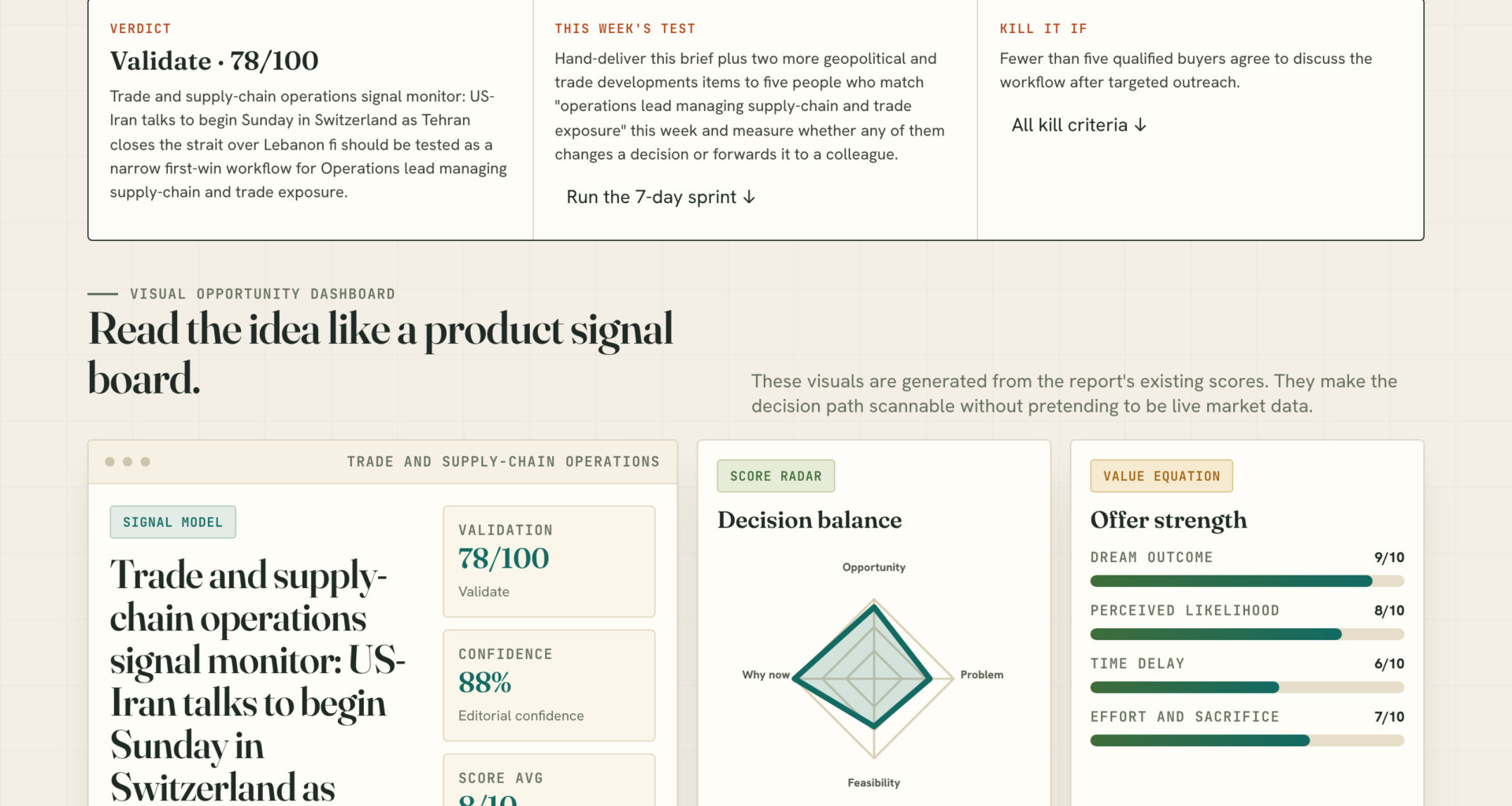

📊 Full opportunity report: Trade and supply-chain operations signal monitor: US-Iran talks to begin Sunday in Switzerland as Tehran closes the strait over Lebanon fi on IdeaNavigator AI — validation score, market gap, and execution plan.

Get the latest gadgets delivered free — and shop member deals
- Fast, free delivery on millions of items
- Access to Prime Big Deal Days deals on October 6–7
- Prime Video, Amazon Music and more included
TL;DR

U.S. and Iran are set to hold talks in Switzerland starting Sunday. Iran has closed the strait over Lebanon fighting, raising concerns for global trade. The development is confirmed and could influence supply chains.
Diplomatic talks between the United States and Iran are scheduled to begin in Switzerland this Sunday, amid Iran’s decision to close the strait over Lebanon fighting, a move that could disrupt international trade routes.
The U.S. and Iran are set to hold negotiations in Switzerland starting Sunday, according to sources familiar with the matter. The talks come amid heightened tensions, with Iran closing the strait over Lebanon fighting, which has raised concerns about potential impacts on global supply chains.
Iran’s decision to close the strait, a critical maritime route, is confirmed and is believed to be linked to ongoing regional conflicts. The timing of the talks and the closure indicates a possible attempt to de-escalate tensions or negotiate trade and security issues.
Trade experts and supply chain managers are closely monitoring the developments, as the closure and negotiations could influence shipping lanes, oil prices, and international trade flows in the coming weeks.
Implications of US-Iran Talks and Strait Closure
This development matters because the planned talks could lead to a de-escalation of regional tensions, potentially reopening key shipping routes. Conversely, if tensions escalate, global trade and supply chains could face disruptions, affecting markets worldwide.
The closure of the strait over Lebanon fighting is a significant escalation in regional conflict, with the potential to impact oil prices, shipping schedules, and international trade flows. Supply chain managers and policymakers are watching these events closely for signs of resolution or further escalation.
As an affiliate, we earn on qualifying purchases.
Background on US-Iran Tensions and Strait Closures
Relations between the U.S. and Iran have been strained for years, with ongoing disputes over nuclear programs, sanctions, and regional influence. Recent regional conflicts, particularly in Lebanon, have intensified tensions. For more on regional conflicts, see the cybersecurity operations signal monitor.
Iran has previously closed or threatened to close strategic waterways, including the Strait of Hormuz, to exert pressure or respond to international actions. The current closure over Lebanon fighting marks a significant escalation, with potential global trade implications.
The upcoming negotiations are part of ongoing efforts to manage these tensions, though the outcomes remain uncertain. You can also explore related technology operations signal monitor topics.
“The U.S. and Iran are scheduled to meet in Switzerland this Sunday to discuss regional tensions and trade issues.”
— an anonymous source familiar with the talks
Uncertain Outcomes and Potential Escalations
It is not yet clear whether the talks will lead to immediate de-escalation or if Iran will reopen the strait. The long-term impact on trade routes and regional stability remains uncertain, and further developments are expected after the Sunday negotiations.
Next Steps and Monitoring Developments
Following the Sunday talks, officials will assess the outcomes and any agreements reached. Market participants and supply chain managers will monitor for signs of reopening the strait or escalation of conflicts. Further diplomatic engagements or regional actions are expected in the coming weeks.
Key Questions
What is the significance of the US-Iran talks starting in Switzerland?
The talks could influence regional stability and impact global trade routes, especially if they lead to de-escalation or escalation of tensions.
Why has Iran closed the strait over Lebanon fighting?
Iran’s decision appears to be a response to regional conflicts, aiming to exert pressure or respond to perceived threats related to Lebanon fighting.
How could the closure of the strait affect global trade?
The closure could disrupt shipping lanes, increase shipping costs, and impact oil prices and supply chains worldwide.
What are the chances of the strait reopening after the talks?
It remains uncertain; the outcome depends on the negotiations’ results and regional developments in the coming days.
What should supply chain managers do now?
They should monitor the negotiations and regional developments closely, prepare contingency plans for potential disruptions, and stay informed about any changes to shipping routes.
Source: IdeaNavigator AI
Fall Picks
fall essentials
As an affiliate, we earn on qualifying purchases.