
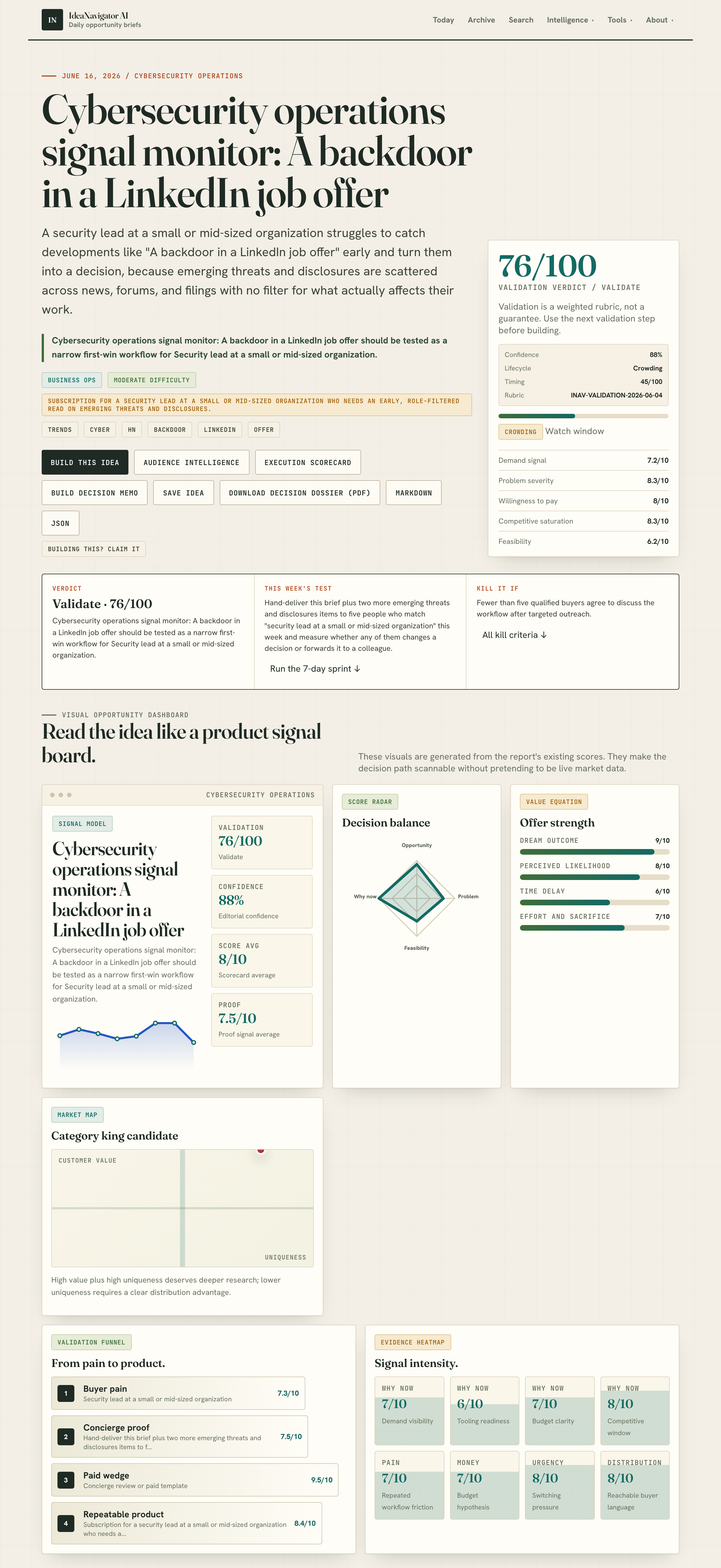
📊 Full opportunity report: Cybersecurity operations signal monitor: A backdoor in a LinkedIn job offer on IdeaNavigator AI — validation score, market gap, and execution plan.
TL;DR
Cybersecurity analysts have detected a backdoor embedded in a LinkedIn job offer, indicating a potential method for attackers to gain unauthorized access. This discovery highlights emerging threats in social engineering and phishing campaigns targeting organizations.
Cybersecurity analysts have confirmed the detection of a backdoor embedded within a LinkedIn job offer, raising alarms about targeted social engineering and malware infiltration. This development underscores the evolving tactics used by threat actors to exploit social platforms for malicious purposes, making it a significant concern for organizational security teams.
Recent cybersecurity monitoring has identified a malicious payload concealed within a LinkedIn job advertisement. The backdoor, once exploited, could allow attackers to establish persistent access to targeted networks or deliver additional malware. The discovery was made through routine threat detection signals, which flagged suspicious activity associated with the posting.
Experts note that the malicious link or script was embedded in the job description, designed to appear legitimate to potential applicants. When clicked, it could redirect users to compromised sites or initiate malware downloads. The incident has been confirmed by cybersecurity firms analyzing the threat signals, although the full scope of affected organizations remains unclear.
Authorities and security researchers are now investigating the extent of the campaign, and whether this backdoor is part of a broader attack infrastructure targeting small and mid-sized organizations, which often lack advanced security defenses.
Potential Impact on Organizational Security Posture
This discovery highlights how threat actors are increasingly leveraging social media platforms like LinkedIn to deliver malware through seemingly legitimate job offers. For small and mid-sized organizations, which may lack extensive cybersecurity measures, this represents a significant risk of infiltration. Early detection and awareness are critical to prevent potential breaches, data theft, or lateral movement within corporate networks.
AI-POWERED CYBERSECURITY OPERATIONS: Threat intelligence anomaly detection and automated incident response systems
As an affiliate, we earn on qualifying purchases.
As an affiliate, we earn on qualifying purchases.
Over recent years, cybercriminals have shifted toward social engineering tactics that exploit popular platforms like LinkedIn for malicious campaigns. Previous incidents involved fake job postings or recruiter profiles used to lure targets into clicking malicious links. The recent detection of a backdoor in a LinkedIn job offer is part of this broader trend, emphasizing the need for vigilance and improved filtering mechanisms. Threat actors often use these methods to bypass traditional defenses, making social media a fertile ground for targeted attacks.
“The embedding of backdoors in social media job postings represents a sophisticated evolution in attack vectors, leveraging trust and familiarity to increase success rates.”
— an anonymous cybersecurity researcher
Extent and Scope of the Backdoor Campaign
It is not yet clear how widespread this backdoor campaign is or which organizations have been targeted. The full technical details of the malware payload and its command-and-control infrastructure are still under investigation. Additionally, the potential for this method to be part of a larger, coordinated attack effort remains unconfirmed.
Ongoing Investigations and Defensive Measures
Cybersecurity firms and affected organizations are expected to conduct further forensic analysis to determine the scope of the threat. Security teams should review their social media monitoring protocols, update threat detection tools, and educate staff about recognizing malicious job offers. Industry authorities may issue advisories or mitigation guidelines as more details emerge.
Key Questions
What exactly is a backdoor in this context?
A backdoor is a hidden method or code that allows unauthorized access to a system or network, often installed covertly through malicious links or scripts embedded in legitimate-looking content, such as a LinkedIn job offer.
How can organizations protect themselves from such threats?
Organizations should implement real-time social media monitoring, educate employees about phishing tactics, verify job postings through official channels, and use advanced threat detection tools to identify suspicious links or scripts.
Is this type of attack common now?
While social engineering via social media is a known tactic, embedding backdoors in job offers is a relatively new development. Threat actors are continuously evolving their methods to bypass traditional defenses.
Should job seekers be concerned about clicking links in postings?
Yes, users should exercise caution with links in unsolicited or suspicious job postings, especially if they seem unusual or request sensitive information. Confirming the legitimacy of the posting through official channels is recommended.
Will there be official advisories about this threat?
Cybersecurity agencies and industry groups are likely to issue alerts once more details are available, but organizations should proactively review their social media security protocols now.
Source: IdeaNavigator AI