
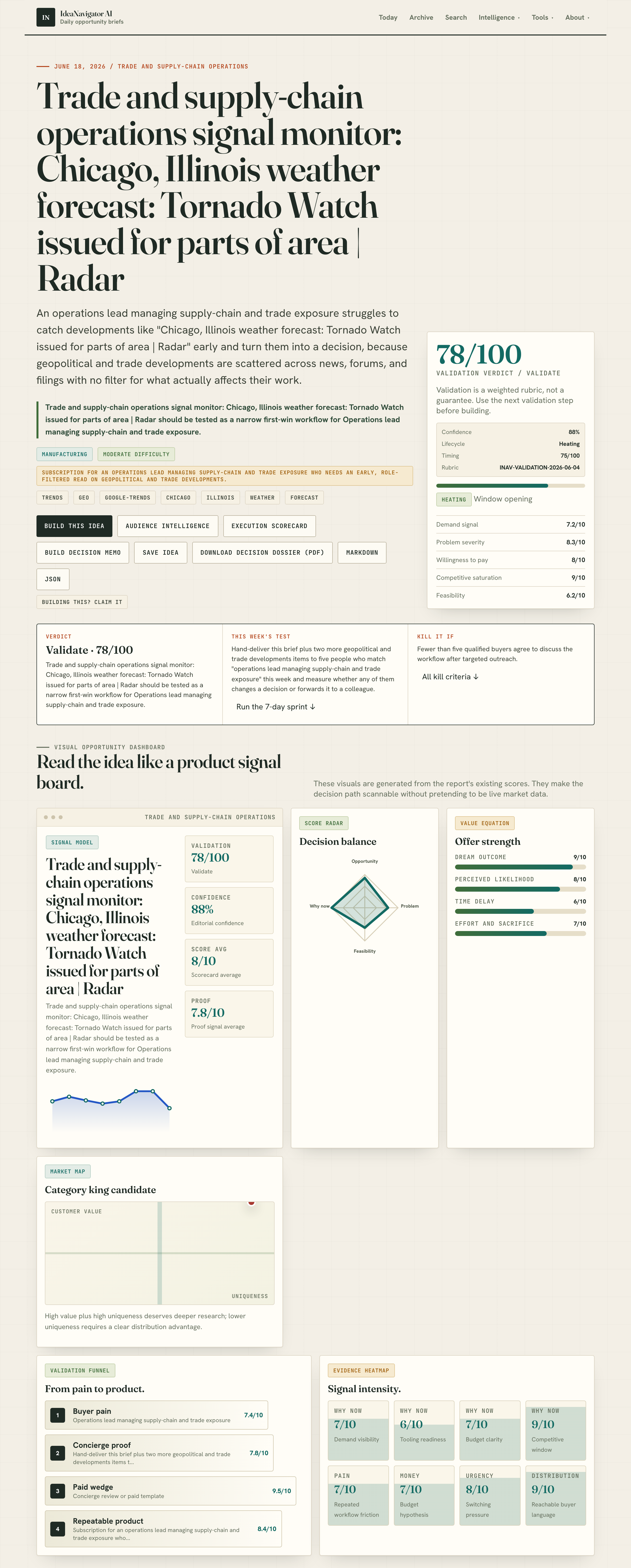
📊 Full opportunity report: Trade and supply-chain operations signal monitor: Chicago, Illinois weather forecast: Tornado Watch issued for parts of area | Radar on IdeaNavigator AI — validation score, market gap, and execution plan.

Get the latest gadgets delivered free — and shop member deals
- Fast, free delivery on millions of items
- Access to Prime Big Deal Days deals on October 6–7
- Prime Video, Amazon Music and more included
TL;DR
A tornado watch has been issued for parts of Chicago, Illinois, affecting trade and supply-chain operations. Authorities are monitoring weather signals to assess potential disruptions. The situation remains ongoing and uncertain.
A tornado watch has been officially issued for parts of Chicago, Illinois, prompting immediate monitoring by supply-chain and trade operations to assess potential disruption risks.
The National Weather Service issued a tornado watch for several counties in the Chicago metropolitan area earlier today, citing weather conditions conducive to severe storms. This alert is part of a broader weather pattern that experts say could impact transportation routes and supply-chain logistics in the region.
Operations managers are actively tracking weather signals, including radar data and forecast updates, to determine if and when disruptions might occur. According to sources familiar with supply-chain management, early detection of such weather alerts is critical for adjusting schedules and rerouting shipments as needed.
While no confirmed disruptions have yet been reported, industry officials emphasize that weather alerts like tornado watches can significantly influence trade flows, especially in sectors relying on just-in-time delivery models. The situation remains dynamic as weather conditions evolve and authorities update their warnings.
Implications for Supply-Chain and Trade Operations During Severe Weather
This tornado watch underscores the importance of real-time weather monitoring for supply-chain resilience. Early alerts enable operations teams to make informed decisions, potentially avoiding delays and damage to goods. As weather patterns grow more unpredictable, such signals are increasingly vital for maintaining trade flow and operational continuity in the Chicago region, a major logistics hub.
weather radar monitor for supply chain management
As an affiliate, we earn on qualifying purchases.
As an affiliate, we earn on qualifying purchases.
Weather Alerts and Supply-Chain Preparedness in Chicago
Chicago’s strategic position as a transportation nexus makes it particularly sensitive to weather disruptions. Historically, severe weather events like tornadoes have caused temporary shutdowns of freight routes and port operations, leading to delays and increased costs. The current tornado watch follows a pattern of rising weather volatility in the Midwest, prompting supply-chain managers to enhance monitoring and contingency planning.
Recent years have seen an uptick in weather-related alerts affecting logistics, with industry groups advocating for improved early warning systems. The current alert aligns with broader efforts to integrate real-time weather signals into supply-chain management tools, aiming to mitigate risks before disruptions occur.
Uncertainties Surrounding Weather Impact and Disruption Timing
It is not yet clear whether the tornado watch will escalate into a tornado warning or cause significant disruptions to supply-chain operations. Weather conditions are still evolving, and authorities have not issued any evacuation or shutdown orders at this time. The extent of potential impact remains uncertain.
Next Steps for Monitoring and Response in Chicago Supply Chains
Supply-chain managers will continue to monitor weather updates and radar signals closely over the coming hours. Authorities are expected to provide further warnings or updates, which will inform operational adjustments. Companies are advised to prepare contingency plans for possible disruptions, including rerouting shipments and adjusting delivery schedules as needed.
Key Questions
What does a tornado watch mean for supply chains in Chicago?
A tornado watch indicates conditions are favorable for tornadoes but does not confirm that one will occur. It prompts increased monitoring and preparedness among supply-chain operators to respond quickly if the situation worsens.
Are there expected disruptions to transportation routes due to the weather?
It is too early to confirm disruptions. Authorities and supply-chain managers are assessing weather signals to determine if rerouting or delays are necessary.
Companies should monitor weather alerts continuously, develop contingency plans, and coordinate with logistics providers to reroute shipments or adjust schedules proactively.
When will more definitive information about the weather impact be available?
Further updates are expected from weather authorities over the next few hours. Supply-chain teams will need to stay alert for any escalation in warnings or new advisories.
Has any damage or disruption been reported yet?
No disruptions or damages have been confirmed at this time. The situation remains under observation as weather conditions develop.
Source: IdeaNavigator AI
Fall Picks
fall essentials
As an affiliate, we earn on qualifying purchases.