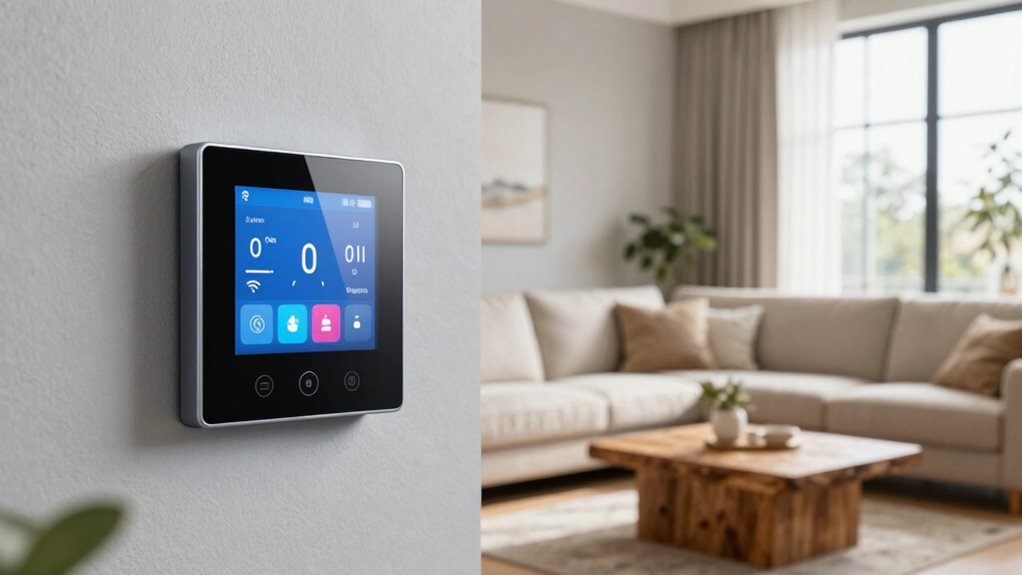
Many believe smart thermostats don’t save money, but they actually do by learning your routines and adjusting energy use accordingly. They prevent unnecessary heating or cooling when you’re away or asleep, helping you cut costs effortlessly. Features like geofencing create custom schedules, maximizing comfort without waste. Plus, they make you more aware of your consumption and encourage energy-smart habits. Keep exploring, and you’ll discover how these devices make saving energy and money easier than you think.
Key Takeaways
- Smart thermostats optimize energy use by learning routines and reducing heating or cooling when unneeded, lowering utility bills.
- They influence user behavior through insights and suggestions, encouraging more conscious and efficient energy habits.
- Features like geofencing create automatic schedules that maximize comfort while minimizing waste.
- By making users more aware of their consumption, these devices promote smarter decisions, leading to cost savings.
- Cost reduction results from behavioral changes and optimized energy management, not just device technology.

Smart thermostats are a smart way to cut your energy bills while maintaining a comfortable home. They do more than just turn your heating and cooling systems on and off; they optimize your energy usage, making your home more energy-efficient. When you install a smart thermostat, you’re taking a step toward reducing waste and lowering costs. These devices learn your routines and preferences, adjusting settings to match your lifestyle. By doing so, they prevent heating or cooling when you’re not home or when you’re asleep, which means you’re not wasting energy on an empty house. This constant adjustment ensures you’re only using energy when necessary, directly boosting your energy efficiency.
Smart thermostats optimize energy use by learning routines and preventing waste when you’re away or asleep.
A common misconception is that smart thermostats don’t really save money. But the truth is, they influence your user behavior in subtle yet impactful ways. Instead of manually fiddling with the thermostat, you let the device handle the adjustments based on your habits. Over time, this leads to more conscious energy use. For example, you might not realize how often you override your traditional thermostat to make your home more comfortable, even if it results in higher bills. With a smart thermostat, you become more aware of your energy consumption because the device provides insights and suggestions. This awareness encourages you to make smarter decisions, like lowering the temperature slightly during winter nights or setting a schedule that aligns with your daily routine.
Additionally, many smart thermostats have features that further enhance energy efficiency, such as geofencing, which detects when you’re leaving or returning home, and adjusts the temperature accordingly. Some models even learn your patterns over time, automatically creating custom schedules that maximize comfort without wasting energy. This means you’re actively participating in your home’s energy management, making user behavior an integral part of the savings. Over time, these small adjustments add up, considerably reducing your monthly bills.
In essence, smart thermostats save money not just through their technology but by subtly influencing your habits. They make you more conscious of energy consumption, encouraging behaviors that lead to savings. Instead of relying solely on manual adjustments or guesswork, you gain a smarter approach to managing your home’s climate. By improving energy efficiency and subtly guiding your user behavior, these devices help you cut costs without sacrificing comfort. So, rather than dismissing smart thermostats as ineffective, recognize that their true power lies in changing how you interact with your home’s energy use—making savings a natural part of your everyday routine. Recognizing the importance of home automation can help you maximize the benefits of these devices.
Frequently Asked Questions
Do Smart Thermostats Require Professional Installation?
Smart thermostats don’t always require professional installation; many models support DIY installation, saving you money upfront. You can typically follow step-by-step instructions and use common tools, making it a straightforward process. However, if your system is complex or you’re unsure, professional installation might be worth the cost comparison. Ultimately, choosing DIY or professional setup depends on your comfort level and the complexity of your HVAC system.
Are Smart Thermostats Compatible With All Heating Systems?
Smart thermostats are compatible with most heating systems, but compatibility issues can arise with older or specialized setups. You might face installation challenges if your system isn’t standard, requiring extra adapters or professional help. To avoid surprises, check your thermostat’s compatibility list before buying. If unsure, consulting an HVAC expert guarantees a smooth installation, so you can start saving money and optimizing your home’s comfort right away.
How Much Can I Realistically Save Annually?
Imagine your energy bill shrinking like a deflating balloon—that’s your potential savings. You can realistically save $100 to $200 annually with a smart thermostat. The key lies in a sharp cost comparison and optimized settings, which lead to significant user savings. By learning your schedule and adjusting temperatures accordingly, you maximize efficiency, making every degree count and turning your thermostat into a smart savings tool.
Do Smart Thermostats Increase Energy Consumption?
Smart thermostats generally don’t increase your energy consumption when used properly. In fact, they enhance thermostat efficiency by learning your schedule and adjusting settings accordingly. This optimized control helps reduce unnecessary heating and cooling, lowering overall energy use. You might worry about extra tech or constant adjustments, but smart thermostats are designed to save energy, making your home more efficient without boosting your utility bills.
Can I Control Smart Thermostats Remotely Without Wi-Fi?
Sure, you can control your smart thermostat remotely without Wi-Fi—if you enjoy living in the past. Without internet, remote access and mobile control become impossible, leaving you stuck adjusting settings manually. Ironically, these features are what make smart thermostats smart, but if the Wi-Fi drops, so does your ability to tweak temperatures from anywhere. So, keep your Wi-Fi strong, or miss out on the convenience of remote control.
Conclusion
Think smart thermostats don’t save money? Think again. Studies show that they can cut your heating and cooling costs by up to 15%, translating to significant savings over time. By optimizing your home’s temperature and preventing energy waste, these devices make a real difference in your bills. So, if you’re looking for a smart investment that pays off, installing a smart thermostat is a move worth considering—your wallet and the environment will thank you.