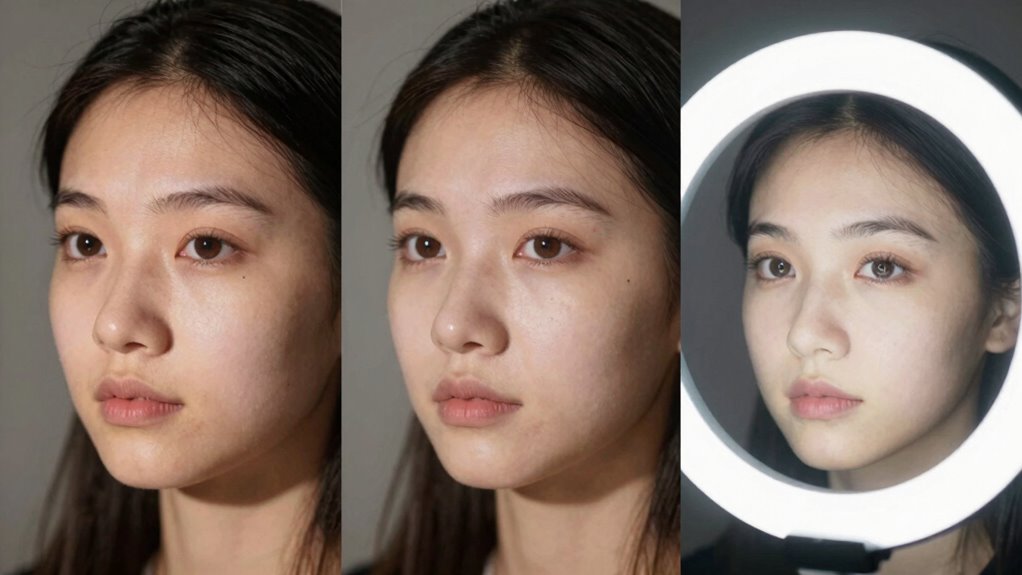

Choosing between a key light, softbox, or ring light depends on the look you want. A ring light offers even, flattering illumination with minimal shadows, perfect for beauty and vlogging. Softboxes produce gentle, diffused light that smooths skin and reduces imperfections—great for portraits. A key light creates strong shadows and contrast, ideal for dramatic effects. To find out which setup enhances your on-camera appearance best, explore the details ahead.
Key Takeaways
- Softboxes provide soft, evenly distributed light that minimizes skin imperfections, flattering most camera shots.
- Ring lights deliver uniform, shadow-free illumination ideal for clear, bright facial features in close-up videos.
- Key lights create high-contrast, dramatic effects that can enhance textures but may require skill to avoid harshness.
- Softboxes and ring lights are more forgiving and easier to achieve natural, flattering looks with minimal setup.
- The best choice depends on your desired aesthetic: softboxes for gentle beauty shots, ring lights for even facial lighting, key lights for dramatic effects.
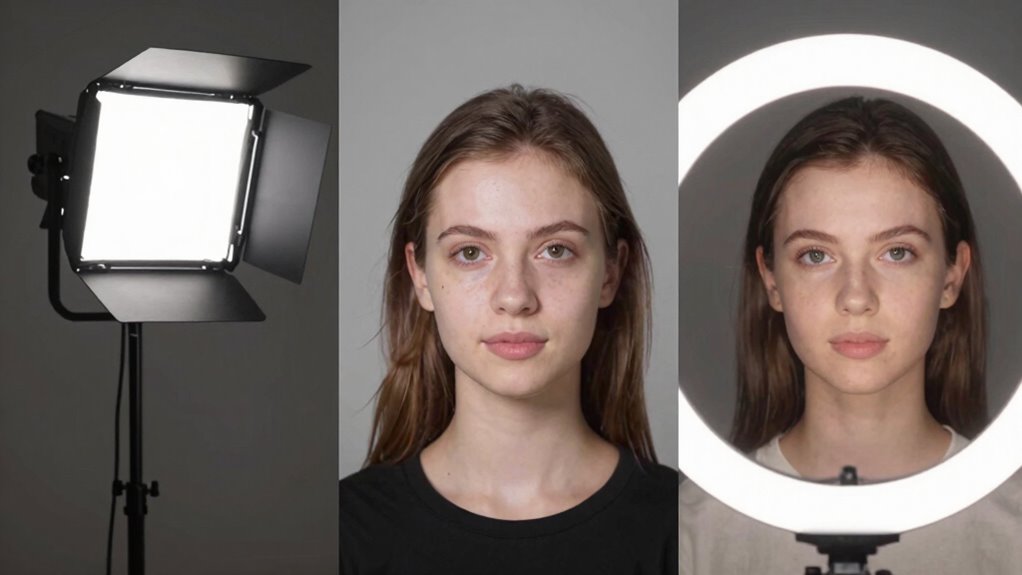
Are you unsure which lighting equipment best suits your photography or videography needs? Choosing between a key light, softbox, and ring light can be tricky, especially when considering factors like color temperature and power output. These elements influence how your subject appears on camera, affecting the overall mood and clarity of your shot. Understanding how each light source handles these aspects will help you make an informed decision.
Choosing the right lighting depends on your desired mood, power needs, and color temperature control.
A key light is your primary source of illumination and usually delivers high power output, making it versatile for various shooting environments. Its color temperature can be adjusted or matched to daylight or tungsten lighting, allowing you to control the warmth or coolness of your images. With a powerful key light, you can create strong contrast and well-defined shadows, emphasizing textures and features. However, because of its high power output, you might need to diffuse or bounce the light to prevent harshness. This makes the key light ideal for situations where you want dramatic or professional-quality lighting, but it requires careful control to avoid overexposure or unnatural color shifts.
Softboxes are designed to diffuse light evenly, producing a gentle, flattering effect on your subject. They also offer a range of color temperatures, which you can adjust by using different bulbs or gels, ensuring your lighting matches your camera settings. Their lower to moderate power output makes softboxes perfect for close-up portraits or interviews, where you want soft shadows and smooth skin tones. Because the light is diffused, it minimizes imperfections and creates a natural look, ideal for beauty shots or professional headshots. Softboxes are also more forgiving in terms of controlling color temperature, as their diffusion reduces harsh shadows and uneven color cast, allowing your camera’s white balance to do its job effectively.
Ring lights, on the other hand, provide a unique, even illumination that’s especially popular for beauty and vlogging. Their circular shape produces a distinctive catchlight in the eyes and a uniform light spread, which helps eliminate shadows on the face. Ring lights tend to have moderate power output and fixed or adjustable color temperature settings, making them convenient for quick setups. The consistency of their light reduces the need for complex diffusion or modifiers, but their color temperature may need adjustment depending on your environment. If you’re looking to achieve a bright, evenly lit look with minimal setup, ring lights are a great choice, especially when you want to look your best on camera without worrying about shadows or uneven lighting.

WYRESTORM 4K AI Tracking Conference Webcam, Auto Framing & Presenter Tracking, 120° Wide Angle, Dual Noise Cancelling Mics, Privacy Cover, USB Plug & Play, Zoom Certified for Teams Meeting Rooms
【Built for Small Conference Rooms】Designed specifically for small meeting spaces, this conference room camera system ensures every participant...
As an affiliate, we earn on qualifying purchases.
Frequently Asked Questions
Which Lighting Setup Is Best for Outdoor Filming?
For outdoor filming, you should choose a softbox or ring light with good light diffusion to soften harsh sunlight. Use portable power sources like batteries to keep your setup flexible and mobile. Softboxes provide even, diffused light that reduces shadows, while ring lights give a flattering, uniform glow. Both options help you control lighting quality outdoors, ensuring your subject looks natural and well-lit despite changing sunlight conditions.
How Do I Choose the Right Light Color Temperature?
Imagine your scene as a painting; choosing the right color temperature sets the mood. If you want a warm, cozy glow, go for around 2700K to 3000K, mimicking sunset’s warmth. For a cool, professional vibe, select 5000K to 6500K, like daylight. Consider your light mood—warm for intimacy, cool for clarity—and match your color temperature to create the perfect atmosphere on camera.
Can I Use Multiple Lights Together Effectively?
Yes, you can use multiple lights together effectively. Focus on strategic light placement to avoid harsh shadows and guarantee even illumination. Use light diffusion techniques, like softboxes or diffusers, to soften the light and create a natural look. By balancing your lights and adjusting their positions, you’ll achieve a professional, well-lit appearance on camera that highlights your features without overwhelming the shot.
What Are the Maintenance Needs for Each Lighting Type?
Imagine your lighting setup as a well-tended garden. For each, you’ll want to monitor the lighting bulb longevity and clean fixtures regularly. Softboxes and ring lights need gentle wiping to remove dust, while key lights may require more thorough cleaning of bulbs and lenses. Keep a close eye on bulb lifespan, replacing them before dimming occurs, and handle fixtures with care to make certain your camera lighting stays bright and effective.
Which Lighting Option Is Most Budget-Friendly for Beginners?
If you’re looking for budget-friendly options for beginner lighting, a ring light is often the most affordable choice. It’s simple to set up, offers even lighting, and doesn’t require much maintenance. Softboxes can be cost-effective if you buy a basic model, but they tend to be pricier than ring lights. Key lights are usually more expensive and complex. So, for starters, a ring light provides the best balance of affordability and quality.

2-Pack LED Video Light Kit, NiceVeedi Studio Light, 2800-6500K Dimmable Photography Lighting Kit with Tripod Stand&Phone Holder, 73" Stream Light for Video Recording, Game Streaming, YouTube
【MULTIPLE COLOR TEMPERATURE & ADJUSTABLE BRIGHTNESS】There are 3 Color temperatures (2800K, 4800K & 6500K) which offer different lighting...
As an affiliate, we earn on qualifying purchases.
Conclusion
Choosing the right lighting isn’t just about equipment; it’s about how you feel and look on camera. While key lights, softboxes, and ring lights each have their perks, the real magic happens when you use them to boost your confidence. Believe it or not, the right light can transform your presence and make you shine. Trust your instincts and experiment—you might just discover that the perfect lighting isn’t just a myth, but the secret to your best self.

ALTSON 60 LED Portable Selfie Light Video Conference Lighting with Clip & Camera Tripod Adapter Rechargeable 2200mAh CRI 97+, 3 Light Modes for Phone iPhone Webcam Laptop Photo Makeup
【Best Light Effect CRI 97+】This slim and lightweight LED light will brighten up your beauty in front of...
As an affiliate, we earn on qualifying purchases.

NEEWER Basic 5" Ring Light for Video Conference Lighting, Clip on Light Kit with Desk Tripod Stand for Monitor Laptop Computer Zoom Call Live Streaming Remote Working Learning Video Recording, BR60
【Neewer BASICS Series】These products offer basic functions and designs that meet the essential needs of most customers, while...
As an affiliate, we earn on qualifying purchases.