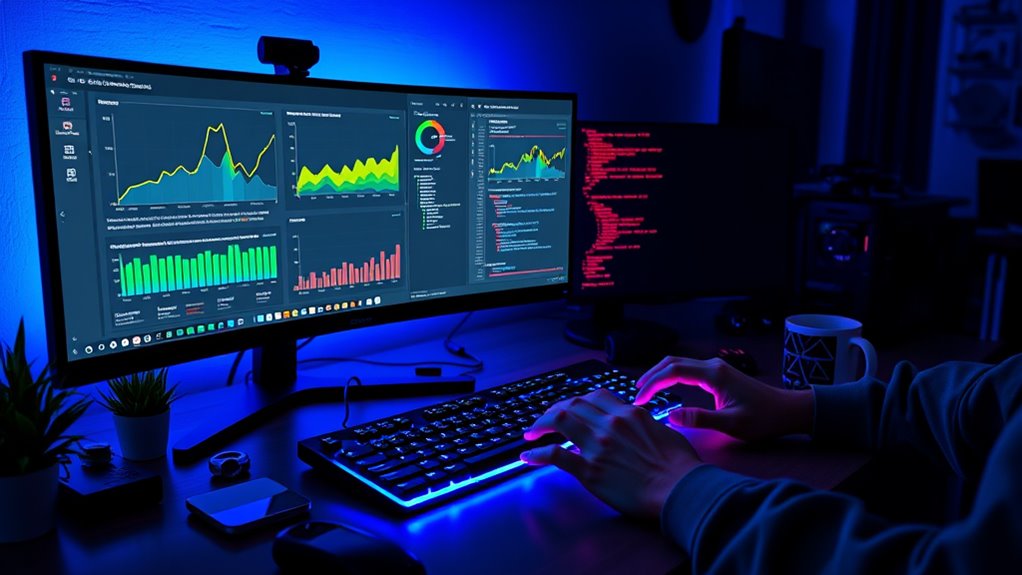

Digital carbon footprinting tools help you measure and lower your software’s environmental impact. They analyze server energy use, data transfer, and hardware efficiency to give you clear insights. By identifying energy-intensive areas, you can optimize code, reduce redundant data, and choose eco-friendly hosting options. Using these tools regularly supports sustainable development practices and cuts costs. Keep exploring to discover how these tools can make your projects greener and more efficient.

Get the latest gadgets delivered free with Prime
- Fast, free delivery on millions of items
- Prime Video, Amazon Music and more included
- Member-only deals all year
Key Takeaways
- Digital carbon footprinting tools measure server energy use, data transfer, and hardware efficiency to assess environmental impact.
- They help developers identify energy-intensive code segments and optimize performance for sustainability.
- These tools provide real-time metrics, enabling continuous monitoring and improvement of digital environmental impact.
- Using such tools guides decisions on efficient data handling, caching, and resource management strategies.
- They support selecting eco-friendly cloud services and infrastructure to reduce overall digital carbon footprint.

Have you ever wondered how your software development practices impact the environment? It’s easy to overlook the environmental footprint of the code you write and the systems you build. But by paying attention to energy efficiency and data optimization, you can substantially reduce your digital footprint. These practices are essential because software consumes energy during development, deployment, and operation, especially when scaled across millions of users. Improving energy efficiency means designing applications that use less power, which not only benefits the environment but can also improve user experience through faster, more responsive software. Data optimization plays a key role here; it involves refining how data is stored, transmitted, and processed to cut down on unnecessary energy consumption. When you minimize redundant data, compress files, or optimize database queries, you’re directly reducing the amount of computational work needed, which translates into lower energy use.
Using digital carbon footprinting tools allows you to measure and understand the environmental impact of your development choices. These tools analyze various factors, such as server energy consumption, data transfer volumes, and hardware efficiency. With that insight, you can make informed decisions to improve your code’s energy profile. For instance, if a tool shows your application is heavy on data transfer, you might implement better caching strategies or compress data before transmission. This reduces the load on servers and network infrastructure, resulting in less energy consumption. Similarly, if your code isn’t optimized for energy efficiency, refactoring it to use fewer resources can have a meaningful environmental impact. Additionally, understanding the energy consumption of hardware used in hosting your applications can lead to more sustainable infrastructure choices.
Measuring your code’s energy use helps reduce environmental impact through smarter optimization and resource management.
As a developer, integrating these tools into your workflow is straightforward and empowering. They often provide real-time metrics and recommendations that help you identify the most energy-consuming parts of your code. By acting on these insights, you can implement best practices like lean coding, minimizing background processes, and choosing energy-efficient cloud services. These actions not only help lower your project’s carbon footprint but can also reduce operational costs and improve performance.
In the end, embracing energy efficiency and data optimization isn’t just about being environmentally conscious—it’s about becoming a smarter developer. Digital carbon footprinting tools give you the visibility you need to make sustainable choices without sacrificing functionality. They foster a mindset of continuous improvement, pushing you to develop software that’s both powerful and responsible. By integrating these practices into your development process, you contribute to a greener digital world while building better, more efficient applications.
digital carbon footprint calculator
As an affiliate, we earn on qualifying purchases.
As an affiliate, we earn on qualifying purchases.
Frequently Asked Questions
How Accurate Are Current Digital Carbon Footprint Measurements?
You might wonder about measurement accuracy and data reliability when evaluating digital carbon footprints. Currently, these tools vary widely in precision, with some providing reasonably reliable estimates while others may have gaps due to limited data or assumptions. While they give useful insights, don’t rely solely on them for exact figures. Instead, consider them as guiding tools, understanding their limitations and the potential for measurement errors in your sustainability efforts.
Can These Tools Integrate With Existing Development Workflows?
You can seamlessly integrate digital carbon footprinting tools into your existing workflows through API integration, making data sharing straightforward. These tools support workflow automation, allowing you to streamline processes and improve efficiency. By embedding them into your development environment, you’ll get real-time insights without disrupting your routine. This integration helps you monitor and reduce your carbon impact effectively, all while maintaining your current workflow’s productivity and consistency.
What Are the Cost Implications of Adopting These Tools?
Imagine your budget as a garden, carefully tending to each plant. When you consider adopting digital carbon footprinting tools, you need a clear cost analysis to see what seeds to plant. These tools often involve upfront costs and ongoing expenses, so budgeting strategies become essential. By understanding the financial landscape, you can nurture sustainable growth without overextending, ensuring your investment yields eco-friendly results and aligns with your long-term goals.
How Do Privacy Concerns Impact Data Collection for Footprint Analysis?
Privacy concerns critically impact data collection for footprint analysis. You need to prioritize user privacy by obtaining explicit consent and minimizing data collection to protect user privacy. Ensuring data security is essential to prevent breaches and build trust. Balancing detailed data collection with respecting user privacy can be challenging, but it’s vital for ethical and legal compliance, ultimately fostering transparency and confidence in your footprinting efforts.
Are There Standards or Regulations Guiding Digital Carbon Footprint Assessments?
Remember, where there’s a will, there’s a way. You should know that digital carbon footprint assessments are guided by evolving industry standards and regulatory compliance. While no universal regulations exist, many organizations follow frameworks like the Greenhouse Gas Protocol and ISO standards to guarantee accuracy and transparency. Staying updated on these standards helps you align with best practices, making your footprint assessments reliable and compliant with current guidelines.
Conclusion
By integrating digital carbon footprinting tools into your development process, you hold the key to a greener future. Think of these tools as compasses guiding your code through a landscape of sustainability, illuminating the path toward eco-conscious decisions. Every line of code you optimize brightens the way for future generations, symbolizing your role as a steward of the planet. Embrace these tools, and turn your innovations into beacons of environmental responsibility.
Fall Picks
fall essentials
As an affiliate, we earn on qualifying purchases.