📊 Full opportunity report: Cutting Edge Industrial Operations Use Phone-Photo Gauge Checks on IdeaNavigator AI — validation score, market gap, and execution plan.

Get the latest gadgets delivered free — and shop member deals
- Fast, free delivery on millions of items
- Access to Prime Big Deal Days deals on October 6–7
- Prime Video, Amazon Music and more included
TL;DR

Industrial facilities are testing a new workflow where technicians photograph gauges with phones, allowing automated reading, logging, and anomaly detection. This aims to replace error-prone manual transcription and avoid costly sensor upgrades.
Multiple industrial facilities are conducting pilot tests of a new workflow that uses smartphone photos to read analog gauges, replacing traditional clipboard-based rounds. This development, confirmed by sources familiar with the trials, aims to improve data accuracy, enable real-time anomaly detection, and build trend histories without the need for costly sensor retrofits. The approach leverages advances in sight image recognition technology to read gauges reliably from ordinary phone photos, offering a potentially transformative upgrade for legacy equipment.
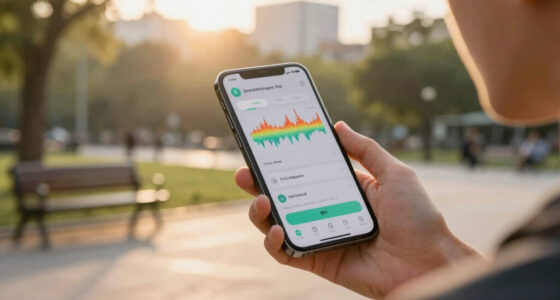
The pilot involves technicians photographing each gauge during their routine rounds, with an app that automatically reads the gauge value, compares it against expected ranges, logs the data with timestamps and location, and flags any anomalies immediately. This process is being tested at three facilities over a month, with the goal of comparing error rates and early detection of developing failures against traditional manual transcription methods. The system is designed to be a minimal viable product (MVP), focusing on legacy gauges without requiring retrofitting or new sensors.
According to sources, this workflow could significantly reduce transcription errors, which often obscure early signs of equipment failures, and enable continuous trend analysis. The approach is being marketed as a subscription service, with tiered pricing based on the number of gauges monitored per facility. The initial tests aim to validate the accuracy, reliability, and operational benefits of the phone-photo method before broader deployment.
Potential Impact on Maintenance and Asset Management
This innovation could reshape how industrial plants perform routine maintenance checks by making data collection more accurate, timely, and cost-effective. Eliminating manual transcription reduces human error and accelerates anomaly detection, which can prevent costly failures and downtime. Additionally, since the system works with existing analog gauges, it offers a low-cost upgrade path for legacy equipment, avoiding the capital expense of installing IoT sensors. If successful, this workflow could set a new standard for operational data collection and trend analysis in industries reliant on legacy instrumentation.
industrial gauge photo reading app
As an affiliate, we earn on qualifying purchases.
As an affiliate, we earn on qualifying purchases.
Legacy Equipment and the Need for Better Data Collection
Many industrial facilities still depend on analog gauges, sight glasses, and counters for critical measurements, but traditional methods of recording these readings are manual, error-prone, and seldom used for detailed trend analysis. Transcription errors can obscure early signs of equipment failure, leading to unexpected outages and costly repairs. While IoT sensors and smart instrumentation are increasingly common, retrofitting legacy systems remains expensive and disruptive. The development of sight image recognition technology that can reliably interpret phone photos offers a promising alternative, providing a low-cost, scalable solution to enhance data accuracy and operational insight.
The concept of using phone photos for gauge reading has gained traction as advances in AI and image processing make sight recognition more reliable. Pilot programs are now testing this approach in real-world industrial settings, with initial results expected soon. These efforts reflect a broader industry trend toward digital transformation and smarter maintenance practices, even with aging infrastructure.
Unclear Aspects of System Reliability and Scalability
It is not yet confirmed how reliably the sight recognition app can interpret gauges across different types, lighting conditions, and wear levels. The accuracy of the AI model in diverse industrial environments remains to be validated, and the impact on operational workflows is still being assessed. Additionally, questions remain about the long-term stability of the system, integration with existing maintenance management systems, and the scalability of the subscription model for different facility sizes and gauge counts.
Next Steps in Validation and Broader Deployment
The pilot programs are expected to conclude within the next month, with initial data comparing error rates and anomaly detection effectiveness. If results are positive, facilities plan to expand the use of the system, integrating it into their routine maintenance workflows. Further development may include refining AI models for better accuracy, expanding gauge compatibility, and developing features for automated reporting and predictive maintenance insights. Industry observers anticipate broader adoption if the pilot demonstrates clear operational benefits and cost savings.
Key Questions
How does the phone-photo gauge reading system work?
Technicians photograph gauges during their rounds using a dedicated app, which automatically reads the gauge value, logs it with timestamp and location, and flags anomalies for review.
What are the main benefits of this approach?
It reduces transcription errors, enables real-time anomaly detection, builds trend histories, and offers a low-cost alternative to sensor retrofits on legacy equipment.
Are there limitations to the current pilot?
Yes, the accuracy of sight recognition across different gauge types and conditions is still being tested, and long-term reliability remains to be proven.
Will this replace all manual rounds?
Initially, the system is intended as an enhancement for specific workflows; full replacement depends on pilot success and further validation.
How much does the service cost?
The system is offered as a tiered subscription, with costs varying based on the number of gauges monitored per facility.
Source: IdeaNavigator AI
Fall Picks
fall essentials
As an affiliate, we earn on qualifying purchases.