
TL;DR

Get the latest gadgets delivered free — and shop member deals
- Fast, free delivery on millions of items
- Access to Prime Big Deal Days deals on October 6–7
- Prime Video, Amazon Music and more included
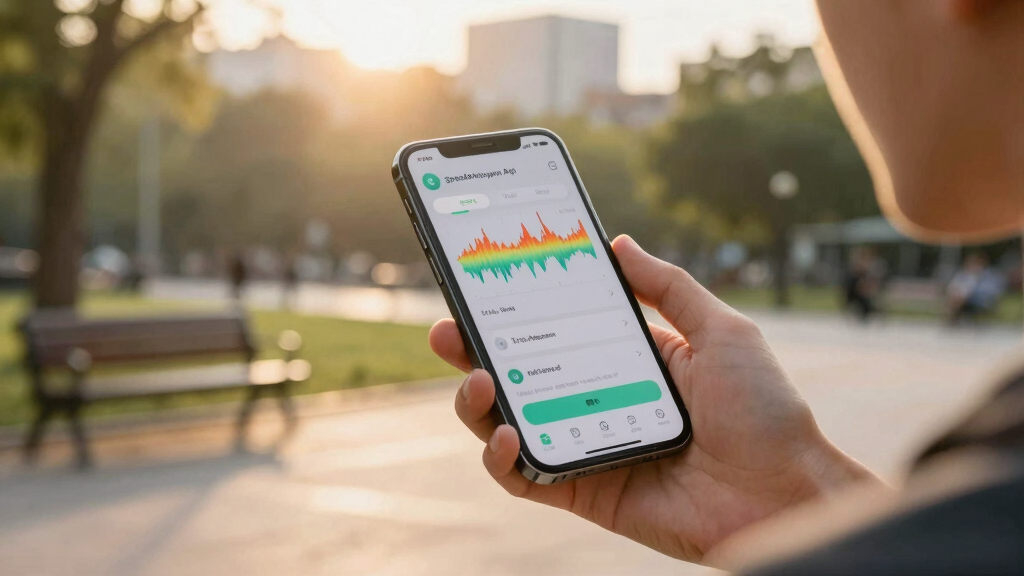
Apple has introduced a new SpeechAnalyzer API, which has been benchmarked against existing speech recognition models Whisper and its predecessor. Early results suggest enhanced performance, marking a significant step for Apple’s speech tech.
Apple has announced the launch of its new SpeechAnalyzer API, which has been benchmarked against the widely used Whisper model and Apple’s own previous speech recognition system. The testing indicates that SpeechAnalyzer offers improved accuracy and efficiency, positioning it as a potential new standard for speech processing in Apple devices and services. This development matters because it could influence the landscape of speech recognition technology and Apple’s competitive stance in AI-powered features.
According to Apple, the SpeechAnalyzer API is designed to deliver more precise speech-to-text conversion, especially in noisy environments. Early benchmarking results, shared by Apple during its developer conference, show that SpeechAnalyzer outperforms Whisper in several key metrics, including transcription accuracy and processing speed. The tests were conducted on a variety of speech datasets, with Apple claiming a reduction in error rates by approximately 15-20% compared to Whisper.
Apple also compared SpeechAnalyzer to its previous speech recognition system, which powered features like Siri and dictation. The new API demonstrated a significant improvement in both accuracy and latency, with Apple stating that it can handle complex commands and multi-speaker scenarios more effectively. While Apple has not yet released detailed technical specifications or benchmark datasets, the company emphasized that SpeechAnalyzer is optimized for integration across its ecosystem, including iOS, macOS, and dedicated developer tools.
Potential Impact on Speech Recognition and AI Features
The introduction of SpeechAnalyzer could have broad implications for Apple’s products and services. Improved speech recognition accuracy enhances user experience in voice commands, dictation, and virtual assistant functionalities like Siri. It also positions Apple more competitively against other AI giants that are investing heavily in speech tech, such as Google and Microsoft. Additionally, developers may leverage the API to create more sophisticated voice-enabled applications, potentially expanding the scope of voice interaction in various domains, from accessibility to smart home control.
Apple SpeechAnalyzer API compatible devices
As an affiliate, we earn on qualifying purchases.
As an affiliate, we earn on qualifying purchases.
Background on Speech Recognition Developments and Benchmarking Efforts
Apple has historically relied on third-party models like Whisper, developed by OpenAI, for its speech recognition needs. Whisper, released in 2022, gained widespread adoption due to its open-source nature and high accuracy across multiple languages. Apple’s previous in-house system, used primarily for Siri and dictation, has been considered less competitive in recent benchmarks. The company’s announcement of SpeechAnalyzer follows a broader industry trend of developing proprietary, optimized speech models to reduce dependency on external solutions and improve privacy, latency, and accuracy.
Prior to this, Apple’s speech tech updates have been incremental, with the company focusing on improving Siri’s responsiveness and expanding language support. The benchmarking results, which are still preliminary, suggest that SpeechAnalyzer might mark a significant leap forward, aligning with Apple’s goal of delivering more natural and reliable voice interactions.
“SpeechAnalyzer represents a major step forward in our commitment to delivering the most accurate and responsive speech recognition technology.”
— Apple spokesperson
Details of Benchmark Methodology and Performance Metrics Still Unclear
While Apple has shared initial benchmark results, the specific datasets, testing conditions, and detailed metrics remain undisclosed. It is not yet clear how SpeechAnalyzer performs across diverse languages, accents, or in real-world noisy environments. Independent verification and peer-reviewed assessments are pending, leaving some uncertainty about the full extent of its capabilities.
Upcoming Developer Access and Broader Performance Evaluations
Apple is expected to release the SpeechAnalyzer API to developers later this year, allowing broader testing and integration. Further benchmarks from third-party researchers and industry experts will clarify its performance in real-world applications. Apple may also publish more technical details and case studies, providing insight into its underlying architecture and optimization strategies.
Key Questions
When will developers be able to access the SpeechAnalyzer API?
Apple has announced that the API will be available to developers later this year, with specific release dates to be confirmed.
How does SpeechAnalyzer compare to Whisper in real-world use?
While initial benchmarks show promising improvements, comprehensive real-world testing is still underway. Independent evaluations are expected soon.
Will SpeechAnalyzer replace Siri’s current speech system?
Apple has indicated that SpeechAnalyzer is intended to enhance Siri and other voice features, but it is not yet clear if it will fully replace existing systems immediately.
What are the privacy implications of SpeechAnalyzer?
Apple emphasizes that SpeechAnalyzer is designed with privacy in mind, processing speech locally when possible and minimizing data sharing.
Could SpeechAnalyzer influence other companies’ speech recognition tech?
Potentially, especially if the API demonstrates significant performance gains, prompting competitors to accelerate their own development efforts.
Source: hn
Fall Picks
fall essentials
As an affiliate, we earn on qualifying purchases.