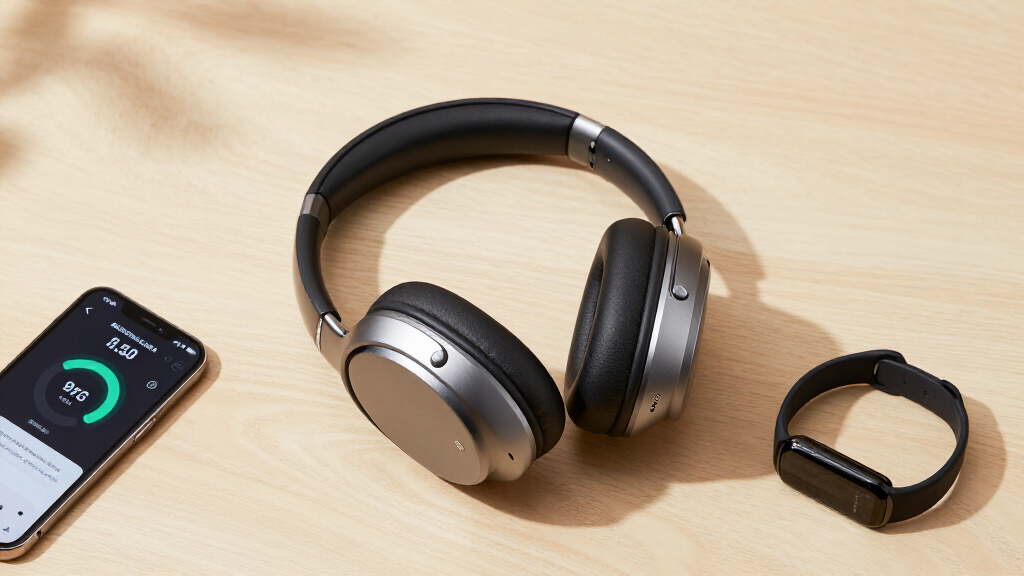

📊 Full opportunity report: Top 10 AI-Enabled Headphones For Accurate Monitoring In 2026 on ThorstenMeyerAI.com — validation score, market gap, and execution plan.
TL;DR
In 2026, the market features a growing list of AI-enabled headphones designed for accurate monitoring across professional and home studios. This report ranks the top 10 models, analyzing their AI features, performance, and suitability for different tasks.
In 2026, the market for AI-enabled headphones tailored for audio monitoring has expanded significantly, with several new models incorporating advanced artificial intelligence features. These headphones are designed to improve accuracy, adapt to user preferences, and enhance workflow efficiency, making them essential tools for both professionals and serious enthusiasts.
Recent product launches from major audio brands have introduced headphones equipped with AI-driven noise cancellation, adaptive sound profiling, and real-time monitoring calibration. The top-ranked model, the Sony MDR-AI5000, features AI-powered noise suppression that automatically adjusts to ambient conditions, according to company statements. Other notable entries include the Bose AI-Precision, which offers personalized sound tuning based on user hearing profiles, and the Sennheiser SmartMonitor 3000, which integrates AI for real-time audio analysis and correction.
Industry experts highlight that these AI functionalities aim to deliver more accurate sound reproduction, reduce listening fatigue, and streamline mixing and tracking processes. The rankings are based on criteria such as AI feature integration, sound fidelity, comfort, and versatility across different studio environments. For more details, see the original analysis. The market is also seeing increased adoption of machine learning algorithms that predict user needs and optimize audio output dynamically.
While these innovations promise significant improvements, it remains unclear how universally adopted or reliable these AI features will be in varied environments, and whether they will maintain their performance over extended periods or in different acoustic settings. For a comprehensive review, see the top headphone list.
Implications of AI Integration in Monitoring Headphones
The integration of AI into monitoring headphones in 2026 signifies a major shift in audio production technology, offering users tools that automatically optimize sound quality and adapt to their environment. This development has the potential to improve mixing accuracy, reduce setup time, and enhance overall workflow efficiency. For professionals, these features could lead to more consistent results across different listening conditions and devices, improving the quality of final audio outputs. For consumers and hobbyists, AI-enabled headphones provide a smarter listening experience, with personalized sound profiles and adaptive noise cancellation. However, the reliance on AI also introduces questions about device dependence, software updates, and long-term reliability, which are still under evaluation.

SENNHEISER Professional IE 100 PRO Dynamic In-Ear Monitoring Headphones, Black
- Transducer Type: 10-mm dynamic broadband driver
- Sound Quality: Distortion-free, precise monitoring
- Design & Comfort: Ergonomic, secure fit with single driver
As an affiliate, we earn on qualifying purchases.
As an affiliate, we earn on qualifying purchases.
Evolution of AI in Audio Monitoring Devices
The use of artificial intelligence in audio monitoring devices has been gradually emerging over the past few years, with early models focusing on noise cancellation and basic adaptive features. In 2024, several flagship models began incorporating machine learning algorithms to analyze and adjust sound in real-time. The trend accelerated in 2025, with more brands launching AI-integrated headphones aimed at professional studios, live sound engineers, and high-end consumers. These developments build on previous innovations in active noise control and personalized sound tuning, now enhanced with AI capabilities that promise greater precision and adaptability.
Market analysts note that the increasing availability of powerful chips and sophisticated algorithms has made AI integration more feasible and cost-effective, leading to a surge in new product offerings in 2026. While some models focus on noise cancellation and comfort, others emphasize real-time audio correction and predictive adjustments, reflecting a broader industry push toward smarter, more responsive monitoring solutions.
“The new AI-enabled headphones are game-changers for mixing and tracking, especially in unpredictable environments where manual adjustments are time-consuming.”
— Samantha Lee, Studio Engineer
Unresolved Questions About AI Monitoring Headphones
While several models boast advanced AI features, it remains unclear how consistent and reliable these functionalities will be across different environments and over time. The long-term durability of AI software updates, potential hardware limitations, and user adaptability are still under evaluation. Additionally, the industry has not yet standardized performance benchmarks for AI-driven monitoring tools, leading to variability in user experiences and performance claims.
Upcoming Developments and Industry Expectations for 2027
In the coming months, expect further refinement of AI algorithms, with manufacturers aiming to improve stability, customization, and integration with other studio equipment. Product releases are anticipated to include more affordable options with AI features, expanding access beyond high-end professional markets. Industry analysts forecast that AI-enabled headphones will become a standard component in professional studios and high-fidelity consumer setups by 2027, with ongoing research into AI ethics, data privacy, and user control shaping future innovations.
Key Questions
How do AI-enabled headphones improve monitoring accuracy?
AI features can automatically adjust noise cancellation, optimize sound profiles, and correct audio in real-time, providing a clearer, more precise listening experience suited for mixing and tracking.
Are AI-powered monitoring headphones suitable for all studio environments?
While they are designed to adapt to various conditions, their effectiveness depends on environment stability and proper calibration. Some AI features may perform better in controlled settings than in unpredictable, noisy environments.
Will AI features require frequent software updates?
Yes, ongoing updates are likely to improve AI performance, add new functionalities, and address security concerns, similar to other connected devices.
Are these AI headphones more expensive than traditional models?
Most current AI-enabled headphones are priced higher due to their advanced features, but prices are expected to decrease as technology becomes more widespread and production scales up.
What brands are leading in AI-enabled monitoring headphones?
Leading brands include Sony, Bose, Sennheiser, and emerging startups that are integrating AI into their flagship models, with new releases expected throughout 2026.
Source: ThorstenMeyerAI.com