To optimize your sleep setup, start by improving air quality with proper ventilation and humidity, which helps you breathe easily. Then, control light by using blackout curtains or eye masks to signal your body it’s time to rest. Finally, minimize noise with earplugs or white noise to prevent disturbances. Focusing on these foundational elements creates a supportive environment for better sleep and mornings full of energy—keep going to discover how each factor plays a crucial role.
Key Takeaways
- Prioritize proper ventilation and air quality to ensure easy breathing and prevent discomfort during sleep.
- Use dim lighting or blackout curtains to support melatonin production and signal the body to relax.
- Minimize noise with earplugs or white noise to prevent disruptions and promote deep, uninterrupted sleep.
- Creating a balanced environment with good air, light, and noise control enhances overall sleep quality.
- Addressing these foundational factors first optimizes comfort, posture, and restorative sleep.
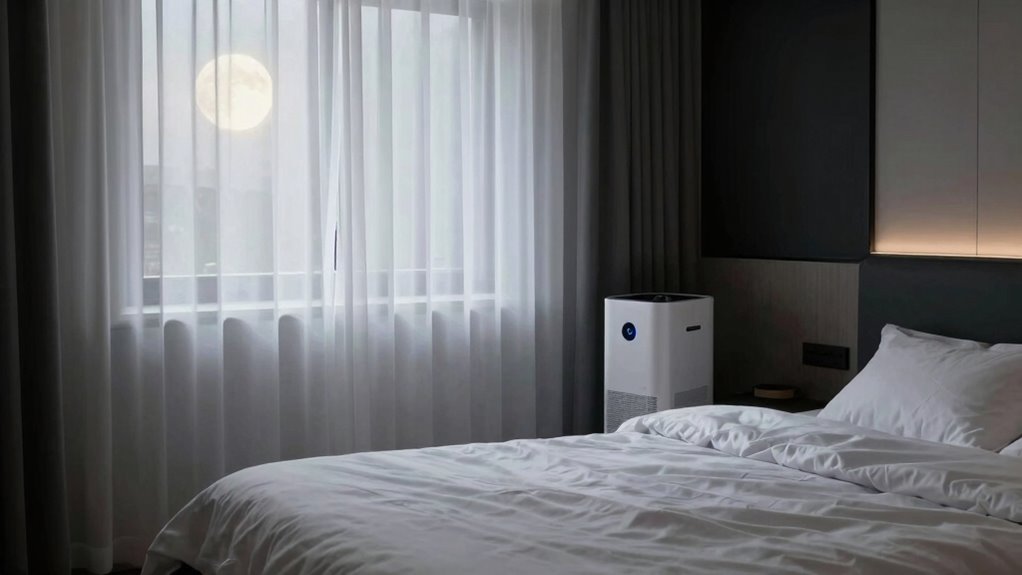
Have you ever wondered how your sleep environment impacts the quality of your rest? It’s not just about how many hours you sleep but also about the setup that surrounds you. The foundation of a good night’s sleep begins with air, light, and noise—each playing a critical role in creating a space where your body can truly relax. If you ignore these elements, even the most comfortable mattress or perfect sleep posture won’t fully help you wake up refreshed.
First, consider the air quality in your bedroom. Clean, fresh air helps your body breathe easier and promotes better oxygen flow, which is crucial for deep, restorative sleep. Poor air quality, on the other hand, can cause you to wake up feeling stuffy or restless. Use a humidifier if your room is dry, and make certain proper ventilation. Good airflow also helps regulate temperature, preventing you from overheating or feeling chilled. A comfortable sleep environment naturally supports your sleep posture and helps your muscles relax, reducing the risk of aches or stiffness in the morning. Additionally, ensuring proper air quality can reduce exposure to indoor pollutants that might disrupt your sleep cycle. Proper ventilation and air circulation are essential for maintaining this balanced environment. Research also shows that indoor pollutants can negatively impact sleep quality, making good air quality even more important. In fact, some indoor pollutants can trigger allergies or respiratory issues that interfere with restful sleep.
Next, light plays a surprisingly powerful role. Exposure to bright light before bed can interfere with your body’s production of melatonin, the hormone responsible for signaling sleep. Dim your lights in the evening to prepare your body for rest. Use blackout curtains or an eye mask to eliminate outside light sources that might wake you prematurely. Darkness signals your body that it’s time to wind down, which in turn encourages your muscles to relax into the right sleep posture. When your body is well-rested and relaxed, your sleep posture—how you position yourself on your mattress—becomes more natural and supportive, reducing strain on your neck, back, and shoulders. Creating a dark sleeping environment is a crucial step toward improving overall sleep quality.
Finally, noise levels can make or break your sleep quality. Even minor disturbances can cause you to wake or enter lighter sleep stages, leaving you tired. Use earplugs or white noise machines to block out disruptive sounds. A quiet environment not only helps you fall asleep faster but also maintains the deep sleep stages that are crucial for your health. When noise is kept in check, your body can settle into a more restful sleep posture without constantly shifting or adjusting to discomfort.
In the end, a well-optimized sleep setup starts with controlling air, light, and noise. These elements directly influence your ability to find a comfortable sleep posture and maintain mattress firmness that suits your body. Pay attention to these foundational factors, and you’ll create a sleep environment that promotes true rest, making every morning feel more refreshed and energized.

LEVOIT Air Purifiers for Bedroom Home Dorm Room, Small Quiet Air Purifiers
- AHAM Verified for Performance: Independently tested for quality and safety
- Effective Pollutant Removal: Captures lint, pet dander, smoke, and dust
- Odor Neutralization: Reduces smoke, fumes, and household odors
As an affiliate, we earn on qualifying purchases.
As an affiliate, we earn on qualifying purchases.
Frequently Asked Questions
How Does Air Quality Affect Sleep Quality?
Good air quality directly impacts your sleep quality. When you guarantee proper air filtration and humidity control, you reduce allergens, dust, and moisture that can disrupt your rest. Clean, fresh air helps you breathe easier and stay comfortable throughout the night. This creates a healthier sleep environment, minimizes respiratory issues, and allows your body to relax fully. Prioritizing air quality makes a noticeable difference in how restorative your sleep feels.
What Are the Best Types of Light for Optimal Sleep?
The best types of light for ideal sleep create a calming sleep environment, mainly using dim, warm lighting. You should use lighting technology like dimmable bulbs or amber LEDs that mimic natural sunset hues, reducing blue light exposure which can interfere with melatonin production. Keep your sleep environment dark by avoiding bright lights before bed, and consider blackout curtains or sleep masks to block out any remaining light, helping you fall asleep faster and stay asleep longer.
How Can Noise Levels Impact Sleep Stages?
Think of noise as a thief in the night, quietly stealing your rest. Elevated noise levels can fragment your sleep stages, making sleep deprivation more likely and increasing your noise sensitivity. When noise disrupts your deep and REM sleep, you wake feeling unrefreshed. To protect your sleep, keep noise levels low, especially during the night, so your body can cycle through all sleep stages uninterrupted, ensuring restorative rest.
What Are Effective Ways to Control Indoor Air Circulation?
You can control indoor air circulation effectively by using air purifiers to remove allergens and pollutants, ensuring cleaner air. Additionally, installing ventilation systems helps maintain fresh airflow and reduces stale air buildup. Regularly opening windows, when weather permits, also boosts natural circulation. Combining these methods improves air quality, making your sleep environment healthier and more comfortable, ultimately supporting better sleep quality.
Can Ambient Noise Actually Help Improve Sleep?
Think of ambient noise as a lullaby for your sleep environment, softly whispering away distractions. It can help mask sudden sounds that might wake you, creating a steady soundscape that encourages deeper rest. Noise management becomes your secret weapon, turning chaos into calm. By incorporating gentle background sounds, you anchor your mind, making it easier to drift into restful slumber and enjoy uninterrupted sleep.
Conclusion
Remember, creating the perfect sleep setup is like tuning an instrument—you need the right air, light, and noise to hit the right notes. When you prioritize airflow, block out harsh light, and minimize noise, you set the stage for restful nights. Think of your sleep environment as a cozy nest, where each element works together like a symphony, guiding you into peaceful slumber. Start with air, light, and noise, and let your dreams take flight.