
📊 Full opportunity report: A Skill Is a Folder, Not a Prompt: What Anthropic Learned Running Hundreds of Them on ThorstenMeyerAI.com — validation score, market gap, and execution plan.
TL;DR
Anthropic has learned that modeling AI skills as folders containing instructions and assets, rather than just prompts, enhances consistency, onboarding, and organizational knowledge. This approach shifts AI development from ad-hoc prompting to durable, reusable capabilities.
Anthropic has announced that its internal approach to building AI capabilities involves structuring Skills as folders containing instructions, scripts, and reference materials, rather than simple prompts. This shift aims to improve consistency, onboarding, and institutional knowledge, marking a significant change in how organizations can deploy AI agents effectively.
According to a detailed write-up from a Claude Code engineer, Anthropic’s method involves packaging knowledge into reusable, versioned folders called Skills. These folders can contain instructions, reference documents, executable scripts, templates, data, configuration, and hooks, enabling AI agents to discover, read, and execute inside a structured container. This approach moves beyond the common misconception that Skills are merely saved prompts or markdown notes.
Anthropic’s internal experiments show that Skills serve three core functions: ensuring consistent output across users, compressing onboarding by encapsulating tribal knowledge, and allowing Skills to improve over time through iteration. The company emphasizes that a Skills library is an appreciating asset, not a cost, as it captures how work is done and becomes more refined with use.
They identified nine categories of Skills, ranging from library references and product verification to infrastructure operations, with verification Skills being the most valuable for quality control. The approach underscores that effective Skills require precise descriptions and scripts, avoiding redundancies and focusing on non-obvious, specific knowledge that pushes the model off default behaviors.
A Skill is a folder, not a prompt
Anthropic published what it learned running hundreds of Skills across its own engineering org. Read as a business memo, the point is bigger than a coding trick: this is how ad-hoc prompting becomes durable institutional capability — the SOPs your agents actually follow, versioned and shared.
“A Skill is just a clever markdown prompt you save in a file.”
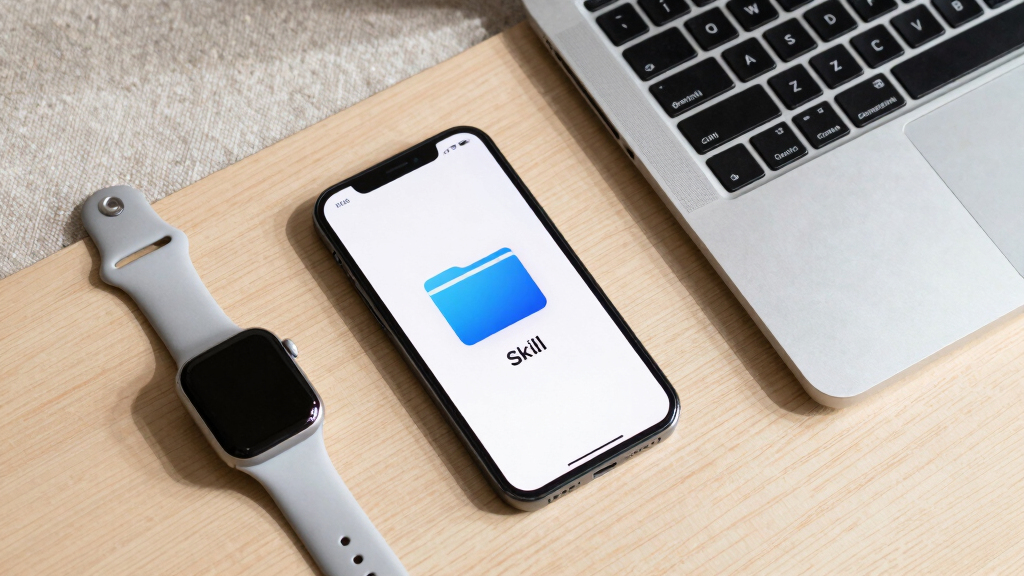
A folder the agent can discover, read & run — instructions, scripts, references, templates, config & on-demand hooks.
The knowledge of how your organization actually operates can be captured, versioned, shared & executed — and the thing capturing it is a humble folder with a script and a gotchas list inside. For the builder, that’s context engineering with real tools attached. For whoever owns the budget, it’s the difference between AI that starts from zero every morning and an asset that compounds. Caveats: best practices are still evolving, checked-in Skills cost context, and curation beats accumulation. Start with one Skill, one gotcha, and the category that catches your mistakes.
Implications for Organizational AI Deployment
This development matters because it shifts AI integration from ad-hoc prompting to a systematic, asset-based approach. By treating Skills as folders with comprehensive instructions and tools, organizations can achieve more consistent, reliable, and maintainable AI behavior. This method also facilitates onboarding, reduces reliance on individual tribal knowledge, and creates a scalable foundation for continuous improvement. For businesses, this means AI can become a more dependable operational asset, rather than a collection of fragile prompts.
AI development folder structure tools
As an affiliate, we earn on qualifying purchases.
As an affiliate, we earn on qualifying purchases.
Background on AI Skill Development and Anthropic’s Approach
Traditionally, AI teams have relied on crafting prompts for specific tasks, often reusing or slightly modifying them. This ad-hoc method can lead to inconsistent outputs and difficulty scaling. Anthropic’s recent internal experiments, as shared by a Claude Code engineer, challenge this paradigm by proposing a structured, containerized approach. Their insights come from running hundreds of Skills across their engineering organization, aiming to embed tribal knowledge and operational guardrails directly into the AI’s capabilities.
The idea of packaging knowledge into reusable units has been discussed in AI circles, but Anthropic’s emphasis on folders as the core unit represents a practical evolution. Their categorization into nine Skill types offers a framework for other organizations to identify gaps and improve AI deployment systematically.
“A Skill is not a clever prompt saved in a text file. It’s a folder — one that can contain instructions, reference documents, runnable scripts, templates, data, configuration, and even hooks that fire only while the Skill is active.”
— Anthropic engineer
Unclear Aspects of Skills Implementation and Scalability
It remains unclear how broadly this approach can be adopted outside Anthropic or how it performs in large-scale, real-world deployments across diverse industries. Details about the tooling, integration challenges, and maintenance costs of such folder-based Skills are still emerging. Additionally, the long-term impact on AI behavior consistency and organizational workflows is under observation, with no definitive data yet available.
Next Steps for Broader Adoption and Validation
Organizations interested in this approach should start by cataloging existing knowledge assets and experimenting with containerized Skills. Further research and case studies are expected to clarify best practices, tooling support, and scalability. Anthropic and other AI developers are likely to refine frameworks, aiming for standardized methods to embed Skills into operational AI systems. Monitoring these developments will reveal whether folder-based Skills become a new industry standard.
Key Questions
How do Skills as folders differ from traditional prompts?
Skills as folders contain instructions, scripts, and assets organized in a structured container, enabling AI agents to discover, read, and execute them. Unlike prompts, which are simple text instructions, Skills encapsulate operational knowledge and tools for consistent, scalable use.
What benefits does this approach offer organizations?
It improves output consistency, streamlines onboarding, captures tribal knowledge, and allows Skills to evolve and improve over time, turning AI capabilities into durable organizational assets.
Are there any challenges in implementing Skills as folders?
Potential challenges include developing tooling for managing, updating, and discovering Skills, integrating them into existing workflows, and ensuring that descriptions and scripts trigger correctly for various tasks.
Will this method work for all types of AI tasks?
While promising for operational and repetitive tasks, the effectiveness for creative or highly variable tasks remains to be fully tested. Ongoing experimentation will clarify its scope.
Is this approach already widely adopted?
No, it is an emerging practice based on Anthropic’s internal experience; broader industry adoption is still in early stages.
Source: ThorstenMeyerAI.com