📊 Full opportunity report: Phone-based injury-risk movement screening for hiring on IdeaNavigator AI — validation score, market gap, and execution plan.

Get the latest gadgets delivered free — and shop member deals
- Fast, free delivery on millions of items
- Access to Prime Big Deal Days deals on October 6–7
- Prime Video, Amazon Music and more included
TL;DR

A pilot program is testing a phone-based movement screening tool for industrial hiring. It aims to identify injury risks remotely, reducing costs and delays. Validation results are pending.
A new phone-based movement screening tool is being tested as a rapid, low-cost method for industrial employers to assess injury risk in job candidates remotely. This development aims to address longstanding gaps in pre-employment screening for physically demanding roles, potentially reducing costly on-the-job injuries.
The initiative involves a guided phone capture of 5 to 7 movements, including squats, reaching, lift simulations, and balance holds. The system analyzes these movements using pose estimation technology to generate a pass/fail injury-risk score within 24 hours, at a cost of approximately $30 to $50 per candidate.
This approach is designed to serve as a first-step screening process, providing employers with immediate insights into a candidate’s lifting mechanics and injury risk. It is intended to be a more accessible and faster alternative to traditional clinic assessments, which can cost $200 to $400 and take several days.
Validation involves screening 25 candidates for a warehouse employer, with independent review of the videos by a physical therapist. The goal is to measure the agreement between the app’s scores and expert assessments, establishing the tool’s reliability before broader deployment.
Potential Impact on Industrial Hiring and Injury Prevention
This development could significantly streamline pre-employment screening for physically demanding roles, enabling employers to identify injury risks early and reduce the incidence of on-the-job injuries. Lower-cost, remote assessments may also expand access to injury prevention measures, especially for small and medium-sized businesses that cannot afford traditional clinic evaluations. If validated, this technology could become a standard part of occupational health protocols, helping to improve workplace safety and reduce workers’ compensation costs.
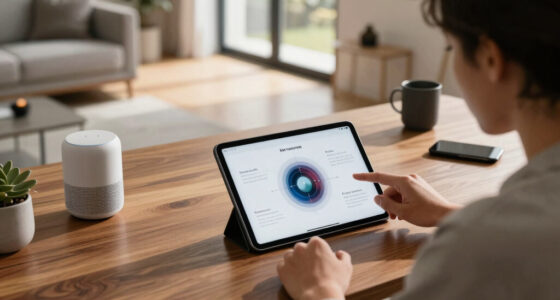
smartphone pose estimation app for injury screening
As an affiliate, we earn on qualifying purchases.
As an affiliate, we earn on qualifying purchases.
Advances in Phone Cameras and Pose Estimation Enable Remote Screening
Recent improvements in smartphone camera quality and pose estimation algorithms have made remote movement analysis feasible. Traditionally, injury-risk assessments required in-person clinic visits, which are costly and time-consuming. Rising workers’ compensation costs and labor shortages have increased interest in scalable, remote screening tools. Preliminary research suggests that movement mechanics can be reliably evaluated through video analysis, paving the way for innovations like this phone-based system.
Previous efforts have focused on in-clinic assessments or wearable sensors, but these options are expensive and less accessible. The new approach aims to leverage widely available technology to democratize injury prevention in occupational settings.
“Using phone cameras and pose estimation, we can remotely assess injury risk with a high degree of accuracy, making screening faster and more affordable.”
— an anonymous researcher
Validation Results and Broader Adoption Still Uncertain
It is not yet clear how accurately the app’s scores will align with expert assessments across diverse populations and job types. The pilot involves only one employer and a small candidate sample, so broader validation is needed. Additionally, questions remain about how well the tool will perform in real-world hiring workflows and whether employers will adopt it at scale.
Upcoming Validation and Expansion Plans for the Screening Tool
The immediate next step is completing the pilot screening of 25 candidates and analyzing the agreement between app scores and physical therapist reviews. If results are promising, plans include expanding testing to multiple employers and refining the algorithm. Further research will focus on assessing long-term impacts on injury rates and hiring efficiency.
Key Questions
How accurate is the phone-based injury screening compared to traditional assessments?
Validation is ongoing; the goal is to demonstrate high agreement with expert evaluations, but definitive accuracy metrics are not yet available.
Can this system replace in-person physical assessments entirely?
It is intended as a preliminary screening tool, not a complete replacement. Confirmatory assessments may still be needed for high-risk candidates.
What types of movements does the system analyze?
The system evaluates movements such as squats, reaching, lift simulations, and balance holds.
How much does the screening cost per candidate?
The estimated cost is between $30 and $50, significantly lower than clinic assessments.
When will this technology be available for widespread use?
Broader deployment depends on validation outcomes; if successful, pilot results could lead to commercial availability within the next year.
Source: IdeaNavigator AI
Fall Picks
fall essentials
As an affiliate, we earn on qualifying purchases.