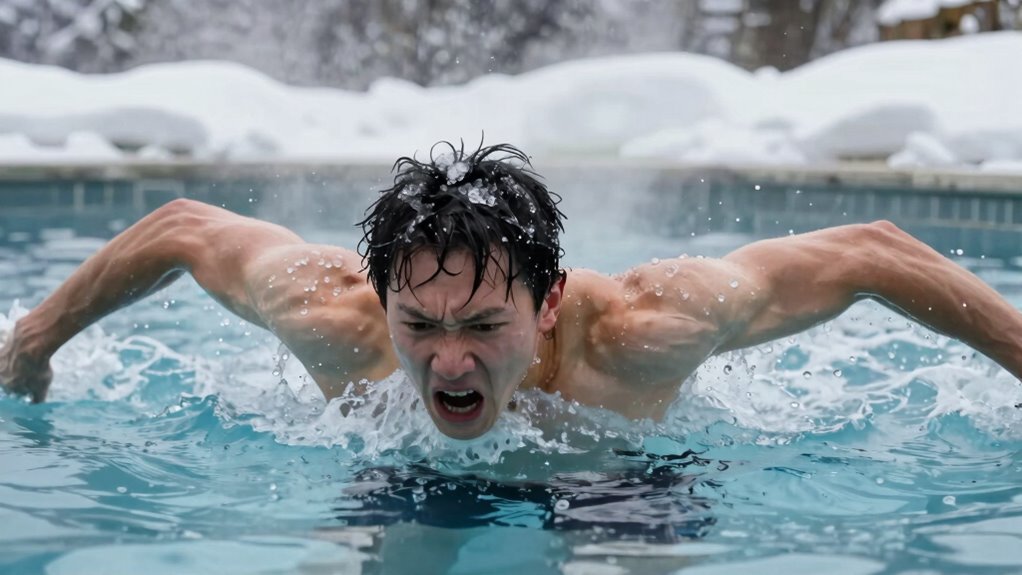

Cold plunges are harder to stick with than people admit because the shock of cold water causes intense discomfort and mental resistance. Your body naturally fights the exposure, and it’s easy to find reasons to skip or delay. Maintaining consistency requires mental toughness, social support, and reminding yourself of long-term benefits. If you want to understand how to overcome these challenges and build resilience, there’s more to discover below.
Key Takeaways
- The intense discomfort and physical shock of cold water make consistent practice challenging to maintain.
- Psychological resistance and temptation to skip sessions often undermine long-term adherence.
- Overcoming initial discomfort requires strong mental resilience, which can waver over time.
- Lack of social support or accountability can lead to decreased motivation and consistency.
- Recognizing setbacks as part of growth is difficult, making persistence harder than it appears.

Many people underestimate just how challenging it is to maintain a cold plunge routine, even when they’re initially excited about the health benefits. The shock of the cold water can be intense, and sticking with it requires mental resilience you might not realize you need. The first few sessions might feel invigorating, but as time goes on, the discomfort becomes more pronounced. Your body naturally resists the cold, and your mind tends to find reasons to skip or delay your plunge. It’s not just about the physical challenge; it’s about mental endurance. Overcoming that initial discomfort repeatedly takes perseverance and a strong mindset, especially when motivation wanes.
You might find it helpful to build social support into your routine. Sharing your commitment with friends or joining a community of cold plunge enthusiasts can make a real difference. When you know others are doing the same, it creates a sense of accountability. There’s something motivating about knowing you’re not alone in facing the cold, and their encouragement can help push you through the tough moments. Plus, social support fosters a sense of camaraderie, making the experience more enjoyable rather than a solitary struggle. It helps normalize the discomfort, so it doesn’t feel like an insurmountable barrier.
Consistency is the hardest part. Even if you’re committed at the start, life’s distractions, fatigue, or bad weather can derail your plans. That’s when mental resilience becomes critical. You need to remind yourself why you started and focus on the long-term benefits, whether it’s improved mood, increased energy, or enhanced recovery. Developing mental toughness means resisting the urge to give up when it’s cold and uncomfortable, especially on days when your motivation dips. Remember, progress isn’t linear. Some days will be easier, others harder, but what matters most is your ability to keep going despite setbacks. Recognizing the importance of psychological resilience can help you prepare mentally for these challenges. Building this resilience often involves understanding the benefits of cold exposure, which can serve as a powerful motivator to persevere through discomfort. Additionally, understanding how to cultivate mental toughness can further enhance your ability to stay committed. Cultivating a growth mindset also plays a key role in viewing setbacks as opportunities for progress rather than failures.
Incorporating social support can serve as a buffer against those setbacks. Whether it’s a workout buddy or an online group, knowing others are in the same boat provides emotional encouragement. It keeps you accountable and helps you push through the mental barriers that often make cold plunges feel unbearable. Ultimately, sticking with this routine is less about physical resilience alone and more about cultivating mental strength supported by a community that understands your goals. That combination makes the difference between fleeting interest and a lasting habit. Additionally, understanding the benefits of cold exposure can motivate you to stay committed when the initial excitement fades.
As an affiliate, we earn on qualifying purchases.
Frequently Asked Questions
How Long Should I Stay in a Cold Plunge for Health Benefits?
For health benefits, you should aim for cold water immersion lasting about 5 to 10 minutes. This duration helps improve your mental resilience and boosts circulation without overexposing your body. Start with shorter sessions and gradually increase your time as you get used to the cold. Remember, consistency is key, and listening to your body guarantees you enjoy the benefits safely while building mental resilience over time.
Are Cold Plunges Safe for Everyone?
Cold water safety isn’t a one-size-fits-all, and your temperature tolerance varies. If you have heart issues, circulation problems, or are pregnant, it’s best to seek medical advice before diving into cold plunges. While many find them invigorating, they aren’t suitable for everyone. Listen to your body, start slow, and always prioritize your safety to enjoy the benefits without risking discomfort or harm.
How Can I Overcome the Initial Shock of Cold Water?
To overcome the initial shock of cold water, focus on building mental resilience and practicing breathing techniques. When you dip in, take slow, deep breaths to calm your nervous system and reduce panic. Remind yourself that the initial shock is temporary, and your mind can adapt with regular exposure. Over time, this mental resilience helps you stay calm and comfortable, making cold plunges easier to endure.
What’s the Best Time of Day for Cold Plunges?
Choosing the early morning for your cold plunge can foster temperature adaptation and boost mental resilience. Starting your day with a brisk dip awakens your senses and sets a resilient tone. Alternatively, late afternoons allow your body to relax and recover, making it easier to embrace the chill. Ultimately, consistency matters more than timing, so select a time that fits your schedule and helps you develop a steady, empowering routine.
How Often Should I Incorporate Cold Plunges Into My Routine?
You should aim for cold plunges about 2 to 3 times a week. This frequency helps build mental resilience without overwhelming you. Regular practice enhances your ability to handle stress and improves your mood. Plus, sharing these experiences with friends can turn cold plunges into fun social experiences, making it easier to stay consistent. Listen to your body, and gradually increase frequency as you grow more comfortable.
Conclusion
So, next time you consider starting cold plunges, remember—they’re tougher than they seem. It’s not just about braving the cold; it’s about overcoming the mental hurdle that keeps many from sticking with it. Will you find the resilience to push through the discomfort and access the benefits? Or will the cold win this round? The choice is yours—are you ready to challenge what you think you know? The real test begins now.