
📊 Full opportunity report: Appointment no-show recovery planner for therapy practices on IdeaNavigator AI — validation score, market gap, and execution plan.

Get the latest gadgets delivered free with Prime
- Fast, free delivery on millions of items
- Prime Video, Amazon Music and more included
- Member-only deals all year
TL;DR
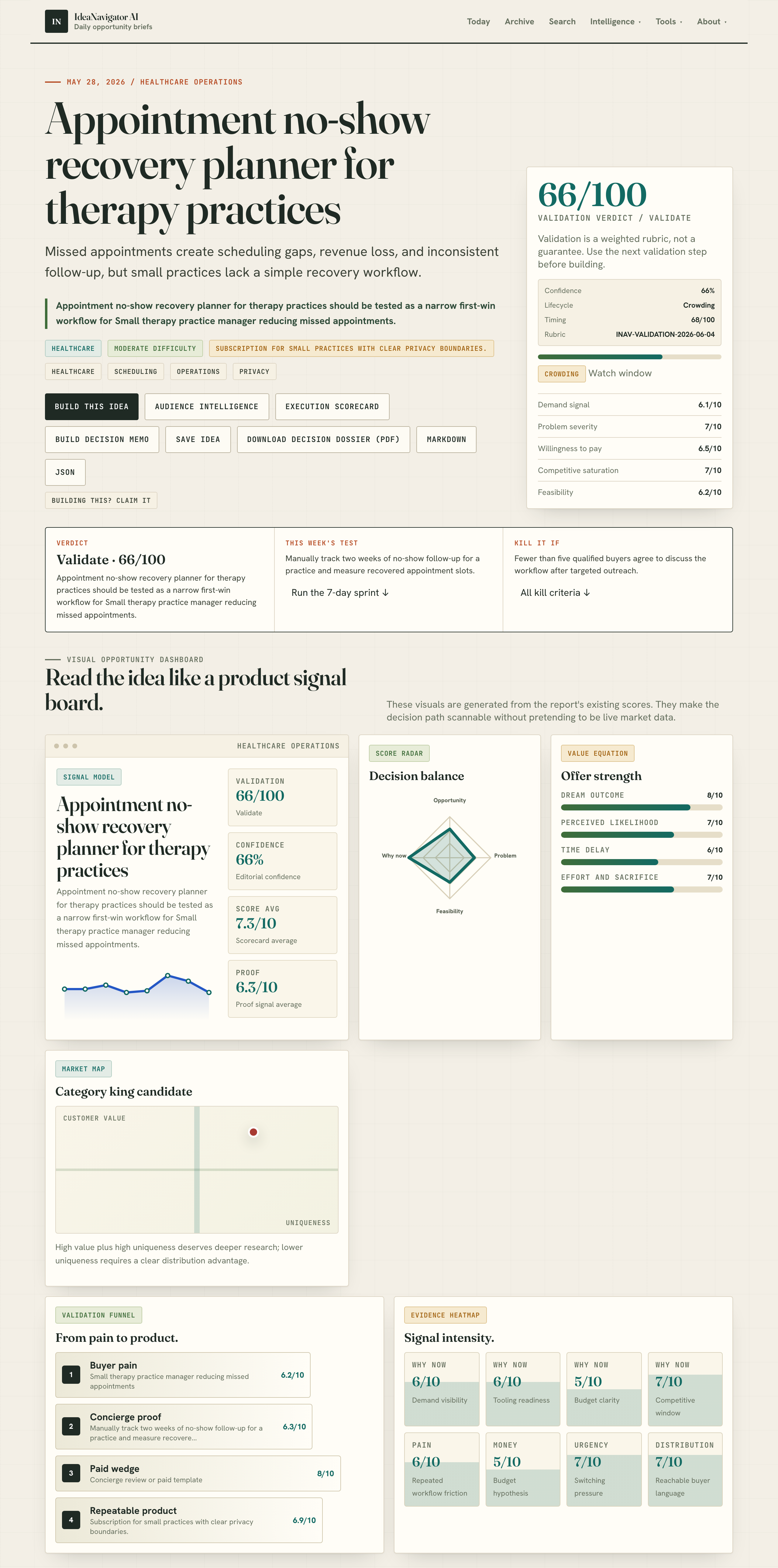
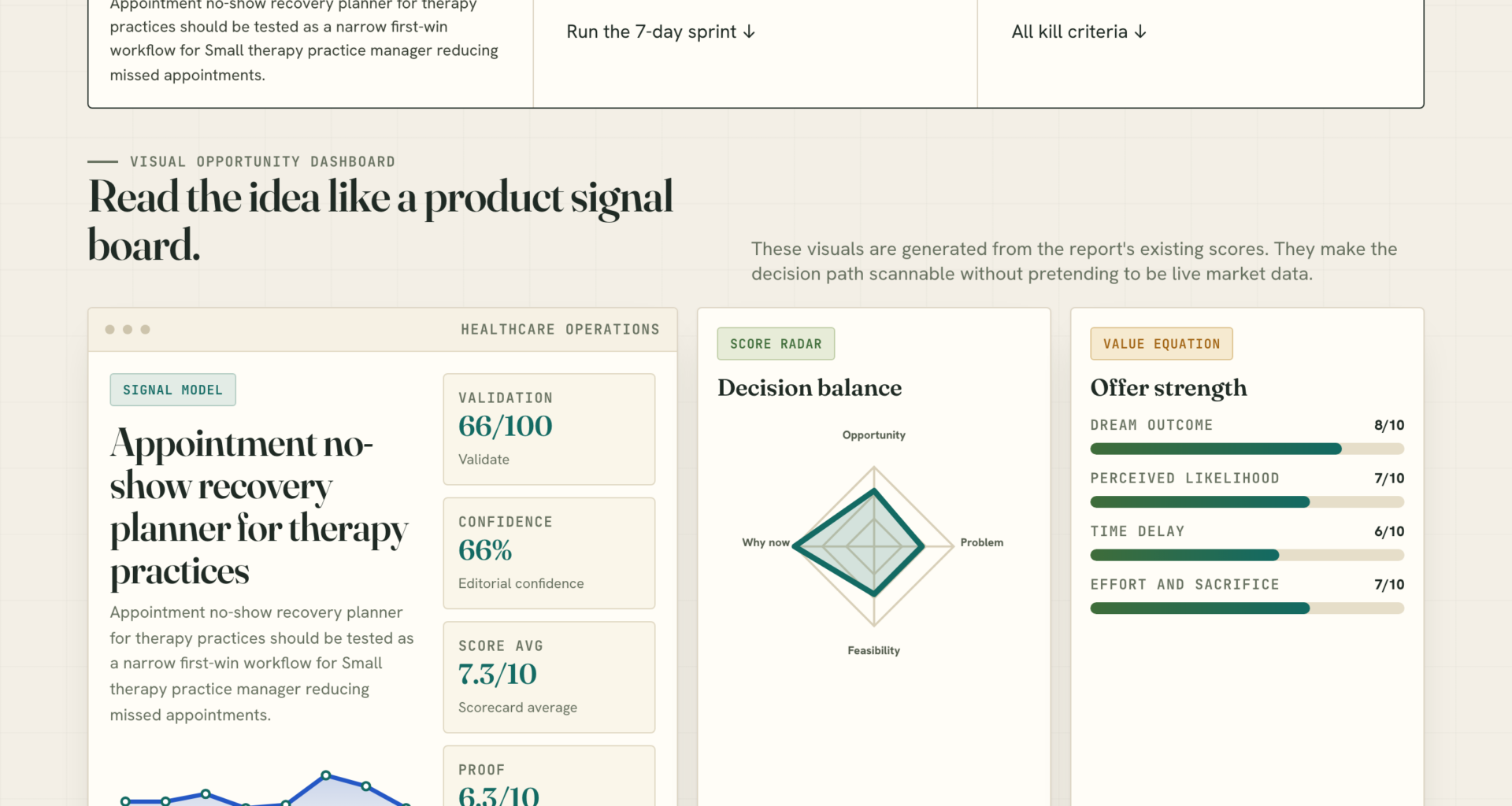
A new appointment no-show recovery planner is being tested for small therapy practices to help reduce missed visits. The tool logs missed appointments, outreach efforts, and rescheduling, aiming to improve revenue and follow-up. Its success will be measured over a two-week trial period.
A new appointment no-show recovery planner is being tested with small therapy practices to address scheduling gaps caused by missed visits. This workflow aims to help practices reduce revenue loss and improve follow-up without relying on clinical claims, marking a step towards operational tools tailored for small healthcare providers.
The no-show recovery planner is a non-clinical tool designed specifically for small therapy practices. It will log missed appointments, record reminder attempts, track rescheduling status, and use outreach templates to re-engage patients. The initial testing involves manually tracking these activities over a two-week period to measure effectiveness in recovering appointment slots.
According to sources from IdeaNavigator AI, the tool is intended as a minimal viable product (MVP) that offers a simple, privacy-conscious way for practices to manage missed visits. Revenue will be generated through a subscription model targeted at small practices, with clear boundaries around patient data privacy.
Potential Impact on Small Therapy Practices’ Revenue
If successful, the no-show recovery planner could significantly reduce revenue loss caused by missed appointments in small therapy practices. By streamlining follow-up workflows, practices can better utilize their schedules, improve patient retention, and increase overall operational efficiency. This addresses a common pain point that small providers often lack dedicated tools to manage no-shows effectively.
appointment no-show recovery planner for therapy practices
As an affiliate, we earn on qualifying purchases.
As an affiliate, we earn on qualifying purchases.
Growing Need for Operational Tools in Healthcare Settings
Missed appointments are a widespread issue in healthcare, especially for small practices that lack dedicated administrative resources. Current solutions often focus on large clinics or hospital systems, leaving small practices without simple, effective tools. The development of this planner aligns with a broader trend towards operational automation and workflow optimization in healthcare, emphasizing non-clinical solutions that improve practice management.
The concept emerged as a response to the recognized need for lightweight, privacy-respecting tools that can be quickly tested and adopted by small practices. The trial period will provide insights into how well such workflows can recover missed appointments and whether they can be scaled.
“This workflow could be a practical solution for small practices to reduce missed appointments without adding clinical complexity.”
— an anonymous researcher
Uncertain Outcomes of the No-Show Recovery Trial
It remains unclear how effective the recovery workflow will be in practice, as the trial is still ongoing. The actual impact on appointment recovery rates, patient engagement, and revenue will only be known after the two-week testing period. Additionally, questions about patient privacy, workflow integration, and scalability are still to be addressed.
Next Steps After Trial Completion and Evaluation
Following the two-week trial, the development team will analyze the data to determine the workflow’s effectiveness. If results are positive, plans will be made to refine the tool and prepare for broader deployment. Further validation may include larger pilot tests across multiple practices, with potential integration into existing scheduling systems.
Key Questions
How does the no-show recovery planner work?
The planner logs missed appointments, tracks reminder attempts, records rescheduling status, and uses outreach templates to re-engage patients, aiming to recover missed slots.
Is this tool intended for large healthcare organizations?
No, it is specifically designed for small therapy practices that lack dedicated operational workflows for no-show management.
Will patient privacy be protected?
Yes, the tool is designed with clear privacy boundaries and does not make clinical claims, focusing solely on operational follow-up processes.
When will the effectiveness of the workflow be known?
The current trial results are expected after a two-week manual tracking period, after which analysis will determine success and next steps.
Could this workflow be scaled to larger practices?
While initially targeted at small practices, if proven effective, the workflow concept could potentially be adapted for larger healthcare providers.
Source: IdeaNavigator AI
Columbus Day / Indigenous Peoples' Day Picks
long weekend sales
As an affiliate, we earn on qualifying purchases.