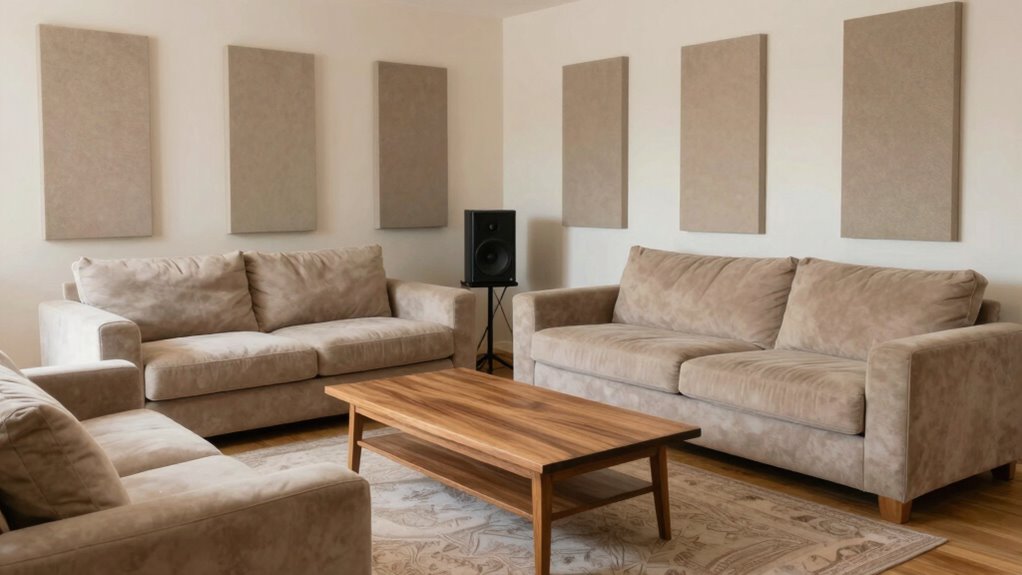

Room correction technology can improve sound, but proper furniture placement still makes a big difference. By arranging furniture thoughtfully, you reduce reflective surfaces and standing waves that cause muddiness and echo. Soft furnishings absorb excess sound, boosting clarity, while strategically positioning speakers minimizes early reflections. Combining these steps with room correction enhances your audio experience. To discover how integrating furniture choices with acoustic tricks can truly transform your space, keep exploring these essential tips.
Key Takeaways
- Proper furniture placement reduces reflective surfaces and standing waves, improving sound clarity beyond what room correction alone can achieve.
- Soft furnishings absorb excess sound, enhancing audio quality when combined with strategic furniture positioning.
- Moving speakers away from walls and corners prevents bass buildup and early reflections, complementing room correction.
- Understanding room dimensions and shape guides furniture arrangement for a more balanced acoustic environment.
- Combining thoughtful furniture placement with acoustic treatments maximizes overall sound quality and listening experience.

While room correction technology can considerably improve your audio experience by adjusting for acoustic flaws, it doesn’t replace the importance of thoughtful furniture placement. Your listening environment is shaped not just by electronic adjustments but also by how you arrange your furniture. Proper furniture placement can minimize reflective surfaces and standing waves, which can distort sound. The use of acoustic treatment, such as sound absorption materials, is essential in complementing furniture placement to create a clearer, more balanced listening space. But without strategic furniture positioning, even the best acoustic treatments and room correction software can fall short of delivering optimal sound quality.
When you position your furniture thoughtfully, you directly influence how sound interacts with your room. Large, reflective surfaces like glass tables, bare walls, or open shelving can cause sound waves to bounce unpredictably, leading to echoes or muddiness. Moving furniture away from walls or placing soft furnishings like rugs, curtains, or upholstered chairs can significantly reduce these reflections. These elements act as acoustic treatment, helping absorb excess sound and improve clarity. The goal is to craft a listening environment where sound waves are controlled, not scattered, allowing your audio equipment to perform at its best.
Your listening environment benefits from furniture placement that considers both sound absorption and diffusion. For example, positioning your speakers away from corners and reflective surfaces helps prevent bass buildup and early reflections, which can muddy the sound. Placing your listening chair at an optimal distance from speakers and avoiding symmetrical placements that cause standing waves makes a noticeable difference. Even small adjustments, like angling your speakers slightly inward or adding bookshelves filled with books, can serve as effective acoustic treatments, breaking up sound reflections and dispersing sound more evenly throughout the room. Understanding room acoustics and how furniture impacts sound can help you make more informed placement choices. Additionally, being aware of room geometry can guide you in designing a space that naturally supports better sound quality. Incorporating room dimensions into your planning can further enhance sound clarity by reducing problematic acoustic interactions. Recognizing how furniture placement influences sound behavior is crucial for optimizing your listening environment.
Ultimately, room correction technology is a valuable tool, but it works best when paired with proper furniture placement. It can fine-tune the sound by compensating for residual flaws, but it can’t overcome fundamental acoustic issues caused by poor room layout. In your quest for the perfect listening environment, think of furniture placement as the foundation that supports all other acoustic improvements. When you combine thoughtful furniture arrangement with acoustic treatment and room correction, you’ll notice a marked difference in clarity, depth, and overall sound quality. This holistic approach ensures your audio system reaches its full potential, making every listening session more immersive and enjoyable.

Focusound 52 Pack Acoustic Foam Panels 1" x 12" x 12" Sound Proof Foam Panles Soundproofing Noise Cancelling Wedge Panels for Home Office Recoding Studio with 300PCS Double-Side Adhesive
- Soundproofing Design: Triangular grooves for noise absorption
- Includes Adhesive Tape: 300pcs double-sided adhesive for easy installation
- Easy Shape Recovery: Reverts to shape after soaking in water
As an affiliate, we earn on qualifying purchases.
As an affiliate, we earn on qualifying purchases.
Frequently Asked Questions
How Do I Measure My Room’s Acoustics Accurately?
To measure your room’s acoustics accurately, start with an acoustic measurement using a sound level meter or a calibrated microphone. Play test tones or pink noise, then record how sound behaves in different spots. Focus on capturing reflections and reverberations. Use this data for sound calibration, adjusting speaker placement or adding acoustic treatments. This process helps you identify problem areas, ensuring your room sounds balanced and clear.
Can Furniture Placement Improve Sound Quality Without Technology?
Furniture placement can markedly improve sound quality without tech, as strategic setups shape the soundscape. You should consider aesthetic considerations, ensuring your arrangement looks good while enhancing acoustics. Customize furniture placement by positioning bookshelves, couches, or rugs to absorb, diffuse, or block sound waves. Moving furniture deliberately creates a dynamic, defined sound environment. With thoughtful tweaks and tailored choices, you can enjoy clear, balanced sound that feels natural and immersive, all without relying on technology.
What Are the Best Spots to Place Speakers in a Room?
You should place your speakers at ear level, facing your listening area for ideal sound. Position them in a balanced, symmetrical layout, avoiding corners and walls that can cause reflections. Experiment with speaker orientation to find the best soundstage. Add acoustic panels around the room to reduce reflections. Keep enough space between speakers and walls to prevent boomy bass, ensuring your setup delivers clear, immersive audio.
Does Room Correction Technology Eliminate All Sound Issues?
No, room correction technology doesn’t eliminate all sound issues. While it improves audio calibration by adjusting for room acoustics, it can’t fix problems caused by poor furniture placement or soundproofing techniques. To get the best sound, you still need to position your speakers carefully, add soundproofing where needed, and optimize your room’s layout. Combining these methods guarantees a richer, more balanced listening experience.
How Often Should I Adjust Furniture for Optimal Sound?
Think of your room as a living canvas—you should adjust your furniture every few months to keep the harmony. For ideal sound, consider decor tips like positioning speakers at ear level and creating a balanced layout. Aesthetic considerations matter too; avoid clutter and choose furniture that complements your space. Regular tweaks help maintain both visual appeal and acoustic quality, ensuring your sound environment stays fresh and inviting.
Conclusion
While room correction tools can fine-tune your setup, they’re like adding a splash of seasoning—you still need the main ingredients, which in this case, is smart furniture placement. Think of your space as a musical instrument; without the right arrangement, even the best sound treatments can’t hit the right note. So, take the time to position your furniture thoughtfully. It’s the secret ingredient that guarantees your sound system truly sings, turning your room into a harmonious sanctuary.