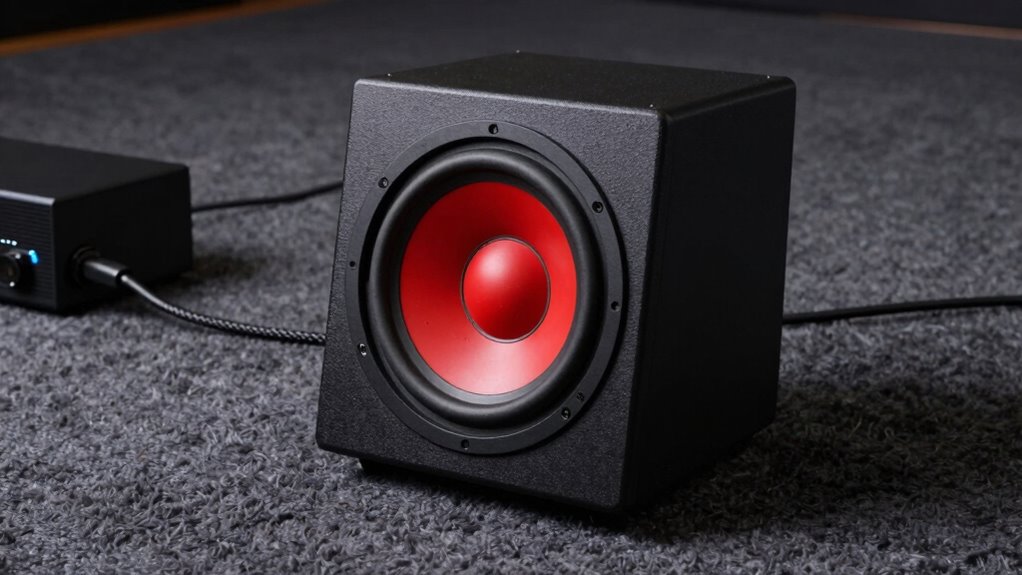

The ‘crawl method’ is a simple, effective way to find the best spot for your subwoofer. Place it near your usual listening position and play some bass-heavy music at moderate volume. Then, move around the room, listening for where the bass sounds fullest and most even. Mark that spot, and place your subwoofer there. This technique helps you avoid guesswork and get deep, balanced bass—keep going to learn more tips for perfect setup.
Key Takeaways
- The ‘Crawl Method’ involves moving a bass-heavy speaker around your room to find where bass sounds fullest and most even.
- It helps identify optimal subwoofer placement by detecting areas with balanced sound, accounting for room reflections and cancellations.
- Place the subwoofer at the marked “sweet spot” for improved bass clarity, impact, and overall sound quality.
- This technique is simple, cost-effective, and leverages your ears to optimize sound rather than relying solely on measurements.
- Fine-tune the subwoofer position after initial placement to achieve tight, balanced, and immersive bass performance.
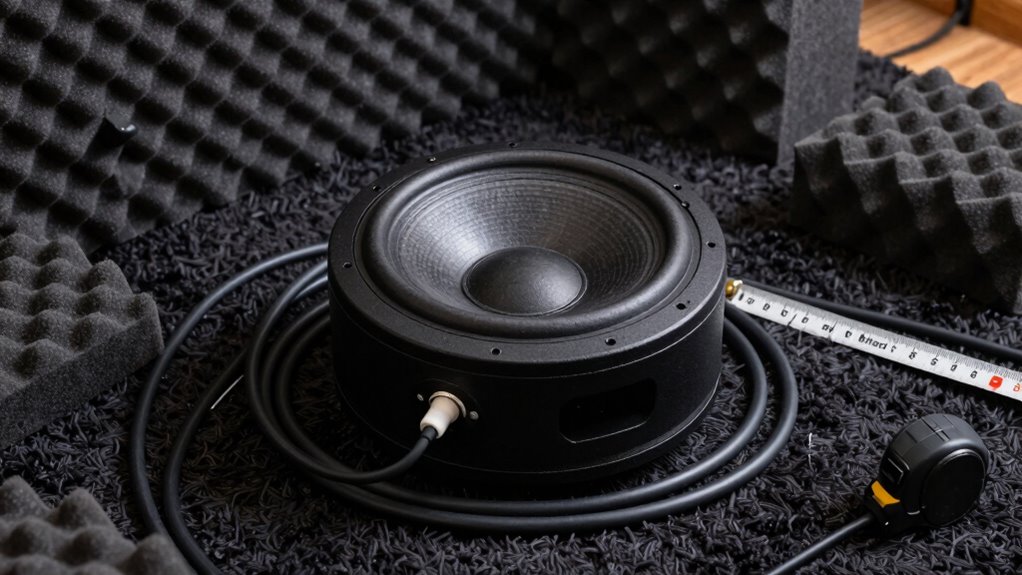
Setting up your subwoofer correctly is vital for achieving deep, balanced bass that enhances your overall audio experience. The key to perfecting this often lies in understanding room acoustics and optimizing subwoofer placement. Your room’s shape, size, furniture, and wall materials all influence how bass waves behave, making placement a critical step. A poorly positioned subwoofer can cause boomy, uneven bass that distracts rather than immerses you. Conversely, strategic placement can dramatically improve sound clarity and impact.
One effective technique to find the ideal spot is known as the “crawl method.” It’s simple yet powerful. You start by placing the subwoofer temporarily in your usual listening position, then play a bass-heavy track at a moderate volume. With your eyes closed or while moving around the room, you listen for the spot where the bass sounds fullest, most even, and least boomy. When you find that sweet spot, you mark it. This is where your subwoofer should go for maximum sound quality. Essentially, you’re using your ears as the measurement tool, allowing your room’s acoustics to guide you to the best placement.
The crawl method works because it accounts for the complex ways sound waves reflect, cancel, and reinforce each other within your space. Bass frequencies are particularly sensitive to room acoustics, which can cause certain areas to amplify or diminish bass. By physically moving around and listening, you identify where these effects balance out. Once you’ve pinpointed that spot, position your subwoofer there, ideally away from corners and walls if possible, to prevent exaggerated bass. Slight adjustments might be necessary afterward, but this initial placement is often the most impactful.
Additionally, consider experimenting with subwoofer placement relative to your main speakers. Placing the sub near your front speakers often yields a more cohesive soundstage. If your room’s acoustics cause uneven bass, you might also try using room treatments or bass traps to tame problematic frequencies. Remember, the goal isn’t just to find the loudest spot but the one where bass feels tight, even, and integrated with your overall sound. Proper subwoofer placement can significantly reduce standing waves and improve overall sound quality.
VaultsOnWheels Under Seat Storage Box Fit for 2019-2026 Chevy Silverado 1500/2500/3500HD (Not for Rear Kicker Subwoofer), Console Organizer Truck Tool Box Detachable Underseat Organizer w/TPE Mats
Perfect Fitment: VaultsOnWheels Under Seat Storage Box for 2019+ Chevy Silverado 1500 & 2500 3500HD (2020-2025) is precision-molded…
As an affiliate, we earn on qualifying purchases.
As an affiliate, we earn on qualifying purchases.
Frequently Asked Questions
Can the Crawl Method Be Used for Multiple Subwoofers?
Yes, you can use the crawl method for multi subwoofer integration. When setting up multiple subs, crawl around your room, listening for bass discrepancies. Adjust the placement and crossover settings as needed to achieve even sound coverage. This hands-on approach helps you fine-tune each sub’s position and crossover adjustments, ensuring a seamless, immersive bass experience across your space.
Is the Crawl Method Suitable for All Room Sizes?
Is the crawl method suitable for all room sizes? Not necessarily. In smaller rooms, it works great, helping you find the perfect subwoofer position quickly. But for larger spaces, acoustic treatment and strategic placement become more important, and the crawl method might not be enough on its own. Consider your room size carefully, and combine it with other setup techniques for ideal sound.
What Tools Are Needed to Perform the Crawl Method?
To perform the crawl method, you’ll need a few equipment essentials like a measuring tape, a flashlight, and a piece of paper or a smartphone to note sound quality. Focus on room acoustics by moving around and listening for the best bass response. These tools help you identify the most effective subwoofer placement, ensuring you get the best sound experience tailored to your room’s unique acoustics.
How Often Should I Repeat the Crawl Process?
You should repeat the crawl process until you find the most suitable spot that matches your listening preferences and complements your room acoustics. Typically, this takes about 3 to 5 passes, but trust your ears. If the bass sounds balanced and fills the space without boominess or hollowness, you’ve found the right placement. Remember, room acoustics can change over time, so revisit the process whenever you rearrange furniture or notice a shift in sound quality.
Does the Crawl Method Work With Wireless Subwoofers?
Think of the crawl method as a dance partner guiding your sound waves. It works with wireless subwoofers, offering setup flexibility and precise placement. While wireless compatibility allows you to move your subwoofer freely, the crawl method helps find ideal spots by testing sound quality. So, yes, you can use the crawl method with wireless subwoofers to enhance your audio experience, making setup smoother and more effective.
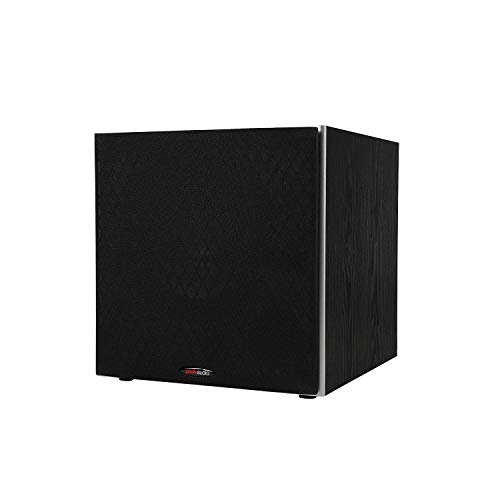
Polk Audio PSW10 10" Powered Subwoofer Home Audio – Power Port Tech, Up to 100 Watts, Big Bass in Compact Design, Easy Setup with Home Theater, Timbre-Matched with Monitor & T-Series Polk Speakers
POWERED SUBWOOFER FOR EXTRA BASS & PUNCH – 10-inch Dynamic Balance woofer and configured directed port provide accurate…
As an affiliate, we earn on qualifying purchases.
As an affiliate, we earn on qualifying purchases.
Conclusion
Now that you know the crawl method, setting up your subwoofer becomes much easier and more effective. Did you know that properly placed subwoofers can improve bass response by up to 80%? That’s a huge difference in sound quality! So go ahead, try the crawl technique—it’s like a cheat code for perfect bass. Once you get it right, you’ll enjoy richer, more immersive audio that truly transforms your listening experience.

2 Pack Bass Traps,24" X 12" Wooden Bass Traps Corner,Large Sound Echo Absorbers,Low Frequency Trap Standing Wave Acoustic Treatment for Home Studio,Listening Room or Theater
【WOODEN DESIGN】This sound absorbing panel is 24×12 inches, made of a solid wood frame, The surface is covered…
As an affiliate, we earn on qualifying purchases.
As an affiliate, we earn on qualifying purchases.

SVS SoundPath Subwoofer Isolation System, 4-Pack
Affordable and discreet alternative to platforms and risers.
As an affiliate, we earn on qualifying purchases.
As an affiliate, we earn on qualifying purchases.