Eye tracking has become a game-changer in virtual reality, enabling more immersive experiences, precise interactions, and advanced analytics. For 2026, the market offers a range of headsets that incorporate eye tracking, each suited to different users. The Meta Quest 3 512GB stands out for its wireless convenience and high-resolution display, making it ideal for casual and immersive gaming. The HTC Vive Focus Vision offers versatile mixed reality capabilities with comprehensive tracking, perfect for tech enthusiasts and professionals. Meanwhile, the Meta Quest Pro caters to creative and enterprise users with its advanced sensors and ergonomic design. These choices reflect different priorities: ease of use, technical depth, or mixed reality prowess. Here’s how they compare and who each is best suited for.
Complete the kit

Key Takeaways
- Meta Quest 3 offers a wireless VR experience with high-resolution visuals, but limited battery life can interrupt extended sessions.
- HTC Vive Focus Vision provides versatile tracking and mixed reality features but requires a more complex setup and more space.
- Meta Quest Pro excels in professional-grade sensors and ergonomic comfort, yet demands a Meta account and has limited availability.
- All options have tradeoffs between ease of use, technical features, and price, making them suitable for different user needs.
- Eye tracking integration enhances realism and interaction, but the complexity and cost vary significantly across models.
| Meta Quest 3 512GB VR Headset with Gorilla Tag Bundle and 3-Month Horizon+ Trial |  | Best Overall for Wireless High-Resolution VR | Storage Capacity: 512GB | Resolution: 4K+ Infinite Display | Memory: 8GB RAM | VIEW ON AMAZON | See Our Full Breakdown |
| HTC Vive Focus Vision — Mixed Reality and PC VR Headset with Controllers |  | Best for Versatile Mixed Reality and Tracking | Display Resolution: 2448×2448 per eye | Field of View: 120° | Refresh Rate: 90 Hz | VIEW ON AMAZON | See Our Full Breakdown |
| Meta Quest Pro | 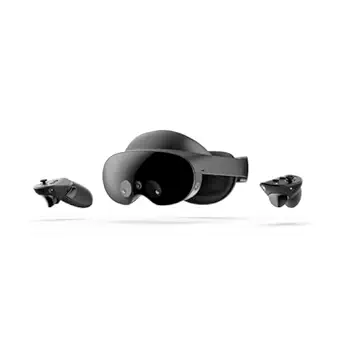 | Best for Professional-Grade Mixed Reality | Storage: 256GB | RAM: 12GB | Sensors: 10 VR/MR sensors | VIEW ON AMAZON | See Our Full Breakdown |
| Meta Quest 3S 128GB VR Headset with Gorilla Tag Bundle |  | Best for Budget-Friendly Wireless VR | Storage Capacity: 128GB | Processor: Snapdragon XR2 Gen 2 | Memory: 8GB RAM | VIEW ON AMAZON | See Our Full Breakdown |
| HTC Vive Focus Vision Wired Bundle with Facial Tracker |  | Best for High-Resolution PC Streaming and Realism | Display Resolution: 2448×2448 per eye | Field of View: up to 120° | Tracking: Eye, hand, face, body | VIEW ON AMAZON | See Our Full Breakdown |
| vr headsets with eye tracking | Connectivity |
|---|---|
| Meta Quest 3 512GB VR Headset | — |
| HTC Vive Focus Vision | DisplayPort, Ethernet, Wi-Fi |
| Meta Quest Pro | Meta account required |
| Meta Quest 3S 128GB VR Headset | — |
| HTC Vive Focus Vision Wired Bu | DisplayPort, Ethernet, Wi-Fi |
More Details on Our Top Picks
Meta Quest 3 512GB VR Headset with Gorilla Tag Bundle and 3-Month Horizon+ Trial
The Meta Quest 3 stands out for its wireless, untethered experience combined with a stunning 4K+ resolution display, making it a top choice for immersive gaming and virtual exploration. Its Snapdragon XR2 Gen 2 processor offers faster load times and enhanced graphics, elevating visual fidelity. The inclusion of a Gorilla Tag bundle and a 3-month Horizon+ trial adds value for casual gamers. Compared to other headsets, its main strength lies in ease of use—no cables or PC setup required—though its battery life can be a limitation during long sessions. It’s best suited for users seeking high-quality visuals and mobility without the hassle of wires.
Pros:- High-resolution 4K+ display for immersive visuals
- Wireless, untethered VR experience
- Includes exclusive bundle and access to 100+ games
- Enhanced graphics with Snapdragon XR2 Gen 2
Cons:- Battery life may fall short for long gaming sessions
- Requires initial calibration and setup
- High storage capacity might be unnecessary for casual users
Best for: Casual gamers and VR newcomers who want a high-res, wireless experience
Not ideal for: Users needing extended playtime or professional-grade mixed reality features
- Storage Capacity:512GB
- Resolution:4K+ Infinite Display
- Memory:8GB RAM
- Battery Life:2+ hours
- Processor:Snapdragon XR2 Gen 2
- Cameras:Dual RGB color cameras
Our verdict“A versatile, high-resolution wireless headset perfect for casual and immersive VR experiences.”
HTC Vive Focus Vision — Mixed Reality and PC VR Headset with Controllers
The HTC Vive Focus Vision offers a comprehensive mixed reality experience with high-resolution displays and a broad 120° field of view. Its standout feature is the sophisticated eye and hand tracking, along with face and body tracking support, enabling realistic interactions and spatial computing. It supports both standalone and PC VR modes, making it flexible for gaming, productivity, or development work. The setup can be complex due to multiple connectivity options, and the high cost might be a barrier for some users. This headset makes the most sense for tech-savvy users or professionals who require advanced tracking and mixed reality capabilities.
Pros:- High-resolution 2448×2448 pixels per eye display
- Versatile tracking including eye, hand, face, and body
- Supports both standalone and PC VR experiences
- Hot-swappable batteries allow longer sessions
Cons:- Setup involves multiple connectivity options and can be complex
- Higher cost compared to simpler VR headsets
- Requires ample space for full tracking and mixed reality use
Best for: Professionals and enthusiasts interested in mixed reality and advanced tracking
Not ideal for: Casual users seeking simple, plug-and-play VR experiences
- Display Resolution:2448×2448 per eye
- Field of View:120°
- Refresh Rate:90 Hz
- Tracking:Eye, hand, face, body
- Battery:Hot-swappable with reserve battery
- Connectivity:DisplayPort, Ethernet, Wi-Fi
Our verdict“A highly capable mixed reality headset suited for professional and technical applications requiring detailed eye and body tracking.”
Meta Quest Pro
The Meta Quest Pro is designed with professionals in mind, featuring a sleek design, high-resolution mixed reality passthrough, and advanced sensors for eye, face, and hand tracking. Its ergonomic shape ensures comfort for extended wear, making it suitable for work, content creation, or social VR. While its hardware is powerful, requiring a Meta account for full functionality and with limited availability, it offers a suite of sensors and capabilities that push the boundaries of mixed reality. Compared with simpler headsets, this model prioritizes professional-grade features over casual gaming, making it ideal for enterprise or serious creators.
Pros:- High-resolution mixed reality passthrough
- Ergonomic design for extended wearing
- Powerful hardware with 12GB RAM and 256GB storage
- Advanced sensors for precise eye, face, and hand tracking
Cons:- Requires a Meta account for full use
- Limited availability and higher price point
- Overkill for casual gaming needs
Best for: Business users, creators, and social VR enthusiasts
Not ideal for: Casual gamers or users without a Meta account
- Storage:256GB
- RAM:12GB
- Sensors:10 VR/MR sensors
- Display Technology:Pancake lenses, quantum dot
- Connectivity:Meta account required
Our verdict“A high-end mixed reality headset ideal for professional users seeking advanced sensors and comfort.”
Meta Quest 3S 128GB VR Headset with Gorilla Tag Bundle
The Meta Quest 3S offers an affordable entry point into untethered VR gaming with a focus on graphics enhancement and longer battery life. Its 128GB storage is sufficient for most casual gamers, and the included Gorilla Tag bundle adds exclusive items to diversify gameplay. Despite its lower storage and some bulkiness, it retains the core advantages of wireless freedom and quick setup. This headset makes sense for users wanting a cost-effective, portable VR solution that doesn’t compromise too much on visual quality or game access, though extended sessions may be limited by battery life.
Pros:- Wireless, untethered VR with freedom of movement
- Enhanced graphics and faster load times
- Includes exclusive Gorilla Tag items
- Longer battery life compared to some models
Cons:- Limited storage for large game libraries
- Battery life may not suffice for very long sessions
- Potentially bulky or uncomfortable for some users
Best for: Budget-conscious gamers and casual VR users
Not ideal for: Power users needing more storage or professional features
- Storage Capacity:128GB
- Processor:Snapdragon XR2 Gen 2
- Memory:8GB RAM
- Battery Life:2+ hours
- Cameras:Dual RGB color cameras
- Included Items:Gorilla Space Suit, 2,000 Shiny Rocks, 3-month Horizon+ trial
Our verdict“A solid, affordable wireless VR headset with attractive bundle features for casual gaming.”
HTC Vive Focus Vision Wired Bundle with Facial Tracker
The HTC Vive Focus Vision Wired Bundle is tailored for users who want high-fidelity visuals combined with detailed facial, eye, and body tracking. Its display resolution and tracking capabilities support realistic interactions in mixed reality environments. The wired setup offers stable PC streaming via DisplayPort, ideal for serious VR developers or professionals aiming for lifelike experiences. The bundle includes a facial tracker to enhance realism, but the complexity of setup and the missing weight details could deter casual users or those seeking simplicity. It’s best for users who prioritize detailed tracking and high visual quality over portability.
Pros:- High-resolution 2448×2448 pixels per eye display
- Advanced facial, eye, and hand tracking
- Wired PC streaming with DisplayPort and Ethernet
- Includes facial tracker for lifelike interactions
Cons:- Complex setup with multiple connectivity options
- Weight and comfort details are not specified
- Price not provided, potentially expensive
Best for: VR developers, enterprise, and realism-focused users
Not ideal for: Casual or portable VR enthusiasts
- Display Resolution:2448×2448 per eye
- Field of View:up to 120°
- Tracking:Eye, hand, face, body
- Connectivity:DisplayPort, Ethernet, Wi-Fi
- Battery:Hot-swappable
- Includes:Facial tracker
Our verdict“A premium wired VR headset designed for high-fidelity realism and detailed tracking, suitable for professional applications.”

How We Picked
In selecting these headsets, I prioritized models that incorporate advanced eye tracking technology and represent a range of user needs—from casual gaming to professional mixed reality. I examined specifications like resolution, tracking capabilities, and hardware versatility, focusing on how each device balances performance and usability. Cost, compatibility, and user experience considerations also played a role, ensuring these picks are not only feature-rich but also practical for various audiences. The goal was to identify headsets that deliver meaningful eye tracking benefits while considering tradeoffs like setup complexity, price, and comfort.
| vr headsets with eye tracking | Connectivity |
|---|---|
| Meta Quest 3 512GB VR Headset | — |
| HTC Vive Focus Vision | DisplayPort, Ethernet, Wi-Fi |
| Meta Quest Pro | Meta account required |
| Meta Quest 3S 128GB VR Headset | — |
| HTC Vive Focus Vision Wired Bu | DisplayPort, Ethernet, Wi-Fi |
Factors to Consider When Choosing Vr Headsets With Eye Tracking
Choosing a VR headset with eye tracking involves considering several key factors: your main use case, the level of tracking precision needed, ease of setup, and budget. Eye tracking can enhance realism and interaction, but not all headsets deliver the same quality or features. Here, I break down what to look for and how to match a headset to your specific needs—whether you’re a casual gamer, a professional developer, or a mixed reality enthusiast.
Understanding Eye Tracking in VR
Eye tracking in VR enhances realism by enabling gaze-based interactions, foveated rendering, and more natural social presence. The technology varies in accuracy, latency, and compatibility, impacting how seamless and convincing the experience feels. Consider whether you need precise tracking for professional tasks or if basic gaze detection suffices for casual use.
Key Factors to Consider
- Resolution and Display Quality: Higher resolution improves visual clarity, especially important when eye tracking is used for foveated rendering.
- Tracking Capabilities: Look for headsets with comprehensive eye, face, and hand tracking if realism and interaction are priorities.
- Setup and Compatibility: Wireless options are easier but may compromise some tracking accuracy. Wired models often provide more stability for detailed work.
- Battery Life and Comfort: Extended sessions demand longer battery life and ergonomic design.
- Price and Ecosystem: Consider the overall value, including included accessories or software ecosystems.
Frequently Asked Questions
What are the main benefits of eye tracking in VR headsets?
Eye tracking in VR enhances immersion by enabling gaze-based interactions that feel more natural. It also allows for features like foveated rendering, which can improve graphics performance by focusing resources where the user is looking. Additionally, eye tracking can improve social presence in multiplayer environments by capturing gaze direction, making interactions feel more lifelike.
Are wireless VR headsets with eye tracking as accurate as wired ones?
Wireless VR headsets with eye tracking have made significant advances, offering impressive accuracy and low latency. However, wired models often still hold an edge in stability and precision, especially in professional or development contexts. The choice depends on your priorities: mobility and convenience versus maximum tracking fidelity.
How important is resolution when choosing an eye-tracking VR headset?
Resolution plays a key role because it directly affects visual clarity and the effectiveness of foveated rendering. Higher resolution displays enable more detailed visuals and more precise eye tracking, which can improve overall realism. For professional or high-end applications, opting for a higher resolution device makes a noticeable difference.
Can eye tracking improve social interactions in VR?
Yes, eye tracking allows avatars to mimic users’ gaze, making social interactions more natural and expressive. It can also support social cues like eye contact and attention, enhancing the feeling of presence and connection in virtual environments. This feature is especially beneficial for virtual meetings, training, or collaborative work.
Is eye tracking necessary for casual VR gaming?
While eye tracking can add a layer of realism to gaming, it is not strictly necessary for casual play. Many users find that standard head and hand tracking suffice for most games. Eye tracking becomes more valuable when you seek advanced features like foveated rendering or social interaction enhancements.