For most people choosing among these VR headsets, the Meta Quest 3 512GB is the best overall pick: it combines standalone play with mixed-reality features and a broad range of uses. The Meta Quest 3S is a more accessible entry point, while the Pimax Crystal Super suits PC VR buyers who prioritize visual detail and can support a demanding setup. The main tradeoffs are standalone convenience versus PC-powered performance, newer features versus renewed or older hardware, and headset capability versus fit and ecosystem. Smartphone viewers such as the DESTEK V5 serve a narrower purpose than dedicated VR systems. Read on for how the 15 options compare and which type of buyer each one suits.

Get the latest gadgets delivered free — and shop member deals
- Fast, free delivery on millions of items
- Access to Prime Big Deal Days deals on October 6–7
- Prime Video, Amazon Music and more included
Complete the kit

Key Takeaways
- Quest 3 is the most balanced choice: its standalone design and mixed-reality capabilities make it a more flexible everyday option than the older Quest 2 models.
- Quest 3S and Quest 3 serve different budgets and priorities: the 3S is the more approachable way into current standalone VR, while the Quest 3 is the stronger all-round choice for buyers seeking a more capable headset.
- PC VR performance comes with setup demands: Pimax Crystal Super and HTC Vive Focus Vision options are better suited to buyers who value PC-connected experiences and accept added hardware and configuration needs.
- Renewed listings and duplicate models need careful comparison: several Quest 2 and Quest 3 entries are renewed, and two DESTEK V5 entries appear, so condition, included accessories, storage, and exact bundle contents matter.
- Not every headset is a full VR system: the smartphone-based DESTEK V5 depends on a compatible phone, while standalone headsets provide their own computing and tracking for a broader range of use.
| Pimax Crystal Super VR Headset |  | Best for Simulator Visuals | Resolution: 3840 × 3840 per eye | Field of view: 140 degrees | Display: QLED Mini-LED with local dimming | VIEW LATEST PRICE | See Our Full Breakdown |
| Meta Quest 3 512GB VR Headset Gorilla Tag Bundle |  | Best Overall Standalone Bundle | Storage: 512GB | Processor: Snapdragon XR2 Gen 2 | RAM: 8GB | VIEW LATEST PRICE | See Our Full Breakdown |
| HTC Vive Focus Vision Wired Bundle – XR Headset with DisplayPort PC VR Streaming Kit |  | Best for Extended Mixed-Reality Sessions | Resolution: 2448 × 2448 per eye | Field of view: 120 degrees | Refresh rate: 90Hz | VIEW LATEST PRICE | See Our Full Breakdown |
| Meta Quest 3S 128GB VR Headset – Gorilla Tag Bundle |  | Best Entry Point for Standalone VR | Storage: 128GB | Processor: Snapdragon XR2 Gen 2 | RAM: 8GB | VIEW LATEST PRICE | See Our Full Breakdown |
| DESTEK V5 VR Headset for Smartphones |  | Best for Basic Smartphone VR | Compatible screen size: 5.5-7.0 inches | Field of view: 110 degrees | Compatibility: iPhone, Samsung, and other smartphones | VIEW LATEST PRICE | See Our Full Breakdown |
| Meta Quest Pro 256GB VR/MR Headset with OAO Virtual Reality Field Trips |  | Best for Mixed Reality Multitasking | Storage: 256 GB | RAM: 12 GB | Sensors: 10 VR/MR sensors | VIEW LATEST PRICE | See Our Full Breakdown |
| HTC Vive Focus Plus 6DoF Standalone VR Headset Bundle |  | Best for Standalone AMOLED Viewing | Tracking: 6DoF | Display: AMOLED | Combined resolution: 2880 × 1600 | VIEW LATEST PRICE | See Our Full Breakdown |
| Meta Quest 3S 128GB Virtual Reality Headset (Renewed Premium) |  | Best Renewed Wireless Gaming Pick | Storage: 128 GB | RAM: 8 GB | Processor: Snapdragon XR2 Gen 2 | VIEW LATEST PRICE | See Our Full Breakdown |
| Meta Quest 2 128GB All-in-One VR Headset (Renewed) |  | Best for a Familiar Standalone VR Setup | Storage: 128 GB | Resolution: 1832 × 1920 pixels per eye | Field of view: 89° | VIEW LATEST PRICE | See Our Full Breakdown |
| DESTEK V5 VR Headset for Smartphones |  | Best Entry Point for Smartphone VR | Compatible phone screen size: 5.5–7.0 inches | Field of view: 110° | Included accessories: Controller | VIEW LATEST PRICE | See Our Full Breakdown |
| HTC Vive Focus Vision Mixed Reality and PC VR Headset with Controllers |  | Best for Extended PC VR Sessions | Resolution per eye: 2448 × 2448 | Field of view: 120° | Refresh rate: 90 Hz | VIEW LATEST PRICE | See Our Full Breakdown |
| Meta Quest 2 All-in-One VR Headset, 256 GB (Renewed) |  | Best Renewed Pick for a Larger Library | Storage: 256 GB | Resolution per eye: 1832 × 1920 pixels | Refresh rate: 90 Hz | VIEW LATEST PRICE | See Our Full Breakdown |
| Meta Quest Pro | 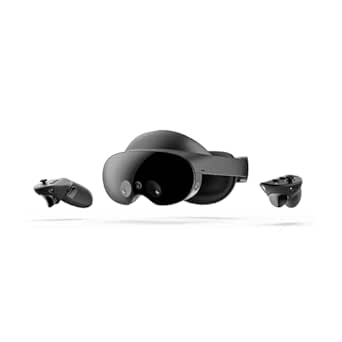 | Best for Mixed-Reality Collaboration | Storage: 256 GB | RAM: 12 GB | Sensors: 10 advanced VR/MR sensors | VIEW LATEST PRICE | See Our Full Breakdown |
| Meta Quest 3 512GB VR Headset (Renewed Premium) |  | Best Renewed All-Rounder | Storage: 512 GB | RAM: 8 GB | Processor: Snapdragon XR2 Gen 2 | VIEW LATEST PRICE | See Our Full Breakdown |
| Meta Quest 2 Advanced All-In-One Virtual Reality Headset (128 GB) |  | Best for Simple, Cable-Free VR | Storage capacity: 128 GB | Connectivity: Wireless | Audio: 3D positional audio | VIEW LATEST PRICE | See Our Full Breakdown |
| VR headset | Field of view | Storage | RAM |
|---|---|---|---|
| Pimax Crystal Super VR Headset | 140 degrees | — | — |
| Meta Quest 3 512GB VR Headset | — | 512GB | 8GB |
| HTC Vive Focus Vision Wired Bu | 120 degrees | — | 12GB |
| Meta Quest 3S 128GB VR Headset | — | 128GB | 8GB |
| DESTEK V5 VR Headset for Smart | 110 degrees | — | — |
| Meta Quest Pro 256GB VR/MR Hea | — | 256 GB | 12 GB |
| HTC Vive Focus Plus 6DoF Stand | 110° | 32 GB | — |
| Meta Quest 3S 128GB Virtual Re | 96° | 128 GB | 8 GB |
| Meta Quest 2 128GB All-in-One | 89° | 128 GB | — |
| DESTEK V5 VR Headset for Smart | 110° | — | — |
| HTC Vive Focus Vision Mixed Re | 120° | — | 12 GB |
| Meta Quest 2 All-in-One VR Hea | 90° | 256 GB | — |
| Meta Quest Pro | — | 256 GB | 12 GB |
| Meta Quest 3 512GB VR Headset | — | 512 GB | 8 GB |
| Meta Quest 2 Advanced All-In-O | — | — | — |
More Details on Our Top Picks
Pimax Crystal Super VR Headset
I’d put the Pimax Crystal Super at the top for PC sim fans who value visual detail and peripheral awareness over wireless freedom. Its 3840 × 3840 resolution per eye and 140-degree field of view are aimed at making cockpit instruments easier to read while keeping more of the virtual scene in view. Compared with the Meta Quest 3 512GB, this is the more specialized choice: it needs a powerful Windows PC and a wired DisplayPort connection, but it prioritizes high-end PC visuals rather than standalone convenience. Eye-tracking adds another layer for supported experiences, while the balanced design is intended to help during longer sessions. The tradeoff is clear: this headset suits a dedicated sim setup, not casual play around the room, and its refresh rate tops out at 90Hz.
Pros:- 3840 × 3840 resolution per eye supports fine detail in simulator scenes.
- 140-degree field of view provides broad peripheral awareness.
- QLED Mini-LED display with local dimming is designed for bright highlights and deeper blacks.
- Eye-tracking and inside-out tracking support a range of PC VR experiences.
Cons:- Requires a powerful Windows PC and a DisplayPort connection.
- Wired use limits movement compared with standalone headsets such as the Meta Quest 3.
- Refresh rate is limited to 90Hz.
Best for: Flight and racing simulator enthusiasts with a powerful Windows PC and DisplayPort who prioritize fine visual detail and a wide field of view.
Not ideal for: Buyers who want a wireless, self-contained headset or need a lightweight setup that works without a gaming PC.
- Resolution:3840 × 3840 per eye
- Field of view:140 degrees
- Display:QLED Mini-LED with local dimming
- Refresh rate:Up to 90Hz
- Connectivity:DisplayPort, USB
- Tracking:Inside-out and eye-tracking
- Lens technology:Aspherical
- Compatibility:Windows 10 PC
Our verdict“Choose the Pimax Crystal Super for a dedicated PC simulator setup where visual clarity matters more than wireless convenience.”
Meta Quest 3 512GB VR Headset Gorilla Tag Bundle
The Meta Quest 3 512GB is my broadest recommendation here because it combines standalone play, color passthrough, and ample storage without requiring a PC. Its Snapdragon XR2 Gen 2 processor and 8GB of RAM support a newer generation of standalone games, while the 512GB capacity leaves more room for a larger library than the Quest 3S 128GB Gorilla Tag Bundle. This package also adds Gorilla Tag items and a trial covering more than 100 games, which makes it particularly appealing to someone starting with that game or exploring VR software. Its main compromise is session length: battery life is just over two hours per charge. Unlike the Pimax Crystal Super, it favors untethered flexibility over simulator-focused display specifications, so PC sim enthusiasts may prefer a headset built around a wired setup.
Pros:- Standalone design does not require a PC for headset use.
- 512GB storage gives more room for games than the 128GB Quest 3S bundle.
- Snapdragon XR2 Gen 2 processor and 8GB RAM support current standalone VR experiences.
- Bundle includes Gorilla Tag items and a three-month trial to more than 100 games.
Cons:- Battery life is just over two hours per charge.
- The included game trial is temporary, so continued access to its catalog depends on what happens after the trial.
- Less suited to PC simulator setups than the wired Pimax Crystal Super.
Best for: First-time VR buyers and Gorilla Tag fans who want a high-capacity standalone headset, color passthrough, and a broad game trial.
Not ideal for: PC simulator enthusiasts who want a wired DisplayPort headset, or players who expect long sessions without charging breaks.
- Storage:512GB
- Processor:Snapdragon XR2 Gen 2
- RAM:8GB
- Display:4K+ Infinite Display
- Battery life:Just over two hours per charge
- Cameras:Dual RGB color passthrough cameras
- Bundle:Gorilla Tag items and three-month trial to more than 100 games
Our verdict“Pick this Quest 3 bundle for flexible standalone play, generous storage, and a ready-made start with Gorilla Tag and a game trial.”
HTC Vive Focus Vision Wired Bundle – XR Headset with DisplayPort PC VR Streaming Kit
The HTC Vive Focus Vision sits between a standalone headset and a dedicated PC VR system: it supports standalone use, while the included DisplayPort kit opens a route to PC streaming. That flexibility, plus hot-swappable batteries, makes it a stronger fit for longer or varied sessions than the Meta Quest 3, whose battery runs just over two hours. The 5K display, 120-degree field of view, and 90Hz refresh rate give it a substantial visual specification, and its eye, hand, face, and body tracking reaches beyond the simpler tracking setup listed for the Quest 3. The catch is that its full capabilities lean on PC connections, and the wired bundle adds bulk. I’d choose it over the Pimax Crystal Super when tracking breadth and swappable power matter; I’d choose the Pimax for its higher per-eye resolution and wider field of view.
Pros:- Supports standalone use and DisplayPort PC VR streaming.
- Eye, hand, face, and body tracking offer broad input and tracking options.
- Hot-swappable reserve battery can extend sessions without waiting for a full recharge.
- MicroSD expansion supports storage increases up to 2TB.
Cons:- Full functionality calls for a PC connection through DisplayPort or Ethernet.
- The wired kit adds bulk compared with an untethered headset such as the Meta Quest 3.
- Its 90Hz refresh rate and 120-degree field of view are less ambitious than the Pimax Crystal Super’s listed 140-degree field of view.
Best for: VR users who want both standalone and DisplayPort PC play, advanced tracking, expandable storage, and longer sessions enabled by battery swaps.
Not ideal for: Buyers seeking the simplest wireless setup, or simulator enthusiasts who prioritize maximum per-eye resolution and field of view over tracking options.
- Resolution:2448 × 2448 per eye
- Field of view:120 degrees
- Refresh rate:90Hz
- IPD adjustment:Automatic
- Tracking:Eye, hand, face, and body tracking
- RAM:12GB
- Expandable storage:Up to 2TB via MicroSD
- Battery:Hot-swappable front reserve battery
- Frame material:Magnesium alloy
Our verdict“Choose the Vive Focus Vision if you want flexible standalone and PC VR use with advanced tracking and battery swaps, and can accept a bulkier connected setup.”
Meta Quest 3S 128GB VR Headset – Gorilla Tag Bundle
The Meta Quest 3S 128GB is the straightforward pick for someone who wants wireless standalone VR and a bundled way into Gorilla Tag, without needing the larger library capacity of the Quest 3 512GB. It shares the Snapdragon XR2 Gen 2 processor and 8GB of RAM with that Quest 3 model, so the key distinction in this lineup is storage rather than a lower-generation processor. Color passthrough cameras also give it mixed-reality capability. The 128GB capacity is the meaningful compromise: buyers who keep many large games installed may prefer the Quest 3’s 512GB. Like that headset, the 3S lasts just over two hours per charge, and its game trial is time-limited. Compared with the smartphone-based DESTEK V5, this is a self-contained VR system rather than a phone viewer, but it costs more in setup complexity and needs charging.
Pros:- Wireless standalone use avoids a PC or smartphone requirement.
- Snapdragon XR2 Gen 2 processor and 8GB RAM support current-generation graphics.
- Dual RGB passthrough cameras enable color mixed-reality views.
- Gorilla Tag bundle includes in-game items and a three-month game trial.
Cons:- 128GB storage leaves less room for a large library than the 512GB Meta Quest 3.
- Battery life is just over two hours per charge.
- Full access to the trial catalog is temporary.
Best for: New standalone VR buyers, especially Gorilla Tag players, who want current-generation processing and do not need a large installed game library.
Not ideal for: Players who keep many games installed or want longer sessions without charging; the 512GB Quest 3 is a better fit for a larger library.
- Storage:128GB
- Processor:Snapdragon XR2 Gen 2
- RAM:8GB
- Battery life:Just over two hours
- Cameras:Dual RGB color passthrough cameras
- Graphics power:Listed as 2× the processing power of Quest 2
- Bundle:Gorilla Tag items and three-month game trial
Our verdict“Choose the Quest 3S bundle as a standalone starter headset if its 128GB capacity suits your game library.”
DESTEK V5 VR Headset for Smartphones
The DESTEK V5 has a different job from the standalone Quest headsets: it holds a compatible smartphone rather than running VR software itself. That makes it a simple option for buyers who already have a suitable phone and want to try phone-based VR without moving to a dedicated system. Its 110-degree field of view, breathable materials, and anti-blue-light lenses are useful design points, while the included Bluetooth controller adds input options. There is an important compatibility limit: full interactive controller functions require Android, and iOS use is restricted to music and YouTube controls. By comparison, the Meta Quest 3S is a complete wireless VR platform with its own processor and cameras, so it is much better suited to dedicated VR gaming. The V5 is the less capable but simpler phone-dependent choice.
Pros:- Works with smartphones using 5.5- to 7-inch screens.
- 110-degree field of view offers a broad viewing area for a phone-based viewer.
- Includes a Bluetooth controller and touch buttons.
- Breathable design and anti-blue-light lenses are built for viewing comfort.
Cons:- Requires a compatible smartphone and does not operate as a standalone VR system.
- Full interactive controller functions require Android; iOS controls are limited.
- Phone-based VR offers a more limited platform than the standalone Meta Quest 3S.
Best for: Smartphone owners who want an entry-level phone-based VR viewer for compatible content and do not expect full controller support on iPhone.
Not ideal for: Dedicated VR gamers, iPhone users seeking full interactive controller controls, or anyone who wants a headset that works without a smartphone.
- Compatible screen size:5.5-7.0 inches
- Field of view:110 degrees
- Compatibility:iPhone, Samsung, and other smartphones
- Included accessories:Bluetooth controller
- Lens feature:Anti-blue-light
- Controller support:Full interactive functions require Android; limited iOS controls
- Support:1 year
Our verdict“Choose the DESTEK V5 only if you want a basic phone-based viewer and your smartphone and controller expectations match its compatibility limits.”
Meta Quest Pro 256GB VR/MR Headset with OAO Virtual Reality Field Trips
The Meta Quest Pro is the strongest fit here for buyers who want a headset to blend virtual content with their physical surroundings and keep several work or learning windows in view. Its full-color passthrough, local dimming, and quantum dot display features set it apart from the more gaming-oriented Meta Quest 2 and the smartphone-dependent DESTEK V5. Self-tracking Touch Pro controllers add precise input and haptics, while multiple resizable screens suit users who expect more than single-app VR. The tradeoff is that its feature set is specialized: someone mainly seeking a straightforward wireless gaming headset may find the Meta Quest 3S a simpler match. The included Optima Academy Online field-trip subscription also has conflicting stated durations—one month and 12 months—so I would verify that detail before buying.
Pros:- Full-color mixed reality passthrough supports viewing the room alongside virtual content
- Touch Pro controllers combine self-tracking cameras with haptic feedback
- Multiple resizable screens support a multitasking workspace
- Includes access to Optima Academy Online virtual field trips
Cons:- The included subscription duration is inconsistently described as one month and 12 months
- Its mixed-reality and multitasking strengths may be unnecessary for buyers who mainly want gaming
Best for: People who want full-color mixed reality, precise controllers, and multiple virtual screens for work or educational activities
Not ideal for: Buyers focused mainly on uncomplicated VR gaming, or anyone relying on a clearly specified duration for the included field-trip subscription
- Storage:256 GB
- RAM:12 GB
- Sensors:10 VR/MR sensors
- Audio:Spatial audio
- Controllers:Meta Quest Touch Pro controllers with self-tracking cameras and haptics
- Display features:Pancake lenses, increased pixel density, local dimming, and quantum dot technology
- Included subscription:Optima Academy Online VR field trips; duration is stated as both one month and 12 months
Our verdict“Choose the Quest Pro if mixed-reality multitasking and advanced controller tracking matter more than a simple gaming-first setup.”
HTC Vive Focus Plus 6DoF Standalone VR Headset Bundle
The HTC Vive Focus Plus suits buyers who want standalone, room-scale VR and favor an AMOLED panel over newer mixed-reality features. Its 2880 × 1600 combined resolution, 90 Hz refresh rate, and 110-degree field of view give it a clear display-focused profile; the Meta Quest 2, by comparison, lists a narrower 89-degree field of view. The glasses-friendly fit and included face cushion also make this bundle a practical option for users who wear spectacles. It is less straightforward than the Meta Quest 3S, though: this model has 32 GB of storage, and some tracking capabilities depend on SDK integration. Product information also mentions PC compatibility alongside standalone operation, so I would check the required setup before choosing it for PC VR.
Pros:- Standalone 6DoF tracking supports movement through a room without a PC connection
- AMOLED display pairs 2880 × 1600 resolution with a 90 Hz refresh rate
- 110-degree field of view is wider than the listed Meta Quest 2 field of view
- Bundle includes controllers, a face cushion, charger, and USB-C cable
Cons:- 32 GB of storage is limited compared with the 128 GB Meta Quest 2 and Meta Quest 3S
- Some tracking features depend on SDK integration
- PC compatibility and standalone operation may require checking setup requirements
Best for: VR viewers who want a standalone AMOLED headset, room-scale tracking, and a design described as accommodating glasses
Not ideal for: Buyers who need generous onboard storage or want PC compatibility and advanced tracking features to work without checking setup requirements
- Tracking:6DoF
- Display:AMOLED
- Combined resolution:2880 × 1600
- Refresh rate:90 Hz
- Field of view:110°
- Storage:32 GB
- Platform:Standalone; Android
- Connectivity:USB Type-C
- Bundle includes:Controllers, face cushion, QC 3.0 charger, and USB Type-C cable
Our verdict“Pick the Vive Focus Plus for standalone AMOLED viewing and glasses-friendly design, but verify PC and tracking requirements first.”
Meta Quest 3S 128GB Virtual Reality Headset (Renewed Premium)
This renewed Meta Quest 3S is the most balanced pick in this group for wireless gaming with mixed-reality capability. Its Snapdragon XR2 Gen 2 processor, 8 GB of RAM, and dual RGB passthrough cameras give it a more current performance and room-viewing profile than the renewed Meta Quest 2. It also keeps Quest 2 game compatibility, making it a sensible choice for buyers with an existing library. The compromises are practical: the LCD panel does not offer the deep blacks associated with OLED, and the listed battery life is roughly two to three hours. It is also a renewed unit, so buyers should be comfortable with possible minor cosmetic signs of prior use. Compared with the Meta Quest Pro, it is a more gaming-centered option rather than a multitasking-focused headset.
Pros:- Snapdragon XR2 Gen 2 processor and 8 GB RAM support updated performance
- Dual RGB cameras provide color passthrough for mixed-reality use
- Backward compatibility supports Quest 2 games
- Untethered design allows room-scale movement without a PC connection
Cons:- Battery life is listed at approximately two to three hours
- LCD display may not deliver the deep blacks of OLED alternatives
- Renewed condition may include minor cosmetic signs of previous use
Best for: Wireless VR gamers who want Quest 2 game compatibility, newer processing, and mixed-reality passthrough in a renewed headset
Not ideal for: Buyers who require a new unit, long sessions without recharging, or OLED-like black levels
- Storage:128 GB
- RAM:8 GB
- Processor:Snapdragon XR2 Gen 2
- Display resolution:2064 × 2208 pixels per eye
- Display type:LCD
- Refresh rate:90 Hz
- Field of view:96°
- Battery life:2+ hours; average listed as 3 hours
- Condition:Renewed Premium
Our verdict“Choose this renewed Quest 3S for a newer wireless gaming and mixed-reality feature set, provided its battery life and condition suit you.”
Meta Quest 2 128GB All-in-One VR Headset (Renewed)
The renewed Meta Quest 2 remains a capable choice for buyers who want a self-contained headset with room-scale tracking and two included controllers. Its 128 GB storage and 1832 × 1920 resolution per eye support a broad standalone setup without a PC, while inside-out tracking keeps room positioning simple. Compared with the newer Meta Quest 3S, however, it lacks the listed Snapdragon XR2 Gen 2 processor and dual RGB passthrough cameras, so it is the less appealing pick for buyers focused on newer graphics and mixed reality. The listed battery life is 2.5 hours, and this unit is renewed with a 90-day limited warranty. I’d choose it for familiar, conventional VR rather than for a more current passthrough experience.
Pros:- Standalone design does not require a PC for VR use
- Inside-out room-scale tracking supports movement around a play area
- 128 GB storage provides room for a collection of VR content
- Includes two Touch controllers and basic charging accessories
Cons:- Listed battery life is 2.5 hours
- Renewed condition comes with a 90-day limited warranty
- Compared with the Meta Quest 3S, it has an older listed processor and no listed dual RGB passthrough cameras
Best for: Buyers seeking a renewed standalone headset with room-scale tracking, two controllers, and enough storage for a general VR library
Not ideal for: Shoppers prioritizing newer mixed-reality passthrough, longer sessions, or the reassurance of a new headset
- Storage:128 GB
- Resolution:1832 × 1920 pixels per eye
- Field of view:89°
- Refresh rate:Up to 120 Hz
- Tracking:Inside-out, room-scale
- Battery life:2.5 hours
- Weight:1.8 pounds
- Included items:VR headset, 2 Touch controllers, charging cable, AC adapter, 2 AA batteries, glass spacer, and guides
- Warranty:90-day limited warranty
Our verdict“Choose the renewed Quest 2 for a straightforward standalone VR setup, not for the newer mixed-reality features of the Quest 3S.”
DESTEK V5 VR Headset for Smartphones
The DESTEK V5 is the simplest route into phone-based VR in this lineup: place a compatible smartphone in the headset and use its 110-degree field of view for videos, movies, and 3D experiences. Unlike the Meta Quest 2 or Meta Quest 3S, it is not a standalone computer, so it avoids a dedicated VR platform but depends on your phone and compatible apps. The included controller and access to more than 100 apps add basic ways to interact, while blue-light-filtering lenses and a lightweight, breathable design address comfort for casual viewing. That convenience comes with a lower ceiling for immersive gaming and mixed reality than either Quest headset. The product information also recommends checking its experience video, a useful cue for buyers to set expectations before choosing phone-powered VR.
Pros:- Works with compatible smartphones from 5.5 to 7.0 inches
- 110-degree field of view is wider than the listed Meta Quest 2 field of view
- Includes a controller and access to more than 100 apps
- Lightweight, breathable design includes blue-light-filtering lenses
Cons:- Requires a compatible smartphone to provide the display and processing
- Does not offer the standalone tracking and mixed-reality features of the Meta Quest 3S
- The product information advises checking an experience video to set expectations
Best for: Casual viewers and first-time users with a compatible 5.5–7.0-inch smartphone who want phone-powered VR videos and simple 3D experiences
Not ideal for: Gamers seeking standalone processing, room-scale tracking, or mixed-reality passthrough comparable to the Meta Quest 3S
- Compatible phone screen size:5.5–7.0 inches
- Field of view:110°
- Included accessories:Controller
- App library:More than 100 apps
- Lens feature:Blue-light filtering
- Design:Lightweight and breathable
- Support:1 year
Our verdict“Pick the DESTEK V5 for casual phone-based VR viewing, but choose a Quest headset for standalone gaming and room-scale immersion.”
HTC Vive Focus Vision Mixed Reality and PC VR Headset with Controllers
The Vive Focus Vision suits buyers who want a headset that can shift between standalone mixed reality and demanding PC VR, with eye tracking, hand tracking, and external body-tracker support giving it more input options than the Meta Quest 2. Its 2448 × 2448 resolution per eye and 120° field of view put visual detail and peripheral coverage near the center of its appeal, while auto-IPD adjustment can make setup easier across different users. Hot-swappable batteries and microSD expansion up to 2 TB also help with long sessions and large libraries. The tradeoff is that PC VR streaming requires a wired Ethernet connection to the router, so it is less convenient to set up than the wireless Meta Quest 3. I’d choose it for a tracking-rich PC VR setup, not for the simplest cable-free experience.
Pros:- High 2448 × 2448 resolution per eye and a wide 120° field of view
- Eye tracking, hand tracking, depth sensing, and support for external body trackers
- Hot-swappable batteries support longer play sessions
- microSD expansion up to 2 TB offers room for large content libraries
Cons:- PC VR streaming requires a wired Ethernet connection to the router
- More tracking and mixed-reality features may be unnecessary for casual standalone users
Best for: PC VR enthusiasts and simulation players who want detailed visuals, expanded tracking options, and replaceable batteries for longer sessions.
Not ideal for: Buyers who want easy wireless PC streaming or a simple, low-setup standalone headset; its Ethernet requirement complicates PC VR use.
- Resolution per eye:2448 × 2448
- Field of view:120°
- Refresh rate:90 Hz
- IPD adjustment:Auto-IPD
- RAM:12 GB
- Expandable storage:Up to 2 TB via microSD
- Audio:3D spatial audio, dual drivers, 3.5 mm jack
- Tracking:Eye tracking, hand tracking, depth sensor, external body-tracker support
Our verdict“Choose the Vive Focus Vision for detailed, tracking-rich VR and extended sessions if its wired PC streaming setup suits your room.”
Meta Quest 2 All-in-One VR Headset, 256 GB (Renewed)
This renewed Quest 2 makes sense for buyers who want a standalone headset with 256 GB of storage and do not need the newer mixed-reality hardware of the Meta Quest 3. Its 1832 × 1920 resolution per eye, 90 Hz refresh rate, and included motion-sensing controllers cover the basics for games and VR apps without a PC or console. Compared with the 128 GB Meta Quest 2, this version offers more room for installed content; compared with the Quest 3, it gives up newer hardware and dual RGB passthrough cameras. The renewed condition also means buyers should be comfortable with a previously owned device, and the listing’s display-size detail is unclear. I’d pick this for accessible standalone VR and storage capacity, while checking the seller’s condition and return terms before ordering.
Pros:- Standalone operation does not require a PC or console
- 256 GB storage provides room for more installed games and apps than the 128 GB Quest 2
- 90 Hz refresh rate and motion-sensing controllers support familiar VR gameplay
- Silicone controller grips and adjustable knuckle straps are listed as included
Cons:- Renewed condition may involve wear or variation from unit to unit
- Older hardware lacks the newer mixed-reality camera setup of the Meta Quest 3
- The listing’s stated display size is unclear or potentially inaccurate
Best for: First-time VR buyers seeking a standalone headset with ample storage who are comfortable purchasing a renewed device.
Not ideal for: Buyers who want newer mixed-reality passthrough, the latest Quest hardware, or the assurance of a new headset.
- Storage:256 GB
- Resolution per eye:1832 × 1920 pixels
- Refresh rate:90 Hz
- Field of view:90°
- Display type:LCD
- Platform:Standalone
- Connectivity:Bluetooth
- Condition:Renewed
Our verdict“Choose this renewed Quest 2 if you want standalone VR and 256 GB of storage, and can accept older hardware and variable condition.”
Meta Quest Pro
The Quest Pro is aimed at people who want full-color mixed reality and expressive social interactions, rather than simply a headset for casual VR games. Pancake lenses with quantum dot technology, local dimming, and full-color passthrough distinguish it from the more gaming-focused Quest 2; its Touch Pro controllers add self-tracking cameras and precision controls. Facial-expression avatars and spatial audio also suit virtual meetings and collaborative work where communicating nonverbally matters. At 256 GB of storage and 12 GB of RAM, it has capacity for multitasking, though the listing does not provide a resolution or refresh-rate figure for direct display comparison with the HTC Vive Focus Vision. A Meta account is required, and age rules vary by region. I’d choose it for mixed-reality work and social presence, not as the straightforward value pick beside the Quest 3.
Pros:- Full-color passthrough supports mixed-reality use with the surrounding environment visible
- Pancake lenses with quantum dot technology and local dimming distinguish its display approach
- Touch Pro controllers use self-tracking cameras for precise input
- Facial-expression avatars and spatial audio add presence to collaborative sessions
Cons:- A Meta account is required for use
- Age restrictions apply in some regions
- The supplied product details do not state resolution or refresh rate for direct display comparison
Best for: Remote collaborators and mixed-reality users who value full-color passthrough, self-tracking controllers, and facial-expression avatars.
Not ideal for: Budget-conscious players or buyers who want a headset without a Meta account requirement or region-specific age restrictions.
- Storage:256 GB
- RAM:12 GB
- Sensors:10 advanced VR/MR sensors
- Display technology:Pancake lenses, quantum dot technology, local dimming, increased pixel density
- Passthrough:Full-color
- Controllers:Meta Quest Touch Pro with self-tracking cameras
- Audio:Spatial audio
Our verdict“Pick the Quest Pro for mixed-reality collaboration and expressive avatars, but choose the Quest 3 if gaming and newer standalone hardware are your priority.”
Meta Quest 3 512GB VR Headset (Renewed Premium)
The renewed Quest 3 is the most versatile pick here for buyers who want wireless VR plus color passthrough without moving to a PC-focused setup like the HTC Vive Focus Vision. Its Snapdragon XR2 Gen 2 processor, 8 GB of RAM, and 4K Infinite Display are positioned as a meaningful step up from the older Quest 2, while 512 GB of storage leaves room for a broader installed library. Dual RGB cameras let virtual objects share the view with the real room, making mixed-reality apps more practical than on the Quest 2. The main compromises are a stated battery life of just over two hours and the uncertainty that comes with a renewed unit’s cosmetic condition. I’d favor it over the Quest Pro for general wireless gaming, while collaboration-focused buyers may prefer the Pro’s facial-expression features.
Pros:- 512 GB of storage accommodates a large installed library
- Snapdragon XR2 Gen 2 processor and 8 GB RAM support newer standalone experiences
- Dual RGB cameras provide color passthrough for mixed-reality apps
- Wireless operation supports movement without a PC connection
Cons:- Listed battery life is approximately two hours or more, limiting uninterrupted sessions
- Renewed cosmetic condition may vary
- Does not include the Quest Pro’s listed facial-expression avatar features
Best for: Wireless VR players who want a large game library, newer standalone processing, and color passthrough in a renewed headset.
Not ideal for: Buyers who need long sessions without charging or want the condition assurance of a new headset.
- Storage:512 GB
- RAM:8 GB
- Processor:Snapdragon XR2 Gen 2
- Display:4K Infinite Display
- Battery life:2+ hours
- Cameras:Dual RGB color cameras
- Condition:Renewed Premium
Our verdict“Choose the renewed Quest 3 for a capable wireless all-rounder with generous storage, provided its battery life and renewed condition fit your needs.”
Meta Quest 2 Advanced All-In-One Virtual Reality Headset (128 GB)
The 128 GB Quest 2 is the straightforward choice for someone who wants to start playing without buying a PC or console. Its wireless, all-in-one design and included hand tracking and controllers lower the setup burden compared with the HTC Vive Focus Vision, which caters to users with more involved PC VR and tracking needs. The listing describes access to more than 500 titles across gaming, fitness, and social experiences, so there are several ways to use the headset beyond seated games. The tradeoff is storage: this model has half the capacity of the 256 GB renewed Quest 2, making library size a more immediate constraint. It also lacks the Quest 3’s dual RGB passthrough cameras and newer processing hardware. I’d choose it for accessible core VR, but skip it if you expect to keep many large games installed.
Pros:- Works wirelessly without a PC or console
- Supports both hand tracking and controllers
- Built-in battery allows movement without a tether
- Play-space boundaries and alerts provide safety guidance
Cons:- 128 GB storage offers less room than the 256 GB renewed Quest 2
- Older model lacks the Quest 3’s dual RGB passthrough cameras
- Not recommended for children under 10, and some content may not suit younger users
Best for: New VR users and families seeking a self-contained headset for games, fitness, and social apps without a computer.
Not ideal for: Players who want to keep a large collection installed, need newer mixed-reality passthrough, or are buying for a child under 10.
- Storage capacity:128 GB
- Connectivity:Wireless
- Audio:3D positional audio
- Input methods:Hand tracking and controllers
- Requirements:No PC or console needed
- Age recommendation:10+
Our verdict“Choose the 128 GB Quest 2 for uncomplicated cable-free VR if a modest installed library and older hardware are acceptable.”
How We Picked
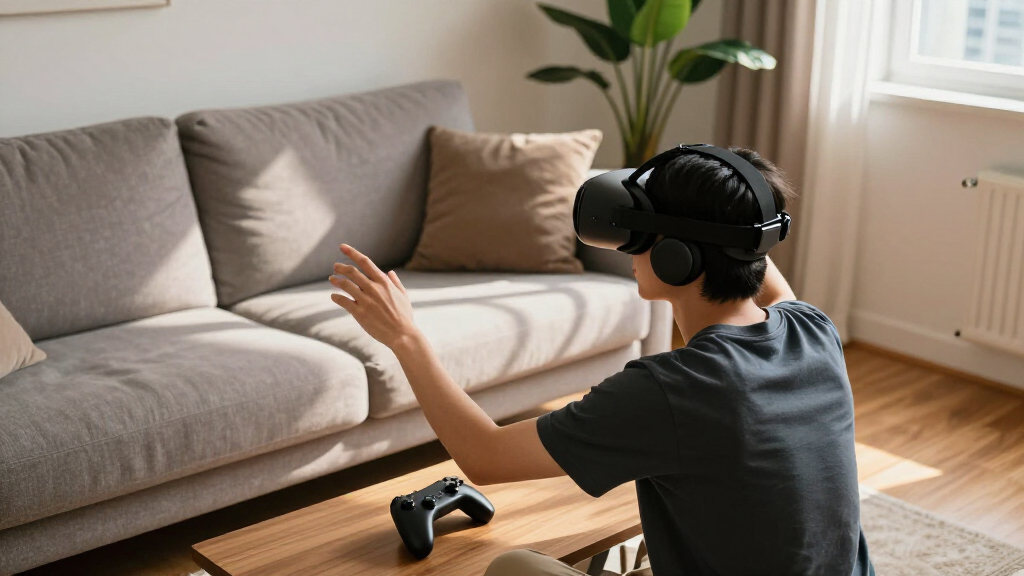
I ranked these VR headsets by how well they meet distinct buyer needs, rather than treating every device as a direct substitute. My main criteria were whether a headset works standalone or depends on a PC or phone, the breadth of experiences its setup can support, its fit for gaming and mixed reality, and the practical demands of ownership, including tracking, compatibility, and bundle complexity. I also weighed whether a product’s capabilities make sense for its intended audience: a phone viewer should not be judged as a PC VR system, and a specialized headset should not rank above a more versatile option for most buyers.
The ranking favors capable, flexible systems first, then options with clear value for a particular audience, followed by older, renewed, or more specialized choices. Quest 3 leads for its balance of convenience and versatility; Quest 3S follows as an approachable standalone alternative. Pimax and HTC Vive options rank higher for buyers with specific PC VR or mixed-reality goals, but their setup requirements narrow their appeal. Renewed Quest models and phone-based viewers remain useful where their limitations match the buyer’s needs, but they are not one-size-fits-all recommendations.
Factors to Consider When Choosing VR Headsets
Before choosing a headset, I would match the device to the way it will be used and the equipment already in your home. The category spans self-contained gaming systems, PC-connected headsets, older renewed devices, and phone viewers; comparing only the product names can hide major differences in setup and capability.
Choose Standalone, PC-Connected, or Phone-Based VR
A standalone headset runs its experiences on the headset, so you can play without keeping a gaming PC connected. PC VR can support demanding experiences, but it ties your use to a compatible computer, connection method, and available play space. Smartphone viewers take a different route: the phone supplies the screen and processing, and the viewer’s usefulness depends on phone fit and compatible content. A common mistake is buying a PC-oriented model before checking whether your computer and preferred games support it. I would choose the platform first, then compare headsets within that group.
Treat Display Quality and Comfort as Separate Decisions
Sharper visuals can help text and distant details appear clearer, but resolution alone does not determine how enjoyable a headset is to wear. Fit, weight distribution, lens adjustment, facial interface, and whether glasses fit comfortably all affect longer sessions. A headset that looks stronger on paper may feel less suitable if its fit does not match your face or if it becomes tiring during extended use. If possible, check whether replacement facial interfaces or prescription-lens options are available for the model you want. I would prioritize a secure, adjustable fit for fitness and long gaming sessions, and place more weight on visual clarity for simulation or PC VR use.
Check Tracking, Controllers, and Room Requirements
Headset tracking and controller tracking shape how naturally you can move through games and applications. Some systems track movement through cameras on the headset, while other setups may rely on additional equipment or particular room conditions. Clear floor space, good lighting, and an unobstructed view of the play area can make setup easier and reduce interruptions. Buyers who expect active games should check the tracking approach and controller design, not just the headset’s display. For seated viewing or guided content, a simpler tracking setup may be perfectly adequate.
Compare Storage and Bundle Contents Carefully
Storage affects how many large games and apps you can keep installed before you need to remove content. A bundle can add a game or accessories, but its name does not always tell you exactly what is included or whether the extras match your needs. Compare the precise model, storage capacity, controllers, cables, and any included software before choosing between similarly named listings. This roundup includes Quest 3 and Quest 3S bundles, standalone listings, and renewed versions, so the product title alone is not enough to identify the best fit. I would choose the headset and storage first, then treat bundled extras as a bonus rather than the main reason to buy.
Weigh Renewed Hardware Against Support and Condition
A renewed headset can be a sensible way to consider an older model, but it brings more uncertainty than choosing a new unit. Check the seller’s condition description, return terms, included accessories, and whether the device still receives the software and app support you need. Battery condition matters especially for standalone headsets, while missing cables or worn facial interfaces can add hassle after delivery. Older Quest 2 options may suit buyers seeking basic standalone VR, but they lack the newer positioning of Quest 3-family models. I would choose renewed hardware only when the exact condition and support terms are clear.
Pay for Capabilities You Will Actually Use
Higher-end PC VR and mixed-reality systems make more sense when their specific strengths match your routine, such as detailed simulation, PC streaming, or spatial experiences. If your main goal is casual standalone gaming, a more specialized headset may add setup work without improving the experiences you use most. The reverse also applies: a basic phone viewer is not a substitute for a tracked standalone headset when you want interactive games. List your three most likely uses and confirm that the headset supports them before comparing extra features. That simple check can prevent paying for a capability that rarely leaves the box unused.
Frequently Asked Questions
Should I choose the Meta Quest 3 or Meta Quest 3S?
I would choose Quest 3 if you want the more capable all-round headset in this lineup and expect to use it regularly for a mix of standalone VR and mixed reality. Quest 3S is a more approachable route into current standalone VR for buyers whose priority is getting started rather than choosing the more capable model. Compare their specific display experience, storage, and included bundle contents before deciding, since the names alone do not explain every difference. If you already know you will play often or want broader use, Quest 3 is the safer match; for a first headset with simpler expectations, Quest 3S may be enough.
Do I need a gaming PC for the Pimax Crystal Super or HTC Vive Focus Vision?
These options are aimed at buyers considering PC-connected VR, but the precise connection method and compatible equipment differ by model and bundle. Check the headset’s PC requirements, connection kit, graphics hardware needs, and the games or software you plan to run before ordering. A capable PC can support experiences that a standalone headset may not run in the same way, but it adds cost, setup, and cable or streaming considerations. If you want to play without a computer, a standalone Quest model is the more direct fit. Do not assume that a bundle includes every PC component required.
Is a renewed Meta Quest 2 still a sensible first VR headset?
It can suit someone who wants to try standalone VR and is comfortable with an older model, provided the renewal condition, return terms, and included accessories are clearly stated. The Quest 2 listings here vary by storage and renewal designation, so check the exact unit rather than treating them as interchangeable. Compared with Quest 3-family options, an older model may be less suitable for buyers who want the newer feature set or longer-term flexibility. Confirm app support for the experiences you care about, and pay particular attention to battery condition. If you expect frequent use, comparing it with Quest 3S before choosing can help avoid an early upgrade.
Can the DESTEK V5 replace a standalone VR headset?
No: the DESTEK V5 is a smartphone viewer, so a compatible phone provides the screen and computing rather than the viewer working as a self-contained system. That makes it a narrower choice for phone-based viewing and compatible content, not a direct alternative to tracked Quest, HTC Vive, or Pimax experiences. Check your phone’s size and compatibility before purchase, and confirm that the content you want works with a phone viewer. If you want interactive gaming with dedicated tracking and controllers, choose a standalone or PC VR headset instead. The two DESTEK V5 entries in this lineup should also be checked for listing details before selecting one.
What should I check before buying a headset bundle or renewed listing?
Read the full listing for the exact headset model, storage, condition, controllers, cables, and any included software or accessories. Bundle names can emphasize a game or kit without making every component obvious, while renewed listings can differ in wear and completeness. Check return terms and seller condition details before relying on a renewed device for everyday use. For a PC streaming bundle, verify which connection parts are included and what computer requirements remain your responsibility. These checks matter especially here because the roundup includes multiple similar Quest listings, several renewed versions, and more than one headset bundle.
Conclusion
For most buyers, I recommend the Meta Quest 3 512GB as the best overall option because it balances standalone convenience with broader mixed-reality use. The Quest 3S is my best value-style entry point for people who want current standalone VR without starting with the more capable Quest 3. For best premium and PC-focused needs, look at the Pimax Crystal Super if visual detail is your priority, or the HTC Vive Focus Vision if its PC streaming and mixed-reality approach better fits your setup. Beginners should start by comparing Quest 3S with Quest 3, while buyers seeking simple phone-based viewing can consider the DESTEK V5. Choose a renewed Quest 2 only if its condition, support, and included parts suit your expectations; otherwise, a newer standalone model is the more flexible long-term choice.
Halloween Picks
halloween
As an affiliate, we earn on qualifying purchases.