
Choosing the right RTX graphics card for VR can significantly enhance your virtual reality experience. The best models strike a balance between high frame rates, smooth visuals, and future-proofing, but tradeoffs often involve price, power requirements, and compatibility. The ASUS Dual GeForce RTX 5060 Ti stands out for its impressive 16GB GDDR7 memory and high performance, making it ideal for demanding VR setups. Meanwhile, the ZOTAC GAMING GeForce RTX 3060 Ti offers a solid middle ground with excellent performance at a more accessible price point. To make the right choice, you need to consider your budget, current system compatibility, and the level of VR fidelity you desire. Keep reading for a detailed breakdown of the best options for 2026, including their strengths and tradeoffs.

Get the latest gadgets delivered free with Prime
- Fast, free delivery on millions of items
- Prime Video, Amazon Music and more included
- Member-only deals all year
Complete the kit



Key Takeaways
- The RTX 3060 Ti emerges as the best all-around choice for most VR users thanks to its balance of performance and affordability.
- Memory size and bandwidth, such as 16GB GDDR7, are key for future-proofing and handling demanding VR titles smoothly.
- Power requirements and system compatibility remain common hurdles, so ensure your setup supports the chosen GPU.
- Premium options like the RTX 5060 Ti offer the highest performance but come with higher costs and power demands.
- Lower-tier models like the RTX 3050 can work for less demanding VR, but they may struggle with high-fidelity experiences and future titles.
| ASUS Dual GeForce RTX 3050 6GB GDDR6 OC Edition Gaming Graphics Card | 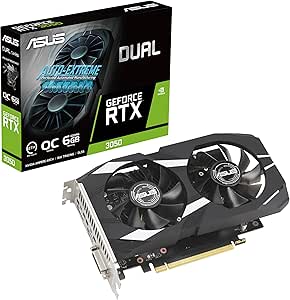 | Best Compact VR Card for Small Builds | GPU: NVIDIA GeForce RTX 3050 | Memory: 6 GB GDDR6 | Boost Clock (OC Mode): 1500 MHz | VIEW ON AMAZON | See Our Full Breakdown |
| MSI Gaming RTX 3050 Ventus 2X 6G OC Graphics Card |  | Best Budget Entry-Level VR Card | GPU Chipset: NVIDIA GeForce RTX 3050 | Boost Clock: 1492 MHz | Video Memory: 6GB GDDR6 | VIEW ON AMAZON | See Our Full Breakdown |
| ZOTAC GAMING GeForce RTX 3060 Ti Twin Edge OC LHR 8GB GDDR6 |  | Best High-Performance VR Card for Serious Gamers | Graphics Coprocessor: NVIDIA GeForce RTX 3060 Ti | RAM: 8 GB GDDR6 | Memory Clock Speed: 14000 MHz | VIEW ON AMAZON | See Our Full Breakdown |
| MSI Gaming GeForce RTX 3060 Ventus 2X 12G OC V1 |  | Best VR for High-Res and Future-Proofing | Chipset: NVIDIA GeForce RTX 3060 | Video Memory: 12GB GDDR6 | Memory Interface: 192-bit | VIEW ON AMAZON | See Our Full Breakdown |
| ASUS GeForce RTX 2060 Overclocked 6G GDDR6 Dual-Fan EVO Edition (Renewed) |  | Best Refurbished Budget VR Card | GPU: NVIDIA GeForce RTX 2060 | Memory: 6 GB GDDR6 | Boost Clock: 1785 MHz | VIEW ON AMAZON | See Our Full Breakdown |
| MSI Gaming GeForce RTX 2060 Ventus GP OC 6GB GDDR6 Graphics Card |  | Best Budget VR-Ready GPU | Chipset: NVIDIA GeForce RTX 2060 | Memory: 6GB GDDR6 | Memory Interface: 192-bit | VIEW ON AMAZON | See Our Full Breakdown |
| ASUS Dual GeForce RTX 5060 Ti 16GB GDDR7 OC Edition Gaming Graphics Card |  | Best High-Performance Compact VR GPU | Graphics Coprocessor: NVIDIA GeForce RTX 5060 Ti | Memory: 16 GB GDDR7 | GPU Clock Speed: 2632 MHz | VIEW ON AMAZON | See Our Full Breakdown |
| MAXSUN GeForce RTX 3050 6GB GDDR6 Low Profile Graphics Card |  | Best Compact Entry-Level VR GPU | GPU: GeForce RTX 3050 | Memory: 6GB GDDR6 | Memory Interface: 96-bit | VIEW ON AMAZON | See Our Full Breakdown |
| rtx graphics card for vr | Memory | Boost Clock | Memory Speed | Outputs |
|---|---|---|---|---|
| ASUS Dual GeForce RTX 3050 6GB | 6 GB GDDR6 | — | — | — |
| MSI Gaming RTX 3050 Ventus 2X | — | 1492 MHz | 14 Gbps | 1x DisplayPort 1.4a, 2x HDMI 2.1a |
| ZOTAC GAMING GeForce RTX 3060 | — | — | — | — |
| MSI Gaming GeForce RTX 3060 Ve | — | 1807 MHz | 15 Gbps | 3x DisplayPort 1.4a, HDMI 2.1 |
| ASUS GeForce RTX 2060 Overcloc | 6 GB GDDR6 | 1785 MHz | — | DisplayPort 1.4, HDMI 2.0, DVI |
| MSI Gaming GeForce RTX 2060 Ve | 6GB GDDR6 | 1710 MHz | 14 Gbps | 3x DisplayPort 1.4a, 1x HDMI 2.0b |
| ASUS Dual GeForce RTX 5060 Ti | 16 GB GDDR7 | — | — | — |
| MAXSUN GeForce RTX 3050 6GB GD | 6GB GDDR6 | — | 14000 MHz | — |
More Details on Our Top Picks
ASUS Dual GeForce RTX 3050 6GB GDDR6 OC Edition Gaming Graphics Card
The ASUS Dual GeForce RTX 3050 OC Edition stands out for its small form factor, making it an ideal choice for compact gaming or VR setups where space is limited. Compared with the ZOTAC RTX 3060 Ti, it offers less raw power but excels in fitting into tight cases without sacrificing ray tracing or DLSS capabilities. Its dual Axial-tech fans and IP5X dust resistance ensure durability and quiet operation, which are essential for long VR sessions. However, with only 6GB VRAM, it may struggle with newer demanding titles or high-resolution VR environments. This makes it better suited for casual VR gamers or those on a smaller build budget, rather than high-end enthusiast setups. For those needing a small, reliable VR card that doesn’t compromise on features, this is a solid pick, but it isn’t ideal for demanding AAA gaming or future-proofing at ultra settings.
Pros:- Compact 2-slot, 20 cm design fits small chassis easily
- Efficient dual Axial-tech fans for quiet cooling
- Supports ray tracing and DLSS for enhanced VR visuals
- Durable with IP5X dust resistance and stainless steel bracket
Cons:- Limited 6GB VRAM may restrict performance in modern VR titles
- Entry-level GPU with lower overall power compared to higher-tier options
Best for: VR enthusiasts with small cases and limited space who want ray tracing and DLSS support without high power consumption.
Not ideal for: High-end VR gamers or users aiming for maximum future-proofing, as 6GB VRAM limits performance in demanding titles.
- GPU:NVIDIA GeForce RTX 3050
- Memory:6 GB GDDR6
- Boost Clock (OC Mode):1500 MHz
- Interface:PCI-Express x16
- Video Output:HDMI 2.1, DisplayPort 1.4a, DVI-D
- Max Resolution:3840 x 2160 (4K)
Our verdict“Ideal for small-build VR setups where space and durability are priorities over maximum gaming power.”
MSI Gaming RTX 3050 Ventus 2X 6G OC Graphics Card
The MSI Gaming RTX 3050 Ventus 2X makes a compelling case for budget-conscious VR users who primarily game at 1080p. Its boost clock of 1492 MHz and 6GB VRAM are comparable to ASUS’s 3050 but with a slightly different cooling design, favoring affordability and simplicity. The dual HDMI 2.1a ports make multi-display VR setups more straightforward, especially for casual or starter VR systems. However, unlike the ZOTAC RTX 3060 Ti, it lacks the raw power and extra VRAM needed for more demanding VR titles or future-proofing. This model is better suited for entry-level VR gamers, or those with less demanding resolution goals, who are willing to accept lower fidelity for a lower price point. It’s not recommended for advanced VR experiences or high-resolution environments where power and VRAM matter most.
Pros:- Affordable price point for entry-level VR gaming
- Dual HDMI 2.1 ports support multi-display VR setups
- Efficient dual-fan cooling minimizes noise and heat
- Compact design suitable for small builds
Cons:- Limited 6GB VRAM restricts high-res VR environments
- Entry-level performance may struggle with demanding titles
Best for: Beginners or casual VR users who want a reliable entry-level card at a low price point.
Not ideal for: Power users aiming for high-fidelity VR or future-proofing, since it’s limited by its VRAM and performance ceiling.
- GPU Chipset:NVIDIA GeForce RTX 3050
- Boost Clock:1492 MHz
- Video Memory:6GB GDDR6
- Memory Speed:14 Gbps
- Outputs:1x DisplayPort 1.4a, 2x HDMI 2.1a
- Architecture:Ampere
Our verdict“Best for budget-conscious VR newcomers who prioritize basic functionality over high-fidelity experiences.”
ZOTAC GAMING GeForce RTX 3060 Ti Twin Edge OC LHR 8GB GDDR6
The ZOTAC RTX 3060 Ti Twin Edge OC offers a significant upgrade over the RTX 3050 options, with 8GB VRAM and NVIDIA’s Ampere architecture optimized for demanding VR titles. Its robust cooling system, IceStorm 2.0, ensures stable performance during extended VR sessions, making it suitable for high-fidelity virtual environments. Compared to the MSI RTX 3060, it provides more VRAM and better ray tracing performance, critical for immersive VR experiences. Its larger size and dual-slot design require more space, which could be a concern for small cases. While it’s powerful enough for most VR applications, the absence of bundled overclocking software might limit customization options. This card targets gamers who want serious VR performance without stepping into the highest-tier GPU territory, balancing power, cooling, and price.
Pros:- 8GB VRAM supports high-resolution VR environments
- Enhanced RT and Tensor Cores for advanced ray tracing and DLSS
- IceStorm 2.0 cooling system for stable long sessions
- Supports multiple displays and VR readiness
Cons:- Requires a larger case due to dual-slot design
- No included overclocking software for fine-tuning
Best for: Enthusiast VR gamers seeking high-end performance at a mid-range price point.
Not ideal for: Small-case VR setups or users with limited space, due to its size and dual-slot design.
- Graphics Coprocessor:NVIDIA GeForce RTX 3060 Ti
- RAM:8 GB GDDR6
- Memory Clock Speed:14000 MHz
- Video Output Interface:DisplayPort, HDMI
- Maximum Resolution:7680×4320
- Fans:2
Our verdict“Perfect for serious VR gamers who need reliable high-fidelity graphics without the cost of top-tier cards.”
MSI Gaming GeForce RTX 3060 Ventus 2X 12G OC V1
The MSI RTX 3060 Ventus 2X 12G OC offers a substantial 12GB of GDDR6 VRAM, making it ideal for high-resolution VR experiences and future games that demand more memory. Its boost clock of 1807 MHz and 15 Gbps memory speed ensure smooth performance at resolutions up to 8K, outperforming many 8GB cards like the ZOTAC RTX 3060 Ti in VR environments. The triple DisplayPort setup and PCIe 4.0 support make it versatile for multi-monitor VR gaming. Its dual Torx fans maintain cooling efficiency, but its larger size may not suit smaller cases. While it provides excellent VR performance and future-proofing, it’s priced higher and consumes slightly more power, which could be a consideration for budget builds or power-sensitive setups.
Pros:- 12GB VRAM enables high-res VR and future-ready gaming
- Supports resolutions up to 8K with multiple outputs
- PCIe 4.0 compatibility for modern platforms
- Triple fan cooling for sustained performance
Cons:- Larger physical size may restrict smaller cases
- Higher price point compared to 8GB counterparts
Best for: VR users aiming for ultra-high resolution and future-proof performance with large VR environments.
Not ideal for: Compact or budget builds where space and power consumption are limited.
- Chipset:NVIDIA GeForce RTX 3060
- Video Memory:12GB GDDR6
- Memory Interface:192-bit
- Memory Speed:15 Gbps
- Boost Clock:1807 MHz
- Outputs:3x DisplayPort 1.4a, HDMI 2.1
Our verdict“A strong choice for dedicated VR enthusiasts seeking maximum VR resolution and long-term viability.”
ASUS GeForce RTX 2060 Overclocked 6G GDDR6 Dual-Fan EVO Edition (Renewed)
The ASUS RTX 2060 EVO provides a cost-effective option for VR newcomers or those upgrading older systems, with 6GB VRAM and real-time ray tracing support. Its Turing architecture enables VR-ready performance at 1080p and some 1440p settings, outperforming older cards like the MSI RTX 2060 Ventus GP OC. The dual Wing-Blade fans and dust-resistant design help keep it quiet and durable, especially in a refurbished state that offers value for money. However, being a refurbished product, it carries some uncertainty about longevity, and its VRAM may limit performance in high-res VR or modern AAA titles. This makes it suitable for entry-level VR users or those on a tight budget, but less ideal for power users or future-proofing.
Pros:- Supports real-time ray tracing and VR features
- Good performance for 1080p and some 1440p VR gaming
- Silent operation with dust-resistant fans
- Refurbished unit offers good value
Cons:- Refurbished condition may impact longevity
- Limited 6GB VRAM restricts high-res VR and demanding titles
Best for: Beginner VR gamers or those upgrading their older GPU on a budget, willing to accept some limitations in VR fidelity.
Not ideal for: Power users or enthusiasts seeking high-resolution VR with maximum future-proofing, due to VRAM and performance constraints.
- GPU:NVIDIA GeForce RTX 2060
- Memory:6 GB GDDR6
- Boost Clock:1785 MHz
- CUDA Cores:1920
- Memory Clock Speed:14000 MHz
- Outputs:DisplayPort 1.4, HDMI 2.0, DVI
Our verdict“Suitable for entry-level VR setups and budget-conscious users who want ray tracing support without high cost, but not for demanding VR environments.”
MSI Gaming GeForce RTX 2060 Ventus GP OC 6GB GDDR6 Graphics Card
The MSI GeForce RTX 2060 Ventus GP OC stands out for delivering real-time ray tracing at a price point that appeals to budget-conscious VR enthusiasts. Compared with the RTX 3050 options, this card offers more mature VR support through its dedicated hardware and higher base clock, but it’s limited by just 6GB of VRAM, which can be a bottleneck in demanding modern titles. Its 192-bit memory interface and 14 Gbps speed ensure solid performance, yet its older architecture means it might struggle with newer, more demanding VR titles over time. The dual-fan cooling is effective, but the single-slot width may restrict airflow and overclocking potential. For those seeking a capable VR card without breaking the bank, this option makes a lot of sense. However, gamers planning for future titles or higher detail levels should consider a more recent GPU.Pros:- Supports real-time ray tracing via NVIDIA Turing architecture
- Fast GDDR6 memory at 14 Gbps for decent VR performance
- Capable of 8K resolution output for future-proofing
Cons:- Only 6GB VRAM limits high-detail or future VR titles
- Older-generation GPU architecture may struggle with new VR demands
- Single-slot design restricts cooling and potential overclocking
Best for: Budget-conscious VR gamers who want decent ray tracing and high resolutions without spending too much.
Not ideal for: Power users or those wanting the latest architecture, as the 2060’s older design limits long-term VR performance and VRAM capacity.
- Chipset:NVIDIA GeForce RTX 2060
- Memory:6GB GDDR6
- Memory Interface:192-bit
- Memory Speed:14 Gbps
- Boost Clock:1710 MHz
- Outputs:3x DisplayPort 1.4a, 1x HDMI 2.0b
Our verdict“This card is best suited for budget VR users who prioritize affordability over cutting-edge performance.”
ASUS Dual GeForce RTX 5060 Ti 16GB GDDR7 OC Edition Gaming Graphics Card
The ASUS Dual RTX 5060 Ti stands out for combining high-end gaming power with a surprisingly compact form factor. Its 16GB of GDDR7 memory and a core clock over 2600 MHz make it significantly more capable for VR, especially in demanding titles or higher settings, compared to the RTX 2060. While it’s smaller than many other high-performance cards, the dual Axial-tech fans and 2.5-slot design help keep temperatures in check, making it suitable for tight cases. Compared with the RTX 3050 options, this GPU offers far more headroom for future VR titles and detailed environments, though it’s likely to be noisier under heavy load due to its cooling design. This pick is ideal for gamers who want top-tier VR capabilities in a smaller, more compatible package.Pros:- Massive 16GB GDDR7 memory enhances future VR game compatibility
- High GPU clock speed over 2600 MHz for smooth VR experiences
- Compact 2.5-slot design with effective cooling for small cases
Cons:- Higher cost compared to mid-range options like the RTX 3050 or RTX 2060
- Potentially louder under load despite advanced cooling features
- Requires a compatible high-capacity power supply
Best for: Gamers seeking high-end VR performance without sacrificing case compatibility or airflow.
Not ideal for: Entry-level VR users or those on a strict budget, since this GPU commands a higher price and power draw.
- Graphics Coprocessor:NVIDIA GeForce RTX 5060 Ti
- Memory:16 GB GDDR7
- GPU Clock Speed:2632 MHz
- Video Output Interface:DisplayPort 2.1b x3, HDMI 2.1b
- Memory Clock Speed:2602 MHz
- Dimensions:9″L x 4.7″W
Our verdict“This GPU is a compelling choice for VR gamers demanding high performance in a smaller, cooler package.”
MAXSUN GeForce RTX 3050 6GB GDDR6 Low Profile Graphics Card
The MAXSUN RTX 3050 Low Profile offers a practical solution for small form factor VR setups, featuring a compact design that fits into tight cases while supporting 8K output. Its 6GB GDDR6 memory with DLSS AI upscaling delivers better performance than previous generation low-profile cards, making it suitable for entry-level VR. However, compared to the RTX 2060 and RTX 5060 Ti, it lacks the raw power needed for demanding VR titles at higher settings. The PCIe x8 interface could bottleneck performance slightly compared to full x16 slots, but for smaller or less demanding setups, this isn’t a dealbreaker. This card makes the most sense for users who prioritize space-saving design over maximum VR performance, such as compact PC builds or ITX systems.Pros:- Compact low-profile design fits small cases and ITX builds
- Supports 8K output and multi-monitor setups with HDMI 2.1 and DisplayPort 1.4a
- DLSS technology improves performance without sacrificing image quality
Cons:- Limited 6GB VRAM may hinder performance in demanding VR titles
- PCIe x8 interface could slightly bottleneck data transfer compared to x16 slots
- Lower raw power than higher-tier cards like the RTX 5060 Ti
Best for: Small form factor VR users who need a space-efficient GPU with decent VR capabilities.
Not ideal for: Power users or gamers aiming for high-detail VR experiences, since 6GB VRAM and lower core clocks limit future-proofing.
- GPU:GeForce RTX 3050
- Memory:6GB GDDR6
- Memory Interface:96-bit
- Memory Speed:14000 MHz
- Core Clock:1042 MHz
- Max Resolution:8K
Our verdict“This GPU is ideal for space-constrained VR setups where budget and size are primary concerns, but it may struggle with future demanding titles.”
How We Picked
The products in this roundup were evaluated based on their raw performance in VR environments, energy efficiency, build quality, and value for money. We prioritized GPUs with strong ray-tracing capabilities and high VR frame rates, as these directly influence smoothness and realism in virtual experiences. Compatibility with current VR headsets and system requirements was also considered, along with the availability and price stability of each model. The ranking reflects a combination of performance benchmarks, user feedback, and the overall balance of features versus cost, aiming to guide different types of VR enthusiasts—whether they seek high-end power or budget-friendly options.Factors to Consider When Choosing Rtx Graphics Card For Vr
When selecting an RTX graphics card for VR, it’s important to understand how specific features translate into real-world performance. Beyond raw specs, factors like VR-specific frame rate requirements, system compatibility, and future-proofing play vital roles. A well-chosen GPU can prevent latency issues and provide a smoother, more immersive experience, but the wrong choice might lead to bottlenecks or expensive upgrades down the line. Here are key considerations to help you navigate the options and avoid common mistakes.Performance & VR Frame Rates
VR applications demand high and stable frame rates, typically around 90Hz or higher, to prevent motion sickness and lag. Not all GPUs deliver the same performance, especially in demanding titles or with ray-tracing enabled. Choosing a card that consistently meets or exceeds these frame rate thresholds ensures smooth gameplay and reduces eye strain. Keep in mind that higher-end models like the RTX 5060 Ti will excel here, but mid-range options like the RTX 3060 Ti often strike a good balance for most users.
Memory and Bandwidth
VR environments can be memory-intensive, especially with high-resolution textures and complex scenes. Cards with larger VRAM, such as 16GB GDDR7, provide more headroom for future titles and help avoid stuttering or loading delays. Bandwidth also impacts how quickly data is transferred, affecting overall responsiveness. Be cautious about spending on models with insufficient memory if you plan to upgrade or push settings higher, as this can limit longevity and performance.
System Compatibility & Power
Before upgrading, verify that your PC’s power supply can handle the GPU’s requirements, including wattage and connector types. Compatibility with your motherboard and physical space within your case are also critical. Some high-performance cards demand enhanced cooling solutions due to increased heat output. Investing in a compatible system ensures that you get the full benefits of your GPU without facing bottlenecks or overheating issues.
Future-Proofing & Longevity
VR technology continues to evolve rapidly, so selecting a GPU with the latest features and ample headroom can extend its usefulness. Features like DLSS (Deep Learning Super Sampling) and ray tracing improve visual fidelity and performance in newer titles. While premium cards cost more upfront, they often provide a longer lifespan, reducing the need for frequent upgrades. Balancing current needs against future demands helps optimize your investment.
Price & Value
Pricing for GPUs fluctuates due to market dynamics, but it’s essential to compare what each model offers relative to its cost. Sometimes, a slightly older or lower-tier card can deliver excellent VR performance at a much lower price, especially if you’re on a budget. Conversely, splurging on a high-end model makes sense if you aim for maximum fidelity and plan to run demanding applications. Consider your VR usage frequency and desired experience level when evaluating value.
Frequently Asked Questions
Will my current PC be able to handle a high-end RTX GPU for VR?
To determine if your PC can support a high-end RTX GPU, check your power supply wattage, available PCIe slots, and physical space inside your case. High-performance GPUs often require additional power connectors and robust cooling solutions. If your system is older or lacks these features, you may need to upgrade your power supply or case. Ensuring compatibility before purchasing prevents costly bottlenecks and helps you maximize your VR experience.
Is VR-specific GPU performance more about frame rates or graphical quality?
Both are important, but in VR, maintaining high and stable frame rates is critical for comfort and immersion. A GPU that delivers excellent graphics but struggles to sustain 90Hz or higher can cause motion sickness or lag. Therefore, prioritizing performance for consistent frame rates often outweighs ultra-high graphical settings in VR. High-end GPUs like the RTX 5060 Ti excel at balancing these needs, providing both quality and stability.
Should I buy the most powerful GPU available or opt for a mid-range option?
The choice depends on your VR ambitions and budget. While the most powerful GPU offers superior performance and future-proofing, it may be unnecessary for less demanding titles or casual use. Mid-range options like the RTX 3060 Ti typically deliver excellent performance at a more accessible price, making them suitable for most users. Consider how much you value high fidelity versus cost savings, and whether your current system can support a top-tier card.
How long can I expect an RTX GPU to stay relevant for VR?
High-end RTX GPUs usually remain relevant for 3-4 years, especially if they include features like ray tracing and DLSS. However, VR hardware and game requirements evolve rapidly, so future-proofing with a slightly more powerful model can extend usability. Regular driver updates also improve performance over time. Budget constraints may limit your options, but investing in the best you can afford now helps ensure a smoother VR experience into the future.
What is the most overlooked factor when choosing an RTX card for VR?
Many buyers overlook the importance of system cooling and airflow, which are critical for high-performance GPUs running intensive VR workloads. Overheating can throttle performance and reduce lifespan. Ensuring your case has good ventilation and considering aftermarket cooling solutions if needed can make a significant difference. Also, verify that your power supply and motherboard support the chosen model to avoid compatibility issues that could negate performance gains.
Conclusion
For most users seeking a balance of performance and affordability, the MSI Gaming RTX 3060 Ti offers the best value, capable of handling demanding VR titles without breaking the bank. If you want the highest possible fidelity and future-proofing, the ASUS GeForce RTX 5060 Ti makes sense, though it demands a more robust system and higher budget. Beginners or casual VR enthusiasts should consider mid-range options like the RTX 3050 models to get started without overspending. Power users or those with a high-end system aiming for cutting-edge experiences should lean toward premium choices, but always verify compatibility first to avoid surprises.