
Choosing the right GPU for VR sim racing in 2026 involves balancing performance, price, and future-proofing. The ASUS GeForce RTX 5080 Gaming OC stands out as the best overall due to its high-end power and VR optimization. The GIGABYTE Radeon RX 9070 XT Gaming OC offers excellent value with comparable performance at a lower price point, making it a strong contender for budget-conscious racers. Meanwhile, the ASUS Dual GeForce RTX 3050 is a solid entry-level option for newcomers looking to enjoy VR racing without overspending. The main tradeoffs revolve around balancing raw power against cost and compatibility, which can make choosing the right GPU confusing. Keep reading for the full breakdown to find the best fit for your setup and budget.

Get the latest gadgets delivered free with Prime
- Fast, free delivery on millions of items
- Prime Video, Amazon Music and more included
- Member-only deals all year
Complete the kit



Key Takeaways
- High-end GPUs like the RTX 5080 deliver exceptional VR performance but come with a premium price, suitable for enthusiasts.
- AMD options such as the RX 9070 XT provide competitive performance at a lower cost, offering great value for most racers.
- VR-specific optimizations in newer GPUs improve latency and immersion, making them worth paying extra for if serious about sim racing.
- Entry-level cards like the RTX 3050 are capable for casual VR racing but may struggle with the most demanding simulations at high settings.
- Compatibility and future-proofing are key—consider GPU features like HDMI/DisplayPort standards and VR readiness to avoid bottlenecks.
| ASUS GeForce GTX 1080 Ti Turbo Edition 11GB Graphics Card |  | Best Overall for High-End VR Racing | Memory: 11GB GDDR5X | Memory Interface: 352-bit | CUDA Cores: 3584 | VIEW ON AMAZON | See Our Full Breakdown |
| ASUS Prime Radeon RX 9070 XT 16GB GDDR6 OC Edition Gaming Graphics Card |  | Best for Silent, Cool VR Sessions | GPU Model: Radeon RX 9070 XT | Memory: 16GB GDDR6 | Clock Speeds: Up to 3030 MHz (OC) | VIEW ON AMAZON | See Our Full Breakdown |
| ASUS Dual GeForce RTX 3050 6GB GDDR6 OC Edition Gaming Graphics Card | 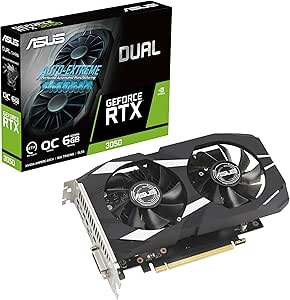 | Best for Mid-Range VR Racing on a Budget | Graphics Coprocessor: NVIDIA GeForce RTX 3050 | RAM: 6 GB GDDR6 | GPU Clock Speed: 1500 MHz | VIEW ON AMAZON | See Our Full Breakdown |
| GIGABYTE GeForce RTX 5080 Gaming OC 16G Graphics Card |  | Best for Cutting-Edge VR Racing | Memory: 16GB GDDR7 | Memory Interface: 256-bit | Architecture: NVIDIA Blackwell | VIEW ON AMAZON | See Our Full Breakdown |
| MSI Gaming GeForce GTX 1660 Ti 6GB GDDR6 HDMI/DP Dual Fan VR Ready OC Graphics Card |  | Best for Entry-Level VR Racing | Chipset: NVIDIA GeForce GTX 1660 Ti | Boost Clock: 1830 MHz | Core Clocks: 1770 MHz | VIEW ON AMAZON | See Our Full Breakdown |
| ZOTAC GAMING GeForce RTX 3060 Ti Twin Edge OC LHR 8GB GDDR6 Graphics Card |  | Best Overall for VR Sim Racing Balance | Graphics Coprocessor: NVIDIA GeForce RTX 3060 Ti | RAM: 8 GB | Video Output Interface: DisplayPort, HDMI | VIEW ON AMAZON | See Our Full Breakdown |
| GIGABYTE Radeon RX 9070 XT Gaming OC 16G Graphics Card |  | Best for High-Resolution, Professional-Grade VR | Graphics Coprocessor: AMD Radeon RX 9070 XT | Ram: 16 GB | GPU Clock Speed: 3060 MHz | VIEW ON AMAZON | See Our Full Breakdown |
More Details on Our Top Picks
ASUS GeForce GTX 1080 Ti Turbo Edition 11GB Graphics Card
This ASUS GTX 1080 Ti Turbo Edition stands out for delivering exceptional performance in immersive VR racing, thanks to its 11GB GDDR5X memory and a boost clock of 1582 MHz. Compared to the RTX 3050 or RTX 5080, it offers a more consistent experience at high settings without needing PCIe 5.0 support. Its premium build quality with Auto-Extreme manufacturing ensures reliability, but the large size and potentially higher power draw mean it requires a spacious case and a robust power supply. This model is perfect for serious sim racers who prioritize stable, high-fidelity VR performance and have a compatible setup, though it’s less ideal for compact builds or budget-conscious buyers.
Pros:- High-performance 11GB GDDR5X memory for demanding VR content
- VR ready for immersive, lag-free experiences
- Premium build quality with Auto-Extreme manufacturing
Cons:- Large size may require a spacious case
- Potentially higher power consumption and need for a strong PSU
Best for: High-end VR racers with spacious cases and reliable power supplies
Not ideal for: Budget gamers or small form factor PC owners due to size and power needs
- Memory:11GB GDDR5X
- Memory Interface:352-bit
- CUDA Cores:3584
- Boost Clock:1582 MHz
- Base Clock:1480 MHz
- Manufacturing Technology:Auto-Extreme
- Features:VR Ready, Customizable backlit logo
Our verdict“This card is ideal for dedicated VR racing enthusiasts seeking top-tier performance and reliability, provided their system can accommodate it.”
ASUS Prime Radeon RX 9070 XT 16GB GDDR6 OC Edition Gaming Graphics Card
This ASUS RX 9070 XT OC Edition excels in quiet operation and efficient cooling, thanks to axial-tech fans and phase-change thermal pads, making it a solid choice over the RTX 3050 for longer VR racing sessions. Its high clock speeds—up to 3030 MHz—deliver a boost in frame rates, especially beneficial for high-resolution VR environments. While it offers excellent durability with dual-ball bearings and a robust design, the absence of specific price data and the high power demand might deter budget-conscious or smaller-system builders. Compared to the GTX 1660 Ti, it provides more VR headroom and future-proofing, but with a bigger power draw and higher cost.
Pros:- Enhanced cooling system with axial-tech fans and thermal pads
- High clock speeds up to 3030 MHz for smooth gameplay
- Quiet operation with 0dB technology
Cons:- High power consumption may require a stronger PSU
- Lack of detailed price info may affect purchasing decision
Best for: VR racers seeking a quiet, cool, and high-performance GPU for extended sessions
Not ideal for: Budget gamers or those with limited power supply capacity due to high power requirements
- GPU Model:Radeon RX 9070 XT
- Memory:16GB GDDR6
- Clock Speeds:Up to 3030 MHz (OC)
- Cooling Features:Axial-tech fans, phase-change thermal pads
- Manufacturing Process:Auto-Extreme
- Features:Quiet and Performance BIOS profiles
Our verdict“This card suits high-end VR racers prioritizing quiet operation and effective cooling, though it demands a capable power setup.”
ASUS Dual GeForce RTX 3050 6GB GDDR6 OC Edition Gaming Graphics Card
The ASUS RTX 3050 OC Edition offers a compelling balance between price and performance, making it suitable for gamers who want decent VR racing experiences without the premium hardware. Its 6GB of GDDR6 memory and a boost clock of 1500 MHz support modern VR titles at 4K resolution, comparable in some ways to the GTX 1660 Ti but with added DLSS technology for better frame rates. However, limited VRAM may be restrictive for ultra-detailed or future titles, and with only two fans, cooling could be less effective under sustained loads compared to more robust options like the RTX 5080. Overall, it’s a good entry point for casual VR racers with limited budgets.
Pros:- Supports DLSS for improved frame rates in VR
- Effective cooling with dual Axial-tech fans
- Supports 4K resolution for immersive VR and multimedia
Cons:- Limited to 6GB VRAM, which may be insufficient for future-proofing
- Cooling might be less effective under heavy loads with only two fans
Best for: Budget-conscious VR racers who want decent performance without high costs
Not ideal for: High-end VR enthusiasts or those planning to run ultra-high settings long-term
- Graphics Coprocessor:NVIDIA GeForce RTX 3050
- RAM:6 GB GDDR6
- GPU Clock Speed:1500 MHz
- Display Resolution Maximum:3840×2160
- Number of Fans:2
- Features:DLSS, PCIe 4.0
Our verdict“This GPU provides solid mid-range VR performance for budget-minded users, though it may struggle with very demanding titles or settings.”
GIGABYTE GeForce RTX 5080 Gaming OC 16G Graphics Card
This GIGABYTE RTX 5080 Gaming OC leverages NVIDIA Blackwell architecture with DLSS 4 and 16GB GDDR7 memory, making it the clear choice for future-proof VR racing. Its PCIe 5.0 support and WINDFORCE cooling system mean it can handle the most demanding VR environments with ease. Compared to the GTX 1080 Ti, it offers a quantum leap in performance and efficiency, but the high cost and power use can be a barrier for some users. It’s best suited for those who want to maximize VR fidelity and are prepared for a higher investment in their setup.
Pros:- Massive 16GB GDDR7 memory for demanding VR content
- Supports PCIe 5.0 for rapid data transfer
- Advanced cooling with WINDFORCE system
Cons:- High power consumption demands strong power supply
- Premium price point may be prohibitive for some
Best for: Enthusiasts wanting the latest VR performance with maximum future-proofing
Not ideal for: Casual or budget gamers who cannot accommodate the high power and cost requirements
- Memory:16GB GDDR7
- Memory Interface:256-bit
- Architecture:NVIDIA Blackwell
- Cooling System:WINDFORCE
- Interface:PCIe 5.0
Our verdict“This GPU is ideal for serious VR racing fans seeking top-tier, future-proof graphics, if they can justify the cost and power needs.”
MSI Gaming GeForce GTX 1660 Ti 6GB GDDR6 HDMI/DP Dual Fan VR Ready OC Graphics Card
The MSI GTX 1660 Ti offers a balanced mix of affordability and performance, making it suitable for casual VR racing. Its 6GB GDDR6 memory and boost clock of 1830 MHz support most VR titles at moderate settings, and dual fans help maintain stable operation during extended sessions. Compared to the RTX 3050, it lacks DLSS, which could affect frame rates in more demanding VR environments. Its power requirements are modest, fitting well into mid-range systems, but its limited VRAM and older architecture mean it may not keep pace with future titles or ultra-high settings. This card is ideal for gamers new to VR or those with tight budgets who still want a playable experience.
Pros:- Decent 6GB GDDR6 memory for VR gaming
- Dual fan cooling system for effective heat dissipation
- Supports ultra-high resolutions up to 8K
Cons:- Limited VRAM may restrict future performance
- Higher power consumption at 120W compared to lower-tier cards
Best for: Beginners or casual VR racers with mid-range systems
Not ideal for: Advanced VR enthusiasts or those planning to run the latest high-fidelity titles at ultra settings
- Chipset:NVIDIA GeForce GTX 1660 Ti
- Boost Clock:1830 MHz
- Core Clocks:1770 MHz
- Memory Interface:192-bit
- Video Memory:6GB GDDR6
- Maximum Display Resolution:7680×4320
Our verdict“This card suits entry-level VR racers seeking a reliable, budget-friendly option for casual racing experiences.”
ZOTAC GAMING GeForce RTX 3060 Ti Twin Edge OC LHR 8GB GDDR6 Graphics Card
The ZOTAC GAMING GeForce RTX 3060 Ti Twin Edge OC stands out for delivering excellent performance with NVIDIA’s Ampere architecture, making it a versatile choice for VR sim racing. Compared to higher-end options like the GIGABYTE RTX 5080, it offers a more affordable price point while still supporting high-resolution VR and multiple displays. Its effective IceStorm 2.0 cooling system ensures stable operation during long racing sessions, but the lack of bundled overclocking software means tuning requires extra effort. Its dual-slot design fits most mid-tower cases, but users with limited space may need to check dimensions carefully. The 8GB GDDR6 memory handles detailed environments well, though it might fall short for the most demanding professional VR workloads. Overall, this card balances performance and value for serious racing enthusiasts without pushing into premium pricing.
Pros:- Excellent Ray Tracing and Tensor Cores for realistic visuals
- Effective cooling system maintains stable performance
- Supports multiple high-res displays and VR headsets
Cons:- No included overclocking software, extra tuning effort needed
- Limited to dual-slot size, may not fit all cases
Best for: VR racers seeking a high-performance, well-rounded GPU that balances price and capability.
Not ideal for: Users requiring the absolute highest frame rates or professional-grade GPU power for advanced simulations.
- Graphics Coprocessor:NVIDIA GeForce RTX 3060 Ti
- RAM:8 GB
- Video Output Interface:DisplayPort, HDMI
- Graphics RAM Type:GDDR6
- Interface:PCI Express
- Memory Clock Speed:14000 MHz
- Number of Fans:2
- Maximum Resolution:7680×4320
- Item Dimensions:8.74″L x 4.55″W
Our verdict“Ideal for mid-tier VR sim racers who want reliable performance without the premium price tag.”
GIGABYTE Radeon RX 9070 XT Gaming OC 16G Graphics Card
The GIGABYTE Radeon RX 9070 XT Gaming OC offers a significant leap in VR graphics capability thanks to its 16GB GDDR6 memory and PCIe 5.0 interface, making it suitable for demanding racing sims and detailed virtual environments. Compared to the ZOTAC RTX 3060 Ti, it provides more VR headroom and better future-proofing, especially for ultra-high-resolution VR setups. Its robust cooling system supports extended sessions, but the high power consumption and heat output may require a high-capacity power supply and excellent case airflow. While it excels in clarity and high-res support, the absence of specific user reviews makes it harder to gauge real-world stability and performance in VR contexts. This card is best suited for tech-savvy gamers or professionals who prioritize maximum visual fidelity over energy efficiency.
Pros:- Massive 16GB GDDR6 memory for ultra-detailed visuals
- Supports high resolutions up to 7680 x 4320
- PCIe 5.0 interface for rapid data transfer
Cons:- High power consumption and heat generation
- Requires a high-capacity power supply and advanced cooling
Best for: High-end VR racing enthusiasts and professionals aiming for ultra-resolution, detailed environments, and futureproofing.
Not ideal for: Casual racers or users with limited power supply capacity, as this card demands significant power and cooling solutions.
- Graphics Coprocessor:AMD Radeon RX 9070 XT
- Ram:16 GB
- GPU Clock Speed:3060 MHz
- Video Output Interface:DisplayPort
- Graphics Ram Type:GDDR6
- Interface:PCI-Express x16
- Memory Clock Speed:2600 GHz
- Display Maximum Resolution:7680 x 4320
- Item Dimensions:11.34″L x 5.2″W
Our verdict“Best suited for VR racers who demand the highest fidelity and are equipped to handle its power needs.”

How We Picked
The selection process focused on performance benchmarks specific to VR sim racing, emphasizing frame rates, latency, and stability in VR environments. Usability factors such as compatibility with popular racing sims and ease of installation were also considered. Build quality and power consumption influenced the ranking, along with overall value—balancing price against performance. The GPUs were ranked to serve different user needs, from enthusiasts to budget buyers, ensuring a range of options that deliver reliable VR experiences in 2026.Factors to Consider When Choosing Gpu For Vr Sim Racing
When choosing a GPU for VR sim racing, several key considerations can make the difference between an immersive, smooth experience and frustrating lag or stuttering. Beyond raw specs, understanding how features like VR readiness, video outputs, and future-proofing align with your setup helps avoid costly mistakes. This guide covers the critical factors to evaluate, so you can choose a GPU that not only performs well today but remains capable as VR technology advances.Performance and VR Optimization
For VR sim racing, high frame rates are non-negotiable. Look for GPUs that can consistently deliver 90Hz or higher in your preferred sims, especially at higher resolutions like 1440p or 4K. VR-specific optimizations, such as low latency modes and frame pacing, significantly reduce motion sickness and enhance immersion. Choosing a GPU with dedicated VR hardware features can provide a smoother, more responsive experience, justifying a higher price for serious racers.
Compatibility and Video Outputs
Ensure your GPU has the right video outputs—typically HDMI 2.1 or DisplayPort 1.4/2.0—to support your VR headset’s resolution and refresh rate. Incompatibilities can cause connection issues or limit performance. Also, check that your PC case and power supply can accommodate larger, more power-hungry cards. Overlooking these details might lead to bottlenecks or hardware conflicts that diminish your VR experience.
Future-Proofing and Longevity
VR technology is rapidly evolving, so selecting a GPU with headroom for future updates is wise. Look for models with ample VRAM—at least 8GB or more—and support for upcoming standards like HDMI 2.1. This investment can extend the lifespan of your setup, preventing early obsolescence. However, it’s worth noting that paying for extra VRAM or top-tier features may be unnecessary if your current needs are modest, so balance your budget accordingly.
Price-to-Performance Ratio
While high-end cards deliver superior performance, they often come at steep prices. Conversely, mid-range GPUs can offer excellent VR experiences without overspending, especially if you’re not pushing ultra settings. Be wary of paying extra for features you won’t use; instead, focus on real-world benchmarks relevant to VR racing. This approach ensures you get the best performance for your money without overspending on unnecessary bells and whistles.
Power Consumption and Cooling
High-performance GPUs typically require robust cooling solutions and higher wattage power supplies. Overlooking thermal management can lead to overheating and throttling, reducing your VR performance. Opt for models with good cooling and efficient power draw, especially if your case has limited airflow. Considering these factors helps preserve your hardware and maintains smooth, uninterrupted VR sessions.
Frequently Asked Questions
Can I use a mid-range GPU for VR sim racing without sacrificing too much performance?
Yes, mid-range GPUs like the RTX 3060 Ti or AMD RX 6700 XT can handle most VR sim racing titles comfortably at 90Hz, especially at 1080p or 1440p. They often strike a good balance between cost and performance, providing smooth gameplay without the steep investment of top-tier cards. However, at higher resolutions or with ultra settings, you might experience some compromises, such as lower frame rates or reduced visual fidelity. If you prioritize affordability while still enjoying immersive VR, a mid-range GPU can be a practical choice, but upgrading later remains an option for more demanding sims.
Is VR-ready certification enough to guarantee smooth racing experiences?
While VR-ready certification indicates a GPU meets minimum standards for VR, it doesn’t guarantee optimal performance in every racing sim. Real-world performance depends on specific benchmarks, driver support, and your overall system configuration. A GPU with higher frame rates and lower latency will deliver a more satisfying experience, especially in fast-paced simulations. Always check VR performance reviews or benchmarks for your preferred titles before making a purchase, as certified models can still vary in actual VR performance.
Should I prioritize GPU VRAM or raw performance for racing VR titles?
For VR sim racing, higher VRAM helps manage higher resolutions and complex textures, reducing stuttering and artifacts. Most modern VR headsets demand at least 8GB of VRAM for smooth performance at 1440p or higher. However, raw GPU performance—measured in frame rates and processing power—is typically more critical for maintaining fluid motion and low latency. Ideally, choose a GPU that balances both aspects—ample VRAM for future-proofing and strong performance to keep your racing smooth and responsive.
Are newer GPUs worth the upgrade if I already have a high-end card from a few years ago?
Upgrading to a newer GPU can be worthwhile if your current card struggles with the latest VR titles, offers lower frame rates, or lacks support for newer standards like HDMI 2.1. Newer models also often feature better VR-specific optimizations, lower latency, and improved power efficiency. However, if your existing GPU still delivers smooth VR performance at your preferred settings, an upgrade may not be necessary immediately. Consider your current performance, how demanding your sims are, and the cost-benefit before deciding to replace a high-end older card.
How does the choice between AMD and NVIDIA impact VR sim racing performance?
Both AMD and NVIDIA produce capable GPUs for VR, but NVIDIA cards have historically offered better driver support and VR-specific features like G-SYNC compatibility and low-latency modes. NVIDIA’s latest RTX series tends to outperform AMD equivalents in high-end VR benchmarks, especially in latency and frame pacing. However, AMD GPUs often come at a more affordable price point and can deliver excellent value, particularly with their recent advancements. Your choice should consider not only raw performance but also compatibility with your VR headset and the racing titles you prefer, as driver stability and software support can influence your overall experience.
Conclusion
For most serious VR sim racers seeking top-tier performance, the ASUS GeForce RTX 5080 Gaming OC offers unmatched power and future-proofing. Budget-conscious gamers will appreciate the GIGABYTE Radeon RX 9070 XT Gaming OC for its solid performance at a lower cost, making it ideal for casual or intermediate racers. Beginners or those upgrading from older hardware should consider the ASUS Dual GeForce RTX 3050, which provides dependable VR performance without a hefty price tag. If you prioritize premium features, high-end specs, and maximum immersion, investing in a flagship GPU is worth it. Conversely, if you’re just starting out or playing less demanding titles, mid-range options will serve you well while keeping costs manageable.
As an affiliate, we earn on qualifying purchases.Halloween Picks
halloween