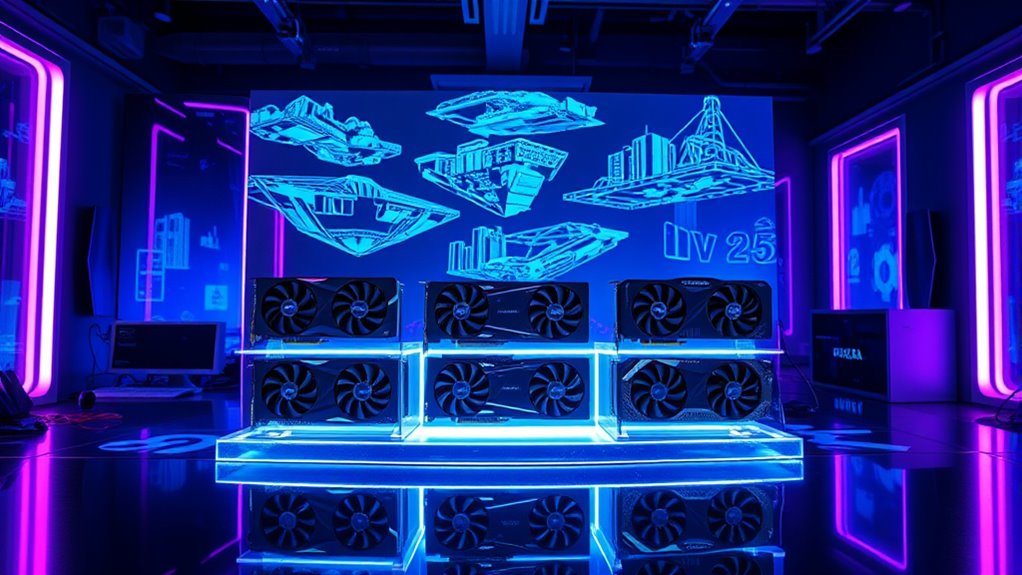
When searching for a GPU for VR productivity, the goal is to find a card that offers smooth, high-fidelity performance without excessive cost. The ASUS TUF Gaming GeForce RTX 5070 12GB stands out as the best overall choice, thanks to its balance of power and affordability. For specialized tasks, options like the PNY NVIDIA Quadro P5000 excel with professional-grade features, while the GIGABYTE RTX 5080 Gaming OC pushes the limits for demanding VR workflows. The main tradeoffs revolve around balancing raw performance, price, and features tailored to either gaming or professional use. Continue reading for a detailed breakdown of each option and how to choose the right GPU for your VR needs.

Get the latest gadgets delivered free with Prime
- Fast, free delivery on millions of items
- Prime Video, Amazon Music and more included
- Member-only deals all year
Complete the kit



Key Takeaways
- High VR performance depends on both GPU power and VR-specific features like low latency and fast refresh rates.
- Professional cards like the Quadro series excel in stability and precision but come at a premium price.
- The highest-end GPUs deliver better future-proofing but may not be necessary for all users’ VR workloads.
- Price-to-performance varies widely; mid-tier cards often provide the best value for most users.
- Compatibility with your VR headset and system is critical; not all GPUs are optimized for every setup.
| ASUS TUF Gaming GeForce RTX 5070 12GB GDDR7 OC Edition Graphics Card |  | Best Overall for VR Productivity | Graphics Coprocessor: NVIDIA GeForce RTX 5070 | RAM: 12 GB | GPU Clock Speed: 2640 MHz | VIEW ON AMAZON | See Our Full Breakdown |
| PNY NVIDIA Quadro P5000 16 GB VR Ready Graphics Card |  | Best for Professional VR Workflows | GPU Architecture: Pascal | Memory: 16 GB | VR Ready: Yes | VIEW ON AMAZON | See Our Full Breakdown |
| ASUS Dual GeForce RTX 3050 6GB GDDR6 OC Edition Gaming Graphics Card |  | Best Budget-Friendly VR Card for Small Builds | GPU: GeForce RTX 3050 | Memory: 6GB GDDR6 | Boost Clock: 1500 MHz (OC Mode) | VIEW ON AMAZON | See Our Full Breakdown |
| PNY NVIDIA Quadro RTX 4000 – Ray Tracing GPU |  | Best for Professional High-Quality VR Rendering | GPU Architecture: NVIDIA Turing | Memory: Ultra-fast graphics memory | RT Cores: 36 RT cores | VIEW ON AMAZON | See Our Full Breakdown |
| ASRock Radeon RX 9060 XT Challenger 16GB OC Graphics Card |  | Best for High-Resolution VR and AI Workloads | Graphics Coprocessor: AMD Radeon RX 9060 XT | Memory: 16 GB | GPU Clock Speed: 3290 MHz | VIEW ON AMAZON | See Our Full Breakdown |
| MSI Gaming GeForce RTX 3060 12GB Graphics Card |  | Best Value for VR Productivity | Memory: 12GB GDDR6 | GPU Clock Speed: 1710 MHz | Memory Clock Speed: 1807 MHz | VIEW ON AMAZON | See Our Full Breakdown |
| GIGABYTE GeForce RTX 5080 Gaming OC 16G Graphics Card |  | Best High-End VR Powerhouse | Architecture: NVIDIA Blackwell | Memory: 16GB GDDR7 | Memory Interface: 256-bit | VIEW ON AMAZON | See Our Full Breakdown |
| ASRock Intel Arc Pro B60 24GB Graphics Card |  | Best Professional Workstation Choice | Memory: 24GB GDDR6 | Memory Bus: 192-bit | Core Count: 20 Xe cores | VIEW ON AMAZON | See Our Full Breakdown |
| PNY NVIDIA RTX A2000 12GB |  | Best Compact Workstation GPU | CUDA Cores: 3328 | TFLOPS: 7.99 | Tensor Cores: 104 | VIEW ON AMAZON | See Our Full Breakdown |
| gpu for vr productivity | Memory |
|---|---|
| ASUS TUF Gaming GeForce RTX 50 | — |
| PNY NVIDIA Quadro P5000 16 GB | 16 GB |
| ASUS Dual GeForce RTX 3050 6GB | 6GB GDDR6 |
| PNY NVIDIA Quadro RTX 4000 | Ultra-fast graphics memory |
| ASRock Radeon RX 9060 XT Chall | 16 GB |
| MSI Gaming GeForce RTX 3060 12 | 12GB GDDR6 |
| GIGABYTE GeForce RTX 5080 Gami | 16GB GDDR7 |
| ASRock Intel Arc Pro B60 24GB | 24GB GDDR6 |
| PNY NVIDIA RTX A2000 12GB | — |
More Details on Our Top Picks
ASUS TUF Gaming GeForce RTX 5070 12GB GDDR7 OC Edition Graphics Card
The ASUS TUF Gaming GeForce RTX 5070 OC stands out for combining high-end performance with durability, making it ideal for demanding VR workflows. Its 12GB GDDR7 memory and boost clock of 2640MHz ensure smooth rendering for complex VR environments, surpassing the RTX 3050’s capabilities. The triple axial-tech fans and military-grade components deliver reliable cooling and longevity, even under sustained loads. Compared with the GIGABYTE RTX 5080, this card offers a more balanced mix of performance and durability, though it trades off for a larger 3.125-slot footprint that requires a spacious case. Its advanced thermal management makes it well-suited for those who push their VR setups hard, but the size and high-end specs mean it needs a compatible high-end desktop. Overall, this card offers the best blend of power, reliability, and future-proofing for serious VR productivity.
Pros:- High-performance RTX 5070 GPU with 12GB GDDR7 memory
- Robust cooling system with three axial-tech fans
- Military-grade components for enhanced durability
- Supports PCIe 5.0 for future compatibility
Cons:- Large 3.125-slot design requiring a spacious case
- Higher power consumption and potential need for a high-capacity PSU
Best for: Power users and professionals needing maximum VR rendering capacity without compromise
Not ideal for: Casual VR users or those with small, compact cases who cannot accommodate its size
- Graphics Coprocessor:NVIDIA GeForce RTX 5070
- RAM:12 GB
- GPU Clock Speed:2640 MHz
- Video Output Interface:DisplayPort 2.1a x3, HDMI 2.1b x2
- Graphics RAM Type:GDDR7
- Maximum Resolution:7680×4320 pixels
Our verdict“This card is perfect for professionals seeking a durable, powerful GPU that can handle intense VR workloads with confidence.”
PNY NVIDIA Quadro P5000 16 GB VR Ready Graphics Card
The PNY NVIDIA Quadro P5000 offers a substantial 16GB of VR-ready memory, making it highly suitable for complex VR applications that demand extensive texture and render processing. Its Pascal architecture supports advanced projection technologies like Multi-Projection and Mosaics, providing a seamless VR experience that surpasses the more gaming-oriented RTX 3050. While its professional-grade features ensure exceptional stability and accuracy, these benefits come with a premium price that may be prohibitive for casual users. Compared to the ASUS RTX 5070, the Quadro P5000 emphasizes precision and reliability over raw gaming performance, making it ideal for content creators and engineers. However, it requires a high-performance system and might be overkill for those simply exploring VR entertainment. This card excels where precision and stability are paramount, especially in professional VR workflows.
Pros:- Huge 16GB VR-ready memory for demanding projects
- Supports multiple advanced projection and rendering features
- Compatible with Windows and Linux systems for versatile use
- Exceptional stability and professional-grade performance
Cons:- Expensive compared to gaming-focused GPUs
- Primarily designed for professional workflows, not gaming
Best for: Creative professionals and engineers focusing on VR development and simulation
Not ideal for: Casual gamers or VR enthusiasts with budget constraints, due to its high cost
- GPU Architecture:Pascal
- Memory:16 GB
- VR Ready:Yes
- Supported Systems:Windows 10, Windows 8.1, Windows 7, Linux
- Features:Multi-Projection, Mosaics, NVIDIA GPU Boost 3.0
Our verdict“This professional GPU is ideal for users who prioritize stability and high-precision VR work over gaming performance.”
ASUS Dual GeForce RTX 3050 6GB GDDR6 OC Edition Gaming Graphics Card
The ASUS Dual GeForce RTX 3050 OC provides a solid entry point for VR in small or budget-conscious setups. Its 6GB GDDR6 VRAM, combined with enhanced ray-tracing and AI features thanks to the Ampere architecture, delivers decent VR performance for less demanding applications. Its two-slot design and axial-tech fans make it suitable for smaller cases, but the limited VRAM can become a bottleneck in complex VR environments or high-resolution textures. Compared to the RTX 5070, this model sacrifices raw power and future-proofing for affordability and compact size, making it less ideal for intense professional VR workflows. Nevertheless, for users with a tight budget or small chassis, it strikes a decent balance of performance and size, though it may struggle with more demanding VR content.
Pros:- Enhanced ray-tracing and AI capabilities with Ampere architecture
- Efficient axial-tech fan design for better cooling
- Compact 2-slot form factor suitable for small cases
Cons:- Limited to 6GB VRAM, which can limit VR complexity
- Less future-proof for high-end or professional VR workloads
Best for: Entry-level VR users and those with small case setups
Not ideal for: Power users or professionals needing high VR rendering capacity, due to limited VRAM
- GPU:GeForce RTX 3050
- Memory:6GB GDDR6
- Boost Clock:1500 MHz (OC Mode)
- Design:2-slot
- Fan Design:Axial-tech
- Dust Resistance:IP5X
Our verdict“This card makes sense for newcomers or users with space constraints, but falls short for demanding VR production tasks.”
PNY NVIDIA Quadro RTX 4000 – Ray Tracing GPU
The PNY NVIDIA Quadro RTX 4000 offers advanced ray tracing and real-time rendering features, making it a strong choice for VR professionals who require high visual fidelity. Its Turing architecture and 36 RT cores provide detailed shading and immersive experiences that go beyond gaming performance, similar in purpose to the Quadro P5000 but with newer tech. It’s better suited to complex visualization and simulation tasks than the ASUS RTX 3050, but with a higher price tag and power demands, it’s less accessible for casual or entry-level users. Unlike the ASUS RTX 5070, which balances gaming and productivity, the RTX 4000 is focused on precision and professional-grade output. This card is ideal for those who need reliable, high-quality VR rendering for professional workflows, but it may be overkill for casual VR users.
Pros:- High-end ray tracing with 36 RT cores
- Advanced shading and real-time rendering capabilities
- Designed specifically for professional VR and visualization workflows
Cons:- Expensive relative to consumer-grade GPUs
- Requires compatible system with high power capacity
Best for: VR professionals and content creators needing precision and high-fidelity rendering
Not ideal for: Casual VR users or gamers on a budget, due to its professional focus and cost
- GPU Architecture:NVIDIA Turing
- Memory:Ultra-fast graphics memory
- RT Cores:36 RT cores
- Features:Real-time rendering, advanced shading
Our verdict“This GPU is best suited for professionals prioritizing visual fidelity and real-time rendering in VR environments.”
ASRock Radeon RX 9060 XT Challenger 16GB OC Graphics Card
The ASRock Radeon RX 9060 XT Challenger offers a compelling combination of 16GB GDDR6 memory and high clock speeds up to 3290 MHz, making it a versatile option for VR at 1440p and even 4K resolutions. Its PCIe 5.0 support and dual-fan cooling system provide fast data transfer and quiet operation, comparable to the NVIDIA Quadro P5000 for demanding VR tasks. While it’s over 9 inches long and requires an 8-pin power connector, it’s more accessible than some high-end professional cards, though it may be overkill for casual VR gaming. Compared to the ASUS RTX 3050, this model offers significantly higher VRAM and better performance for AI workloads. It’s a solid choice for those needing a balance between gaming, creative work, and VR productivity, provided their case can accommodate its size.
Pros:- High 16GB GDDR6 memory supports complex VR scenes
- Supports PCIe 5.0 for fast data transfer
- Effective dual-fan cooling for quiet operation
- High boost clock of 3290 MHz for performance
Cons:- Requires a large chassis with sufficient clearance
- Needs an 8-pin power connector, increasing power demands
Best for: VR users running high-resolution content and AI workloads who need a balanced, powerful GPU
Not ideal for: Casual users with small cases or low power supplies, due to size and power requirements
- Graphics Coprocessor:AMD Radeon RX 9060 XT
- Memory:16 GB
- GPU Clock Speed:3290 MHz
- Video Output Interface:DisplayPort, HDMI
- Graphics RAM Type:GDDR6
- Maximum Resolution:7680×4320 pixels
Our verdict“This GPU is well suited for VR professionals and enthusiasts who need high VRAM and performance in a reasonably accessible form factor.”
MSI Gaming GeForce RTX 3060 12GB Graphics Card
The MSI Gaming GeForce RTX 3060 with 12GB of GDDR6 memory offers a compelling balance between cost and capability for VR workflows. Unlike higher-end options like the GIGABYTE RTX 5080, it consumes less power and is more accessible price-wise, making it suitable for users who need solid VR performance without the highest-end investment. Its support for high resolutions up to 7680 x 4320 ensures crisp visuals, which is vital for immersive VR. However, the 1710 MHz GPU clock and potential power demands mean it still requires a capable power supply and cooling. Compared to premium models, this card sacrifices some performance headroom but delivers excellent value for mid-tier VR setups.
Pros:- Generous 12GB GDDR6 memory supports demanding VR applications
- Multiple high-res display outputs for multi-monitor or VR headsets
- Reliable brand with proven performance in gaming and productivity
Cons:- Potentially high power consumption requiring a robust PSU
- May need advanced cooling solutions in intensive use scenarios
Best for: VR enthusiasts or professionals on a budget who want reliable high-resolution output for productivity tasks.
Not ideal for: Power users seeking the absolute maximum frame rates or future-proofing with PCIe 5.0 and advanced architectures.
- Memory:12GB GDDR6
- GPU Clock Speed:1710 MHz
- Memory Clock Speed:1807 MHz
- Display Outputs:3 x DisplayPort (v1.4a), 1 x HDMI 2.1
- Maximum Resolution:7680 x 4320
- Power Consumption:Not specified but high
Our verdict“This card provides excellent value for those building a mid-range VR workstation with high-resolution display needs.”
GIGABYTE GeForce RTX 5080 Gaming OC 16G Graphics Card
The GIGABYTE RTX 5080 Gaming OC leverages NVIDIA Blackwell architecture with 16GB of GDDR7, making it a formidable choice for intensive VR workflows. Compared to the MSI RTX 3060, it offers significantly more memory and cutting-edge features like PCIe 5.0 support, ideal for future-proofing demanding VR and creative applications. Its WINDFORCE cooling system ensures sustained high performance, but this comes with a tradeoff: increased power draw and higher cost. This GPU is best suited for serious VR creators who need maximum performance and are prepared for the investment.
Pros:- Powerful NVIDIA Blackwell architecture for demanding workloads
- Large 16GB GDDR7 memory supports complex VR and AI tasks
- Advanced cooling system maintains performance stability
Cons:- High power consumption requiring robust power supply
- Premium price point limits accessibility for casual users
Best for: VR professionals or content creators demanding top-tier rendering and fluidity in complex 3D or AI-enhanced VR environments.
Not ideal for: Budget-conscious users or those with limited power supply capacity, as this card’s high power consumption and price may be prohibitive.
- Architecture:NVIDIA Blackwell
- Memory:16GB GDDR7
- Memory Interface:256-bit
- PCIe Version:PCIe 5.0
- Cooling System:WINDFORCE
- Power Consumption:High
Our verdict“This GPU makes the most sense for users who need maximum VR rendering power and are willing to invest heavily for it.”
ASRock Intel Arc Pro B60 24GB Graphics Card
The ASRock Intel Arc Pro B60 with 24GB of GDDR6 memory stands out for large-scale VR tasks that demand extensive RAM, such as AI training or multi-monitor setups. Its PCIe 5.0 support and four DisplayPort 2.1 outputs make it highly capable for complex workflows, especially compared to the PNY NVIDIA RTX A2000, which has less memory but a smaller form factor. The blower-style cooling is acceptable for professional environments, but may struggle in high-temperature scenarios, and its primary focus on professional applications means it isn’t optimized for gaming. This card is ideal for VR professionals working with large datasets or multi-screen environments.
Pros:- Massive 24GB GDDR6 memory suitable for large datasets and professional tasks
- Supports multiple high-resolution displays simultaneously
- PCIe 5.0 future-proofing ensures compatibility with next-gen systems
Cons:- Single blower cooling may be less effective in sustained high loads
- Chassis clearance and PSU capacity need careful verification
Best for: VR developers and 3D artists running multi-monitor setups or AI workloads requiring extensive VR-ready memory.
Not ideal for: Casual VR users or gamers, as this card’s primary design targets professional workflows and may lack gaming-optimized drivers.
- Memory:24GB GDDR6
- Memory Bus:192-bit
- Core Count:20 Xe cores
- PCIe Support:PCIe 5.0
- Display Outputs:4x DisplayPort 2.1
- Power:200W TDP
Our verdict“This GPU excels for VR professionals requiring extensive memory and multi-display support in demanding workloads.”
PNY NVIDIA RTX A2000 12GB
The PNY NVIDIA RTX A2000 with 12GB of CUDA cores and a low-profile design offers a practical solution for VR setups constrained by space. Its 3328 CUDA cores and 7.99 TFLOPS performance rival some mid-tier gaming cards, but with a focus on efficiency and workstation reliability. Unlike the GIGABYTE RTX 5080, it consumes only 70W, making it suitable for small or quiet environments. However, its lower power and performance ceiling mean it cannot match the raw power of higher-end models, especially for intensive VR rendering. This model is perfect for professionals needing a reliable, low-profile GPU for VR and workstation tasks in limited spaces.
Pros:- Low power consumption at only 70W
- Compact low-profile design fits in small cases
- High CUDA core count supports demanding workloads
Cons:- Limited details on specific VR optimization features
- May lack the raw performance for very intensive VR applications
Best for: VR professionals or engineers working in compact cases or needing energy-efficient hardware for demanding VR tasks.
Not ideal for: High-end VR content creators or gamers seeking maximum performance, as this card’s capabilities are more modest.
- CUDA Cores:3328
- TFLOPS:7.99
- Tensor Cores:104
- RT Cores:26
- Power Consumption:70W
- Form Factor:Low-profile, dual-slot
Our verdict“This GPU is ideal for space-constrained, professional VR setups where efficiency and reliability are priorities.”

How We Picked
The products in this roundup were evaluated based on their ability to handle demanding VR workloads reliably and smoothly. Key factors included raw graphical performance, VR-specific features such as latency reduction and frame rates, build quality, and driver stability. We also considered value for money, ensuring that each GPU offers features aligned with different user needs—from gaming enthusiasts to professional content creators. The ranking reflects a balance between performance, price, and versatility, prioritizing options that deliver consistent VR productivity without unnecessary extras that inflate costs.Factors to Consider When Choosing Gpu For Vr Productivity
Choosing the right GPU for VR productivity involves more than just raw specs. It’s important to consider how well the card supports VR-specific features, future-proofing, and compatibility with your existing setup. The following sections highlight key factors to help you make an informed decision and avoid common pitfalls that can hinder VR performance.Performance and VR Optimization
Look for GPUs with high core counts, fast memory, and strong ray tracing capabilities to ensure smooth VR experiences. VR demands high frame rates—ideally 90Hz or higher—so prioritize cards that can sustain these without stuttering. Avoid cards that struggle with sustained performance, as this can cause discomfort during extended VR sessions. The right balance of power and efficiency reduces latency and improves immersion, making performance a top consideration.
Compatibility and Connectivity
Not all GPUs work seamlessly with every VR headset, so check the compatibility list before purchasing. Ensure the card has enough DisplayPort or HDMI outputs compatible with your VR headset’s requirements. Additionally, verify that your system’s power supply and PCIe slot can support the GPU’s wattage and size. Overlooking these details can lead to setup issues or subpar performance, so compatibility should be a primary factor.
Price and Value
High-end GPUs like the RTX 5080 deliver top-tier performance but come with a hefty price tag. Mid-range options such as the RTX 3060 or RTX 3050 often provide excellent performance for VR at more accessible prices. Be wary of overspending on features you won’t use and look for cards that offer a good performance-to-cost ratio. Sometimes, investing in a more affordable model with decent specifications can be the smarter choice, especially if your VR workloads are not extremely demanding.
Future-Proofing
VR technology continues to evolve rapidly, so selecting a GPU with ample headroom can extend the lifespan of your setup. Consider models with higher VRAM and newer architectures that support upcoming standards. While premium cards tend to be more future-proof, they may not be necessary for casual or beginner users. Balance your current needs with potential upgrades to avoid premature obsolescence.
Driver Stability and Software Support
Consistent driver updates and reliable software support are vital for VR productivity. Unstable drivers can cause crashes, glitches, or performance dips, disrupting your workflow. Opt for GPUs from reputable manufacturers with a history of regular updates. Reading user reviews and professional benchmarks can also reveal how well a card maintains stability over time, which is critical for professional or extended VR use.
Frequently Asked Questions
How much VRAM do I need for VR productivity?
For most VR productivity tasks, 8GB of VRAM is a solid minimum, with 12GB or more preferred for handling larger projects or more demanding applications. Higher VRAM allows for smoother performance with high-resolution textures and complex scenes, reducing lag and stuttering. It also helps future-proof your setup against upcoming VR content and software updates, ensuring a longer lifespan for your GPU.
Can I use a gaming GPU for professional VR work?
Yes, many gaming GPUs like the RTX 3060 or RTX 4070 are capable of supporting VR productivity tasks effectively. They typically offer excellent performance at a more affordable price point compared to professional-grade cards. However, professional GPUs such as the Quadro series often provide better stability, driver support, and features tailored for CAD, 3D rendering, or simulation workloads, which can matter for certain professional applications.
Is ray tracing necessary for VR productivity?
Ray tracing enhances visual realism and can improve the quality of VR scenes, but it is not strictly necessary for productivity. For most workflow tasks, raw performance and low latency matter more. If your work involves realistic rendering or visual effects, a GPU with ray tracing capabilities can add value, but for general VR tasks, prioritize performance and compatibility first.
How important is GPU cooling and size for VR setups?
Cooling and physical size are often overlooked but are critical for maintaining performance and longevity. High-performance GPUs generate a lot of heat, and inadequate cooling can lead to thermal throttling, reducing performance during extended sessions. Additionally, ensure your PC case has enough space to accommodate larger cards, as airflow is essential to keep temperatures in check and prevent overheating.
Should I prioritize professional or gaming GPUs for VR productivity?
The choice depends on your specific needs. Gaming GPUs like the RTX series generally offer better value and are sufficient for most immersive VR workflows. However, if your work involves precision, stability, or software that benefits from certified drivers—such as CAD or simulation tools—professional GPUs like the Quadro or RTX A2000 may justify their higher cost. Consider your workload and software compatibility before deciding.
Conclusion
For most users seeking a GPU for VR productivity in 2026, the ASUS TUF Gaming GeForce RTX 5070 offers a balanced mix of performance and value, making it the best overall choice. If budget is a primary concern, the ASRock Radeon RX 9060 XT Challenger provides solid performance at a lower price point. Professionals or those requiring maximum stability might lean toward the PNY NVIDIA Quadro P5000 or the RTX A2000. Beginners and casual users can start with mid-range options like the RTX 3050, which delivers reliable VR experience without overspending. Ultimately, your choice should align with your specific performance needs, budget, and intended use case.
As an affiliate, we earn on qualifying purchases.Columbus Day / Indigenous Peoples' Day Picks
long weekend sales