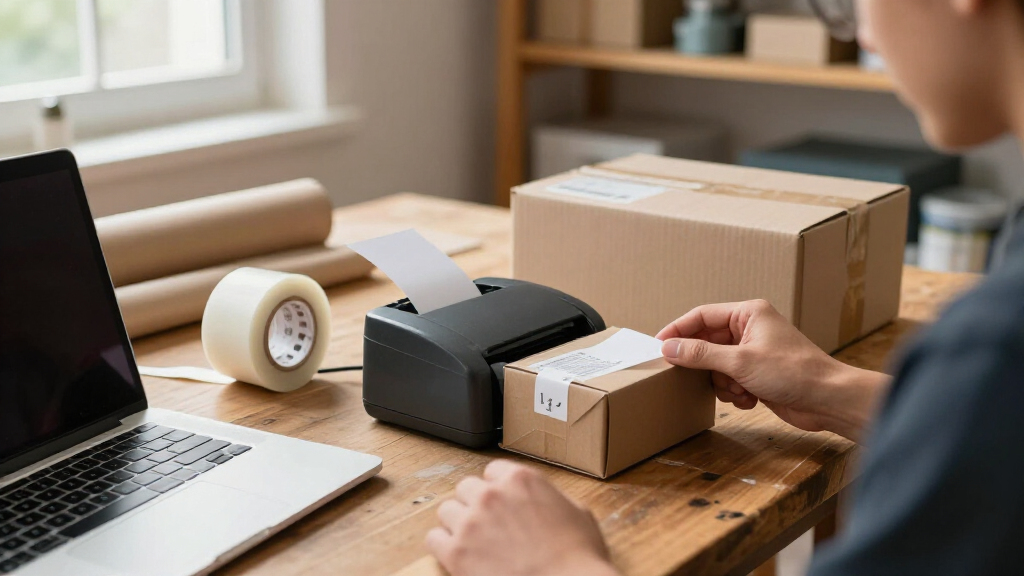

Portable thermal label printers can speed up shipping without taking up the space of a standard office printer. My best overall pick is the Nelko Bluetooth Thermal Shipping Label Printer for its straightforward 4 × 6 shipping-label focus; the Rongta RP425 stands out for buyers who want another established-format option, while the compact KNAON models may suit tighter workspaces. The main tradeoffs are not just printer size: phone and computer compatibility, setup, label-feed design, and supported label formats can matter more than portability alone. I compare all seven options by those practical differences, so keep reading for the full breakdown and help choosing a printer that fits your shipping routine.

Get the latest gadgets delivered free with Prime
- Fast, free delivery on millions of items
- Prime Video, Amazon Music and more included
- Member-only deals all year
Complete the kit



Key Takeaways
- All seven picks target Bluetooth thermal shipping labels, so the deciding factors are compatibility, setup, and handling—not a choice between ink and toner.
- Nelko is my overall pick for buyers who want a direct 4 × 6 shipping-label setup rather than a printer centered on compactness or specialized use.
- Rongta RP425 and NULLTONEX are alternatives worth comparing when you want to weigh another 4 × 6-focused option against the overall pick.
- The two KNAON listings are separate products; compare their exact model details and included accessories instead of assuming their shared brand means identical use.
- None of these names alone settles compatibility: confirm support for your device, shipping platform, and label dimensions before buying.
| Nelko Bluetooth Thermal Shipping Label Printer, 4 x 6 | 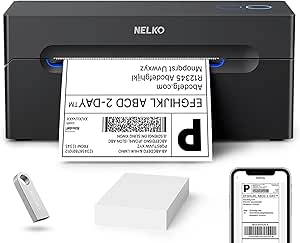 | Best Overall | Printer type: Direct thermal | Connectivity: Bluetooth via NELKO app; USB | Print speed: Up to 72 4 x 6 labels per minute | VIEW LATEST PRICE | See Our Full Breakdown |
| NULLTONEX 4×6 Bluetooth Thermal Shipping Label Printer |  | Best Starter Bundle | Printer type: Direct thermal | Resolution: 203 DPI | Print speed: Up to 150 mm/s (72 labels per minute) | VIEW LATEST PRICE | See Our Full Breakdown |
| Labeer Bluetooth Thermal Shipping Label Printer |  | Best Compact Pick | Printer type: Direct thermal | Resolution: 203 × 203 DPI | Supported label widths: 1.57–4.41 inches | VIEW LATEST PRICE | See Our Full Breakdown |
| Rongta RP425 Bluetooth Thermal Shipping Label Printer |  | Best for Automatic Label Sizing | Model: RP425 | Printer type: Thermal | Connectivity: Bluetooth | VIEW LATEST PRICE | See Our Full Breakdown |
| KNAON Bluetooth Thermal Shipping Label Printer |  | Best for Custom Labels | Printer type: Thermal | Output: Monochrome | Connectivity: Bluetooth and USB | VIEW LATEST PRICE | See Our Full Breakdown |
| KNAON 4×6 Bluetooth Thermal Shipping Label Printer |  | Best for Cross-Platform Setups | Printer type: Thermal | Print output: Monochrome | Connectivity: Bluetooth via FlashLabel Pro app; USB | VIEW LATEST PRICE | See Our Full Breakdown |
| JADENS Bluetooth Thermal Shipping Label Printer, 4 x 6 | 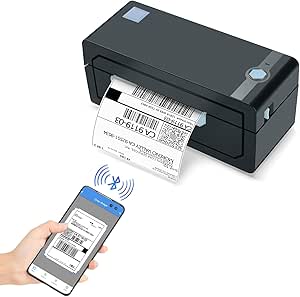 | Best for Fanfold and Roll Label Flexibility | Model: JD268BT | Printer type: Thermal | Print resolution: 203 × 203 DPI | VIEW LATEST PRICE | See Our Full Breakdown |
| portable thermal label printer | Printer type | Connectivity | Print speed | Resolution |
|---|---|---|---|---|
| Nelko Bluetooth Thermal Shippi | Direct thermal | Bluetooth via NELKO app; USB | Up to 72 4 x 6 labels per minute | 203 x 203 DPI |
| NULLTONEX 4×6 Bluetooth Therma | Direct thermal | Bluetooth and USB | Up to 150 mm/s (72 labels per minute) | 203 DPI |
| Labeer Bluetooth Thermal Shipp | Direct thermal | Bluetooth and USB | — | 203 × 203 DPI |
| Rongta RP425 Bluetooth Thermal | Thermal | Bluetooth | Up to 150 mm/s | 203 dpi |
| KNAON Bluetooth Thermal Shippi | Thermal | Bluetooth and USB | Up to 180 mm/s | 200 × 200 |
| KNAON 4×6 Bluetooth Thermal Sh | Thermal | Bluetooth via FlashLabel Pro app; USB | Up to 180 mm/s | — |
| JADENS Bluetooth Thermal Shipp | Thermal | Bluetooth, USB 2.0 | — | — |
More Details on Our Top Picks
Nelko Bluetooth Thermal Shipping Label Printer, 4 x 6
The Nelko PL70E is my strongest all-round pick for sellers who want a portable printer that handles both phone-based and computer-based workflows. It connects by Bluetooth through the NELKO app or by USB, and its support for fanfold and roll labels gives it more media flexibility than the starter-sheet-focused NULLTONEX. At up to 72 4 x 6 labels per minute, it suits regular parcel batches without taking up much desk space. The tradeoff is that Bluetooth printing depends on the app, while Mac users are limited to USB. At 1.4 kg, it is portable between work areas, though not as light as the Labeer. I’d choose it for broad everyday utility, not for color output or app-free mobile printing.
Pros:- Bluetooth and USB connection options
- Works with both fanfold and roll thermal labels
- Supports label widths from 1.54 to 4.1 inches
- Prints up to 72 4 x 6 labels per minute without ink or toner
Cons:- Bluetooth printing requires the NELKO app
- Mac computers connect by USB only
- Heavier than the 450 g Labeer model
Best for: Small online sellers who switch between phone and computer orders and want roll or fanfold label support.
Not ideal for: Mac users who specifically want wireless printing, or anyone who needs color labels or a very lightweight travel printer.
- Printer type:Direct thermal
- Connectivity:Bluetooth via NELKO app; USB
- Print speed:Up to 72 4 x 6 labels per minute
- Resolution:203 x 203 DPI
- Supported label width:1.54–4.1 in (40–104 mm)
- Compatible operating systems:Windows 7 or later, macOS, Chrome OS, iOS, Android
- Weight:1.4 kg
- Dimensions:9 x 5 x 6 in (D x W x H)
Our verdict“Choose the Nelko for flexible everyday shipping-label work across mobile and desktop devices, provided Mac wireless printing is not a requirement.”
NULLTONEX 4×6 Bluetooth Thermal Shipping Label Printer
The NULLTONEX is the most ready-to-print choice here for a new shipping setup: its box includes a USB cable, power cord, and 25 sheets of 4×6 labels. That starter supply makes it easier to check the workflow before buying more media, unlike the Nelko, whose listed package does not include labels. It connects by Bluetooth or USB, supports major shipping platforms, and offers app templates for adjusting label layouts. The stated speed reaches 150 mm/s, while the 203 DPI output is standard for monochrome shipping labels. Its main compromise is that it prints black and white only, and the 3-pound body is less appealing for frequent travel than the lighter Labeer. I’d pick it for a first shipping station rather than a mobile-first setup.
Pros:- Includes 25 sheets of 4×6 thermal labels
- Bluetooth and USB connectivity
- Supports Amazon, Shopify, Etsy, USPS, UPS, FedEx, and DHL
- FlashLabel Pro app includes customizable templates
Cons:- Monochrome output only
- At 3 pounds, it is heavier than the Labeer
- The listed included labels are sheets rather than a roll supply
Best for: New marketplace sellers who want included 4×6 labels and a choice of Bluetooth or USB setup.
Not ideal for: Frequent travelers prioritizing low weight, or makers who need color printing or detailed photo-quality output.
- Printer type:Direct thermal
- Resolution:203 DPI
- Print speed:Up to 150 mm/s (72 labels per minute)
- Connectivity:Bluetooth and USB
- Supported label width:1.57–4.3 inches
- Compatible platforms:Amazon, Shopify, Etsy, USPS, UPS, FedEx, DHL
- Weight:3 pounds
- Dimensions:8.08 × 4.73 × 6.9 inches
- Included:Power cord, USB cable, 25 sheets of 4×6 thermal labels
Our verdict“Choose the NULLTONEX if you want a straightforward starter kit with sample labels and broad shipping-platform support.”
Labeer Bluetooth Thermal Shipping Label Printer
At just 450 g and 7.2 inches long, the Labeer is the easiest pick in this group to move between a home packing table and another workspace. Its compact build does not limit it to shipping labels: it supports widths from 1.57 to 4.41 inches and listed formats including 4×6, 4×4, 4×2, and 2×1, making it more adaptable for inventory or small-item labels than the 4×6-focused NULLTONEX. Automatic label calibration and jam detection are useful when changing sizes, though they do not remove the need to manage the app and media correctly. Mobile printing uses FlashLabel Pro; macOS, ChromeOS, and Linux connect over USB. Compared with the heavier Nelko, this is the more travel-friendly option, but the stated maximum sheet capacity is 50.
Pros:- Very light at 450 g
- Supports shipping, inventory, and smaller label formats
- Automatic label calibration and jam detection
- Bluetooth and USB connectivity
Cons:- Mobile printing requires the FlashLabel Pro app
- macOS, ChromeOS, and Linux use USB rather than Bluetooth
- Maximum sheet capacity is 50
Best for: Sellers with limited workspace who need a lightweight printer for shipping and smaller inventory labels.
Not ideal for: People who want app-free mobile printing, or desktop users who require wireless connections on macOS, ChromeOS, or Linux.
- Printer type:Direct thermal
- Resolution:203 × 203 DPI
- Supported label widths:1.57–4.41 inches
- Supported label sizes:4×6, 4×4, 4×2, 2×1 inches, and custom sizes
- Connectivity:Bluetooth and USB
- Compatible devices:Windows PCs, macOS, ChromeOS, Linux, iPhone, Android
- Maximum sheet capacity:50
- Weight:450 g
- Dimensions:7.2 × 2.64 × 3.15 inches
Our verdict“Pick the Labeer if portability and varied label sizes matter more than large media capacity or wireless desktop compatibility.”
Rongta RP425 Bluetooth Thermal Shipping Label Printer
The Rongta RP425 earns its place for buyers who regularly change label formats and want the printer to detect the media width automatically. It handles labels from 0.98 to 4.37 inches, a broader stated range at the narrow end than the Nelko’s 1.54-inch minimum. Its 150 mm/s speed and 203 dpi resolution fit routine shipping work, while Bluetooth connects iOS and Android devices through the RONGTA app. The broad width support is useful, but setup is less friction-free on computers: Windows and Mac require driver software. The 0.65 kg weight keeps it more portable than the Nelko, although its 10.2-inch dimension makes it less compact than the Labeer. I’d favor this model for mixed label sizes, not for someone who wants the smallest travel footprint.
Pros:- Automatically detects and feeds labels
- Supports widths from 0.98 to 4.37 inches
- Bluetooth printing from iOS and Android
- Works with Windows, macOS, and Chrome OS
Cons:- Mobile printing requires the RONGTA app
- Windows and Mac setup requires driver software
- Longer than the Labeer based on listed dimensions
Best for: Small businesses printing shipping, barcode, or other labels in several widths from mobile devices and computers.
Not ideal for: Buyers who want a tiny travel printer or a computer setup without driver installation.
- Model:RP425
- Printer type:Thermal
- Connectivity:Bluetooth
- Compatible systems:Windows 7 and newer, macOS 10.11 and newer, Chrome OS, Android, iOS
- Supported label width:0.98–4.37 in
- Print speed:Up to 150 mm/s
- Resolution:203 dpi
- Dimensions:10.2 × 7.4 × 5.3 in
- Weight:0.65 kg
Our verdict“Choose the RP425 if automatic detection across a wide range of label widths matters more than the smallest possible footprint.”
KNAON Bluetooth Thermal Shipping Label Printer
The KNAON stands out for people who want to make more than standard carrier labels: the FlashLabel Pro app offers templates, icons, and fonts, and the printer accepts widths from 1.5 to 4.2 inches. Its stated 180 mm/s speed is higher than the NULLTONEX and Rongta figures, which may help when printing batches, while USB gives computer users an alternative to Bluetooth. The compromise is the file workflow: shipping labels must be saved as PDFs and imported into the app, adding a step compared with a simpler print path. Bluetooth also depends on FlashLabel Pro. At 2.8 pounds, it is compact enough for a home packing station but not as easy to carry as the 450 g Labeer. I’d choose it for label customization, not the most seamless parcel workflow.
Pros:- App includes templates, icons, and fonts for customized labels
- Print speed up to 180 mm/s
- Bluetooth and USB connectivity
- Supports Windows, macOS, ChromeOS, and Linux
Cons:- Shipping labels must be saved as PDFs and imported into the app
- Bluetooth printing requires FlashLabel Pro
- Heavier than the compact Labeer
Best for: Small sellers and makers who want to customize product, inventory, or shipping labels with app templates and graphics.
Not ideal for: High-volume shippers who want direct, low-step label printing or travelers who prioritize minimal weight.
- Printer type:Thermal
- Output:Monochrome
- Connectivity:Bluetooth and USB
- Compatible operating systems:Windows 7 or later, macOS, ChromeOS, Linux
- Supported paper width:1.5–4.2 inches
- Print speed:Up to 180 mm/s
- Resolution:200 × 200
- Weight:2.8 pounds
- Included:10 test printing papers
Our verdict“Choose the KNAON when custom label design is a priority and the extra PDF-import step fits your shipping routine.”
KNAON 4×6 Bluetooth Thermal Shipping Label Printer
The KNAON is a good fit for a home shipping station shared by different kinds of devices: Bluetooth printing from phones and tablets works through the FlashLabel Pro app, while USB support covers Windows, macOS, ChromeOS, and Linux computers. That breadth gives it an advantage over the JADENS, whose listed computer compatibility is limited to Windows and macOS. Its 7.2-inch-long compact body is easier to tuck away than the larger JADENS, though KNAON’s 203 dpi monochrome output is aimed at legible shipping labels, not color or fine graphic work. The app’s templates, fonts, and icons offer some label customization, but phone-based printing depends on that app. It also prints only, and the included 20 test papers are a starter supply rather than a full roll for ongoing shipments.
Pros:- Bluetooth and USB connections support mobile and computer workflows.
- Listed compatibility includes Windows, macOS, ChromeOS, and Linux.
- Compact dimensions suit a crowded desk or home shipping area.
- FlashLabel Pro offers templates, fonts, and icons for label customization.
Cons:- Bluetooth printing requires the FlashLabel Pro app.
- Monochrome thermal output cannot print color.
- The package includes only 20 test printing papers.
Best for: Small businesses or home shippers who use a mix of ChromeOS, Linux, Mac, and mobile devices and want a compact printer with app-based label templates.
Not ideal for: Buyers who want direct Bluetooth printing without a companion app, color labels, or a printer that also scans or copies.
- Printer type:Thermal
- Print output:Monochrome
- Connectivity:Bluetooth via FlashLabel Pro app; USB
- Compatible operating systems:Windows 7 or later, macOS, ChromeOS, Linux
- Maximum media width:4.41 inches
- Print resolution:203 dpi
- Print speed:Up to 180 mm/s
- Dimensions:7.2 × 3.15 × 2.65 inches
- Included paper:20 test printing papers
Our verdict“Choose the KNAON if broad operating-system support and a compact footprint matter more than app-free Bluetooth printing or color output.”
JADENS Bluetooth Thermal Shipping Label Printer, 4 x 6
The JADENS suits shippers who want to work with both fanfold and roll labels, with support for widths from 1.57 to 4.1 inches and a maximum media size of 4 × 6 inches. Its Bluetooth and USB options let it serve mobile devices through the Jadens app or compatible Windows and Mac computers. Compared with the KNAON, it offers a stated one-year warranty and clearly specified media formats, but the KNAON lists broader computer operating-system support, including ChromeOS and Linux. There are workflow tradeoffs: phones and tablets need the Jadens app, Bluetooth is not supported directly, and changing label types calls for recalibration. The 203 dpi monochrome output avoids ink and toner, but this print-only model is focused on practical shipping and business labels rather than color graphics or all-in-one tasks.
Pros:- Accepts both fanfold and roll labels.
- Supports label widths from 1.57 to 4.1 inches.
- Offers Bluetooth and USB 2.0 connectivity.
- Includes a one-year warranty.
Cons:- Mobile printing requires the Jadens app, and Bluetooth is not supported directly.
- Changing label types requires recalibration.
- Listed computer compatibility is limited to Windows and macOS.
Best for: Online sellers who switch between fanfold and roll shipping labels and primarily print from a Windows or Mac computer or the Jadens mobile app.
Not ideal for: ChromeOS or Linux users, or mobile users who want Bluetooth printing without installing a dedicated app.
- Model:JD268BT
- Printer type:Thermal
- Print resolution:203 × 203 DPI
- Connectivity:Bluetooth, USB 2.0
- Label width:1.57–4.1 inches
- Maximum media size:4 × 6 inches
- Supported media:Fanfold and roll labels
- Compatible systems:Windows 7 or newer, macOS 10.9 or newer; iOS and Android via Jadens app
- Warranty:One year
Our verdict“Pick the JADENS if you need roll-and-fanfold flexibility and a stated warranty, and can work with its app and recalibration requirements.”

How We Picked
I compared the seven listed printers around the practical demands of portable shipping: 4 × 6 label suitability, connection and device compatibility, setup clarity, desk footprint, and day-to-day handling. I also considered how easy it is to match a printer to a common home or small-business workflow, since a portable printer is only useful if it works with the device and shipping tools a buyer already uses. I did not treat Bluetooth or a shared label size as proof that the models are interchangeable; exact compatibility and supported media should be checked on each listing.
The order favors the most direct fit for routine 4 × 6 shipping first, then options that may suit buyers comparing alternate models or prioritizing a smaller setup. Nelko takes the overall spot as the clearest general-purpose recommendation based on the supplied product details. The other entries remain useful comparisons, but the available names do not establish meaningful differences in speed, battery operation, included accessories, or build materials, so I avoid claiming those advantages without verified specifications.
| portable thermal label printer | Printer type | Connectivity | Print speed |
|---|---|---|---|
| Nelko Bluetooth Thermal Shippi | Direct thermal | Bluetooth via NELKO app; USB | Up to 72 4 x 6 labels per minute |
| NULLTONEX 4×6 Bluetooth Therma | Direct thermal | Bluetooth and USB | Up to 150 mm/s (72 labels per minute) |
| Labeer Bluetooth Thermal Shipp | Direct thermal | Bluetooth and USB | — |
| Rongta RP425 Bluetooth Thermal | Thermal | Bluetooth | Up to 150 mm/s |
| KNAON Bluetooth Thermal Shippi | Thermal | Bluetooth and USB | Up to 180 mm/s |
| KNAON 4×6 Bluetooth Thermal Sh | Thermal | Bluetooth via FlashLabel Pro app; USB | Up to 180 mm/s |
| JADENS Bluetooth Thermal Shipp | Thermal | Bluetooth, USB 2.0 | — |
Factors to Consider When Choosing Portable Thermal Label Printers
Portable shipping printers can look alike while behaving differently once they meet your phone, labels, and shipping software. I would settle the workflow questions before comparing secondary features: what you print, which device sends the job, and where the printer will sit. These checks can prevent a printer that seems compact and convenient from becoming an awkward fit for everyday fulfillment.
Match the Printer to Your Label Size and Workflow
Start with the label dimensions your shipping platform actually produces, not the size you expect to use someday. A 4 × 6 printer is a natural match for many parcel labels, but it may be unnecessary if your regular tasks involve smaller address or barcode labels. Check whether the printer supports the media format you need and whether the software can set the label dimensions correctly. A common mistake is buying by the phrase “shipping label printer” and assuming every template will print at the right scale. If your work spans several label sizes, confirm the supported range before choosing portability over versatility. Match the printer, label roll, and software settings as one system.
Check Device and Platform Compatibility Before Buying
Bluetooth does not guarantee that a printer will pair with every phone, computer, or shipping service. Check the stated support for your operating system and whether printing runs through a dedicated app, a desktop driver, or a browser-based workflow. If you create labels on a laptop but want to print from a phone while packing, verify both paths rather than relying on one compatibility claim. Also check whether your shipping platform exports a printable file the printer can handle. Buyers often focus on pairing and miss the extra setup steps between generating a label and sending it to the printer. Compatibility with your full label workflow matters more than Bluetooth by itself.
Decide Whether You Need True Cordless Printing
“Portable” can mean a small printer that moves easily between desks, or a printer that can print away from a power outlet. Do not assume Bluetooth means battery-powered operation; wireless communication and cordless power are different features. If you plan to print at pop-up events or away from a fixed packing station, check the power source, battery details, and charging method in the exact model listing. For a home shipping desk, a compact unit that stays plugged in may be more practical than paying for mobility you rarely use. Think through where labels are created, printed, and applied before prioritizing a battery. Choose portability that matches your location, not just the product name.
Plan for Label Loading, Storage, and Ongoing Supplies
A printer’s everyday convenience depends on more than its outer dimensions. Check whether it accepts the label format and roll or fanfold stock you plan to buy, and whether the feed path suits the space where it will sit. Leave room for the label supply to feed cleanly instead of wedging the printer against a wall or into a crowded shelf. It also helps to learn how the model handles calibration and what the instructions say when a label feeds crookedly. Buyers can overlook supply compatibility and later find that their preferred labels do not fit the printer’s loading arrangement. Account for the printer plus its working space and consumables.
Prioritize Setup Support if You Print Infrequently
Frequent shippers may be comfortable installing drivers and adjusting label settings; occasional users often benefit more from clear instructions and a simple first-print process. Check what setup materials and troubleshooting guidance are included, especially if you are switching from a regular inkjet printer. A test label can reveal scaling or orientation issues before you print a batch for outgoing orders. If more than one person will use the printer, consider whether each person can connect without repeating a complicated setup. Paying attention to support and setup can save more time than choosing a marginally smaller device. Ease of getting the first label right is part of usability.
Compare the Exact Listings, Not Just Brand Names
Several products in this roundup have similar names and the same broad 4 × 6 Bluetooth purpose, so brand alone is a weak basis for a decision. Compare the exact model number, supported devices, included cables or adapters, media-loading method, and stated power requirements. This is especially useful when weighing the two KNAON listings: a shared name does not prove their bundles or specifications match. Be cautious about carrying claims from one model page over to another product from the same maker. If an important detail is absent, confirm it before purchase rather than filling the gap with assumptions. Exact model specifications beat look-alike product titles.
Frequently Asked Questions
Will any of these Bluetooth printers work with my phone and shipping app?
Not automatically: Bluetooth confirms a connection method, not support for every phone or shipping service. Check the exact model’s compatibility list for your phone operating system and confirm that your shipping app can send labels to it, either directly or through a supported print app. If you create labels on a computer, check desktop support separately. A useful pre-purchase check is to look up the app or driver named in the listing and verify that it supports your device. Confirm the entire path from label creation to printing, not just the wireless connection.
Is Bluetooth the same as being able to print without a power outlet?
No. Bluetooth describes how a device communicates; it does not confirm that the printer has a battery. Some portable printers still need a power adapter or cable while printing. Check the exact model’s power specifications if you expect to print at a market, warehouse, or other spot without an outlet. If the printer will stay on a packing desk, corded power may be perfectly suitable and can make the setup simpler. Verify battery operation separately from wireless connectivity.
Can I use labels from any supplier with a 4 × 6 printer?
Do not assume so. Confirm that the label stock matches the printer’s supported dimensions and loading method, and check whether the model accepts rolls, fanfold labels, or both. Label material and the printer’s sensing or calibration process can also affect whether stock feeds properly. A small test pack can be a sensible way to confirm a new supply before committing to a large quantity. Measure and check media compatibility rather than relying on the 4 × 6 description alone.
Should I choose a compact printer or one that is easier to load?
Choose based on where and how often you print. If the printer moves between locations or must fit on a crowded desk, a smaller footprint can help; if you print batches regularly, straightforward label loading and a comfortable feed path may save more time. Remember that the printer also needs room for labels to unwind or feed from behind. A compact body can still need extra working space around it. Compare the complete setup footprint, not just the printer’s dimensions.
How can I tell which of the two KNAON printers is the better fit?
Compare the exact listing details rather than assuming the shared KNAON name means the models are identical. Look for differences in supported label formats, device compatibility, power requirements, included accessories, and loading arrangements. If those details are not clear, ask the seller or consult the manufacturer’s documentation before choosing. Also compare each model against your actual workflow: a bundle or feature you will not use should not outweigh a compatibility requirement you do need. Let verified model specifications, not the title alone, decide between them.
Conclusion
For routine 4 × 6 shipping, Nelko is my best overall choice among these listed options. Buyers comparing alternative 4 × 6-focused models can also weigh Rongta RP425, NULLTONEX, and JADENS, while checking exact compatibility and included accessories rather than assuming the names tell the whole story. I cannot identify a defensible best-value or best-premium pick from the supplied product details alone, so I would compare verified specifications and bundle contents before paying more. For beginners, choose the listing with the clearest setup instructions and confirmed support for your phone or computer; for a compact workspace, compare the complete footprint and label-feed space of the two KNAON models. The right choice is the one that matches your labels, devices, and printing location—not simply the one labeled portable.
Halloween Picks
halloween
As an affiliate, we earn on qualifying purchases.