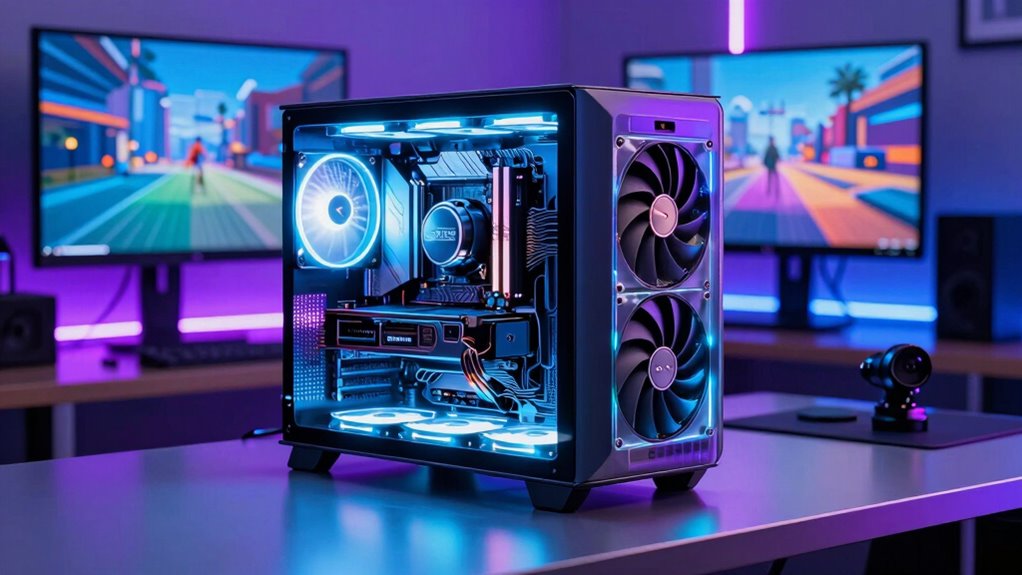

If you’re searching for a GPU for VR with 24GB VRAM, you’re likely aiming for high-end performance and future-proofing. The NVIDIA GeForce RTX 3090 Founders Edition stands out as the best overall choice, offering robust power for demanding VR applications. For those prioritizing workstation capabilities, the ASRock Intel Arc Pro B60 provides a professional-grade alternative, while the NVIDIA RTX PRO 4000 offers cutting-edge GDDR7 memory for advanced AI workloads. Keep in mind, the main tradeoffs involve balancing raw performance, price, and compatibility—these GPUs vary significantly in cost and features. Continue reading for a detailed breakdown of each option to help you make an informed decision.

Get the latest gadgets delivered free with Prime
- Fast, free delivery on millions of items
- Prime Video, Amazon Music and more included
- Member-only deals all year
Complete the kit


Key Takeaways
- The NVIDIA GeForce RTX 3090 models dominate in raw VR performance, but come at a premium price.
- Workstation GPUs like the ASRock Intel Arc Pro B60 excel in professional tasks but may lack some gaming features.
- The NVIDIA RTX PRO 4000 stands out with GDDR7 memory, offering future-proofing for AI and simulation workloads.
- Price varies widely, with many high-VRAM GPUs costing over $2,000, making budget considerations critical.
- Compatibility and power requirements are often overlooked but essential—ensure your system can support these high-performance cards.
| ASRock Intel Arc Pro B60 24GB Graphics Card, Workstation GPU, PCIe 5.0, 4x DisplayPort 2.1, Blower |  | Best for Professional Workloads and Scalability | Memory: 24GB GDDR6 | Memory Bus: 192-bit | Architecture: Intel Xe2-HPG | VIEW ON AMAZON | See Our Full Breakdown |
| NVIDIA GeForce RTX 3090 Founders Edition Graphics Card (Renewed) | 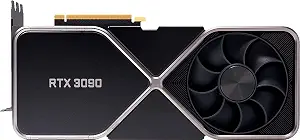 | Best for High-Resolution Gaming and Professional Work | Graphics Coprocessor: NVIDIA GeForce RTX 3090 | RAM: 24 GB | GPU Clock Speed: 1.8 GHz | VIEW ON AMAZON | See Our Full Breakdown |
| ZOTAC Gaming GeForce RTX 3090 Trinity OC 24GB GDDR6X Graphics Card |  | Best for Enthusiast Gaming and 8K Content Creation | Memory: 24 GB GDDR6X | Memory Speed: 19.5 Gbps | Boost Clock: 1710 MHz | VIEW ON AMAZON | See Our Full Breakdown |
| EVGA GeForce RTX 3090 FTW3 Ultra Gaming 24GB GDDR6X Graphics Card |  | Best for Custom Cooling and Gaming Performance | Memory: 24GB GDDR6X | Technology: iCX3 | Ray Tracing Cores: 2nd Gen | VIEW ON AMAZON | See Our Full Breakdown |
| NVIDIA RTX PRO 4000 Blackwell Graphics Card – 24GB GDDR7 ECC, PCIe 5.0, DisplayPort 2.1b, AI Workstation GPU |  | Best for AI and Professional Workloads with ECC Memory | Graphics Coprocessor: NVIDIA RTX PRO 4000 | RAM: 24 GB GDDR7 ECC | GPU Clock Speed: 1230 MHz | VIEW ON AMAZON | See Our Full Breakdown |
| EVGA GeForce RTX 3090 FTW3 Ultra Gaming 24GB GDDR6X Graphics Card |  | Best for High-End Creative and Gaming Workloads | Graphics Coprocessor: NVIDIA GeForce RTX 3090 | Graphics Card Ram: 24 GB | GPU Clock Speed: 1800MHz | VIEW ON AMAZON | See Our Full Breakdown |
| gpu for vr with 24gb vram | Video Output Interface | Memory | Graphics Coprocessor | GPU Clock Speed |
|---|---|---|---|---|
| ASRock Intel Arc Pro B60 24GB | — | 24GB GDDR6 | — | — |
| NVIDIA GeForce RTX 3090 Founde | DisplayPort, HDMI | — | NVIDIA GeForce RTX 3090 | 1.8 GHz |
| ZOTAC Gaming GeForce RTX 3090 | HDMI, DisplayPort | 24 GB GDDR6X | — | — |
| EVGA GeForce RTX 3090 FTW3 Ult | — | 24GB GDDR6X | — | — |
| NVIDIA RTX PRO 4000 Blackwell | DisplayPort | — | NVIDIA RTX PRO 4000 | 1230 MHz |
| EVGA GeForce RTX 3090 FTW3 Ult | DisplayPort | — | NVIDIA GeForce RTX 3090 | 1800MHz |
More Details on Our Top Picks
ASRock Intel Arc Pro B60 24GB Graphics Card, Workstation GPU, PCIe 5.0, 4x DisplayPort 2.1, Blower
The ASRock Intel Arc Pro B60 stands out for its high 24GB GDDR6 memory and PCIe 5.0 support, making it ideal for demanding AI, 3D rendering, and multi-GPU setups. Unlike the NVIDIA options, it emphasizes silent operation with a blower-style cooler, which benefits professional environments where noise matters. However, its blower design can lead to higher temperatures in smaller cases, and verification of chassis clearance is essential. This GPU is better suited to users prioritizing stability, multi-GPU scaling, and low-noise operation over gaming performance or aesthetic features.
Pros:- 24GB GDDR6 memory ideal for AI and large-scale modeling
- Supports PCIe 5.0 ensuring maximum bandwidth
- Silent blower cooling minimizes noise in professional settings
Cons:- Requires careful check of chassis clearance and PSU capacity
- Single blower design may cause higher temperatures in tight cases
Best for: Workstation users needing scalable, professional-grade GPU for AI or rendering tasks
Not ideal for: Casual gamers or users with small cases, due to its blower design and professional focus
- Memory:24GB GDDR6
- Memory Bus:192-bit
- Architecture:Intel Xe2-HPG
- Core Count:20 Xe cores
- PCIe Support:PCIe 5.0 x16
- Outputs:4x DisplayPort 2.1
- Cooling:Blower-style, 0dB silent at low loads
- Power:Single 8-pin, 200W TDP
Our verdict“This GPU is best for professionals who need scalable, quiet, high-memory workstation graphics rather than gaming or casual use.”
NVIDIA GeForce RTX 3090 Founders Edition Graphics Card (Renewed)
The RTX 3090 Founders Edition provides a robust 24GB of GDDR6X memory, supporting resolutions up to 7680×4320, making it suitable for both high-end gaming and professional workloads. Compared with the ZOTAC Trinity OC, it offers a cleaner, more streamlined design and is generally more accessible for standard builds. The main tradeoff lies in its refurbished status and potentially higher power draw, which could be a concern for some users. It makes the most sense for those needing a versatile GPU that handles demanding visual tasks and gaming equally well.
Pros:- 24GB GDDR6X VRAM for ultra-high-resolution applications
- Supports resolutions up to 7680×4320 for immersive visuals
- Refurbished and inspected to perform like new
Cons:- Refurbished units may have limited warranty coverage
- Potentially higher power consumption compared to lower-tier cards
Best for: Gamers and professionals seeking a high-performance, high-resolution capable GPU
Not ideal for: Budget-conscious buyers or those not prepared for higher power consumption and potential warranty limitations
- Graphics Coprocessor:NVIDIA GeForce RTX 3090
- RAM:24 GB
- GPU Clock Speed:1.8 GHz
- Video Output Interface:DisplayPort, HDMI
- Compatible Devices:Desktop
- Interface:PCI-Express x16
- Memory Clock Speed:19.5 GHz
- Maximum Resolution:7680×4320
Our verdict“This card offers top-tier performance for demanding gaming and professional tasks, best for users who want high resolution and VRAM capacity without strict budget constraints.”
ZOTAC Gaming GeForce RTX 3090 Trinity OC 24GB GDDR6X Graphics Card
The ZOTAC Trinity OC combines 24GB GDDR6X memory with a powerful cooling solution and RGB lighting, making it ideal for gamers pushing into 8K resolutions or demanding creative workflows. Its 1710 MHz boost clock and 750W recommended power supply highlight its high performance, but its large size and high wattage requirements may limit compatibility. Compared to the EVGA FTW3, it offers a slightly more aggressive factory overclock and RGB aesthetics, appealing to enthusiasts who want style and performance. Its main tradeoff is the need for a substantial power supply and spacious case.
Pros:- Large 24GB GDDR6X VRAM for demanding applications
- Supports 8K resolution and multiple displays
- Enhanced cooling with IceStorm 2.0 technology
Cons:- Requires a high-wattage 750W power supply
- Large size may not fit in compact cases
Best for: High-end gamers and content creators targeting 8K resolution and advanced visual workloads
Not ideal for: Casual users or those with smaller cases and limited power capacity
- Memory:24 GB GDDR6X
- Memory Speed:19.5 Gbps
- Boost Clock:1710 MHz
- Video Output Interface:HDMI, DisplayPort
- Maximum Resolution:7680×4320
- GPU Architecture:NVIDIA Ampere
- Dimensions:12.5″L x 4.75″W
- Power Consumption:350W
Our verdict“This GPU is best for enthusiasts seeking maximum performance and resolution capabilities at the expense of size and power requirements.”
EVGA GeForce RTX 3090 FTW3 Ultra Gaming 24GB GDDR6X Graphics Card
The EVGA FTW3 Ultra Gaming combines 24GB GDDR6X VRAM with advanced iCX3 cooling technology and customizable ARGB lighting, making it a compelling choice for gamers and creative professionals. Its support for ray tracing and DLSS enhances real-time visuals, while the large size and high power draw (noted by its 350W TDP) demand a spacious case and robust power supply. Compared with the ZOTAC Trinity OC, it offers more refined cooling and customizable aesthetics, but at a comparable size and price. This card is ideal for those who want top performance with personalized cooling options.
Pros:- 24GB GDDR6X VRAM for demanding workloads
- Advanced iCX3 cooling technology for better thermal management
- Customizable ARGB lighting for aesthetic personalization
- Supports ray tracing and DLSS for enhanced visuals
Cons:- Large physical size requiring spacious case
- High power consumption may increase overall system costs
Best for: High-end gamers and creators who want extensive cooling options and visual customization
Not ideal for: Compact case builders or budget-conscious buyers, due to size and power needs
- Memory:24GB GDDR6X
- Technology:iCX3
- Ray Tracing Cores:2nd Gen
- Tensor Cores:3rd Gen
- Display Outputs:DisplayPort 1.4a, HDMI 2.1
- Interface:PCI Express Gen 4
- Dimensions:12″L x 4.75″W
- Power Consumption:350W
Our verdict“This GPU suits users seeking maximum gaming and creative performance with customizable cooling and lighting, provided their case can accommodate it.”
NVIDIA RTX PRO 4000 Blackwell Graphics Card – 24GB GDDR7 ECC, PCIe 5.0, DisplayPort 2.1b, AI Workstation GPU
The NVIDIA RTX PRO 4000 Blackwell is designed for AI professionals and high-precision rendering, with 24GB GDDR7 ECC memory and PCIe 5.0 support, offering faster data transfer than GDDR6X cards like the RTX 3090. Its single-fan design reflects its professional-grade intent, prioritizing stability and efficiency over gaming aesthetics. Compared to the consumer-focused RTX 3090, this GPU provides enhanced reliability for critical workloads, but at a premium price and lower clock speeds. It’s best suited for users whose work demands maximum data integrity and professional-grade compute power.
Pros:- 24GB GDDR7 ECC memory ensures data integrity for critical tasks
- Supports PCIe 5.0 for faster data throughput
- Maximum resolution of 7680×4320 suitable for high-fidelity visuals
- Professional-grade GPU optimized for AI and rendering workloads
Cons:- Likely very expensive compared to gaming GPUs
- Single fan may limit cooling in sustained high-load scenarios
Best for: AI researchers, 3D artists, and simulation professionals needing ECC memory and maximum stability
Not ideal for: Gaming enthusiasts or casual users who prioritize raw gaming performance over stability
- Graphics Coprocessor:NVIDIA RTX PRO 4000
- RAM:24 GB GDDR7 ECC
- GPU Clock Speed:1230 MHz
- Video Output Interface:DisplayPort
- Memory Clock Speed:1750 MHz
- Interface:PCI-Express x16
- Maximum Resolution:7680×4320
- Dimensions:9.5″ L x 4.4″ W
Our verdict“This card is ideal for professionals requiring high reliability and ECC memory in demanding AI and rendering applications, not for gaming or casual use.”
EVGA GeForce RTX 3090 FTW3 Ultra Gaming 24GB GDDR6X Graphics Card
The EVGA GeForce RTX 3090 FTW3 Ultra stands out for its massive 24GB of GDDR6X memory, making it a top choice for demanding VR applications that require large textures and complex assets. Compared to the NVIDIA GeForce RTX 3090 Founders Edition, this model offers advanced cooling with triple fans, which helps maintain performance during extended VR sessions, although it is bulkier and may not fit smaller cases. Its high 1800MHz boost clock and support for 8K resolution make it ideal for professional-grade VR experiences. However, its large size and lack of bundled accessories mean it’s best suited for users with spacious cases and technical familiarity. This pick makes the most sense for gamers and creators who prioritize raw power and cooling efficiency over compactness.
Pros:- Massive 24GB GDDR6X VRAM supports complex VR textures and multitasking
- Triple fan cooling system for effective heat dissipation during intensive workloads
- Supports 8K resolution and high refresh rates for immersive VR experiences
- High boost clock of 1800MHz for peak performance
Cons:- Very large size may not fit in smaller or mid-tower cases
- Premium price point may be prohibitive for casual or budget-conscious buyers
- Pre-owned or refurbished units could face longevity issues
Best for: Enthusiasts and professionals running demanding VR setups that need maximum VRAM and cooling performance.
Not ideal for: Casual users or those with small or standard-sized cases who need a more compact or budget-friendly GPU.
- Graphics Coprocessor:NVIDIA GeForce RTX 3090
- Graphics Card Ram:24 GB
- GPU Clock Speed:1800MHz
- Video Output Interface:DisplayPort
- Graphics Ram Type:GDDR6X
- Maximum Display Resolution:7680×4320
- Item Dimensions:11.81″L x 5.38″W
Our verdict“This GPU is best suited for users who need top-tier VR performance and have the space and budget to support its size and cost.”

How We Picked
Each GPU was selected based on performance benchmarks relevant to VR workloads, focusing on models with 24GB VRAM or more. We prioritized cards that balance high VRAM capacity with real-world usability, including factors like power consumption, cooling solutions, and driver stability. Additional emphasis was placed on build quality and future-proofing features such as PCIe 5.0 support and advanced memory technologies. The ranking reflects a combination of raw performance, value, and suitability for demanding VR applications, ensuring options for different budgets and professional needs.| gpu for vr with 24gb vram | Graphics Coprocessor | Video Output Interface | Interface |
|---|---|---|---|
| ASRock Intel Arc Pro B60 24GB | — | — | — |
| NVIDIA GeForce RTX 3090 Founde | NVIDIA GeForce RTX 3090 | DisplayPort, HDMI | PCI-Express x16 |
| ZOTAC Gaming GeForce RTX 3090 | — | HDMI, DisplayPort | — |
| EVGA GeForce RTX 3090 FTW3 Ult | — | — | PCI Express Gen 4 |
| NVIDIA RTX PRO 4000 Blackwell | NVIDIA RTX PRO 4000 | DisplayPort | PCI-Express x16 |
| EVGA GeForce RTX 3090 FTW3 Ult | NVIDIA GeForce RTX 3090 | DisplayPort | — |
Factors to Consider When Choosing Gpu For Vr With 24gb Vram
When choosing a GPU for VR with 24GB VRAM, it’s important to consider several key factors. High VRAM is crucial for handling large textures and complex scenes, but performance, compatibility, and future-proofing are equally vital. Understanding these factors can help you avoid common pitfalls like overpaying for unneeded features or selecting a card incompatible with your system. The right choice depends on your specific VR workload, whether gaming, professional design, or AI development.Performance and VRAM Capacity
While 24GB VRAM is a significant advantage for VR, raw GPU processing power remains essential. Higher VRAM allows for larger textures and more complex scenes, reducing stuttering and increasing realism. However, a GPU with ample VRAM but lower core performance may still struggle with demanding VR applications. Balancing VRAM size with core performance ensures smoother experiences, especially at higher resolutions or with multi-monitor setups.
Compatibility and System Requirements
High-VRAM GPUs often demand robust power supplies and cooling solutions. Check your system’s compatibility with PCIe 5.0 and ensure your power supply can support the GPU’s wattage. Additionally, verify that your case has enough space and airflow to accommodate larger cards. Compatibility issues can cause bottlenecks or prevent installation altogether, so matching your system’s specs with the GPU’s requirements is vital.
Price and Future-Proofing
These high-capacity VRAM cards tend to be quite expensive, often over $2,000. While investing in a premium GPU can be justified for professional VR work or future-proofing, it’s essential to assess whether your workload justifies the cost. Think about the longevity of your setup; a more expensive card with GDDR7 memory, for example, might provide better long-term value, but only if your applications can leverage it fully.
Power Consumption and Cooling
High-performance GPUs with large VRAM modules generate significant heat and require substantial power. Ensure your system’s power supply can handle the load, and consider the cooling options—air cooling may be insufficient for some models, requiring liquid cooling solutions. Overlooking these factors can lead to thermal throttling or hardware failures, reducing the lifespan of your investment.
Driver Support and Software Ecosystem
For VR, driver stability and software support are essential. Nvidia cards generally have broader driver support for VR applications, but some workstation cards might lack optimized driver profiles. Confirm that your VR software and headset are compatible with the GPU’s drivers. Reliable, well-supported drivers translate to fewer crashes and smoother experiences, especially during long or intensive sessions.
Frequently Asked Questions
Is 24GB VRAM necessary for VR gaming in 2026?
For most current VR gaming, 24GB VRAM is more than enough, as most games don’t utilize such high memory levels. However, in 2026, with more complex VR experiences and higher-resolution textures, this capacity could become more relevant. If you’re primarily gaming, a high-performance card with 12-16GB VRAM might offer better value, but for professional or development work, 24GB can provide extra headroom.
Will a workstation GPU like the ASRock Intel Arc Pro be suitable for VR gaming?
Workstation GPUs like the ASRock Intel Arc Pro are designed mainly for professional tasks such as CAD and 3D rendering. While they can handle VR to some extent, they may lack gaming-specific optimizations, resulting in lower frame rates or compatibility issues. If gaming is your primary concern, a gaming-oriented GPU like the RTX 3090 series will generally deliver better performance and driver support.
How does GDDR7 memory on the RTX PRO 4000 impact VR performance?
GDDR7 memory offers increased bandwidth and efficiency compared to GDDR6X, potentially enhancing VR performance in data-heavy applications and future VR content. This means smoother rendering of complex scenes and better handling of AI-driven features. However, the actual benefits depend on whether your VR applications are optimized for these newer memory technologies—simply having GDDR7 doesn’t guarantee a noticeable performance boost in all scenarios.
Is it worth paying extra for PCIe 5.0 support in a VR GPU?
PCIe 5.0 support provides higher bandwidth, which can be beneficial as VR applications and GPUs evolve. Currently, most VR workloads don’t fully utilize PCIe 4.0, but future applications may benefit. If you plan to keep your system for several years and use demanding workloads, investing in PCIe 5.0 compatibility could be a prudent choice for long-term performance and upgradeability.
What should I consider about power supply when choosing a high-VRAM GPU?
High-performance GPUs with large VRAM modules often have substantial power requirements, sometimes exceeding 350W. You should verify that your power supply can deliver enough wattage with the appropriate connectors. Additionally, ensure your system’s cooling is adequate to handle the increased heat output. Overlooking power and cooling needs can result in system instability or hardware damage, ultimately reducing your GPU’s lifespan.
Conclusion
For most users seeking a GPU for VR with 24GB VRAM in 2026, the NVIDIA GeForce RTX 3090 Founders Edition offers the best balance of performance and value, making it ideal for enthusiasts and professionals alike. If your focus is on professional workloads or AI development, the NVIDIA RTX PRO 4000 provides cutting-edge memory technology and future-proofing. Budget-conscious buyers or those new to high-end VR should consider more affordable options with slightly less VRAM but still strong performance, like certain RTX 3080 Ti variants. Ultimately, your choice should align with your primary use case—gaming, professional work, or development—and your system’s compatibility and power capacity.
As an affiliate, we earn on qualifying purchases.Columbus Day / Indigenous Peoples' Day Picks
long weekend sales