📊 Full opportunity report: Capture, Review, And Share Basketball Highlights With A Phone on IdeaNavigator AI — validation score, market gap, and execution plan.

Get the latest gadgets delivered free with Prime
- Fast, free delivery on millions of items
- Prime Video, Amazon Music and more included
- Member-only deals all year
TL;DR
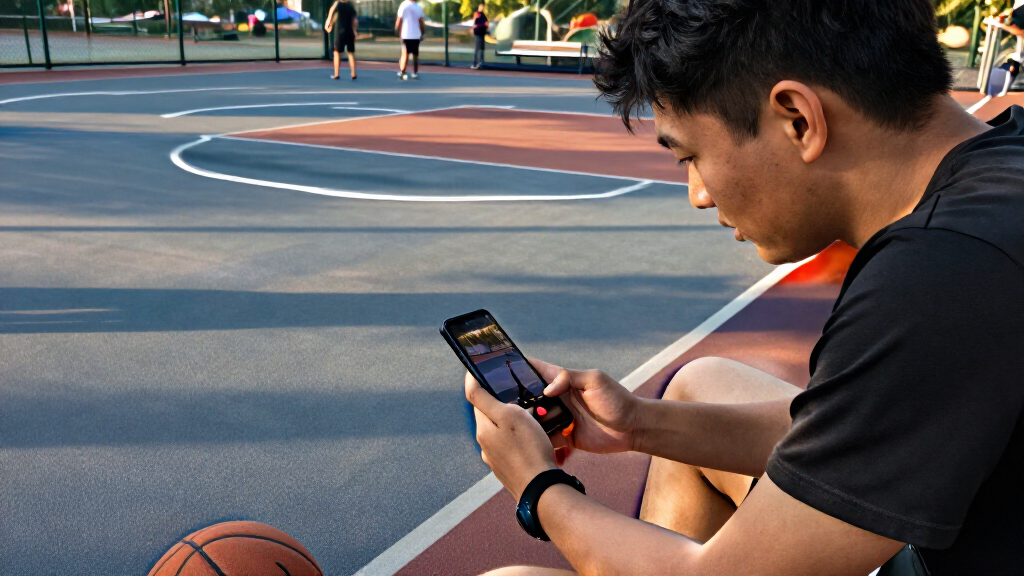
A product concept proposes an app that processes phone-recorded basketball games into player-specific highlight reels, game stats and a shareable season profile. The idea is aimed at families seeking an alternative to higher-cost sports video programs, but its accuracy, pricing and demand have not been tested in the information available.
IdeaNavigator AI has proposed testing a phone-based basketball video app that would identify a selected player in game footage, assemble highlights and estimate game statistics. The concept targets parents and players in youth and recreational basketball who want shareable footage and development data without paying for a higher-cost team video program; no functioning product, accuracy results or customer demand figures are provided.
The proposed workflow starts with a family uploading ordinary phone footage. The app would then track a chosen player, detect events such as shots, rebounds and steals, create a highlight reel with score overlays, and generate a per-game stat line. It would also maintain a shareable season profile so clips and statistics could be collected over time.
The product brief describes a gap between recording games and making the footage useful: families may film youth or recreational games but lack the time to manually clip plays or compile statistics. The app is intended to reduce that work. Its suggested revenue model is a family subscription for each season, with an additional charge for exporting individual reels. Prices and subscription terms are not specified.
Rather than proposing a broad sports platform at the outset, the plan calls for testing this as a narrow first use case. The suggested trial would process footage from 100 games, measure user satisfaction with highlight accuracy and test whether families convert to season subscriptions at AAU tournaments. No evidence is supplied that this test has taken place.
A Lower-Cost Route to Game Clips
If the proposed workflow performs reliably, it could make game footage more useful to families who cannot justify a costly team video service or spend hours editing clips themselves. Player-specific reels could be easier to share, while repeated game records might help families follow development. Those benefits remain intended outcomes, not demonstrated results.
The main practical question is whether automated tracking can identify the right player and correctly label events in crowded, fast-moving games filmed from changing phone positions. Errors could weaken both highlight reels and stat lines. The idea’s appeal will depend not just on generating clips, but on producing results accurate enough that families trust and continue using the service.
The proposed tournament test would also address a business question: whether families who try the service are willing to pay for a season profile or exported reels. Until those measures are available, the concept represents a market hypothesis rather than a validated product opportunity.
Products Worth Considering

Apple Watch Series 12 GPS 42mm Smartwatch

Samsung 49-Inch Odyssey G93SC QD-OLED Curved Gaming Monitor

Sonos Era 300 Wireless Smart Speaker with Dolby Atmos, Black
As an affiliate, we earn on qualifying purchases.
From Phone Recording to Player Profile
The proposal is focused on youth and amateur basketball, where games are often recorded by parents or players on phones. Its stated problem is that footage can remain unused because selecting and editing plays by hand takes time. The intended customer is a parent or player seeking highlights and stats without a budget for a more expensive sports program.
The idea’s timing rests on a technology claim: that on-device vision models can track players and recognize events in ordinary footage, potentially reducing the need for multi-camera setups. That capability is presented as the rationale for the concept, but no model, technical evaluation, benchmark or comparison is supplied. The plan therefore treats automated analysis as something to test, not as a confirmed performance level.
The proposed first step is deliberately limited: process 100 games of parent-recorded footage, assess satisfaction with the resulting highlights and test subscription conversion at AAU tournaments. That would provide an initial indication of whether the workflow is useful and commercially attractive, though the brief does not define a target accuracy rate or success threshold.
Accuracy and Demand Still Untested
No app launch, working prototype, customer trial or technical results are described. It is not clear how well the system could follow a selected player when players overlap, camera framing changes or the footage is distant or shaky. The concept also does not explain how it would verify score overlays or distinguish events such as missed shots, rebounds and steals.
Other open questions include which phones and video formats would be supported, how long processing would take, how footage and player information would be stored, and whether users could correct mistakes. Subscription and reel-export prices are also missing. The proposed 100-game test has no stated results, participant count beyond the footage sample, or conversion benchmark, so accuracy and willingness to pay remain unknown.
A 100-Game Trial Would Test Fit
The next step in the proposed plan is to process 100 games filmed by parents and assess whether users are satisfied with the highlights. A separate commercial test at AAU tournaments would examine whether families subscribe for a season. Those tests could show whether the app’s output is useful enough to justify a recurring payment, but no schedule or launch commitment is given.
For readers evaluating the idea, the key evidence to watch for would be measured event and player-identification accuracy, user feedback on correcting errors, actual subscription conversion and disclosed pricing. Until those details or test results are available, the concept should be understood as an early product proposal, not an available service or a proven alternative to existing programs.
Source: IdeaNavigator AI
Key Questions
What would the proposed basketball app do?
It would analyze uploaded game footage to identify a selected player, create a highlight reel with score overlays, generate a game stat line and maintain a shareable season profile.
Is the app available now?
The information describes a product concept and proposed validation plan. It does not establish that an app has launched or that a working product is available.
How accurate are the highlights and statistics?
No accuracy results are provided. The proposal suggests measuring satisfaction with highlight accuracy during a test using footage from 100 games.
How might the service charge families?
The proposed model is a family subscription per season, with separate pricing for exporting reels. No specific prices or terms are given.
What is the proposed next test?
The plan calls for processing 100 games of parent-recorded footage and testing season-subscription conversion at AAU tournaments. No dates or results have been announced.
Source: IdeaNavigator AI