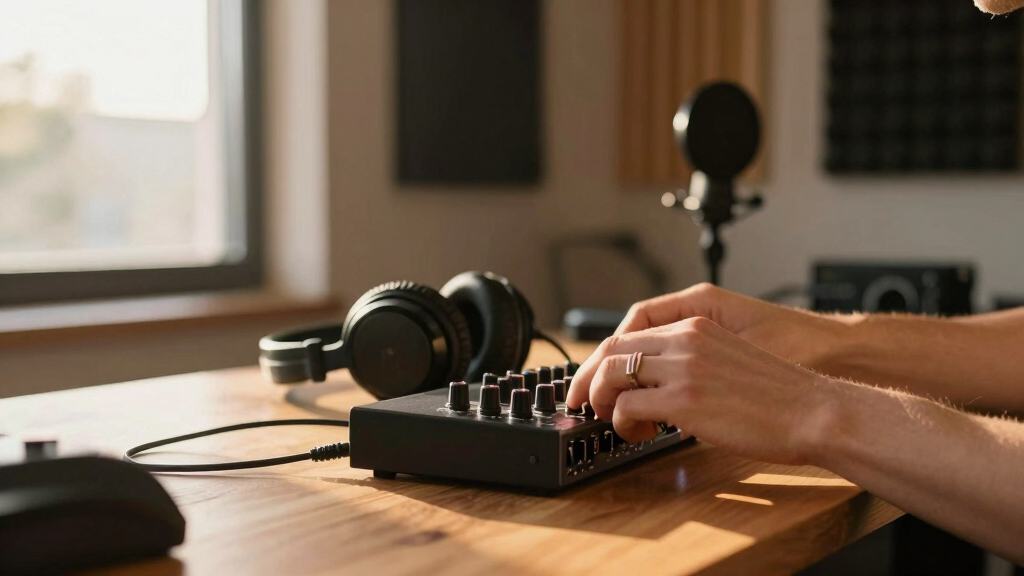

When selecting the best audio interfaces with loopback for streaming, the key factors are audio quality, ease of setup, and versatility. The Focusrite Scarlett 2i2 4th Gen stands out for its reliable, high-fidelity sound, making it ideal for most streamers. The Zoom AMS-44 offers multiple inputs and robust loopback features for multi-source streaming, perfect for content creators with complex setups. However, tradeoffs exist: higher-end models cost more, while simpler options may lack advanced routing. Keep reading to see which picks suit your streaming needs best.
Key Takeaways
- The best models balance audio quality with straightforward loopback routing for seamless streaming.
- Multiple input/output options are vital for streamers using instruments, microphones, and screens simultaneously.
- Build quality and software stability can greatly influence long-term reliability in live streaming setups.
- Higher-priced interfaces often include more advanced features like multi-channel loopback and enhanced control.
- Ease of use and setup are critical for beginners, while experienced streamers may prioritize customization and expandability.


More Details on Our Top Picks
Guitar Audio Interface Pocket Internal Recording Sound Card with Type-C & Lightning for Live Streaming by iPad, iPhone, Android, PC Plug and Laptop Plug & Play
This ultra-compact audio interface is designed for newcomers who want straightforward live streaming or guitar recording. It stands out for its simple plug-and-play setup, making it ideal for quick use with smartphones and laptops. Compared to more advanced options like the Focusrite Scarlett 2i2, this model sacrifices some features for ease of use, focusing solely on mono recording without mixing capabilities. The device’s low latency and high-fidelity input deliver clear sound, but it’s limited to mono and lacks multi-track support, which could be a drawback for more complex recordings. Its pocket size and volume controls are perfect for mobile musicians or hobbyists. However, it’s only recording-focused, so no editing or mixing functions are included.
Pros:- Plug-and-play simplicity, no drivers needed
- High-quality 24bit/48KHz recording fidelity
- Compact, pocket-sized design for portability
- Volume controls with indicator lights
Cons:- Limited to mono recording, no multi-track or mixing
- No onboard editing or DSP features
- Only supports recording, not mixing or editing
Best for: Beginners, mobile streamers, and guitar players seeking a simple, portable recording solution.
Not ideal for: Professional producers or multi-instrument recording enthusiasts who need multiple channels and editing features.
- Supported Devices:Smartphones, Laptops, Electric Guitars, Bass
- Connectivity:Type-C, Lightning, 1/4″ Jack, 3.5mm Headphone Out
- Channels:1 mono
- Frequency Response:48KHz
- Size:Pocket-sized
- Input Type:1/4″ Jack, Type-C, Lightning
- Weight:20.5g
- Latency:Low latency digital processing
Bottom line: Ideal for beginners and mobile musicians who prioritize portability and ease over advanced features.
Synido Portable Guitar Audio Interface, 24-bit/96kHZ Audio Adapter with USB-C, Inst./Headphone Ports for Live Streaming, for DJ Set Audio Recording, for iPhone/iPad/Android/Mac/PC/Laptop, (A20)
This model makes a strong impression for its portability combined with high-resolution audio at 96kHz and 24-bit depth, surpassing some competitors like the M-AUDIO M-Track Solo in fidelity. Its gain control and robust build make it perfect for on-the-go musicians and streamers. Compared to bulkier interfaces, its pocket-sized design offers convenience without sacrificing sound quality. The device’s built-in wire storage and simple interface support seamless live streaming and recording, including loopback features for easy content creation. However, it’s primarily mono and may have compatibility limitations with certain apps, especially on Android. The device’s simplicity is a plus, but it lacks advanced multi-channel options or onboard mixing. Still, for solo musicians and streamers needing clear audio, it’s a compelling choice.
Pros:- High-resolution 96kHz/24-bit audio fidelity
- Compact, pocket-sized design
- Built-in wire storage and simple operation
- Supports live streaming with loopback
Cons:- Mono input only, no multi-channel support
- Limited app compatibility on some devices
- No onboard mixing or advanced effects
Best for: Traveling musicians, streamers, and content creators needing high-quality, portable audio input.
Not ideal for: Pro studio engineers or multi-instrument recording projects requiring multiple inputs and channels.
- Supported Devices:Smartphones, Tablets, Computers
- Connectivity:USB-C, 3.5mm headphone, instrument input
- Sample Rate:96KHz
- Bit Depth:24-bit
- Size:Pocket-sized
- Input Type:Mono, instrument
- Weight:10 grams
- Special Features:Loopback, gain control
Bottom line: Perfect for solo performers and streamers seeking high-quality portable recording with minimal setup.
M-AUDIO M-Track Solo USB Audio Interface for Recording, Streaming and Podcasting with XLR, Line and DI Inputs, Plus a Software Suite Included
The M-AUDIO M-Track Solo offers a balanced combination of affordability and functionality, making it suitable for podcasters and musicians alike. It outperforms basic interfaces like the Synido A20 in flexibility, thanks to its dual inputs—XLR with phantom power and a dedicated line/instrument input—enabling recording of vocals and instruments simultaneously. Its 48kHz resolution delivers clear sound, though it doesn’t match the 96kHz of higher-end models, which could matter for critical recordings. The interface’s simple controls and included software—such as MPC Beats—are user-friendly, but it lacks advanced features like loopback or onboard effects found in more premium units. Still, it’s an excellent, budget-friendly choice for streaming, podcasting, and basic home studio use.
Pros:- Dual inputs: XLR with phantom power + line/instrument
- Simple setup with included software
- Solid build quality and reliable performance
- Affordable price point
Cons:- Limited to 48kHz resolution
- No loopback or advanced mixing features
- Basic feature set for complex recording needs
Best for: Podcasters, home studio beginners, and musicians needing a versatile, affordable interface.
Not ideal for: Pro producers or multi-track recording artists requiring multi-channel, multi-input setups with advanced mixing.
- Supported Devices:PC, Mac, iOS
- Connectivity:USB, XLR, 1/4″ Line/Instrument
- Sample Rate:48KHz
- Bit Depth:16/24-bit
- Inputs:XLR with phantom, line/instrument
- Outputs:Main and headphone
- Size:Compact
- Included Software:MPC Beats, Pro Tools First
Bottom line: A versatile choice for streamers and podcasters starting out or on a budget, prioritizing simplicity and reliability.
2×2 USB-C Audio Interface for PC/Mac Recording, 24-bit/192kHz, Dual TS/XLR Inputs, +48V Phantom Power, Studio/Podcast/Streaming(Matte Red)
This interface stands out for its combination of professional-grade audio quality and comprehensive control, making it suitable for serious musicians and streamers. It surpasses the Focusrite Scarlett 2i2 in sample rate (192kHz) and offers dedicated front-panel controls for gain, low-cut filters, and monitor mix, providing more precise control during recordings. Its robust metal housing ensures durability, and the dual XLR/TS inputs with phantom power support a wide range of microphones and instruments. Compared to simpler interfaces, it provides more flexibility for multi-mic setups and high-fidelity streaming. Its main tradeoff is slightly larger size and a more complex control layout, which might be overwhelming for absolute beginners. Nonetheless, for those seeking studio-quality sound with live streaming capability, it’s an excellent choice.
Pros:- 24-bit/192kHz high-resolution audio
- Dual combo inputs with phantom power
- Front-panel gain, filters, and monitor controls
- Durable metal build
Cons:- Larger and slightly more complex to operate
- Higher price point compared to entry-level units
- Requires some familiarity with audio controls
Best for: Musicians, podcasters, and streamers who need high-resolution, multi-input recording with advanced controls.
Not ideal for: Beginners or casual streamers who prefer a simple, plug-and-play device without extensive controls.
- Supported Devices:PC, Mac
- Connectivity:USB-C, dual XLR/TS inputs
- Sample Rate:192KHz
- Bit Depth:24-bit
- Inputs:2 combo XLR/TS, phantom power
- Outputs:Stereo monitor
- Dimensions:Small desktop
- Build:Metal
Bottom line: Best suited for experienced users demanding studio-quality sound and flexible input options for streaming and recording.
Focusrite Scarlett 2i2 4th Gen USB Audio Interface for Recording, Songwriting, Streaming and Podcasting — High-Fidelity, Studio Quality Recording, and All the Software You Need to Record
The Focusrite Scarlett 2i2 4th Gen is widely regarded as the best all-rounder in this roundup, combining professional-grade audio quality with user-friendly features. It features the same acclaimed preamps as large studio models, with a massive 120dB dynamic range, outperforming many competitors like the Synido A20 in fidelity. Its innovative Auto Gain and Clip Safe features simplify level setting, making it accessible for beginners yet suitable for advanced users. The inclusion of Air mode adds a musical character to recordings, and the bundled software—Pro Tools First, Ableton Live Lite, and Hitmaker—provides a full starting toolkit. Compared to the more specialized interfaces, it offers a balanced mix of high-end features and ease of use. The main tradeoff is its slightly higher cost, but the quality justifies it.
Pros:- Studio-quality 120dB dynamic range
- Auto Gain and Clip Safe for easy level setting
- Includes comprehensive software bundle
- Built-in Air mode for enhanced recordings
Cons:- Higher price compared to entry-level units
- Slightly larger size, less portable
- Advanced features may be unnecessary for casual users
Best for: Musicians, streamers, and podcasters seeking an all-in-one high-quality interface with extra software and features.
Not ideal for: Budget-conscious beginners who only need basic input, or those requiring multi-channel multi-input setups.
- Supported Devices:PC, Mac
- Connectivity:USB-A, USB-C
- Sample Rate:192KHz
- Bit Depth:24-bit
- Inputs:2 combo XLR/TS with Air mode
- Outputs:Main and headphone
- Dynamic Range:120dB
- Included Software:Pro Tools First, Ableton Live Lite, Hitmaker
Bottom line: A versatile studio-grade interface that balances professional sound quality with user-friendly controls and software support.
MAONO USB Audio Interface for PC: Interface with XLR Input 24-bit/192kHz Routing Software LOOPBACK ASIO Driver for Recording Music, Home-Studio, Guitar, Podcast, Streaming, DAW(PS22 Lite White)
This Maono PS22 Lite stands out for its versatile routing software and compatibility with both Mac and Windows, making it ideal for streamers and podcasters who need reliable loopback capabilities. Compared to the Focusrite Scarlett 2i2, it offers more flexible virtual channels, though it may lack the same high-end preamp clarity. Its compact design and easy plug-and-play setup are perfect for beginners, but some users may find the preamp gain a bit limited for certain condenser mics. The included routing software truly enhances live streaming, making it a strong choice for content creators looking for value and functionality. BestFor: Streamers and home studio enthusiasts seeking an affordable yet feature-rich interface. NotIdealFor: Professional musicians requiring ultra-clean studio-grade audio, where higher-priced interfaces like Focusrite might be better. Pros: High-resolution 24-bit/192kHz recording, flexible virtual routing software, compact and plug-and-play design, compatible with major DAWs. Cons: Limited preamp gain for some condenser microphones, software might have a learning curve for beginners, no dedicated hardware controls for routing.
Verdict: This pick makes the most sense for streamers and content creators who want a versatile, cost-effective interface with robust loopback features.
Specs: Compatible Devices: Laptop, Personal Computer; Supported Software: Avid Pro Tools, Ableton Live, Cubase; Connectivity Technology: USB; Number of Channels: 3; Frequency Response: 20 KHz; Max Sample Rate: 192 KHz.Pros:- High-resolution 24-bit/192kHz recording for clear sound
- Powerful routing software with virtual channels and loopback
- Compact, lightweight, and easy to use for beginners
Cons:- Preamp gain may be insufficient for certain condenser mics
- Software features can be complex for new users
- Lacks hardware controls for routing adjustments
Best for: Microphone podcasters and live streamers needing robust loopback and easy setup.
Not ideal for: Pro musicians demanding high-end studio sound with maximum preamp headroom.
- Compatible Devices:Laptop, Personal Computer
- Supported Software:Avid Pro Tools, Ableton Live, Cubase
- Connectivity Technology:USB
- Number of Channels:3
- Frequency Response:20 KHz
- Maximum Sample Rate:192 KHz
Bottom line: Ideal for streamers and content creators who need versatile routing and loopback at an affordable price.
MAONO USB Audio Interface for PC: Interface with XLR Input 24-bit/192kHz Routing Software LOOPBACK ASIO Driver for Recording Music, Home-Studio, Guitar, Podcast, Streaming, DAW(PS22 Lite Black)
This Maono PS22 Lite Black is tailored for newcomers to audio recording, offering straightforward plug-and-play functionality combined with effective loopback features. Unlike the Zoom AMS-44, which has more dedicated inputs for multiple instruments, this model keeps things simple yet effective for solo streamers and podcasters. Its compact size and intuitive software make it accessible for users just starting out, but it may lack the extensive routing options of more advanced interfaces. The inclusion of ASIO drivers ensures low-latency performance, ideal for live streaming. However, for more complex multi-mic setups, a higher-end interface might be necessary. BestFor: Beginners and casual content creators looking for an easy-to-use, versatile interface. NotIdealFor: Professionals requiring extensive I/O options and advanced control features. Pros: Plug-and-play with Mac and Windows, low-latency ASIO driver support, compact design, includes virtual routing software. Cons: Limited physical controls, fewer input channels, basic routing options, some users report software learning curve.
Verdict: This is a perfect starter interface for newcomers who want reliable loopback and high-res recording without complexity.
Specs: Compatible Devices: Mac, Windows, iPad; Supported Software: DAW software like Pro Tools, Ableton; Connectivity Technology: USB; Number of Channels: 3; Frequency Response: 20 KHz; Max Sample Rate: 192 KHz.Pros:- User-friendly plug-and-play operation
- Low-latency ASIO driver support
- Compact size ideal for limited space setups
- Includes virtual routing software for live stream management
Cons:- Limited number of I/O channels for complex setups
- Basic physical controls without dedicated routing knobs
- Routing software can have a learning curve for new users
Best for: Beginner streamers and podcasters needing simple setup with reliable loopback.
Not ideal for: Advanced users with multi-mic or instrument-heavy setups requiring more I/O options.
- Compatible Devices:Mac, Windows, iPad
- Supported Software:DAW software like Pro Tools, Ableton
- Connectivity Technology:USB
- Number of Channels:3
- Frequency Response:20 KHz
- Maximum Sample Rate:192 KHz
Bottom line: Best suited for beginners seeking a straightforward, reliable interface for streaming and recording.
Zoom AMS-44 USB Audio Interface for Musicians & Podcasters, with 4 Inputs, 4 Outputs, Loopback, Direct Monitoring, Bus-Powered, for Recording and Streaming on PC, Mac, iOS, and Android
The Zoom AMS-44 offers extensive I/O with four inputs and outputs, making it a top choice for multi-instrument recording and professional streaming. Unlike the Maono models, its dedicated hardware controls and multiple monitoring mixes give it an edge in studio flexibility. Its bus-powered design and compatibility across PC, Mac, iOS, and Android make it versatile for various workflows. The main drawback is its higher price point, which may be overkill for simple single-mic streaming. The advanced routing and multiple direct monitoring options make this ideal for musicians and producers demanding high fidelity and complex routing. However, for casual streamers, this could be too feature-heavy. BestFor: Professional musicians and multi-instrument streamers needing extensive I/O and control. NotIdealFor: Beginners or streamers with minimal equipment who do not require multiple inputs. Pros: Four inputs and outputs, dedicated hardware controls, multi-monitoring capabilities, bus-powered and versatile across devices. Cons: Higher cost, complexity of advanced routing, larger footprint.
Verdict: Best suited for professionals or musicians needing comprehensive I/O and routing options for streaming and recording.
Specs: Compatible Devices: PC, Mac, iOS, Android; Supported Software: Pro Tools, Ableton, Reaper; Connectivity Technology: USB; Number of Channels: 4 in/4 out; Frequency Response: 96 KHz; Max Sample Rate: 192 KHz.Pros:- Four inputs and four outputs for multi-instrument recording
- Hardware controls for easy live adjustments
- Multiple monitoring mixes and loopback capability
- Cross-platform compatibility with bus-power
Cons:- Premium price may be prohibitive for casual users
- More complex interface setup required
- Larger size compared to simpler models
Best for: Musicians and producers requiring multi-channel input/output with advanced routing for streaming.
Not ideal for: Casual streamers or solo podcasters with limited equipment needs.
- Compatible Devices:PC, Mac, iOS, Android
- Supported Software:Pro Tools, Ableton, Reaper
- Connectivity Technology:USB
- Number of Channels:4 in / 4 out
- Frequency Response:96 KHz
- Max Sample Rate:192 KHz
Bottom line: This interface is designed for professionals or serious musicians needing extensive routing and multi-channel flexibility.
BOMGE USB Audio Interface(32bit/192 kHz) with XLR,phantom power,Direct Monitoring,Loopback for PC Recording,Streaming,Guitarist,Vocalist and Podcasting
The BOMGE USB Audio Interface offers a surprisingly high level of sound quality at an affordable price, with 32-bit/192kHz resolution and phantom power, making it suitable for vocals and guitar alike. Its combo inputs support both XLR and ¼” jacks, providing flexibility for different microphones and instruments. Compared to the Wrugste Solo, it provides more features like phantom power and higher bit depth, but it may lack the same level of build quality or software support. Its simple design and plug-and-play operation make it excellent for beginners or those on a budget, though it may fall short for complex multi-mic setups. The loopback feature is useful for streaming, but fewer physical controls mean less real-time adjustment. BestFor: Budget-conscious musicians and streamers needing decent quality with minimal fuss. NotIdealFor: Professional studios or users requiring extensive routing options and hardware controls. Pros: High-resolution 32-bit/192kHz audio, combo XLR/¼” inputs, phantom power, plug-and-play simplicity. Cons: Limited physical controls, fewer I/O channels, basic routing features, build quality might be lower than premium models.
Verdict: This interface is perfect for entry-level users who want good audio quality and loopback for streaming without high costs.
Specs: Supported Software: DAW software like Cubase, Ableton; Connectivity Technology: USB; Number of Channels: 2; Frequency Response: 192 KHz; Max Sample Rate: 192 KHz; Input Type: Combo XLR/¼”.Pros:- High-quality 32-bit/192kHz audio resolution
- Support for phantom power on XLR input
- Combo input for microphones and instruments
- Simple plug-and-play operation
Cons:- Limited physical controls and routing options
- Fewer I/O channels for complex setups
- Build quality may not match high-end interfaces
Best for: Home studio beginners and streamers needing reliable loopback at an affordable price.
Not ideal for: Pro producers or multi-mic setups requiring more I/O and control options.
- Supported Software:Cubase, Ableton
- Connectivity Technology:USB
- Number of Channels:2
- Frequency Response:192 KHz
- Max Sample Rate:192 KHz
- Input Type:Combo XLR/¼”
Bottom line: Best for budget-conscious musicians and streamers needing decent audio quality with loopback functionality.
Wrugste USB Audio Interface Solo(24Bit/192kHz)+48V Phantom Power for Computer Recording Podcasting and Streaming Plug and Play Noise-Free Wrugste XLR Audio Interface for PC No Software Included
The Wrugste Solo impresses with its ultra-compact design and noise-free operation, making it ideal for mobile recording and streaming setups. Unlike the BOMGE, it has fewer features but maintains high sound fidelity with 24-bit/192kHz resolution and phantom power for condenser mics. Its plug-and-play nature simplifies connection, but the lack of bundled software limits advanced routing or customization. Compared to the Maono PS22 Lite, it offers a more minimalistic profile, suited for users prioritizing portability over extensive features. The straightforward operation makes it a favorite for on-the-go recording, but it might not satisfy those needing multiple inputs or complex routing options. BestFor: Podcasters and mobile streamers who need a small, noise-free interface. NotIdealFor: Multi-mic studio setups or users seeking detailed routing controls. Pros: Compact size, noise-free operation, 24-bit/192kHz fidelity, plug-and-play simplicity. Cons: Limited I/O options, no bundled software, basic routing capabilities, minimal physical controls.
Verdict: Perfect for portable recording and streaming where size and simplicity matter most.Pros:- Small, portable, and noise-free operation
- High-resolution 24-bit/192kHz audio fidelity
- Support for phantom power on XLR input
- Plug-and-play with simple setup
Cons:- Limited I/O for multi-mic setups
- No dedicated routing software or controls
- Basic features suitable mainly for solo use
Best for: Podcasters and mobile streamers needing a compact, noise-free interface.
Not ideal for: Users requiring multiple inputs or complex routing for studio projects.
- Supported Software:No software included
- Connectivity Technology:USB
- Number of Channels:2
- Frequency Response:96 KHz
- Max Sample Rate:192 KHz
- Input Type:XLR with phantom power
Bottom line: Great for portable, high-fidelity recording and streaming with minimal setup.
NearStream AMIX40U Audio Interface & Mixer for PC and Smartphone, 10-Channel, Dual XLR/6.35mm Inputs, 48V Phantom Power, Dual Monitoring, 2-Inch LCD, Bluetooth/AUX/USB, for Podcasting, Streaming,Music
This compact device combines extensive control with versatile connectivity, making it ideal for streamers who want an all-in-one solution. Compared with the Focusrite Scarlett Solo, the AMIX40U offers more channels and onboard mixing features, but sacrifices some of the pristine audio quality and simplicity. Its 10-channel control, dual XLR/6.35mm inputs, and built-in effects support complex setups, yet it requires external power and is bulkier. The 2-inch LCD and physical controls make adjustments straightforward during live streams or recordings. Tradeoffs include limited hardware quality compared to higher-end interfaces and the need for external power. This pick makes the most sense for content creators who need flexible, integrated controls and multiple input options in a portable form, willing to accept slight compromises in audio fidelity for convenience.
Pros:- Versatile 10-channel control with onboard mixing effects
- Multiple connectivity options including Bluetooth, AUX, and USB
- Dual headphone outputs for real-time monitoring
Cons:- Requires external power supply, reducing portability
- Limited audio fidelity compared to higher-end interfaces
Best for: Streamers and podcasters seeking an all-in-one portable mixer with flexible input options.
Not ideal for: Audio purists or musicians prioritizing studio-grade sound quality over integrated controls and multi-channel mixing.
- Channels:10
- Inputs:Dual XLR/6.35mm
- Phantom Power:48V
- Connectivity:Bluetooth/AUX/USB
- Display:2-inch LCD
- Power:USB-C external power
Bottom line: Ideal for streamers who want a feature-rich, portable mixer with extensive input options and onboard controls.
Focusrite Scarlett Solo 3rd Gen USB Audio Interface for Guitarists, Vocalists, Podcasters or Producers to record and playback studio quality sound
This model is designed for musicians and vocalists who prioritize recording clarity and simplicity. Compared to the NearStream AMIX40U, it offers superior audio fidelity with high-performance preamps and 24-bit/192kHz converters, but lacks multiple inputs and onboard mixing. Its single mic preamp with Air mode provides a brighter, more open sound, perfect for studio recordings, yet it can be limiting for multi-mic setups or streaming with multiple sources. The balanced outputs ensure clean playback, and the included software suite adds value for beginners. Tradeoffs involve fewer input options and no onboard effects or controls. This interface makes the most sense for solo artists, podcasters, or producers who want professional sound quality without complex features, and are okay with a simple setup.
Pros:- Exceptional 24-bit/192kHz audio fidelity
- High-quality mic preamp with Air mode for vocal clarity
- Includes professional software bundle
Cons:- Limited to a single combo input, restricting multi-source recording
- No onboard mixing or effects for live control
Best for: Solo musicians, vocalists, and podcasters needing high-quality recordings with minimal fuss.
Not ideal for: Streamers or content creators requiring multiple inputs or onboard mixing features.
- Sample Rate:192kHz
- Bit Depth:24-bit
- Inputs:1 XLR/Instrument combo
- Outputs:Balanced stereo
- Phantom Power:Yes
- Dimensions:5.65″W x 3.77″H x 1.71″D
Bottom line: Best suited for solo artists and podcasters who prioritize studio-quality sound in a simple, reliable package.
Synido USB C Audio Interface for Recording Music, Streaming, Podcasting with XLR, Line Input, 24bit/48kHz, 48V Phantom Power, 2-channel, Silver
Compared with the Focusrite Scarlett Solo, the Synido offers a more affordable entry point with similar 2-channel capability and phantom power. Its high-fidelity sampling at 24-bit/48kHz ensures decent sound quality suitable for streaming and basic recording, but it falls short of higher-end interfaces’ clarity and low-latency performance. Its lightweight, portable design makes it ideal for mobile use, and the multiple input types support different microphones and instruments. The controls are straightforward, and the phantom power is reliable for condenser mics. Tradeoffs include lower maximum sample rate and fewer advanced features. This device makes the most sense for hobbyists or beginners who want decent audio quality without a premium price, especially for casual streaming or podcasting.
Pros:- Affordable price point with 2-channel support
- Supports phantom power for condenser mics
- Lightweight and portable for mobile use
Cons:- Limited to 48kHz maximum sample rate
- Fewer advanced features and controls compared to higher-end models
Best for: Beginner streamers and podcasters on a tight budget needing reliable 2-channel recording.
Not ideal for: Professional musicians or streamers requiring high sample rates or complex routing options.
- Sample Rate:48kHz
- Bit Depth:24-bit
- Inputs:XLR and Line
- Phantom Power:Yes
- Connectivity:USB-C
- Weight:300g
Bottom line: Great for beginners or casual streamers looking for a dependable, budget-friendly interface.
IK Multimedia iRig Stream stereo audio interface for iPhone, iPad, Mac, iOS and PC with USB-C, Lightning and USB for 24-bit, 48 kHz recording from mixers and studio gear
This ultra-lightweight interface is designed for mobile content creators and streamers who need high-quality, portable solutions. Compared to the Focusrite Scarlett Solo, the iRig Stream emphasizes flexibility with multiple connection options (USB-C, Lightning, USB) and stereo RCA inputs, making it ideal for connecting mixers, keyboards, or media players. Its 24-bit/48kHz recording quality is sufficient for live streams and podcasts, but it doesn’t match the fidelity of higher-end interfaces. The direct monitoring feature ensures latency-free listening, a critical aspect for live performance or streaming. Tradeoffs involve fewer inputs and no onboard controls or effects. This makes the most sense for mobile streamers, musicians on the go, or those who prioritize portability and ease of use over professional-grade audio fidelity.
Pros:- Compact, lightweight design for portability
- Multiple device connectivity options (USB-C, Lightning, USB)
- Supports 24-bit/48kHz recording with direct monitoring
Cons:- Limited input options for multi-source recording
- Lacks onboard effects or advanced routing controls
Best for: Mobile streamers, live performers, and podcasters needing a portable, high-quality interface.
Not ideal for: Studio-based producers or musicians requiring multiple inputs and advanced control features.
- Sample Rate:48kHz
- Bit Depth:24-bit
- Inputs:Stereo RCA
- Connectivity:USB-C, Lightning, USB
- Dimensions:4.1″D x 1.15″W x 1.25″H
- Weight:2.4 ounces
Bottom line: Perfect for on-the-move creators who need quick, high-quality recordings with minimal setup.
M-AUDIO M-Track Duo USB Audio Interface for Recording, Streaming and Podcasting with Dual XLR, Line and DI Inputs, plus a Software Suite Included
This interface is a versatile choice for beginners and casual users, offering dual XLR/Line inputs with phantom power and a comprehensive software bundle. Compared to the IK iRig Stream, it provides more input flexibility and slightly higher sample rate capabilities, making it suitable for both streaming and basic studio recording. Its straightforward controls and multiple output options, including headphone and stereo outputs, support versatile monitoring. The included MPC Beats software enhances creative potential for budding producers. Tradeoffs include limited build quality and lower maximum sample rate (48kHz) compared to higher-tier interfaces. This device makes sense for newcomers who want a balanced mix of functionality and affordability, especially for home studios or podcast setups.
Pros:- Dual XLR/Line inputs with phantom power
- Includes MPC Beats software suite
- Supports multiple output options for monitoring
Cons:- Limited to 48kHz maximum sample rate
- Build quality may be less durable for heavy use
Best for: Beginners and hobbyists seeking a flexible, budget-friendly interface for streaming and casual recording.
Not ideal for: Professional musicians or streamers requiring higher sample rates, advanced routing, or rugged build quality.
- Sample Rate:48kHz
- Inputs:Dual XLR/Line
- Phantom Power:Yes
- Outputs:Headphone + Stereo
- Connectivity:USB
- Dimensions:5.51″W x 1.77″H x 4.53″D
Bottom line: A solid entry-level option for newcomers wanting versatile inputs and bundled software in a compact design.

How We Picked
The evaluation focused on performance, usability, build quality, and value. I considered technical specs like bit depth, sample rate, and the number of inputs/outputs, especially those with dedicated loopback features. Ease of setup and software stability were also key, as these impact real-world streaming reliability. Devices that offered versatile routing options and clear controls ranked higher, as streamers need both simplicity and flexibility. The ranking reflects a balance between professional-level features and accessible usability for a broad range of users.Factors to Consider When Choosing Best Audio Interfaces With Loopback For Streaming
Choosing the right audio interface with loopback for streaming involves understanding your specific needs and how features translate into your workflow. While high-end models deliver top-quality sound and advanced routing, they can also be more complex and expensive. Conversely, budget options might lack some flexibility but can be perfect for newcomers or casual streamers. This guide highlights the key factors to consider, helping you avoid common pitfalls and find a model that matches your setup and skill level.
Number of Inputs and Outputs
Assess your current and future needs for inputs and outputs. If you plan to connect multiple microphones, instruments, or secondary devices, prioritize interfaces with multiple XLR, line, or instrument inputs. For simple setups, a 2-in, 2-out model might suffice, but more complex streams benefit from additional channels and dedicated outputs for monitoring and routing. Overlooking this can lead to bottlenecks or expensive upgrades later.
Loopback Functionality
Loopback capability is essential for capturing system audio, such as browser sounds, game audio, or multiple microphones, into your stream. Not all interfaces include this feature or implement it effectively. Look for dedicated loopback routing controls and software support to simplify setup. Failing to verify this can result in complicated workarounds or missed content in your streams.
Sound Quality and Latency
Audio fidelity matters for professional streaming, especially when recording voice or music. Aim for interfaces supporting at least 24-bit/96kHz, which balances quality and system load. Latency is another concern; lower latency interfaces reduce delay, making real-time monitoring more natural. Ignoring these factors may lead to poor audio clarity or frustrating delays during recordings and live sessions.
Software and Compatibility
Reliable driver support and user-friendly control software streamline the setup process and ongoing operation. Ensure the interface is compatible with your OS and streaming platform. Some devices include bundled software or routing tools that greatly simplify complex setups. Overlooking software stability can cause crashes, audio dropouts, or compatibility issues during live broadcasts.
Build Quality and Portability
Durability is often overlooked but crucial, especially if you plan to travel or move your setup frequently. Metal chassis and robust connectors extend the lifespan of your device. Compact models enhance portability but may limit I/O options. Sacrificing build quality for size or cost can lead to reliability problems, impacting your ability to stream confidently over time.
Frequently Asked Questions
Do all audio interfaces with loopback support live streaming?
While many audio interfaces include loopback features, not all are optimized for live streaming. Some may require complex setup or lack dedicated routing controls, making them less convenient for streaming purposes. It’s essential to verify whether the device supports real-time system audio capture with minimal latency and whether its software integrates smoothly with your streaming platform. Reading detailed specifications and user reviews can help confirm suitability for live broadcasts.
Is it worth paying more for an audio interface with advanced loopback features?
Investing in a higher-priced interface with comprehensive loopback capabilities often provides better stability, more routing options, and higher audio quality. For streamers who handle multiple audio sources, such as music, game sound, and microphone, these features can significantly improve workflow and output quality. However, if your setup is simple, a budget model with basic loopback may suffice, saving costs without sacrificing essential functionality.
Can I use a regular audio interface for streaming without loopback?
Yes, but without native loopback support, you will need to use workaround methods like virtual audio routing software, which can be complex and introduce additional latency or stability issues. For casual streaming or simple setups, this may be manageable, but for more professional or consistent streams, an interface with built-in loopback simplifies the process and reduces the chance of technical hiccups.
How important is the number of inputs for streaming?
The number of inputs determines how many audio sources you can connect simultaneously. If you only plan to use a microphone, a 2-input device might suffice. However, if you intend to include instruments, multiple mics, or system audio, selecting an interface with more inputs will provide flexibility. Overestimating your needs can lead to unnecessary expenses, but underestimating can limit future expansion or complicate your setup.
Should I prioritize portability or features when choosing an interface?
Portability is important if you travel frequently or have a mobile streaming setup. Compact models are easier to carry but may lack the extensive I/O options or robust build of larger units. Conversely, stationary setups benefit from larger, feature-rich interfaces that offer more input/output channels and advanced routing. The best choice depends on your workflow—balance your need for mobility against the complexity of your streaming requirements.
Conclusion
For most streamers seeking a reliable, all-around performer, the Focusrite Scarlett 2i2 4th Gen offers excellent quality with straightforward operation, making it the best overall pick. If you need advanced routing and multiple sources, the Zoom AMS-44 provides robust features at a higher price point. Beginners or casual streamers will appreciate the simplicity of models like the M-AUDIO M-Track Solo, while professionals needing top-tier sound and expandability should consider premium options like the 2×2 USB-C Audio Interface. Your choice should align with your current setup, future plans, and budget to ensure seamless live streaming experiences.