For the best photography trips, choose a camera travel bag that prioritizes quick access over maximum capacity. Look for one with dedicated, well-padded compartments and external quick-access pockets so you can grab gear instantly. Weather-resistant materials and secure closures protect your equipment on the go. A compact, efficient design reduces bulk and makes gear retrieval faster, enhancing your experience. Keep exploring to discover how the right features can elevate your travel photography.
Key Takeaways
- Prioritize bags with external quick-access pockets for essential items like memory cards and filters.
- Opt for compact, efficient designs that facilitate fast gear retrieval over large, cumbersome capacities.
- Use bags with adjustable interior dividers to quickly customize layout without sacrificing accessibility.
- Choose weather-resistant bags with secure closures to protect gear while allowing rapid access when needed.
- Select ergonomic, lightweight bags that enable comfortable, spontaneous photography sessions on the go.
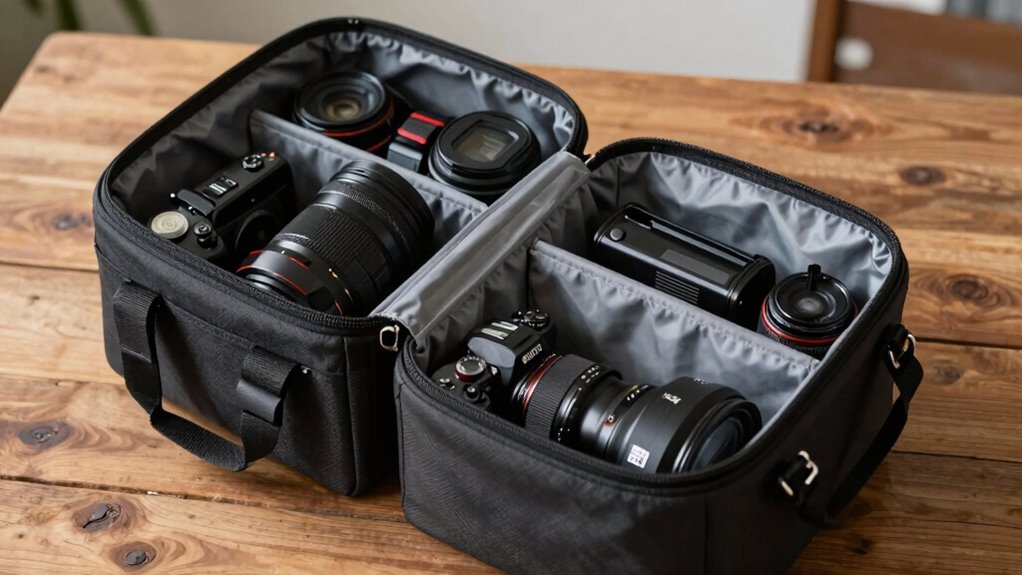
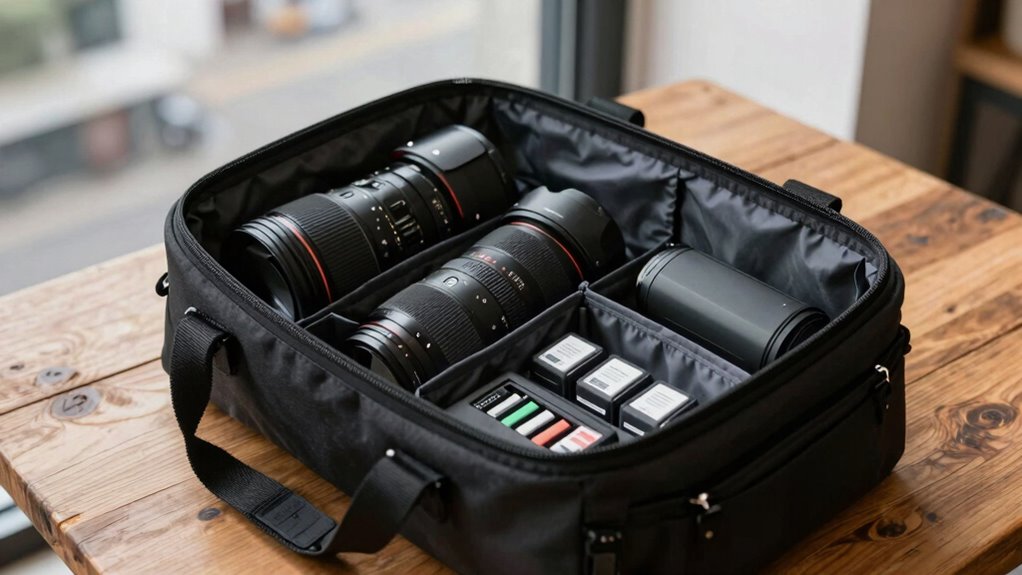
When choosing a camera travel bag, prioritizing quick and easy access to your gear often matters more than maximizing capacity. You want to be able to grab your camera or lens swiftly without rummaging through a cluttered compartment. The right bag keeps your gear organized and accessible, especially when you’re on the move or capturing fleeting moments. Look for designs that feature dedicated, well-padded compartments for each piece of equipment. This not only enhances access but also provides essential lens protection, preventing scratches and bumps during transit.
Weather resistance is another crucial factor. When you’re traveling, unpredictable weather can strike at any moment—rain, snow, or even dust. A bag with weather-resistant materials and sealed zippers will safeguard your gear against the elements. You don’t want a sudden downpour to ruin your equipment or cause condensation inside the bag. Weather resistance also extends to the overall durability of the bag, making it suitable for rugged adventures or urban commutes. A well-made, weatherproof bag offers peace of mind, knowing your camera and lenses stay dry and protected regardless of the environment.
While capacity might seem tempting, it shouldn’t come at the expense of accessibility or protection. Larger bags often mean more compartments and space, but they can also become cumbersome, making it harder to reach your gear quickly. Instead, opt for a bag that strikes a balance between size and efficiency. Compact, thoughtfully designed bags often feature quick-access pockets on the outside, perfect for storing items like memory cards, filters, or even a small tripod. These external pockets allow you to grab essentials without opening the main compartment, saving time and hassle. Investing in a compact design can greatly improve your overall travel experience.
Another key aspect is the bag’s interior organization. Look for adjustable dividers that let you customize the layout for your specific gear collection. This customization ensures everything stays in place, reducing the risk of damage during transit. Secure closures, such as sturdy zippers or magnetic snaps, further enhance quick access and security. When these features combine with weather resistance and lens protection, your camera bag truly becomes a reliable companion for travel photography. Additionally, choosing a bag made from eco-friendly or sustainable materials can contribute to preserving biodiversity and supporting environmentally conscious practices, aligning your gear choices with your commitment to sustainable living. Incorporating eco-friendly materials can also promote sustainability, making your gear choices more aligned with a responsible lifestyle.
To further optimize your setup, consider bags that are designed with ergonomic features, ensuring comfort during extended periods of carrying. A well-designed, lightweight bag can help reduce fatigue, allowing you to focus more on your photography. In the end, a camera travel bag that prioritizes quick access and protection over sheer capacity helps you focus on capturing moments rather than worrying about your gear. It’s about choosing a bag that fits your needs, keeps your equipment safe, and allows you to be spontaneous when the perfect shot appears.
camera travel bag with quick access pockets
As an affiliate, we earn on qualifying purchases.
As an affiliate, we earn on qualifying purchases.
Frequently Asked Questions
How Do I Choose the Right Bag for Different Camera Gear?
To choose the right bag for your camera gear, prioritize one with a well-designed camera compartment that keeps your gear organized and protected. Look for padded straps for comfort during transport. Consider how often you’ll need quick access versus capacity, and opt for a bag that balances both. A versatile bag with multiple compartments and adjustable padding helps you customize storage, ensuring your gear stays safe and accessible on your travels.
What Security Features Should I Look for in Travel Bags?
You should look for security features like lockable zippers and RFID-blocking pockets in your travel bag. Make sure it has good camera bag ergonomics for comfortable carrying during long trips. Prioritize travel bag durability, choosing materials that resist wear and tear. Secure closures and discreet compartments help protect your gear from theft, while sturdy construction ensures your bag withstands rough handling. These features keep your camera gear safe and accessible throughout your travels.
Are There Lightweight Options for Heavy Camera Equipment?
Did you know over 60% of photographers prefer lightweight gear? You can find camera travel bags that combine lightweight durability with compact capacity, making them ideal for heavy equipment. These bags are designed to protect your gear without adding bulk, so you can move easily. Look for models with sturdy materials and strategic compartments. This way, your gear stays safe, and travel remains hassle-free.
How Do I Organize Accessories in a Travel Bag?
To organize accessories in your travel bag, start by using compartments or pouches for small items like lens cleaning tools, ensuring they don’t get lost. Keep your camera strap options handy in an outer pocket for quick access. Assign dedicated spaces for each accessory, such as filters or batteries, so you can find everything easily. This setup helps you stay organized, prevents damage, and makes your photography gear travel-ready at all times.
Can These Bags Be Airline Cabin Approved?
Yes, these camera travel bags can be airline cabin approved if they meet cabin approval regulations. Check the bag’s dimensions to guarantee it fits within airline size limits, and verify its durability to withstand travel stresses. A durable design helps protect your gear, and confirming it complies with cabin approval regulations means you can carry it on board without issues. Always double-check airline-specific requirements before your trip.
Conclusion
Think of your camera travel bag like a well-organized toolkit; quick access often outweighs sheer capacity. I once watched a photographer switch lenses mid-shoot in seconds, thanks to a bag designed for easy access. That moment reminded me that having what you need at your fingertips can make or break your shoot. Prioritize accessibility over size, and you’ll find your adventures become smoother, more efficient, and ultimately more enjoyable.