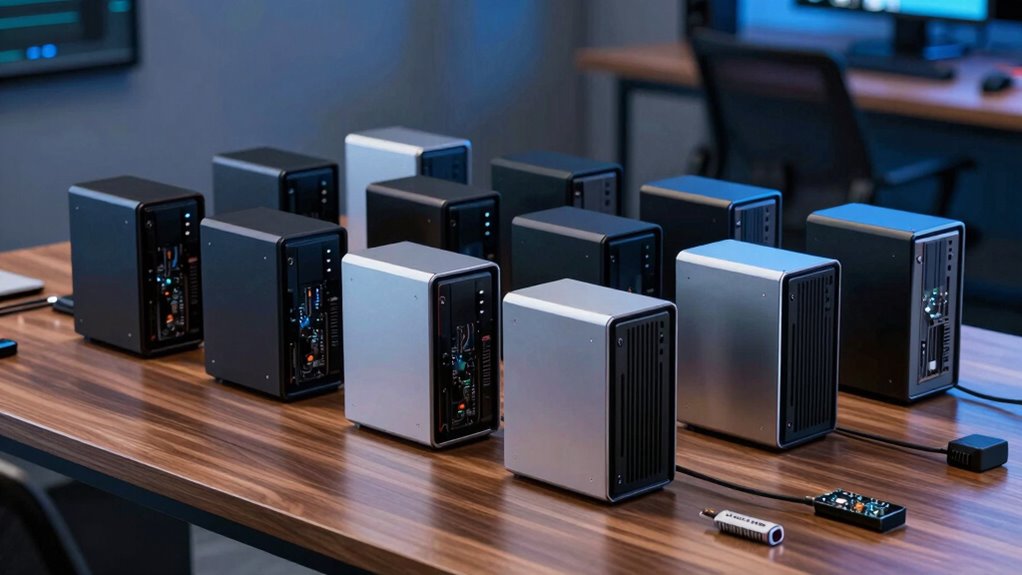
Setting up a home lab requires a mini PC that balances performance, versatility, and size. The MINISFORUM MS-01 stands out as the best overall choice thanks to its powerful Core i9 processor and dedicated GPU, ideal for demanding tasks. The HP EliteDesk 705 G4 is a strong contender for those seeking a reliable, compact business-grade machine, while the GMKtec G3S offers a budget-friendly entry point for newcomers. These options illustrate the main tradeoffs: higher performance versus budget constraints, and size versus expandability. Keep reading to see how each model stacks up for different home lab needs.

Get the latest gadgets delivered free with Prime
- Fast, free delivery on millions of items
- Prime Video, Amazon Music and more included
- Member-only deals all year
Complete the kit

Key Takeaways
- The most powerful mini PC in this lineup is the MINISFORUM MS-01, suitable for intensive virtualizations and workloads.
- The HP EliteDesk offers a solid balance of reliability and compactness, making it a dependable choice for long-term home lab setups.
- Budget options like GMKtec G3S provide decent performance for light to moderate tasks but may fall short for demanding projects.
- Expandability and ports vary significantly; models with dedicated GPU and multiple ports are better for complex setups.
- Size matters—smaller units save space but often sacrifice upgradeability and cooling capacity.
| MINISFORUM MS-01 Mini Workstation Core i9-13900H, 64GB RAM, 1TB SSD, RTX 3050 Graphics, HDMI, USB4, 10G SFP+ Ports |  | Best Overall Performance for Intensive Home Lab Tasks | Processor: Intel Core i9-13900H (14 cores/20 threads, up to 5.4 GHz) | RAM: 64GB DDR5 | Storage: 1TB PCIe SSD, supports additional M.2 SSDs and U.2 SSDs | VIEW ON AMAZON | See Our Full Breakdown |
| HP EliteDesk 705 G4 Mini Desktop Computer |  | Best for Business-Grade Reliability and Moderate Performance | Processor: AMD Ryzen 5 Pro 2400GE up to 3.8GHz | RAM: 8GB DDR4 | Storage: 256GB SSD | VIEW ON AMAZON | See Our Full Breakdown |
| Dell Optiplex 3060 Micro PC, Intel Core i3-8100T, 16GB DDR4 RAM, 256GB NVMe SSD, Windows 11 Pro (Renewed) |  | Best Reliable Budget Mini PC for Everyday Tasks | Processor: Intel Core i3-8100T 3.10 GHz | RAM: 16GB DDR4 | Storage: 256GB NVMe SSD | VIEW ON AMAZON | See Our Full Breakdown |
| TK Node Mini PC – Home Assistant, AMD R2314, 16GB RAM, 256GB SSD |  | Best for Home Automation and Versatile Lab Use | Processor: AMD R2314 / AMD R2514 / Intel Core i3-1215U | RAM: 16GB installed, up to 64GB supported | Storage: 256GB SSD, expandable up to 4TB NVMe | VIEW ON AMAZON | See Our Full Breakdown |
| Dell OptiPlex 3040 Micro PC Mini Desktop, Intel Core i3, 8GB RAM, 256GB SSD, Windows 11 Pro, WiFi & Bluetooth, Keyboard & Mouse |  | Best Budget-Friendly Mini for Basic Lab and Testing | Processor: Intel Core i3-6100T 3.2GHz | RAM: 8GB DDR4 | Storage: 256GB SSD | VIEW ON AMAZON | See Our Full Breakdown |
| MINISFORUM Intel Core i5-12600H Processor Mini Computer, MS-01 Mini Workstation Barebone Desktop PC |  | Best for Professional Power and Expandability | Processor: Intel Core i5-12600H (12 cores/16 threads, up to 4.5 GHz) | Graphics: Intel Iris Xe Graphics (1.4 GHz) | Network Ports: 2x 10G SFP+ ports, 2x 2.5G RJ45, 2x USB4, 2x USB3.2 Gen2 | VIEW ON AMAZON | See Our Full Breakdown |
| BOSGAME E4 Air Mini PC, AMD Ryzen 5 3500U, 8GB DDR4, 256GB SATA SSD |  | Best for Budget Multitasking and 4K Media | Processor: Ryzen 5 3500U | Cores/Threads: 4 cores / 8 threads | Graphics: Radeon Vega 8 | VIEW ON AMAZON | See Our Full Breakdown |
| GMKtec G3S Mini PC with Intel N95 Processor, 8GB RAM, 256GB SSD |  | Best for Compact Office and Media Use | Processor: Intel N95, 3.4GHz | RAM: 8GB DDR4 | Storage: 256GB M.2 SSD | VIEW ON AMAZON | See Our Full Breakdown |
| mini pcs for home lab | Processor | Storage | RAM | Graphics |
|---|---|---|---|---|
| MINISFORUM MS-01 Mini Workstat | Intel Core i9-13900H (14 cores/20 threads, up to 5.4 GHz) | 1TB PCIe SSD, supports additional M.2 SSDs and U.2 SSDs | 64GB DDR5 | NVIDIA RTX 3050 |
| HP EliteDesk 705 G4 Mini Deskt | AMD Ryzen 5 Pro 2400GE up to 3.8GHz | 256GB SSD | 8GB DDR4 | — |
| Dell Optiplex 3060 Micro PC | Intel Core i3-8100T 3.10 GHz | 256GB NVMe SSD | 16GB DDR4 | — |
| TK Node Mini PC | AMD R2314 / AMD R2514 / Intel Core i3-1215U | 256GB SSD, expandable up to 4TB NVMe | 16GB installed, up to 64GB supported | — |
| Dell OptiPlex 3040 Micro PC Mi | Intel Core i3-6100T 3.2GHz | 256GB SSD | 8GB DDR4 | — |
| MINISFORUM Intel Core i5-12600 | Intel Core i5-12600H (12 cores/16 threads, up to 4.5 GHz) | M.2 PCIe4.0 SSD, U.2 SSD support | — | Intel Iris Xe Graphics (1.4 GHz) |
| BOSGAME E4 Air Mini PC | Ryzen 5 3500U | 256GB SATA SSD | 8GB DDR4 | Radeon Vega 8 |
| GMKtec G3S Mini PC with Intel | Intel N95, 3.4GHz | 256GB M.2 SSD | 8GB DDR4 | Intel UHD Graphics up to 1000MHz |
More Details on Our Top Picks
MINISFORUM MS-01 Mini Workstation Core i9-13900H, 64GB RAM, 1TB SSD, RTX 3050 Graphics, HDMI, USB4, 10G SFP+ Ports
The MINISFORUM MS-01 stands out for its incredible processing power, thanks to an Intel Core i9-13900H and 64GB DDR5 RAM, making it ideal for demanding tasks like virtualization, 3D rendering, or high-end gaming within a home lab setting. Its multiple high-speed outputs, including HDMI 4K and USB4, paired with dual 10G SFP+ ports, provide comprehensive connectivity for complex network setups and media workflows. Compared to the HP EliteDesk 705 G4, which offers a more modest AMD Ryzen 5 processor, the MS-01 delivers superior raw speed but at a significantly higher cost and complexity. This model’s ability to support enterprise SSDs and a dedicated RTX 3050 makes it suitable for high-performance scenarios, but its small form factor and high-end specs come with a steep price and a need for advanced technical knowledge to maximize expansion and setup. It’s best suited for users who need top-tier performance and are comfortable with hardware complexities.
Pros:- Exceptional processing power with Core i9-13900H for demanding applications
- Multiple high-speed video and network outputs for professional workflows
- Expandable storage including enterprise-grade SSD support
- Dedicated RTX 3050 graphics for rendering and gaming
Cons:- High cost makes it less accessible for casual users
- Small form factor limits straightforward hardware upgrades
- Requires significant technical knowledge for setup and expansion
Best for: Power users running intensive workloads, such as 3D rendering, virtualization, or gaming within their home labs.
Not ideal for: Beginners or those seeking a budget-friendly, plug-and-play mini PC for basic server tasks or light testing.
- Processor:Intel Core i9-13900H (14 cores/20 threads, up to 5.4 GHz)
- RAM:64GB DDR5
- Storage:1TB PCIe SSD, supports additional M.2 SSDs and U.2 SSDs
- Graphics:NVIDIA RTX 3050
- Video Output:HDMI 4K@60Hz, 2x USB4 8K@30Hz
- Network:2x 10G SFP+ ports, 2x 2.5G RJ45
Our verdict“This mini PC is ideal for experienced users who need maximum performance and are prepared to handle its complexity and cost.”
HP EliteDesk 705 G4 Mini Desktop Computer
The HP EliteDesk 705 G4 is a compact, refurbished mini desktop that offers a solid balance of performance and affordability. Its AMD Ryzen 5 Pro 2400GE processor provides capable multitasking power, suitable for running multiple virtual machines or small server environments in a home lab. Compared to the Dell Optiplex 3060, which also features an Intel Core i3, the HP’s Ryzen chip delivers better overall performance and efficiency for multitasking. However, with only 8GB RAM, it may fall short for heavier workloads or multitasking demands, and as a refurbished unit, it might have limited warranty coverage. Its small size and pre-installed Windows 11 Pro make it a straightforward choice for those needing a reliable, space-efficient lab node that won’t break the bank.
Pros:- Powerful AMD Ryzen 5 Pro processor for multitasking
- Fast SSD storage enabling quick data access
- Pre-installed Windows 11 Pro for immediate productivity
- Compact, space-saving design
Cons:- Limited to 8GB RAM, restricting heavy multitasking
- Refurbished condition may limit warranty and future upgrades
- No dedicated graphics card for high-end visual tasks
Best for: Small business owners or hobbyists who need a reliable, budget-friendly mini PC for basic server or virtualization tasks.
Not ideal for: Power users or professionals requiring high RAM capacity or gaming/graphics-intensive workloads.
- Processor:AMD Ryzen 5 Pro 2400GE up to 3.8GHz
- RAM:8GB DDR4
- Storage:256GB SSD
- Operating System:Windows 11 Pro
- Form Factor:Mini Desktop
- Condition:Refurbished
Our verdict“This mini PC offers reliable performance for small-scale lab setups, especially for users prioritizing cost and space efficiency over raw power.”
Dell Optiplex 3060 Micro PC, Intel Core i3-8100T, 16GB DDR4 RAM, 256GB NVMe SSD, Windows 11 Pro (Renewed)
The Dell Optiplex 3060 Micro PC offers a dependable platform with an Intel Core i3-8100T and 16GB RAM, making it a sensible choice for basic virtualization, file server, or testing environments in a home lab. Compared to the HP EliteDesk 705 G4, this Dell provides a slightly faster processor and double the RAM, which can improve multitasking potential. However, its older 8th gen processor still limits performance for more intensive workloads, and as a renewed product, warranty support might be limited. Its multiple I/O ports and compact size make it suitable for users who want a straightforward, reliable mini PC that’s easy to deploy for standard lab tasks without excessive investment.
Pros:- Reliable performance with an older but capable Intel Core i3 processor
- 16GB RAM enhances multitasking and virtualization capacity
- Fast NVMe SSD for quick data access
- Multiple connectivity options for diverse peripherals
Cons:- Older processor limits performance for demanding tasks
- Refurbished status may impact warranty coverage
- No dedicated graphics, unsuitable for GPU-dependent workloads
Best for: Hobbyists or small-scale lab environments requiring dependable, affordable hardware for routine tasks.
Not ideal for: Users needing high-performance computing or graphics-intensive applications, due to its modest CPU and integrated graphics.
- Processor:Intel Core i3-8100T 3.10 GHz
- RAM:16GB DDR4
- Storage:256GB NVMe SSD
- Operating System:Windows 11 Pro
- I/O Ports:Multiple USB, DisplayPort, HDMI
- Condition:Renewed
Our verdict“This Dell offers a stable, budget-conscious choice for everyday lab tasks, especially for users who prioritize reliability over raw power.”
TK Node Mini PC – Home Assistant, AMD R2314, 16GB RAM, 256GB SSD
The TK Node Mini PC excels in compactness and flexibility, with options including AMD R2314, AMD R2514, or Intel Core i3-1215U, making it a versatile choice for home automation, virtualization, or small server tasks. Its support for up to three 4K displays and expandable RAM up to 64GB positions it as a capable hub for smart home integrations and lightweight virtualization. Compared with the MINISFORUM MS-01, which offers higher raw power and graphics, the TK Node emphasizes size, power efficiency, and flexible deployment, though it sacrifices dedicated GPU performance. The device’s support for Home Assistant OS and network connectivity makes it especially appealing for automation projects, but setup might require some technical familiarity.
Pros:- Compact size with flexible placement options
- Supports multiple 4K displays for diverse use cases
- Expandable RAM and storage for future upgrades
- Reliable 24/7 operation with quality build
Cons:- Requires setup and configuration, not plug-and-play
- No dedicated GPU, limiting graphics-heavy tasks
- Higher price point compared to basic mini PCs
Best for: Smart home enthusiasts and those needing a flexible, space-efficient lab node for virtualization and automation.
Not ideal for: Power users needing high-end graphics or intensive computational performance, due to limited GPU support and focus on efficiency.
- Processor:AMD R2314 / AMD R2514 / Intel Core i3-1215U
- RAM:16GB installed, up to 64GB supported
- Storage:256GB SSD, expandable up to 4TB NVMe
- Display Outputs:HDMI, DisplayPort, USB-C
- Dimensions:5 x 5 x 1.7 inches
- Warranty:2-year US-based limited
Our verdict“This device is best suited for automation, virtualization, and light server roles in small spaces where flexibility and efficiency matter most.”
Dell OptiPlex 3040 Micro PC Mini Desktop, Intel Core i3, 8GB RAM, 256GB SSD, Windows 11 Pro, WiFi & Bluetooth, Keyboard & Mouse
The Dell OptiPlex 3040 offers a straightforward, space-saving solution with an Intel Core i3-6100T and 8GB RAM, suitable for basic server functions, testing environments, or small-scale virtualization in a home lab. Its inclusion of WiFi, Bluetooth, and a keyboard/mouse bundle simplifies deployment for those new to mini PCs. Compared to the HP EliteDesk 705 G4, which has a more powerful processor, the 3040’s older CPU limits performance for multitasking, but its affordability and reliable build make it appealing for casual use. Its older hardware and basic I/O options mean it’s best for light workloads rather than high-demand tasks, but its small footprint is ideal for tight spaces.
Pros:- Compact, space-efficient design
- Reliable performance with SSD storage
- Includes WiFi, Bluetooth, keyboard, and mouse for easy setup
- Pre-installed Windows 11 Pro
Cons:- Older processor limits multitasking and heavy workloads
- Refurbished units may have limited warranty
- No dedicated graphics card for GPU-intensive tasks
Best for: Beginners or hobbyists starting small virtual environments or testing on a budget.
Not ideal for: Power users or those running heavy virtualization, gaming, or intensive workloads due to hardware limitations.
- Processor:Intel Core i3-6100T 3.2GHz
- RAM:8GB DDR4
- Storage:256GB SSD
- Operating System:Windows 11 Pro
- Connectivity:WiFi, Bluetooth
- Includes:Keyboard, Mouse
Our verdict“This mini PC suits beginners or casual lab users seeking a reliable, affordable platform for basic testing and virtual environments.”
MINISFORUM Intel Core i5-12600H Processor Mini Computer, MS-01 Mini Workstation Barebone Desktop PC
This barebone mini PC stands out for users who need serious processing power and extensive connectivity options, especially compared with the BOSGAME E4 Air, which is more suited for straightforward multitasking. The Intel Core i5-12600H with 12 cores offers a performance edge for demanding tasks like 3D rendering or video editing, but it requires additional RAM and storage, adding complexity for less technical users. Its high-speed network ports, including 10G SFP+ and multiple Ethernet options, make it ideal for a home lab that demands fast data transfer and network flexibility. Unlike the GMKtec G3S, which is more compact and easier to set up, the MS-01’s larger size and barebone nature make it less suitable for those seeking a simple plug-and-play solution. This model is perfect for advanced users who want a customizable, high-performance mini PC for professional workloads.
Pros:- Powerful 12-core Intel Core i5-12600H processor for demanding tasks
- Multiple high-speed network options, including 10G SFP+
- Supports multiple display outputs with HDMI and USB4
- Flexible expandability via M.2, U.2, and PCIe slots
Cons:- Requires additional RAM and storage, increasing initial setup effort
- Larger size than typical mini PCs may not fit tight spaces
Best for: Tech-savvy home lab enthusiasts needing high processor performance and expandability
Not ideal for: Beginners or users seeking a ready-to-run mini PC with minimal setup
- Processor:Intel Core i5-12600H (12 cores/16 threads, up to 4.5 GHz)
- Graphics:Intel Iris Xe Graphics (1.4 GHz)
- Network Ports:2x 10G SFP+ ports, 2x 2.5G RJ45, 2x USB4, 2x USB3.2 Gen2
- Video Output:HDMI 2.0, 2x USB4
- Memory:2x DDR5-5200 slots
- Storage:M.2 PCIe4.0 SSD, U.2 SSD support
Our verdict“This pick is ideal for experienced users who need a customizable, high-performance mini PC for professional home lab work.”
BOSGAME E4 Air Mini PC, AMD Ryzen 5 3500U, 8GB DDR4, 256GB SATA SSD
The BOSGAME E4 Air is well-suited for users looking for a balance between affordability and multimedia capability, especially compared to the more robust MINISFORUM MS-01, which targets high-end professional tasks. Its Ryzen 5 3500U with Radeon Vega 8 graphics offers decent performance for general home lab activities, streaming, and multitasking, but falls short for intensive 3D rendering or gaming. The triple 4K monitor support enhances productivity, making it ideal for a home lab setup focused on multiple outputs, unlike the GMKtec G3S, which has a more limited display support. While it’s less powerful than the MS-01, it provides a straightforward, all-in-one package with built-in RAM and storage, simplifying setup for those less comfortable with hardware tweaks. This is a great choice for users who want reliable performance without complex configuration.
Pros:- Decent performance from AMD Ryzen 5 3500U with integrated Radeon Vega 8 graphics
- Supports triple 4K monitors for enhanced multitasking
- Fast SSD and 8GB RAM for smooth everyday use
- Built-in all-in-one design simplifies setup
Cons:- Limited internal storage, not suitable for large media libraries
- No dedicated GPU limits high-end gaming or intensive 3D work
Best for: Home lab users seeking a cost-effective, multimedia-capable mini PC for multitasking and display flexibility
Not ideal for: Power users needing high-end processing or expandability for advanced workloads
- Processor:Ryzen 5 3500U
- Cores/Threads:4 cores / 8 threads
- Graphics:Radeon Vega 8
- RAM:8GB DDR4
- Storage:256GB SATA SSD
- Display Support:Triple 4K via HDMI, DisplayPort, USB-C
Our verdict“This mini PC makes the most sense for users who want a capable, budget-friendly device for multitasking and media in a home lab setting.”
GMKtec G3S Mini PC with Intel N95 Processor, 8GB RAM, 256GB SSD
The GMKtec G3S offers a compact, space-saving design with sufficient performance for office tasks and basic media streaming, making it a more straightforward option compared to the more versatile BOSGAME E4 or the high-end MINISFORUM MS-01. Its 12th Gen Intel N95 processor provides decent processing power within a very low power envelope, ideal for lightweight home lab applications and multimedia. The dual HDMI outputs and support for dual 4K displays make it suitable for multitasking in limited spaces, unlike larger mini PCs that require more setup or hardware upgrades. However, its 8GB RAM is not upgradeable, which could limit future multitasking potential, and it lacks a dedicated GPU for graphics-intensive tasks. This model is best for those prioritizing a small footprint and simple setup over raw processing power.
Pros:- Very compact and space-efficient design
- Supports dual 4K displays for productivity
- Decent performance for office and multimedia tasks
- Low power consumption (6 watts)
Cons:- Limited to 8GB RAM, not upgradeable
- No dedicated graphics for gaming or graphics-intensive apps
- Basic OS may need updates for some applications
Best for: Home users needing a compact, easy-to-use mini PC for basic office, media, and light multitasking
Not ideal for: Power users or those requiring extensive expandability or high-end graphics capabilities
- Processor:Intel N95, 3.4GHz
- RAM:8GB DDR4
- Storage:256GB M.2 SSD
- Graphics:Intel UHD Graphics up to 1000MHz
- Connectivity:WiFi 5, Bluetooth 5.0, Gigabit Ethernet
- Display Support:2 HDMI, 4 USB 3.2
Our verdict“This mini PC is perfect for space-constrained environments where simple, reliable performance for everyday tasks is needed in a home lab.”

How We Picked
The products were selected based on their hardware performance, expandability, build quality, and user flexibility. Priority was given to models that balance power with size, making them suitable for home labs where space and noise levels matter. We also considered value for money, reliability, and the availability of ports and upgrade options. The ranking reflects how well each mini PC can handle a range of home lab tasks—from virtualization to media serving—while remaining manageable in a typical home environment.| mini pcs for home lab | Graphics |
|---|---|
| MINISFORUM MS-01 Mini Workstat | NVIDIA RTX 3050 |
| HP EliteDesk 705 G4 Mini Deskt | — |
| Dell Optiplex 3060 Micro PC | — |
| TK Node Mini PC | — |
| Dell OptiPlex 3040 Micro PC Mi | — |
| MINISFORUM Intel Core i5-12600 | Intel Iris Xe Graphics (1.4 GHz) |
| BOSGAME E4 Air Mini PC | Radeon Vega 8 |
| GMKtec G3S Mini PC with Intel | Intel UHD Graphics up to 1000MHz |
Factors to Consider When Choosing Mini Pcs For Home Labs
Choosing the right mini PC for a home lab involves weighing several important factors beyond just raw specs. It’s essential to consider how much performance you need now and in the future, as well as your space constraints and upgrade plans. A good home lab mini PC should strike a balance between power, size, and expandability, ensuring it can grow with your projects without becoming a cluttered or noisy addition to your home.Performance and CPU Power
The CPU is the core of your mini PC’s capabilities. For demanding tasks like virtualization, container hosting, or running multiple servers, prioritize models with high-end processors such as Intel Core i7 or i9, or AMD Ryzen 5 or 7. For lighter use, a Core i3 or AMD Ryzen 3 can suffice but may limit multitasking ability. Remember that more powerful CPUs often mean higher energy consumption and cost, so match your choice to your intended workload to avoid overspending or underperformance.
Expandability and Ports
Home labs often require multiple connections for networking, storage, and peripherals. Look for mini PCs with multiple USB ports, HDMI or DisplayPort outputs, and ideally, Ethernet and Thunderbolt options. Some models support M.2 or SATA SSD upgrades and additional RAM, which can extend the device’s lifespan and usefulness. Avoid overly compact units that sacrifice port variety or upgrade options if you plan to expand your setup over time.
Size and Cooling
Size matters because space constraints are real in home environments. Smaller units save desk space but may have limited cooling, which can lead to thermal throttling under heavy loads. Larger mini PCs often include better cooling solutions and additional features like multiple fan controls or larger heatsinks. Consider your environment’s noise tolerance as well—more powerful models tend to generate more heat and noise, so balance performance with comfort.
Energy Consumption and Noise
Running a home lab 24/7 demands energy-efficient hardware to keep operational costs manageable. Look for models with low power CPUs and energy-saving features. Noise levels are also critical; quieter units make for a more pleasant home environment, especially if your lab is in a shared space. Overly noisy mini PCs can become distracting, so check reviews for thermal management and acoustics before buying.
Price and Value
The budget you allocate influences your options significantly. While high-end mini PCs like the MINISFORUM MS-01 provide top-tier performance, they come at a premium. Budget models like GMKtec G3S are more affordable but may limit future expansion or workload capacity. Consider where your needs lie—if you require a future-proof setup with room for upgrades, investing more upfront can save money long-term. Conversely, if your projects are light, a budget option might suffice.
Frequently Asked Questions
Can I upgrade the RAM or storage on these mini PCs?
Most mini PCs offer some degree of upgradeability, especially in RAM and storage. Entry-level models may have soldered RAM, which cannot be upgraded, so check specifications carefully. Higher-end units often support additional RAM modules and M.2 SSDs, allowing you to expand capacity as your needs grow. Upgrading components can boost performance significantly, but it’s important to verify compatibility and ease of access before purchasing.
Are these mini PCs suitable for running multiple virtual machines?
Yes, but with caveats. For hosting multiple VMs, you’ll want a mini PC with a powerful multi-core CPU, ample RAM (at least 16GB or more), and fast storage. The MINISFORUM MS-01 with its Core i9 and 64GB RAM is an excellent choice for intensive virtualization, whereas lower-tier options might struggle with multiple VMs or complex setups. Always consider cooling and power supply capacity to ensure stability under load.
What’s the ideal size for a home lab mini PC?
The ideal size depends on your space and noise preferences. Ultra-compact units save desk space but may have limited cooling and expansion options. Slightly larger mini PCs often include better cooling and more ports, making them more versatile. If space is tight, aim for a balance—compact enough to fit comfortably but large enough to accommodate necessary upgrades and cooling solutions.
How important is energy efficiency for a home lab mini PC?
Energy efficiency becomes significant if your home lab runs continuously. Models with low-power CPUs and efficient power supplies can reduce electricity costs and heat output. This not only lowers your power bill but also minimizes noise from cooling fans. Choosing energy-efficient hardware is a smart move, especially in shared living spaces where noise and heat are concerns.
Should I prioritize a mini PC with dedicated GPU for my home lab?
It depends on your workload. If your projects involve GPU-accelerated tasks like machine learning, video processing, or gaming servers, a model with a dedicated GPU makes sense. For most typical home lab setups, integrated graphics are sufficient and save power and cost. Consider whether your intended tasks truly require a GPU before paying extra for one, to avoid unnecessary expense.
Conclusion
For most users seeking a reliable, versatile mini PC, the MINISFORUM MS-01 offers an excellent balance of power and expandability, making it the best overall choice. Budget-conscious builders will find the GMKtec G3S sufficient for lighter tasks, while those wanting a premium, business-grade option should consider the HP EliteDesk 705 G4. Beginners or those just exploring home labs are better served by simpler, more affordable units, while advanced users aiming for intensive workloads should look toward models with high-end CPUs and dedicated GPUs. Your ideal pick depends on your specific needs, space constraints, and future plans.
As an affiliate, we earn on qualifying purchases.Columbus Day / Indigenous Peoples' Day Picks
long weekend sales