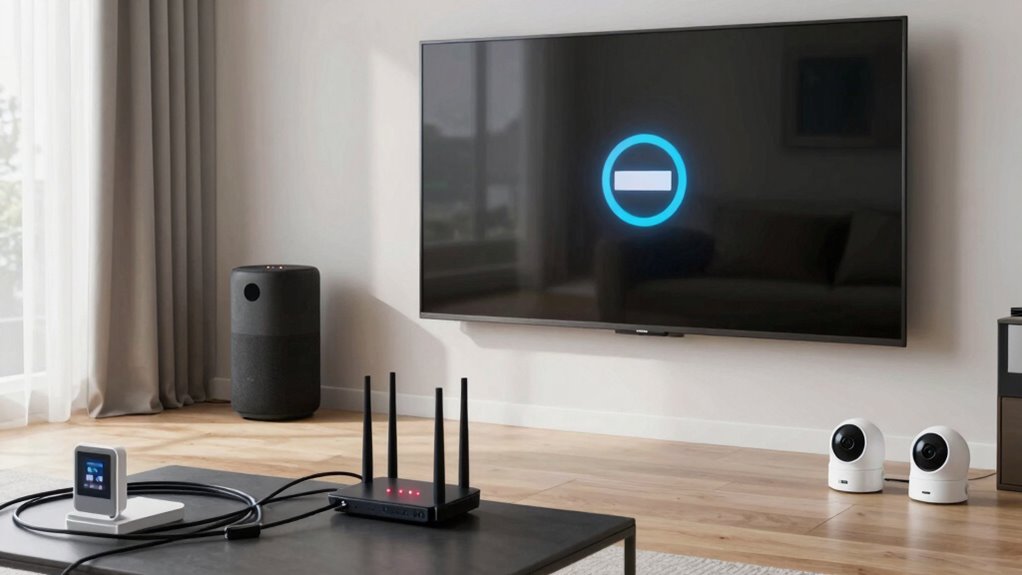

Some smart homes fail the internet outage test because their networks lack resilience and backup solutions. If your Wi-Fi isn’t strong enough or has dead zones, devices become unresponsive when the internet drops. Without local hubs or cellular backups, critical functions can stop working. Improving your network’s placement, upgrading equipment, and adding backup systems can help. Keep exploring to discover how to make your smart home more reliable during outages.

Get the latest gadgets delivered free with Prime
- Fast, free delivery on millions of items
- Prime Video, Amazon Music and more included
- Member-only deals all year
Key Takeaways
- Dependence on a single Wi-Fi network without backup systems leaves smart homes vulnerable during outages.
- Weak or poorly placed routers and extenders cause connectivity issues, leading to device failures during internet disruptions.
- Lack of network resilience measures allows interference and congestion to impair smart device responsiveness.
- Absence of local control hubs or cellular backups prevents device operation when internet access is lost.
- Outdated or insufficient networking equipment hampers capacity and stability, causing smart home failures during outages.

Smart homes rely heavily on stable internet connections to function smoothly, and when an outage occurs, it can disrupt your daily routines and smart device operations. Many people assume that a reliable Wi-Fi connection is enough to keep everything running seamlessly, but this isn’t always the case. Your smart devices depend on consistent network access, and even minor disruptions can cause major headaches. That’s why understanding wireless resilience and backup systems is vital for maintaining a connected home during outages.
Wireless resilience refers to a smart home’s ability to maintain stable connectivity despite potential issues like interference, signal drops, or network congestion. When your Wi-Fi signal weakens or drops, smart devices can become unresponsive or revert to their default settings, defeating the purpose of automation. To improve wireless resilience, you should consider strategically placing routers and extenders to eliminate dead zones and guarantee strong coverage throughout your home. Using mesh networks can also help, as they create a unified system that dynamically reroutes data around obstacles or signal issues, keeping your devices connected during network hiccups. Additionally, wireless resilience involves ensuring your network can withstand interference from other electronic devices or neighboring networks, which is crucial for uninterrupted smart device operation. Regularly testing your network’s performance can help identify weak points before they cause problems during an outage. Moreover, adopting proper network configuration can significantly enhance your system’s stability and resilience. Understanding the importance of network robustness can further help in designing a more resilient smart home network. Being aware of potential electromagnetic interference sources can also aid in optimizing your setup for better reliability.
Enhance smart home connectivity with strategic router placement and mesh networks for reliable, uninterrupted device operation.
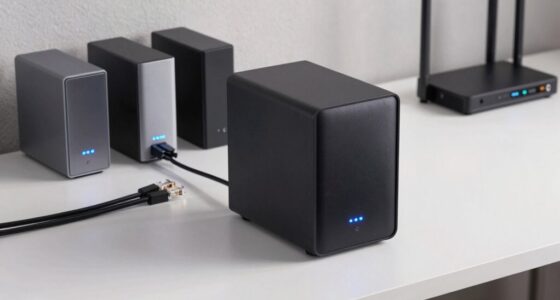
Backup systems are equally essential in safeguarding your smart home during internet outages. These systems can range from local hubs to alternative connectivity options that activate when your primary internet fails. For example, some smart home setups include a local hub or bridge that allows certain commands and automations to operate without internet access. Additionally, you might consider having a cellular backup or mobile hotspot ready as a secondary connection. These backup systems can provide a critical lifeline, ensuring your smart home remains functional for essential tasks like security monitoring or controlling lights and thermostats. Implementing backup systems that are compatible with your devices and setup can make a significant difference in maintaining connectivity during outages.
However, integrating backup systems isn’t enough if your wireless resilience isn’t solid. For example, if your primary Wi-Fi is unreliable or not properly distributed, backup systems won’t be as effective. It’s important to test your network regularly and optimize it for stability. This might involve updating firmware, changing Wi-Fi channels to avoid interference, or upgrading to more advanced equipment that can handle higher traffic and provide better resilience.
In the end, a smart home that can withstand internet outages relies on a combination of strong wireless resilience and effective backup systems. You need a network that’s designed to handle disruptions and backup options that keep essential functions running. Without these safeguards, your smart home becomes vulnerable to failures during outages, leaving you frustrated and disconnected when you need your devices most. Investing in these aspects ensures your smart home remains smarter and more resilient, no matter what happens to your internet connection.
mesh Wi-Fi router for smart home
As an affiliate, we earn on qualifying purchases.
As an affiliate, we earn on qualifying purchases.
Frequently Asked Questions
Can Smart Home Devices Function Without Internet Access?
Many smart home devices can operate without internet access, especially if they have local control capabilities. Device compatibility varies; some devices like smart locks and lights work directly with your hub, maintaining functionality during outages. Without internet, energy efficiency might decline if remote updates or automation rely on online services. To guarantee continuous operation, choose devices designed for local control, prioritize compatibility, and consider offline automation options for a reliable smart home experience.
What Backup Options Are Available for Smart Home Connectivity?
Did you know 60% of smart home failures during outages stem from connectivity issues? To prevent this, you can set up a local network that operates independently of the internet, ensuring your devices stay functional. Additionally, investing in backup power like uninterruptible power supplies (UPS) keeps your smart home running smoothly during outages. These options help maintain seamless control and security, even when the internet goes down.
How Do Internet Outages Affect Smart Home Security Systems?
Internet outages can disable your smart home security system if it relies solely on the cloud. However, if your system operates on a local network with device independence, it can continue functioning without internet access. This setup guarantees that cameras, alarms, and sensors stay active and responsive, maintaining your security even during outages. You gain peace of mind knowing your smart home remains protected, regardless of connectivity issues.
Are There Smart Home Hubs That Operate Offline?
Some smart home hubs do operate offline, but they often have limitations. Many rely on internet connectivity for full functionality, so offline device functionality can be restricted, especially for remote access or updates. However, certain hubs, like Samsung SmartThings or Hubitat Elevation, offer offline modes that control compatible devices locally. Keep in mind, these hubs’ limitations mean some features may be unavailable without an internet connection.
What Steps Can Prevent Smart Home Failures During Outages?
Picture your smart home as a vintage radio—without a backup, it’s useless during a storm. To prevent failures during outages, you should set up a robust local network that keeps devices functioning independently. Implement device redundancy by having multiple devices for critical functions, like smart hubs, so if one fails, another takes over. Regularly update firmware and use wired connections where possible to guarantee reliability during internet disruptions.
Conclusion
When the internet goes out, your smart home can quickly become less intelligent. Nearly 60% of smart home devices rely heavily on constant connectivity to function properly, leaving you stranded without automation or control. This highlights how fragile these systems are without a reliable internet connection. To truly enjoy the benefits of smart living, consider integrating local control options and backup solutions. Otherwise, a simple outage could turn your smart home into just a regular house.
Halloween Picks
halloween
As an affiliate, we earn on qualifying purchases.