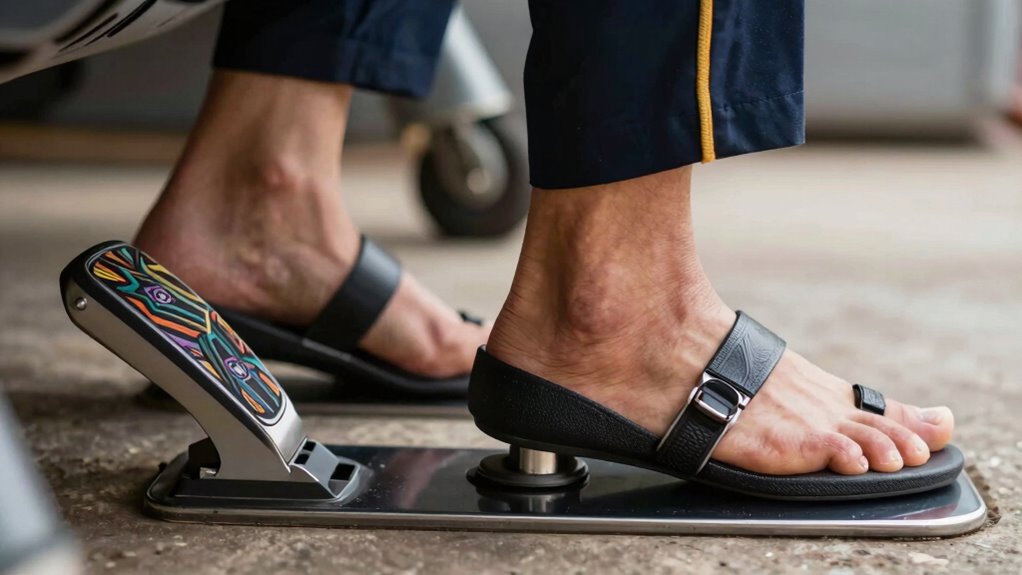

Using rudder pedals in flight simulation helps you develop coordination faster than you might think because they force you to synchronize your feet with your hand controls. This practice improves your ability to manage yaw and to react smoothly during critical maneuvers like landing and crosswind corrections. As you consistently use pedals, muscle memory builds quickly, making your actions feel more natural. Keep exploring, and you’ll discover how this integrated control boosts your flying skills even further.

Get the latest gadgets delivered free — and shop member deals
- Fast, free delivery on millions of items
- Access to Prime Big Deal Days deals on October 6–7
- Prime Video, Amazon Music and more included
Key Takeaways
- Rudder pedals promote muscle memory, enabling quicker and more natural coordination between feet and hands during flight maneuvers.
- Using pedals accelerates understanding of aircraft yaw control, speeding up the learning process.
- They improve response time to environmental cues like crosswinds, fostering faster adaptive skills.
- Pedal practice helps develop intuitive control, reducing hesitation and increasing confidence more rapidly.
- Integrated pedal and yoke inputs enhance overall aircraft handling skills in less time.
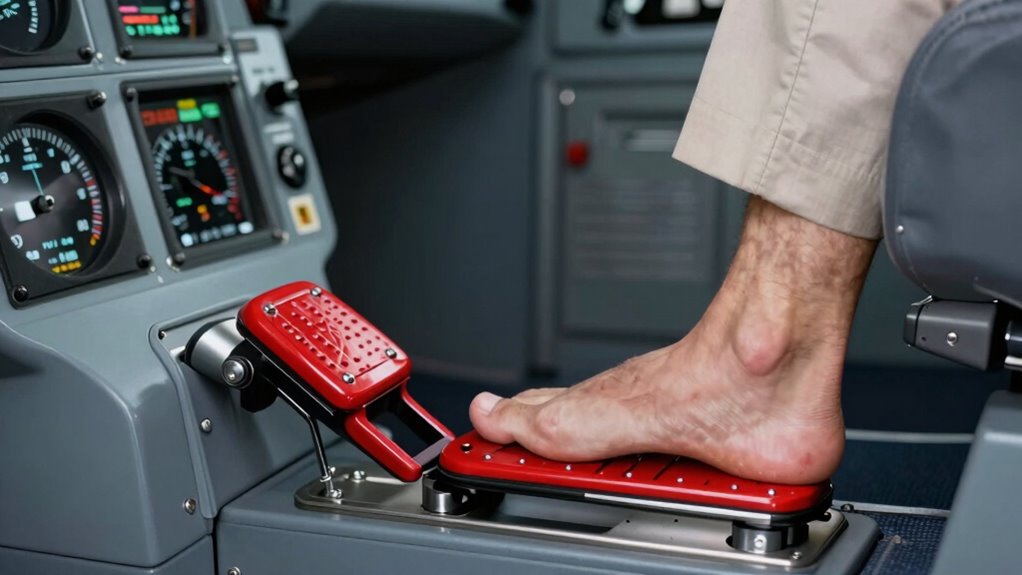
Learning to coordinate your feet and hands on a flight simulator or aircraft can seem intimidating at first, but using rudder pedals accelerates this process more than you might expect. When you practice with rudder pedals during flight simulator sessions, you develop a natural sense of aircraft control, especially during critical maneuvers like aircraft landing. The pedals help you manage yaw, which is essential for keeping the plane aligned during approaches. As you refine your ability to use the pedals smoothly with your hands on the yoke or joystick, your overall coordination improves quickly. This integrated approach is crucial because real-world flying demands seamless cooperation between your feet and hands.
Practicing with rudder pedals enhances coordination and control during critical aircraft maneuvers like landings.
In a flight simulator, you have the advantage of practicing aircraft landing techniques repeatedly without risk. As you get comfortable with rudder pedal inputs, you’ll notice how your ability to keep the aircraft steady during descent and flare enhances. The pedals help you counteract any unwanted yaw caused by crosswinds or turbulence, making your landings smoother and more precise. Over time, this coordination becomes second nature, and you’ll find it easier to execute complex maneuvers during actual flights. The more you use the pedals, the more your brain adapts to controlling yaw and maintaining aircraft balance, leading to faster skill acquisition. Developing muscle memory through consistent practice is essential for smooth and instinctive control.
Using rudder pedals also boosts your understanding of aircraft behavior. You start to recognize subtle cues from the simulator that indicate when to adjust pedal input, such as during a crosswind landing or when correcting for asymmetric thrust. This heightened awareness translates directly to real aircraft handling, where quick, accurate pedal inputs can make the difference between a safe landing and a rough one. Incorporating flight control surfaces into your practice helps you better understand how different inputs affect aircraft movement, which is vital for mastering aircraft handling in all conditions. Additionally, practicing with rudder pedals enhances your grasp of aerodynamic principles, which are fundamental for understanding how aircraft respond to various control inputs and environmental factors.
Most importantly, incorporating rudder pedals into your flight practice shortens your learning curve. Instead of relying solely on visual or manual cues, you develop muscle memory for coordinated inputs. This means, during an actual aircraft landing, your feet and hands work together instinctively, reducing hesitation and increasing confidence. With consistent practice, the initial challenge of integrating pedal and control inputs diminishes, making flying feel more intuitive. Ultimately, rudder pedals don’t just teach coordination—they fast-track your progress toward becoming a more proficient and confident pilot. Additionally, they help you familiarize yourself with aircraft control surfaces, which are vital for mastering aircraft handling in all conditions.
rudder pedals for flight simulator
As an affiliate, we earn on qualifying purchases.
As an affiliate, we earn on qualifying purchases.
Frequently Asked Questions
Can Beginners Use Rudder Pedals Without Prior Flying Experience?
Yes, beginners can use rudder pedals without prior flying experience, especially with simulator training. Simulator sessions help you get comfortable with aircraft controls, including rudders, before actual flights. During this training, you learn basic coordination and aircraft maintenance concepts, making real-world flying less intimidating. While initial use might feel challenging, consistent practice with simulators accelerates your coordination skills, preparing you to handle rudder pedals confidently when flying for the first time.
Do Different Aircraft Types Require Different Rudder Pedal Setups?
Think of flying like a tailor-made suit—each aircraft demands a unique fit. Yes, different aircraft types require different rudder pedal setups; aircraft-specific adjustments guarantee smooth control. Pedal customization lets you fine-tune the pedals to match the aircraft’s unique handling. When you adapt your pedals, you’re not just fitting controls—you’re enabling precise coordination, making every maneuver feel natural and effortless, no matter the plane’s size or style.
How Long Does It Typically Take to Master Rudder Pedal Coordination?
It usually takes a few hours to a few days to master rudder pedal coordination, depending on your practice frequency. You’ll get better as you fine-tune rudder calibration and pedal sensitivity, making movements smoother and more natural. Consistent practice helps you develop muscle memory, so don’t get discouraged if it feels challenging at first. Keep practicing, and coordination will become second nature faster than you expect.
Are There Common Mistakes to Avoid When Using Rudder Pedals?
When using rudder pedals, avoid common mistakes like neglecting pedal sensitivity adjustment or overusing the heel-toe technique. For example, a pilot might struggle with sudden turns because they didn’t calibrate pedal sensitivity, causing jerky movements. To improve, focus on smooth pressure application and adjust sensitivity settings to match your comfort. Practice slowly, paying attention to your heel and toe movements, gradually building precise coordination without overcorrecting.
Do Rudder Pedals Improve Overall Flying Skills Beyond Coordination?
Yes, using rudder pedals can improve your overall flying skills by enhancing aerodynamic efficiency and cockpit ergonomics. When you master proper pedal use, you gain better control during turns and turbulence, making your flying smoother and more precise. This leads to more efficient flight paths and fuel savings. Plus, comfortable cockpit ergonomics reduce fatigue, allowing you to focus on flying confidently, ultimately elevating your skills beyond basic coordination.
Conclusion
Using rudder pedals is like learning to ride a bike—you might stumble at first, but soon it feels natural. As you practice, your coordination improves faster than you think, making flying feel more intuitive. Don’t be discouraged by initial challenges; with patience, you’ll find your feet and hands working together smoothly. Before you know it, you’ll be steering with confidence, enjoying the seamless flow of control just like a pro pilot.
Fall Picks
fall essentials
As an affiliate, we earn on qualifying purchases.