
TL;DR

Get the latest gadgets delivered free with Prime
- Fast, free delivery on millions of items
- Prime Video, Amazon Music and more included
- Member-only deals all year
In 2026, the market for AI-enhanced webcams offers advanced features like AI tracking, low-light optimization, and high-frame-rate modes. The Logitech MX Brio remains the top pick for overall quality, while brands like EMEET lead in specialized functionalities. These innovations improve video quality and user experience for remote work and content creation.
Several leading webcam brands have introduced AI-enhanced models in 2026, emphasizing features like AI tracking, improved low-light performance, and high-frame-rate options. These developments are set to redefine video quality and usability for remote workers, streamers, and content creators, making AI-driven features increasingly standard in consumer and professional webcams.
The Logitech MX Brio remains the top overall choice due to its larger sensor and dependable low-light performance, despite its higher price. It captures high-quality images in mixed lighting conditions, which is crucial for professional video calls. EMEET leads in mid-range offerings with models like the PIXY for AI tracking, the C60E for PTZ zoom, and the S600 for streaming value, highlighting the growing importance of AI features in webcams.
Most webcams in the market now cap at 30fps at 4K resolution, with some models like the Acer A640 offering 60fps at lower resolutions, suitable for fast-motion content. The tradeoff between sensor size and resolution remains central, with larger sensors providing better image quality in dim lighting. For a detailed review of top webcams, see the original analysis. Features such as AI tracking, gesture control, and local recording are becoming standard in mid-range models, offering more than just high resolution. For the best options in 4K webcams, check out the top picks for 2026.
The 10 picks
- 1
 AOC 4K Webcam for PC with Microphone, Privacy Cover, 99° FOV, Plug & Play USB…View on Amazon →
 - 2
 4K Webcam for PC & Mac with Autofocus and Noise-Canceling MicrophonesView on Amazon →
 - 3
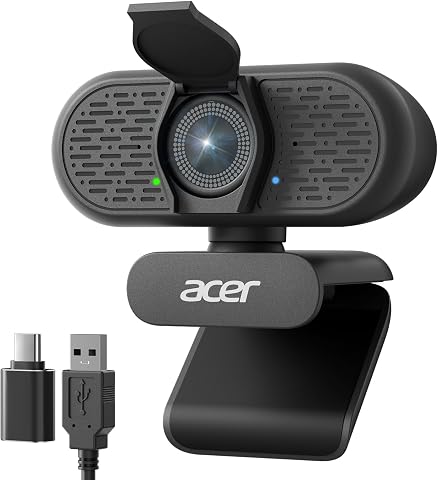 Acer A640 4K Webcam for PC with Sony Sensor, Autofocus, AI Noise Canceling Mi…View on Amazon →
 - 4
 EMEET C960 4K Webcam for PC with Auto Focus and Dual MicsView on Amazon →
 - 5
 EMEET NOVA 4K Webcam for PC – Ultra HD, Autofocus, Dual Mics, Privacy Cover,…View on Amazon →
 - 6
 Logitech MX Brio Ultra HD 4K Webcam for Collaboration and StreamingView on Amazon →
 - 7
 EMEET S600 4K Webcam for StreamingView on Amazon →
 - 8
 Logitech Brio 4K Webcam with HDR, Noise-Canceling Microphone, Windows Hello,…View on Amazon →
 - 9
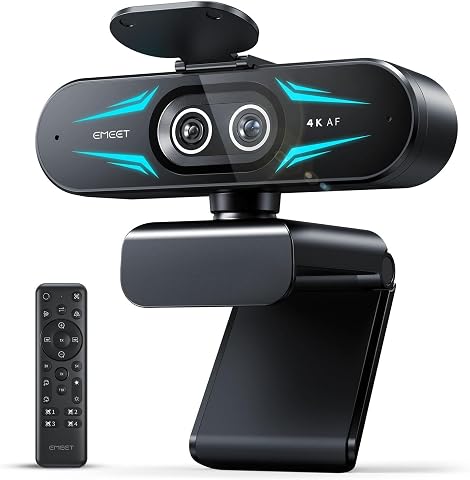 EMEET C60E Dual-Camera 4K Webcam for Streaming with 11X Zoom and RGB LightingView on Amazon →
 - 10
 EMEET PIXY Dual-Camera AI-Powered 4K PTZ Webcam with AI Tracking and Gesture…View on Amazon →
Impact of AI Features on Video Conferencing Quality
The integration of AI-driven features in webcams significantly enhances video quality, especially in challenging lighting conditions, and enables advanced functionalities like automatic framing and tracking. This improves user experience for remote work, virtual meetings, and content creation. As AI features become more common, they will likely influence platform compatibility and set new standards for professional video quality, making these webcams essential tools in 2026.
Evolution of Webcam Technology and AI Integration
Over the past few years, webcam technology has shifted from basic resolutions to advanced AI-powered systems. Early models focused on resolution, but recent developments emphasize sensor size, low-light performance, and AI features like tracking and gesture control. Brands like Logitech and EMEET have led this shift, with their models now offering sophisticated AI capabilities. The market is responding to increased demand for professional-quality video in remote work, streaming, and online education, prompting rapid innovation in this segment.
Unconfirmed Claims About Future AI Capabilities
While current models feature AI tracking and low-light improvements, it is not yet clear how much further AI integration will advance in the near future. Specific claims about fully autonomous framing, gesture recognition, or AI-driven editing in webcams remain speculative, with limited official details from manufacturers.
Upcoming Releases and Expected AI Enhancements
Manufacturers are expected to release new models in the coming months with enhanced AI capabilities, including more sophisticated tracking, gesture controls, and integration with video conferencing platforms. Industry analysts anticipate that AI features will become standard even in mid-range webcams, further driving innovation and competition in this segment.
Key Questions
Are AI-enhanced webcams worth the extra cost in 2026?
Yes, for users requiring precise framing, low-light performance, or content creation, AI features provide tangible benefits that justify higher prices. For basic video calls, mid-range models may suffice.
Will AI features improve platform compatibility?
Many manufacturers are optimizing AI features for compatibility with popular platforms like Zoom, Teams, and Google Meet, but full integration varies by model. Expect ongoing improvements in this area.
Is 4K resolution still necessary for professional use?
While 4K provides benefits for cropping and recording, most conferencing platforms compress video streams, reducing the practical need for native 4K. High-quality sensors and AI tracking often matter more than resolution alone.
What should I prioritize when choosing an AI webcam?
Focus on sensor size and low-light performance, AI tracking capabilities, frame rate options, and software support. Price should align with your specific needs, whether content creation or simple conferencing.
Source: ThorstenMeyerAI.com
Fall Picks
fall essentials
As an affiliate, we earn on qualifying purchases.