To fix room echo quickly, start by hanging thick soundproof curtains over windows and walls near your recording area. Add acoustic panels on reflection points like walls behind speakers or microphones to absorb sound. Combining both solutions creates a layered approach that controls echo and boosts clarity. Focus on strategic placement rather than covering the entire space. Keep these tips in mind, and you’ll discover even more effective ways to improve your audio quality.
Key Takeaways
- Use heavy, sound-absorbing curtains over windows and walls to reduce sound reflections and dampen echo.
- Install acoustic panels at reflection points near speakers or recording areas to absorb internal reverberations.
- Combine curtains and panels for layered soundproofing, addressing both external noise and internal echo.
- Focus on strategic placement of treatments rather than covering entire walls for effective echo reduction.
- Small adjustments, like hanging curtains or panels in key spots, can significantly improve audio clarity quickly.
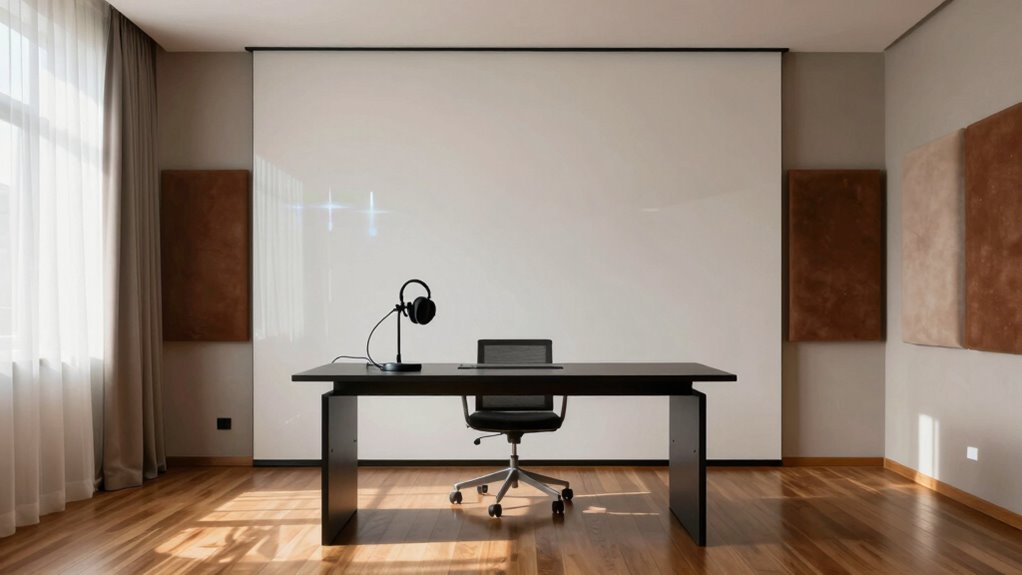
Are you tired of that annoying echo ruining your recordings or listening experience? Echoes can make your audio sound muddy, distant, or just plain unpleasant. Fortunately, fixing this problem doesn’t require a complete room overhaul. Small adjustments can make a big difference, especially when it comes to absorbing sound reflections. One of the simplest and most effective solutions is to add soundproof curtains. These heavy, dense curtains are designed to absorb sound waves, preventing them from bouncing around your space. Hanging soundproof curtains over windows, doorways, or even along walls can dramatically reduce echo. They’re easy to install, affordable, and can be moved or removed as needed, making them a versatile option for both recording studios and home theaters.
Alongside soundproof curtains, acoustic panels are your best friends for a more permanent fix. Acoustic panels are specially designed to absorb sound energy, reducing reverberations and flutter echoes within a room. They come in various sizes, shapes, and materials, so you can customize your setup based on your space and needs. Placing acoustic panels on walls where sound reflections are most prominent can markedly improve your room’s acoustics. They’re especially useful in spaces with hard surfaces like concrete or hardwood floors, which tend to bounce sound around. Installing acoustic panels is straightforward—adhesive-backed panels can be stuck directly to walls, or you can opt for frames if you prefer a more decorative look.
The combination of soundproof curtains and acoustic panels offers a layered approach to sound treatment. While curtains help block sound from entering or leaving your space, acoustic panels tackle the internal reflections that cause echo. You don’t need to fill your entire room with foam; strategic placement of these materials can be enough to make your audio clearer. For example, hanging soundproof curtains over windows and on walls where sound tends to bounce can be complemented with acoustic panels placed at reflection points—usually around your speakers or recording area. This setup creates a balanced environment that minimizes echo and improves sound quality.

VEVOR 2 Pcs Sound Dampening Blankets, Soundproof Curtains with 96 x 80 in, Soundproof Blanket with Grommets, Studio Grommeted Blanket, for Window, Door, Light Blocker, Music Recording, Black
Sound Absorption & Noise Reduction: Made with a polyester woven surface and recycled cotton filling, this 3-layer physical…
As an affiliate, we earn on qualifying purchases.
As an affiliate, we earn on qualifying purchases.
Frequently Asked Questions
Can I Fix Echo Without Professional Sound Treatment?
Yes, you can fix echo without professional sound treatment. Try DIY acoustic panels using household materials like foam or thick blankets to absorb sound. Place them strategically around your room, especially on walls and corners, to prevent echo. Use simple echo prevention tips like adding rugs, curtains, or furniture to reduce sound reflection. These quick fixes can markedly improve your audio quality without needing professional help.
How Long Does It Take to See Results?
You’ll see improvement within a few hours to a few days after making quick changes like adding soft furnishings or acoustic panels. The timing expectations depend on your room’s size and how much treatment you apply. Typically, you’ll notice reduced echo almost immediately, but full audio clarity may take up to a week. Stay consistent with your adjustments, and your improvement timeline will be quicker.
Will These Fixes Affect the Overall Sound Quality?
Did you know that proper acoustic treatment can improve sound quality by up to 50%? Yes, these fixes won’t harm your overall sound quality—in fact, they enhance it. By reducing unwanted echo and reflections, you create a clearer, more professional audio environment. So, implementing these quick changes helps maintain, or even boost, your sound quality while making your space sound more balanced and natural.
Are DIY Solutions as Effective as Professional Ones?
DIY solutions can be quite effective, especially if you’re willing to put in the effort and research. While they often save money, their effectiveness might not match professional solutions, which are designed with advanced techniques and materials. If you have a good understanding of acoustics, DIY effectiveness can be impressive, but for ideal, reliable results, a professional comparison is usually the better choice.
Can Room Echo Be Completely Eliminated?
You can substantially reduce room echo, but completely eliminating it is tough. Studies show that adding acoustic panels cuts echo by up to 80%. While soundproof curtains and acoustic panels greatly improve sound quality, achieving perfect silence is nearly impossible in every space. For the best results, combine these solutions and focus on reducing hard surfaces that bounce sound. Consistent adjustments make your audio clearer, even if total elimination remains elusive.

Focusound 52 Pack Acoustic Foam Panels 1" x 12" x 12" Sound Proof Foam Panles Soundproofing Noise Cancelling Wedge Panels for Home Office Recoding Studio with 300PCS Double-Side Adhesive
Soundproofing – Acoustic foam panels triangular grooves structure for better noise absorption, helps to reduce and absorb unwanted…
As an affiliate, we earn on qualifying purchases.
As an affiliate, we earn on qualifying purchases.
Conclusion
Now that you know how to tame room echo, don’t let it beat you. With a few quick tweaks, you can turn your space into a sound haven and keep your audio crystal clear. Remember, a little effort goes a long way—sometimes, it’s the small changes that make a big difference. So go ahead, put these tips into action, and finally get your sound just right. After all, a smooth voice is worth the extra mile.

Soon Global Acoustical Wall Panels, 6-Piece 23.62 X 23.62 Inches Art Acoustic Panels, Decorative Acoustic Panels, Acoustic Wall Panels, Sound Absorbing Wall Art, Arcadian Vortex
Superior Acoustic Performance–Crafted from high-density polyester fiber, these groove-patterned panels are engineered for superior sound absorption. The linear…
As an affiliate, we earn on qualifying purchases.
As an affiliate, we earn on qualifying purchases.

SoundAssured Acoustical Fabric – Acoustically Transparent Fabric for Making Acoustic Panels – DIY Sound Panel Acoustic Fabric (Black)
DIY acoustic panels made easy – Create professional-quality acoustic panels, bass traps, or acoustic walls for home studios,…
As an affiliate, we earn on qualifying purchases.
As an affiliate, we earn on qualifying purchases.