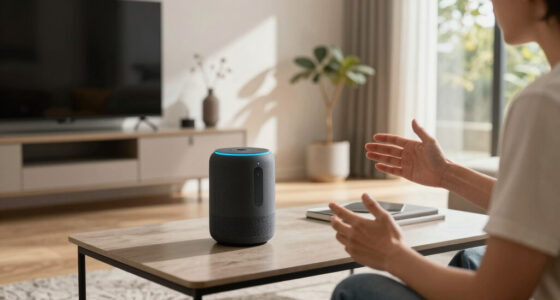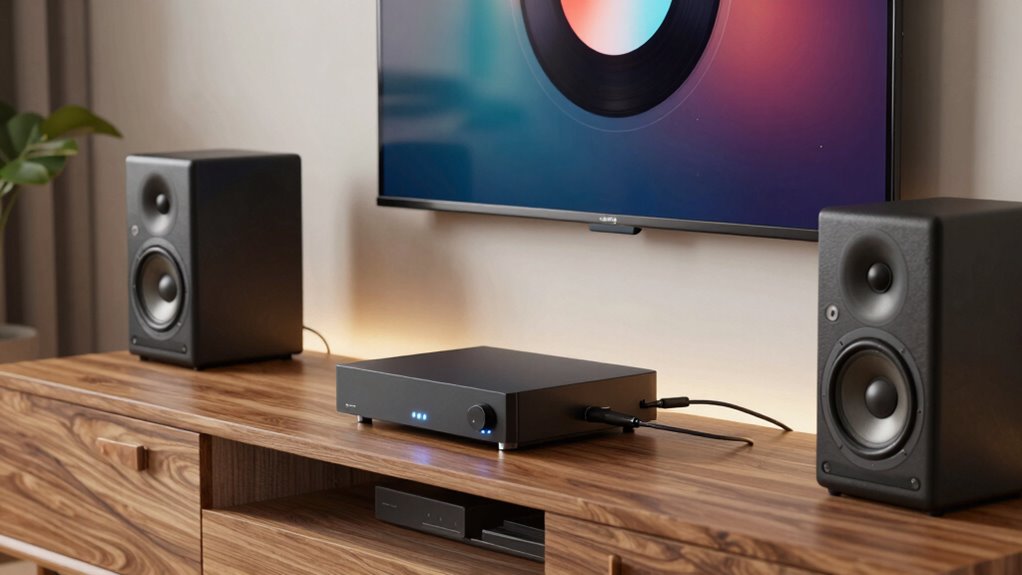

Network streamers are replacing old audio setups because they simplify access with seamless digital connectivity, eliminating the need for multiple components, wires, and physical media. With wireless options like Bluetooth and Wi-Fi, you can effortlessly stream high-quality music from your devices. They also support multi-room audio, ensuring synchronized playback across spaces, and deliver cleaner sound by transmitting digital signals directly to your DACs. To discover how these advancements can upgrade your listening experience, keep exploring what’s possible.
Key Takeaways
- They offer seamless digital access, eliminating the need for multiple traditional components and physical media.
- Wireless connectivity ensures easier streaming and reliable high-quality audio without complex wiring.
- Multi-room capabilities enable synchronized playback across different zones for immersive listening.
- Digital transmission maintains audio integrity, reduces noise, and supports high-resolution sound.
- Future-proof features and advanced DAC integration provide a more flexible, high-fidelity audio experience.
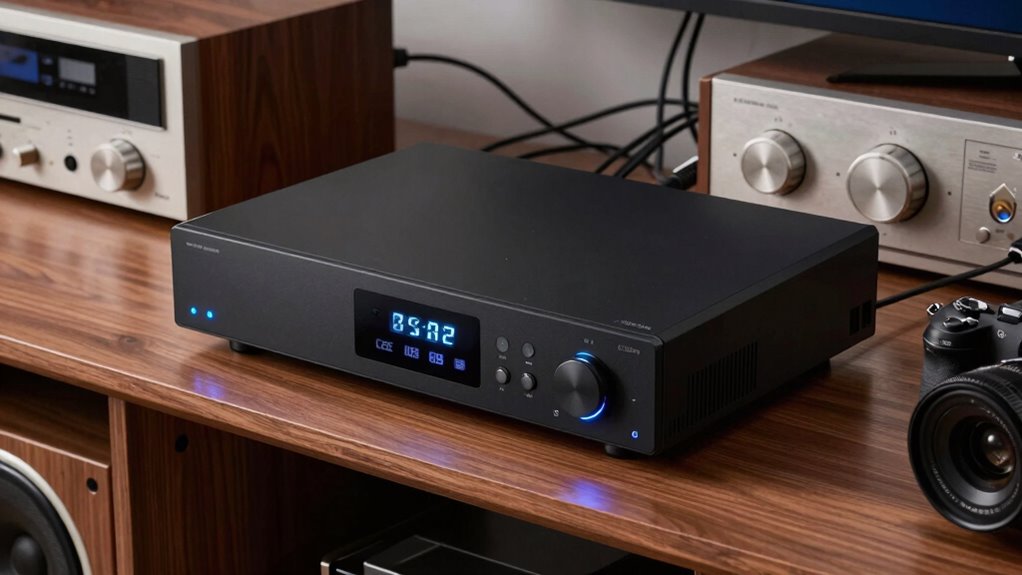
As technology advances, many audiophiles are recognizing that network streamers are now replacing traditional audio setups. These devices offer a level of convenience and sound quality that old stereos or CD players simply can’t match. Instead of fussing with multiple components, wires, and format limitations, you get seamless access to a vast universe of digital music via Wi-Fi or Ethernet. Network streamers connect directly to your home network, allowing you to stream high-resolution audio from services like Tidal, Qobuz, or your personal library without physical media. This shift means you no longer need to swap CDs or rely on radio signals; you have instant access to your favorite tracks with just a few taps on your smartphone or remote.
One of the key advantages of modern network streamers is their ability to leverage Bluetooth connectivity for quick, wireless pairing with smartphones, tablets, or computers. Bluetooth allows you to stream music effortlessly, making these devices incredibly versatile. You can start music on your mobile device and have it play through your high-quality system without plugging in cables. This wireless convenience is a significant upgrade from traditional setups, which often demanded wired connections and often limited flexibility. Plus, newer Bluetooth versions support higher quality audio, so you don’t have to sacrifice sound fidelity for convenience. Additionally, the integration of digital audio transmission ensures a more reliable and consistent listening experience. As the technology continues to evolve, many streamers now feature advanced compression algorithms that optimize sound quality over wireless connections.
Furthermore, many network streamers now incorporate multi-room audio capabilities, enabling synchronized playback across multiple speakers or zones within your home, enhancing the overall listening environment. This feature allows for a more immersive and customizable listening experience, especially in larger homes or multi-purpose spaces. When considering upgrading your setup, it’s important to understand the difference between analog and digital signals. Traditional audio systems rely heavily on analog connections, which can introduce noise or signal degradation over long cable runs. Digital signals, on the other hand, preserve the integrity of the audio data during transmission, resulting in cleaner sound quality. Network streamers excel at transmitting digital audio directly from the source to your DAC (Digital-to-Analog Converter), ensuring minimal loss and maximum fidelity. This digital pathway also enables features like gapless playback and detailed digital signal processing, which are difficult to achieve with analog setups. Additionally, digital transmission supports high-resolution audio, allowing you to experience music with greater detail and clarity. The ability of digital systems to support multiple streaming platforms further broadens your musical options and enhances your listening experience.
In essence, switching to a network streamer means embracing the future of audio technology. You get the convenience of wireless connectivity, the ability to access a broad range of digital content, and the potential for superior sound quality through digital transmission. The traditional analog versus digital debate leans heavily in favor of digital, especially when paired with high-quality DACs, which can extract remarkable detail from digital streams. As you consider replacing your old audio setup, it’s clear that network streamers offer a smarter, more flexible, and often better-sounding alternative.

Cambridge Audio MXN 10 – Compact Separate High Resolution WiFi Network Audio Player and Streamer Featuring Bluetooth 5.0, Internet Radio and ESS Sabre DAC – Lunar Grey
- StreamMagic Gen 4 Module: Fast music retrieval and high-quality sound
- ESS SABRE ES9033Q DAC: Enhanced streaming capabilities
- High-Quality Internet Radio: Supports MPEG-DASH
As an affiliate, we earn on qualifying purchases.
As an affiliate, we earn on qualifying purchases.
Frequently Asked Questions
How Do Network Streamers Connect to Existing Audio Systems?
You connect network streamers to your existing audio system using wireless connectivity, typically via Wi-Fi or Ethernet. They often feature multiple outputs to integrate seamlessly with your setup. With multi-room synchronization, you can control and stream music throughout your home from a single device. Just plug in, connect to your network, and enjoy seamless wireless streaming and synchronized audio across different rooms, enhancing your listening experience effortlessly.
Are Network Streamers Compatible With All Audio Formats?
No, network streamers aren’t compatible with all audio formats, but most support popular audio file formats like MP3, FLAC, and WAV. They also use various streaming protocols such as DLNA, AirPlay, or Spotify Connect, which help guarantee smooth playback. To avoid issues, check your streamer’s specifications and supported formats before purchasing, making certain it matches the audio files you want to play and the streaming protocols you prefer.
What Is the Cost Difference Between Traditional and Network Streaming Setups?
Think of traditional setups as a vintage car and network streamers as a sleek electric vehicle. Generally, traditional systems involve more hardware, making them pricier upfront, while network streamers lean on software, often reducing costs. The key difference is that digital components in streamers eliminate the need for extensive analog hardware, which can cut expenses over time. So, you might pay more initially for a traditional setup but save in the long run with a network streamer.
How Secure Are Network Streamers Against Hacking?
Network streamers are generally secure against hacking if you prioritize cybersecurity. They use data encryption to protect your music and data from unauthorized access. However, vulnerabilities can still exist if your network isn’t secure, so it’s essential to update firmware regularly and use strong passwords. Being proactive about cybersecurity concerns helps guarantee your streaming setup remains safe, giving you peace of mind while enjoying your music.
Do Network Streamers Require Regular Software Updates?
Yes, network streamers require regular software updates to guarantee firmware stability and improve user interface features. Updating your device helps fix bugs, enhance security, and add new functionalities. You should regularly check for updates through the device’s menu or app, and follow the manufacturer’s instructions. Staying current with firmware updates keeps your network streamer running smoothly, providing a better listening experience and protecting your setup from potential vulnerabilities.
Conclusion
Switching to network streamers can revolutionize your audio setup, offering convenience, higher quality, and seamless integration. Imagine upgrading from a traditional CD player to a network streamer and enjoying instant access to your entire music library through a single app. For example, a home audiophile replaced their vintage gear with a network streamer, experiencing richer sound and effortless control. Embracing this technology not only modernizes your system but elevates your listening experience to new heights.