
Open-back headphones give you a more natural and spacious soundstage because sound passes freely in and out, making music feel more open and realistic. Closed-back headphones trap sound inside, providing a controlled, immersive experience with deeper bass and better noise isolation, but they lack the airy feel. Your choice depends on whether you prefer a natural sound environment or privacy and noise reduction. Keep exploring to discover how each option can elevate your listening game.
Key Takeaways
- Open-back headphones create a more natural, spacious soundstage by allowing sound to pass freely in and out.
- Closed-back headphones offer a more controlled, immersive sound with deeper bass, but a less expansive soundstage.
- Open-backs enhance sound realism and airiness, ideal for accurate listening in quiet environments.
- Closed-backs focus on noise isolation, which can slightly limit the perceived soundstage but improve privacy.
- The choice between open and closed-backs impacts the perceived depth, width, and authenticity of the soundstage.
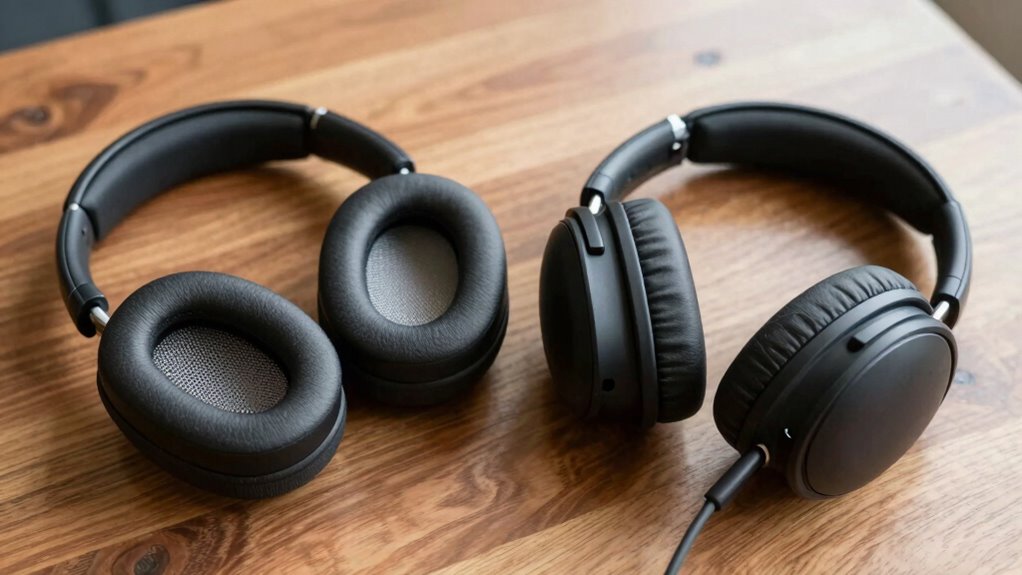
Are you trying to decide between open-back and closed-back headphones? Understanding the differences in sound characteristics can help you make the right choice. One key aspect to contemplate is sound leakage and noise isolation. Open-back headphones are designed with perforated ear cups or grills that allow air and sound to pass through. This design creates a more natural, spacious soundstage because the sound can move freely in and out. However, because sound escapes easily, you’ll notice significant sound leakage, which means people nearby might hear what you’re listening to. Conversely, closed-back headphones feature sealed ear cups that block external sounds and trap audio inside. This setup delivers superior noise isolation, making them ideal for environments where you need to focus or keep sound from disturbing others.
Open-back headphones offer a spacious sound but leak sound; closed-back provide better noise isolation and privacy.
If you’re in a noisy setting, closed-back headphones are your best bet. They help you drown out background noise, allowing you to enjoy your music or calls without distraction. The sealed design minimizes sound leakage, so your audio stays private and doesn’t bother those around you. Open-backs, on the other hand, excel in quieter environments or when you’re seeking a more authentic listening experience. Because they don’t block out external sounds, they allow you to hear your surroundings more naturally, which is great for casual listening or in studio settings where accurate sound reproduction is vital. But be mindful—if you’re in a shared space, your open-back headphones might leak sound, causing disturbance or revealing your audio to others nearby.
The difference in sound leakage and noise isolation also impacts your overall listening experience. Open-back headphones tend to offer a more spacious, airy sound, making them popular among audiophiles and professionals who want a true-to-life soundstage. Closed-backs, however, often provide deeper bass and more controlled sound, which can be advantageous for tracking or mixing in studio environments, or simply enjoying a more immersive experience in a quiet room. Additionally, sound fidelity can be affected by the design, with open-backs typically providing a more natural and detailed sound profile. While open-backs might seem tempting for their natural sound, their lack of noise isolation makes them less practical in noisy or public settings. Closed-backs, with their effective noise blocking, give you privacy and focus, though at the slight expense of a less open soundstage.
Choosing between the two ultimately depends on your priorities: do you want a rich, natural sound with some sound leakage, or do you prefer maximum noise isolation and privacy? Both styles have their strengths, but understanding how sound leakage and noise isolation influence your listening environment will help you pick the right pair for your needs.
Frequently Asked Questions
How Do Open-Back Headphones Impact Outdoor Listening Experiences?
Open-back headphones aren’t ideal for outdoor listening because ambient noise easily seeps in, making it harder to focus. Plus, they cause sound leakage, so people nearby might hear your music. You’ll find it challenging to enjoy your audio privately outside. If you want to listen without disturbance or bothering others, closed-back headphones are a better choice, as they block out ambient noise and minimize sound leakage.
Can Closed-Back Headphones Be as Comfortable as Open-Back Ones?
Yes, closed-back headphones can be just as comfortable as open-back ones if they have soft ear cushion comfort and an adjustable headband to reduce pressure. Look for models with plush padding that doesn’t squeeze too tightly, and make certain the headband is lightweight and flexible. Proper fit is key—when these elements are well-designed, you’ll enjoy extended listening sessions without discomfort.
Are There Specific Genres of Music Better Suited for Open-Back Headphones?
Think of open-back headphones as the window to your music. They excel with genres like classical, jazz, and acoustic because they deliver a spacious soundstage and superior sound quality. Your genre preferences matter because open-backs provide clarity and natural acoustics that bring out subtle details. If you crave immersive, realistic sound, these headphones suit genres where sound quality and a wide soundstage are top priorities.
How Do Durability and Maintenance Differ Between Open- and Closed-Back Designs?
Open-back headphones typically have less durability because their materials aren’t built for rugged use, requiring more careful handling and regular cleaning to maintain longevity. Closed-back designs usually feature sturdier materials, making them more durable and easier to clean, with fewer maintenance needs. You should regularly wipe down your headphones and check for wear, especially on the ear pads and headband, to guarantee they stay in good condition longer.
What Are the Best Use Cases for Hybrid or Semi-Open Headphones?
Ever wonder when hybrid or semi-open headphones are your best choice? They excel in aesthetic versatility, offering a blend of open and closed designs that suit various styles. Use them in environments where you want decent noise isolation but still appreciate a natural, immersive soundstage. They’re perfect for casual listening, studio work, or outdoor activities where you need a balance between sound quality and comfort without sacrificing style.
Conclusion
Choosing between open-back and closed-back headphones depends on what you prioritize. If you crave a spacious soundstage like Alex, who uses open-backs for mixing, you’ll appreciate their expansive audio. But if privacy and noise isolation matter more, closed-backs like Jamie’s are better suited. Ultimately, test both types to see which fits your style. Remember, your perfect sound experience is just a choice away — it’s all about what feels right for you.