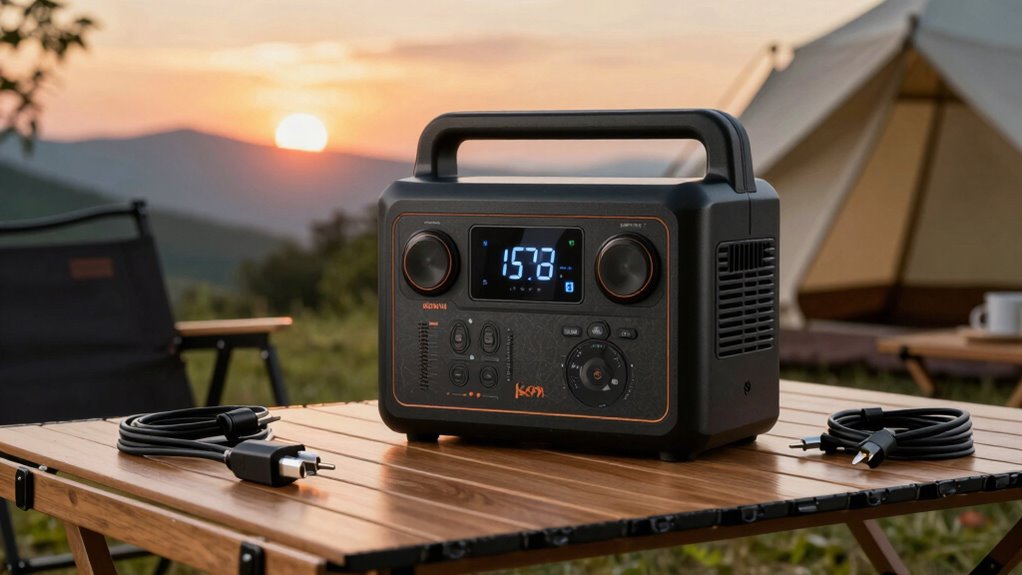

Watt-hours tell you how much energy a portable power station can store and deliver, directly impacting how long your devices can stay powered before needing a recharge. The higher the watt-hours, the longer you’ll be able to run your gadgets, but it also means a heavier and less portable unit. Balancing capacity, recharge time, and portability is key. If you’re curious about making the right choice, you’ll discover more about what watt-hours really mean.
Listen free for 30 days with Audible
Thousands of audiobooks and originals — cancel anytime.
As an affiliate, we earn on qualifying purchases.
Key Takeaways
- Watt-hours measure the total energy capacity of a power station’s battery, indicating how long it can power devices.
- Higher watt-hours generally mean longer runtime but may affect portability and weight.
- Watt-hours alone don’t determine suitability; consider recharging speed and power output for your needs.
- Understanding watt-hours helps estimate how many devices and for how long they can be powered.
- Balancing watt-hour capacity with recharging method and portability ensures the best choice for your use case.

Have you ever been caught without power when you needed it most? It’s frustrating, especially when you’re trying to keep your devices running during an outage or while off-grid. That’s where portable power stations come in. But before you buy one, it’s crucial to understand what “watt-hours” really mean, so you can select the right model for your needs. The term “watt-hours” (Wh) indicates the amount of energy a power station can store and deliver over time. Essentially, it’s a measure of the total capacity of the battery inside the station. The higher the watt-hours, the longer your devices can run before needing a recharge. However, watt-hours alone don’t tell the whole story; you also need to think about battery capacity and how quickly the station can recharge.
Battery capacity is a key factor because it directly affects how long your devices can stay powered. Think of it as the fuel tank in your car—more capacity means you can go farther without refueling. If you plan to run larger appliances or multiple devices simultaneously, you’ll want a station with a higher watt-hour rating. Conversely, for charging phones, tablets, or small gadgets, a lower capacity might suffice. But keep in mind, larger capacity units tend to be heavier and bulkier, so portability is also a consideration.
Charging times are equally important when evaluating portable power stations. After all, a station with a massive battery won’t be useful if it takes hours to recharge. Different units have different charging speeds, often influenced by their input power and technology. Some stations can be recharged via AC outlets in a few hours, while others may take longer, especially if you’re using solar panels or other alternative methods. If you expect to rely on your power station regularly, quick charging times become a significant advantage, ensuring your station is ready when you need it.
Ultimately, understanding what watt-hours mean helps you gauge how long your devices can run and how practical the power station will be for your specific needs. You need to balance battery capacity with charging times, portability, and power output to find the right fit. A higher watt-hour capacity isn’t always better if it means sacrificing portability or if it takes too long to recharge. By considering these factors, you can choose a portable power station that keeps your devices powered when it matters most, without surprises or inconvenience.
portable power station 500 watt-hours
As an affiliate, we earn on qualifying purchases.
As an affiliate, we earn on qualifying purchases.
Frequently Asked Questions
How Long Can a Portable Power Station Run Specific Devices?
You can run your specific devices for hours, depending on the portable power station’s watt-hours capacity, solar compatibility, and your device’s power draw. Higher watt-hours mean longer usage. For example, a 500Wh station can power a phone or small appliance for several hours. Keep in mind, frequent use and charging cycles impact battery lifespan, so choosing a station with good battery health ensures longer-lasting performance.
What Factors Affect the True Capacity of Watt-Hours?
Did you know that battery chemistry can reduce a power station’s true capacity by up to 20%? This means the advertised watt-hours often overstate actual usage. Factors like power management also play a role, as inefficient systems drain more energy than necessary. You should consider both when evaluating a portable power station, ensuring you get the most accurate representation of its real-world capacity and how long it can power your devices.
Are Watt-Hour Ratings Consistent Across Different Brands?
Watt-hour ratings aren’t always consistent across brands because different brands may use varying battery chemistries that affect capacity. When you compare brands, look beyond the label and consider their battery chemistry and how they test capacity. Some brands might overstate watt-hours, so doing a brand comparison helps make certain you get a reliable power station. Always check reviews and specifications to make an informed choice that suits your needs.
How Does Temperature Impact Power Station Performance?
Did you know that extreme temperatures can decrease a power station’s battery efficiency by up to 50%? Temperature effects considerably impact performance; high heat accelerates battery degradation, while cold reduces capacity. When you operate in extreme conditions, your device may not deliver its rated watt-hours. To guarantee ideal performance, keep your portable power station within its recommended temperature range, and avoid exposing it to extreme heat or cold for prolonged periods.
Can Watt-Hour Capacity Determine Charging Speed?
Watt-hour capacity doesn’t directly determine charging speed, but it influences your battery life and how long your power station lasts. Larger capacity means more energy, but it might take longer to recharge due to lower energy density. Your charging speed depends on the charger’s wattage, not just the watt-hour capacity. So, a smaller capacity with a powerful charger can recharge faster than a larger one with a weaker charger.
Conclusion
Now, armed with a clear understanding of watt-hours, you’re better prepared to choose a portable power station that truly powers your adventures. Think of it as your personal Excalibur—trust it to strike the right balance between capacity and portability. Don’t let confusion drain your excitement; instead, let knowledge be your compass, guiding you to the perfect energy source. After all, with the right watt-hour rating, you’re ready to conquer any journey ahead.
NFL season / tailgating Picks
team gear
As an affiliate, we earn on qualifying purchases.