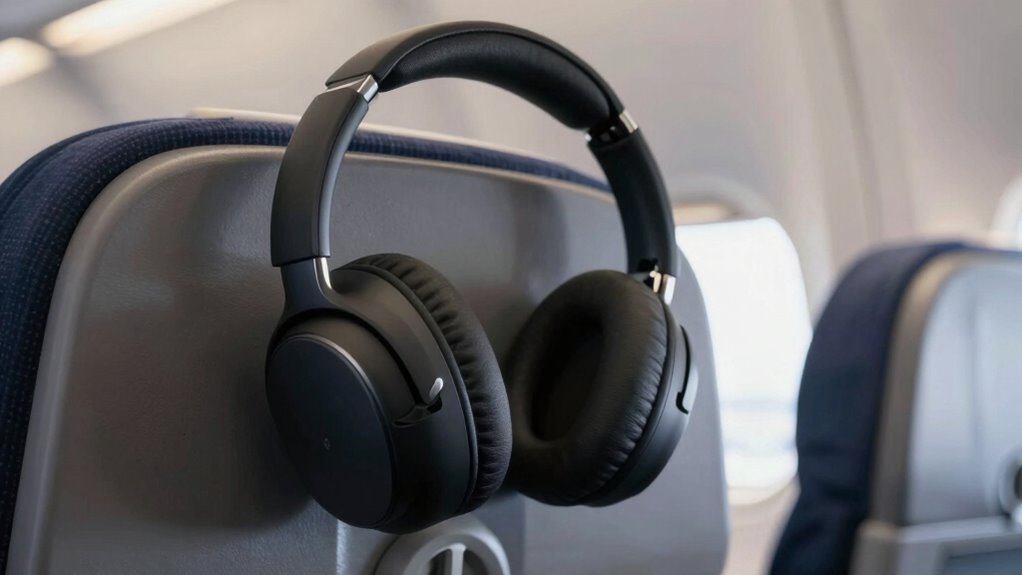

Active Noise Cancelling (ANC) acts like a superpower on flights by continuously analyzing ambient sounds with tiny microphones and then generating sound waves that cancel out those noises. This process creates a quiet bubble around your ears, making engine hums, chatter, and ambient noise seem almost nonexistent. The technology adjusts instantly to changing sounds, giving you a calmer, more immersive experience. Want to discover how this fascinating technology works behind the scenes? Keep exploring to find out.
Key Takeaways
- ANC creates a superpower-like quiet by actively canceling out ambient noise, especially effective during flights.
- Microphones detect external sounds, and headphones produce sound waves that destructively interfere with noise.
- The technology continuously adapts to changing noise environments, maintaining consistent noise reduction.
- Combining passive insulation with active cancellation maximizes noise blocking, making the experience feel almost magical.
- ANC transforms noisy flight cabins into peaceful environments, enhancing comfort, focus, and audio clarity.

Noise cancelling is a technology that actively reduces unwanted sounds, allowing you to enjoy your music or focus without distractions. When it comes to understanding how it works, it’s helpful to compare passive versus active noise cancelling. Passive noise cancelling relies on physical barriers like ear cups and ear tips to block out sound. Think of it as a form of sound insulation—simply using thicker material or snug-fitting ear cushions to muffle ambient noise. Active noise cancelling (ANC), on the other hand, uses advanced technology in headphones to combat external sounds more effectively. It employs microphones to pick up ambient noise, then generates sound waves that are the exact opposite (destructive interference) to cancel out those sounds. This active process makes ANC feel like a superpower, especially on flights where engine noise and chatter can be overwhelming.
You’ll find that passive and active noise cancelling often work together in modern headphones. While passive elements provide a basic level of sound reduction, active technology takes it a step further to create a quieter listening environment. This synergy is what makes ANC so impressive—it’s not just about muffling sound but actively fighting noise in real time. When you wear noise-canceling headphones with ANC, you don’t just block out noise passively; you engage a sophisticated electronic system that constantly adjusts to your environment. This is why ANC feels so effective and seamless, especially during flights where engine hums and cabin noise are persistent. You’ll notice that even with the engine running, your music remains clear, and your focus stays intact.
The technology in headphones has come a long way, making ANC more accessible and more efficient than ever. It’s embedded into the design, utilizing tiny microphones and powerful processors to analyze and counter external sounds instantly. You may not realize it, but this active process is what makes noise cancelling feel like a superpower. Unlike passive noise cancelling, which is limited to physical barriers, ANC actively analyzes sounds and cancels them out before they reach your ears. This dynamic process results in a much quieter experience, especially when flying long distances or working in noisy environments. European cloud innovation has also contributed significantly to the development of advanced audio technology, pushing the boundaries of what noise cancelling can achieve. When you understand the distinction between passive versus active, you appreciate how technology in headphones has evolved. It’s this innovation that transforms your listening experience, making it more immersive and less susceptible to the chaos around you.
noise cancelling headphones for flights
As an affiliate, we earn on qualifying purchases.
As an affiliate, we earn on qualifying purchases.
Frequently Asked Questions
How Does Active Noise Cancellation Differ From Passive Noise Isolation?
Active noise cancellation uses soundproofing techniques by generating sound waves that cancel out background noise, providing noise reduction methods that adapt to your environment. Passive noise isolation, on the other hand, relies on physical barriers like ear cups or ear plugs to block sound. You’ll find ANC offers dynamic noise reduction, ideal for unpredictable sounds, while passive methods provide straightforward soundproofing, perfect for consistent noise environments.
Can ANC Headphones Block Out All Types of Noise Effectively?
Like a superhero with a secret weapon, ANC headphones can block out most environmental noise, but they don’t eliminate all sounds completely. They excel at reducing low-frequency sounds, like engine noise, providing significant sound attenuation. However, high-frequency noises, such as sirens or sharp voices, may still seep through. So, while ANC offers impressive noise reduction, it won’t totally cancel out every type of noise, especially sudden or unpredictable sounds.
Do ANC Headphones Work Equally Well for All Frequencies of Sound?
ANC headphones don’t work equally well across all sound frequencies. They typically excel at blocking out low to mid-range frequencies like engine noise or hums, thanks to their sound frequency response. However, their effectiveness depends heavily on your headphone fit — a snug, proper fit guarantees the noise-canceling microphones can pick up ambient sounds accurately. High-frequency sounds, like speech or high-pitched noises, might still be heard.
Are There Any Health Risks Associated With Long-Term Use of ANC Headphones?
You might worry about long-term use of ANC headphones affecting your health, but current evidence suggests minimal risks. However, prolonged exposure could contribute to long-term hearing issues or mental fatigue due to constant sound filtering. As you often wear them during travel or work, take breaks to safeguard your hearing and mental well-being. Being mindful helps ensure you enjoy the benefits without unintended health consequences.
How Do ANC Headphones Affect Audio Quality and Sound Perception?
ANC headphones can slightly affect sound clarity and audio fidelity, but quality models minimize this impact. You might notice a subtle decrease in high-frequency detail or a slight change in sound staging. However, many headphones are engineered to preserve audio quality while reducing ambient noise, so your listening experience remains immersive. To get the best sound, choose headphones with advanced noise cancellation tech designed to maintain sound clarity.
Conclusion
Now that you know how noise cancelling works, you’ll appreciate why it feels like a superpower on flights. Did you know that active noise cancelling headphones can reduce ambient noise by up to 30 decibels? That’s equivalent to cutting out the roar of an airplane engine! With this technology, you can enjoy a peaceful, immersive experience even in the loudest environments. So next time you fly, embrace the power of ANC and travel in unmatched comfort.