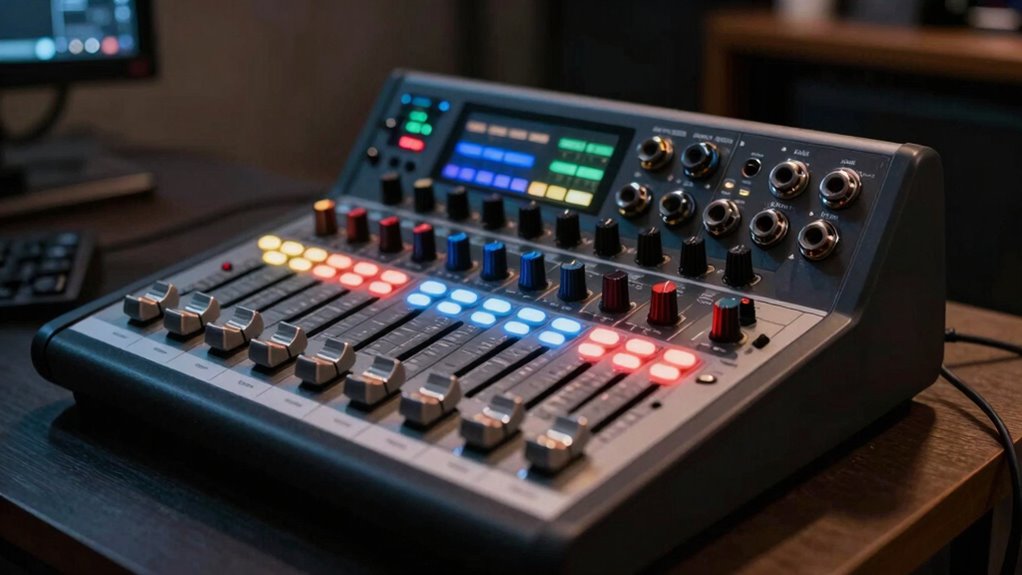

Choosing between a mixer and an audio interface mainly depends on how you prioritize signal routing. Mixers offer straightforward, physical controls for quick adjustments and flexible routing, ideal for live performance or complex setups. Audio interfaces typically rely on software for routing, providing precise control suited for studio recording. Your decision hinges on whether you need immediate, tactile routing and control or software-based precision through your workflow. Keep exploring to discover which option fits your needs best.
Key Takeaways
- Mixers excel in straightforward, physical signal routing suitable for live settings, while interfaces route primarily through software for detailed control.
- Analog mixers offer tactile routing with immediate adjustments; digital mixers provide complex, programmable routing options.
- Audio interfaces generally support fixed I/O configurations, whereas mixers offer flexible routing for multiple sources and outputs.
- Mixers are optimized for real-time, hands-on control, while interfaces focus on precise, multi-track recording and editing.
- The routing flexibility of a device directly impacts workflow efficiency and suitability for live performance or studio production.
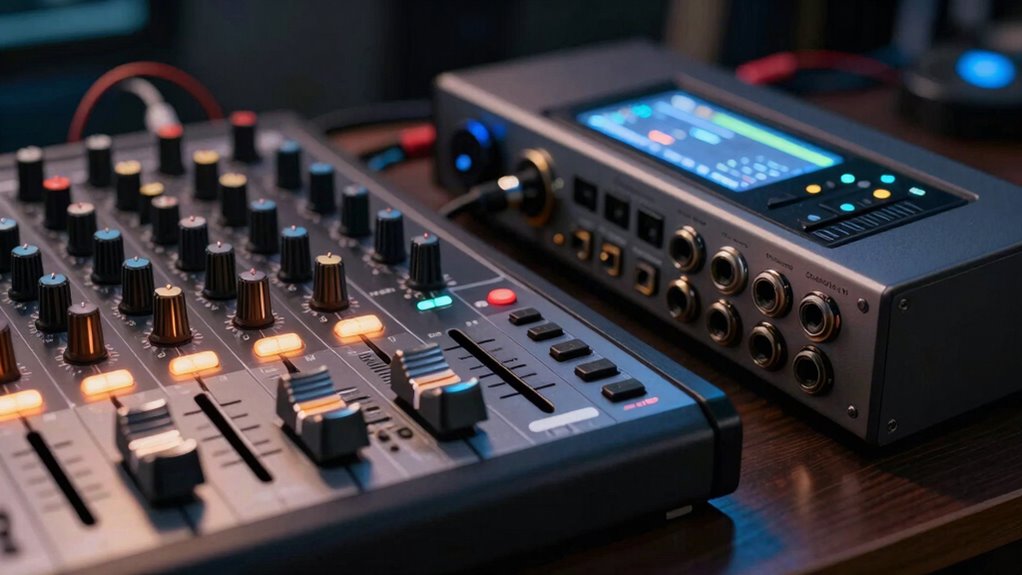
Have you ever wondered whether a mixer or an interface is the better choice for routing your audio signals? It’s a common question, and the answer hinges on understanding their fundamental differences and how they align with your needs. One key factor to contemplate is the debate of analog vs. digital. Mixers, especially analog models, provide a tactile, intuitive experience with physical knobs and faders, giving you immediate control over your sound in real-time. They excel in live settings and situations where hands-on manipulation is essential, offering a warm, natural sound quality that many find appealing. Digital mixers, on the other hand, bring a different set of advantages—they often include advanced processing features, recallability, and integration with other digital tools. This digital domain allows for more complex routing, effects, and editing, but can sometimes feel less immediate compared to the tactile feedback of analog gear.
Another vital aspect is port flexibility, which can make or break your setup depending on your workflow. Mixers generally offer multiple input and output channels, with some models providing dedicated inserts, auxiliary sends, and subgrouping options. This makes them highly adaptable in live environments, where quick adjustments are necessary. In contrast, audio interfaces are designed primarily for studio use, offering a specific number of inputs and outputs that are often optimized for recording and production tasks. While some interfaces now include multiple outputs and MIDI connectivity, they tend to be less flexible in routing than mixers. If you need to connect several instruments, microphones, and external effects simultaneously, a mixer’s port flexibility makes it easier to manage complex setups with fewer limitations. Additionally, understanding the differences in signal routing capabilities can help you determine which device better suits your workflow. Incorporating digital connectivity options can further enhance the versatility of your setup, especially when integrating with other digital tools. Recognizing the core functionalities of each device can help you make a more informed decision based on your specific needs. Knowing about signal processing options can also influence your choice, as some mixers and interfaces offer different levels of built-in effects and editing features. Furthermore, considering the ease of use in setup and operation can be crucial for those who need quick, reliable performance under pressure.
Your choice also depends on whether you’re prioritizing real-time control or detailed recording. Mixers shine when you need to tweak levels on the fly, mix multiple sources, or handle live performances. Interfaces are better suited for capturing high-quality recordings, with precise control over individual tracks and near-zero latency. Routing in mixers is straightforward, with dedicated channels and physical controls, while interfaces often require routing through software, which can introduce complexity but also offers precise automation and editing.
Ultimately, your decision hinges on your specific application—if you value hands-on control, analog vs. digital considerations, and port flexibility, a mixer might be your best bet. If your focus is on detailed, high-quality recording, an interface offers the clarity and flexibility you need. Understanding these differences helps you choose the right tool to streamline your workflow and achieve the best sound possible.

Professional 4-Channel DJ Audio Mixer, Bluetooth Sound Board with USB MP3 Input & 48V Phantom Power for Karaoke Podcasting Live Streaming Home Recording Guitar Bass Keyboard
- Multiple Input Options: USB, XLR, 6.35mm jack, +48V phantom power
- Bluetooth Wireless Streaming: Stream music wirelessly from devices
- Compact and Portable Design: Small size ideal for mobile use
As an affiliate, we earn on qualifying purchases.
As an affiliate, we earn on qualifying purchases.
Frequently Asked Questions
How Do Mixers and Interfaces Differ in Audio Quality?
You’ll notice that mixers often provide warm, analog sound, especially if they have high-quality preamps, enhancing audio quality. Interfaces, on the other hand, tend to deliver cleaner, more precise digital audio. Your choice depends on whether you prefer the character of analog versus the clarity of digital. High-end mixers with superior preamp quality can rival interfaces, but generally, interfaces offer more consistent, transparent sound with less coloration.
Can a Mixer Replace a Dedicated Audio Interface?
Think of a mixer as a Swiss Army knife—versatile but not specialized. While it can handle basic audio routing, it’s not a true replacement for a dedicated digital interface. Analog mixers excel in hardware simplicity, but digital interfaces offer pristine sound quality and advanced software integration. For professional recording, a dedicated interface outperforms a mixer, especially when clarity and detailed control matter. You can’t fully replace a specialized tool with a multi-purpose one.
What Are the Cost Differences Between Mixers and Interfaces?
The cost comparison between mixers and interfaces varies widely. Generally, interfaces are more budget-friendly, especially entry-level models, offering essential features at lower prices. Mixers tend to be more expensive, especially larger or more advanced models with multiple channels and effects. When considering budget, think about your needs carefully; a basic interface might save money, while a mixer could be a worthwhile investment for more complex routing and live sound needs.
Which Setup Is More Portable for Live Recording?
For live recording, a compact interface is more portable because it’s smaller and easier to carry around. It typically offers a lightweight design, making it ideal for on-the-go setups. Mixers, while versatile, tend to be bulkier and less convenient to transport. If you need portable power and a compact design, an interface lets you quickly set up and record without sacrificing quality, perfect for live environments.
How Do I Choose Based on My Recording Needs?
Imagine your recording space as a canvas—your room acoustics and microphone placement shape the final picture. If you need flexibility for multiple sources and live sound, a mixer helps you control everything easily. For focused, high-quality recordings, an interface with precise microphone placement is key. Assess your room’s acoustics and your need for real-time adjustments. Choose based on how much control and clarity your recordings demand.
Conclusion
Ultimately, choosing between mixers and interfaces hinges on your routing needs. Did you know that over 60% of professionals prefer interfaces for their flexibility in compact setups? This shows how essential routing options are in shaping your workflow. By understanding your specific requirements, you can make a smarter decision that streamlines your process and boosts your creativity. So, weigh your options carefully—you might find that the right routing tool truly transforms your sound.