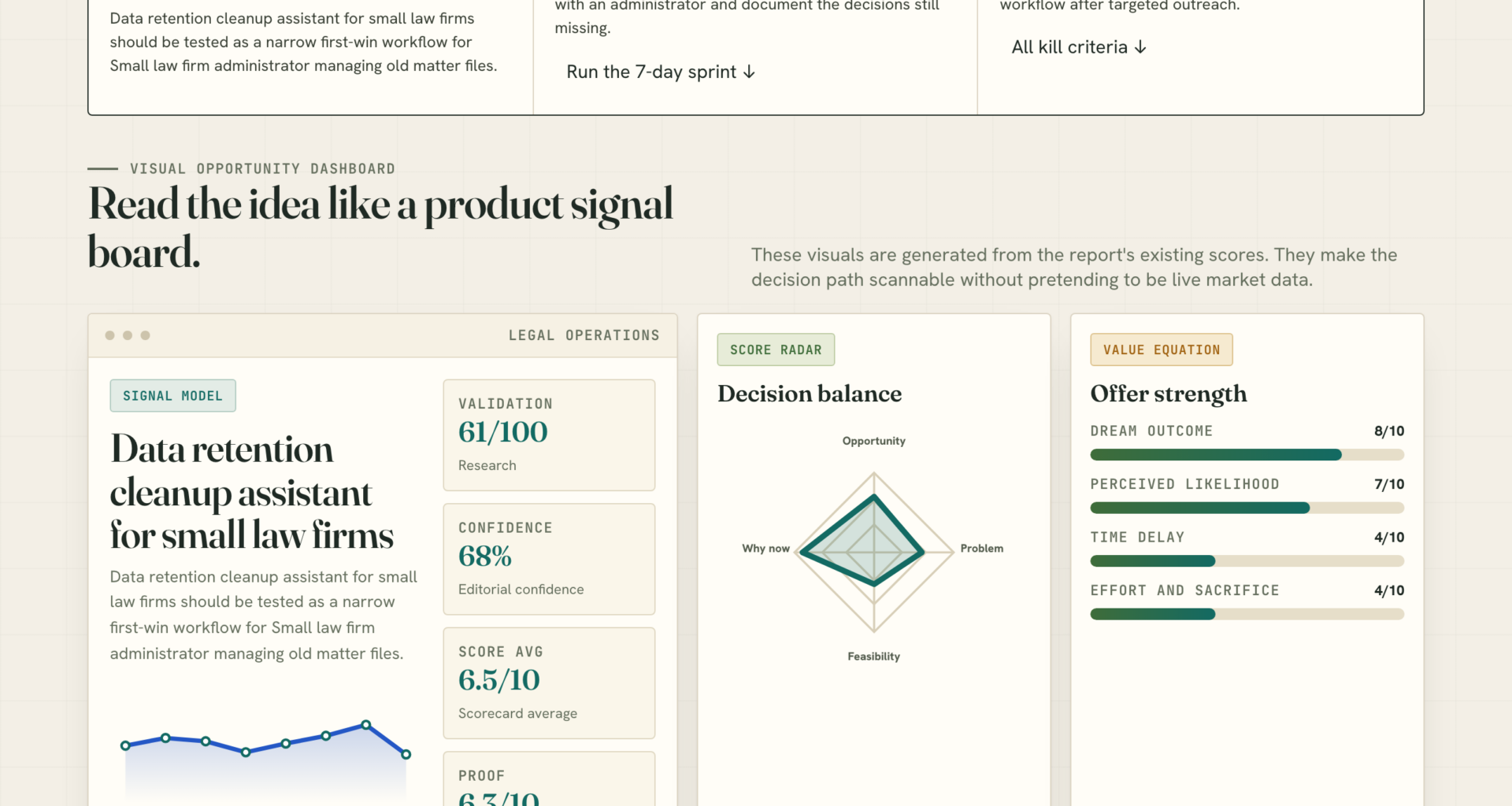

📊 Full opportunity report: Data retention cleanup assistant for small law firms on IdeaNavigator AI — validation score, market gap, and execution plan.
Listen free for 30 days with Audible
Thousands of audiobooks and originals — cancel anytime.
Start your free trialAs an affiliate, we earn on qualifying purchases.
TL;DR
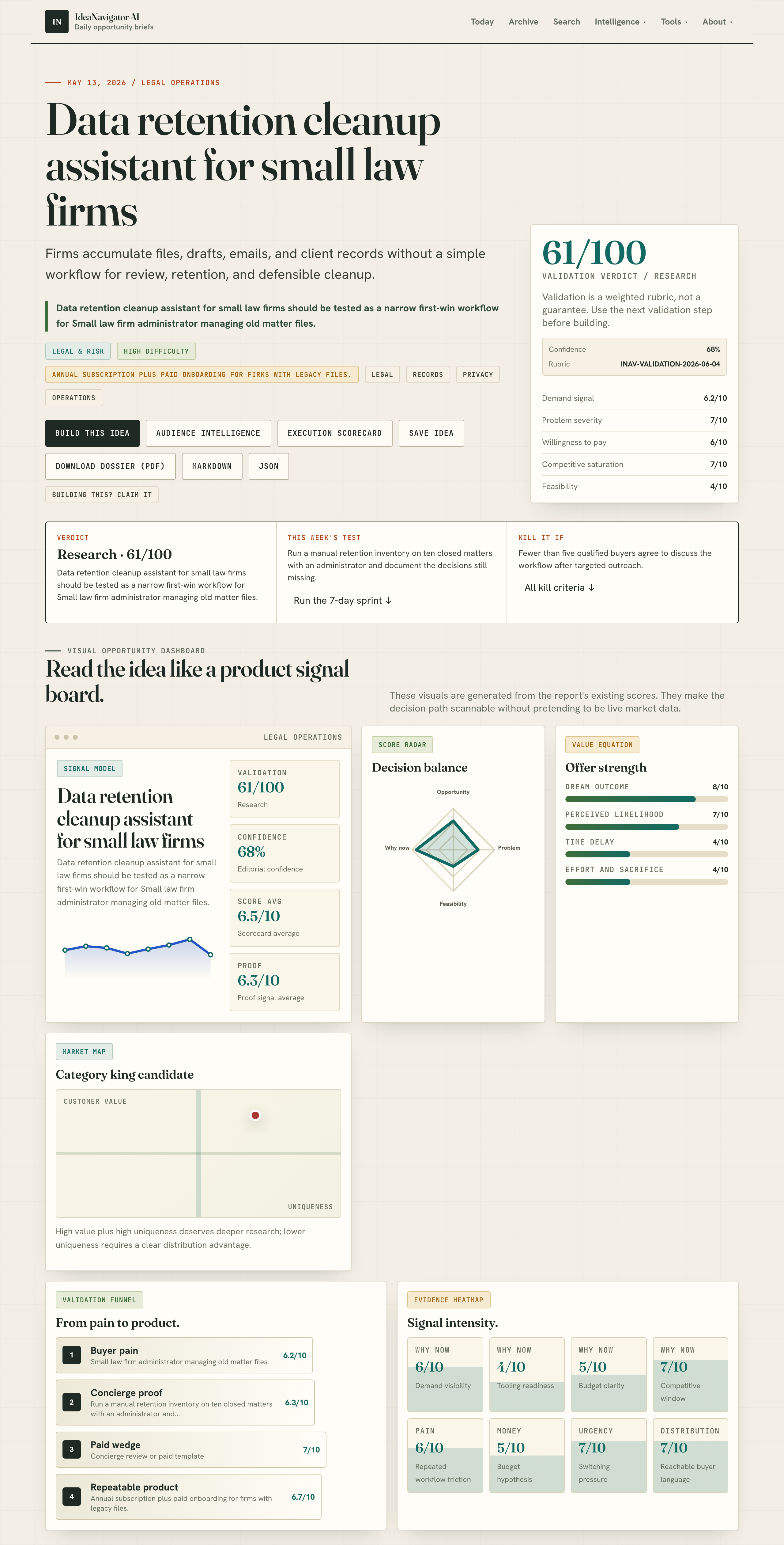
A new data retention cleanup assistant is under testing for small law firms, focusing on streamlining review workflows for legacy files. This innovation addresses a key operational challenge for digitizing firms. The testing phase involves evaluating a matter-file review queue with real law firm administrators.
A new data retention cleanup assistant tailored for small law firms is entering a testing phase, aiming to improve the review and management of legacy matter files. This development responds to a widespread challenge faced by small firms digitizing records faster than they update cleanup procedures, potentially streamlining operational workflows and ensuring compliance.
The assistant is designed as a matter-file review queue that labels files based on age, ownership, retention status, and missing decisions. It also generates exportable cleanup notes, providing a structured workflow for firms managing large volumes of old documents and emails.
According to sources familiar with the project, the initial testing involves manually conducting retention inventories on ten closed matters with a law firm administrator. The goal is to validate the tool’s effectiveness in identifying files that require review and decision-making, helping firms maintain defensible data management practices.
The product is intended to be offered through an annual subscription model, with additional paid onboarding services for firms with significant legacy data. The market focus is legal operations, specifically targeting small firms that lack dedicated compliance or data management teams.
Why Small Firms Need Automated Data Cleanup
This tool could significantly reduce the administrative burden on small law firms by providing a simple, repeatable workflow for reviewing old matter files. As firms digitize records rapidly, many struggle to keep their data organized and compliant with retention policies. Automating this process can improve operational efficiency, reduce legal risk, and ensure defensible data management practices.
Moreover, the initiative reflects a broader trend in legal operations toward automation and smarter data handling, especially among small firms lacking extensive resources for manual review processes. If successful, it could set a precedent for further automation solutions tailored to small legal practices.
legal document management software
As an affiliate, we earn on qualifying purchases.
As an affiliate, we earn on qualifying purchases.
Operational Challenges in Small Law Firm Data Management
Many small law firms have accumulated extensive digital records, including files, drafts, emails, and client documents, over years of practice. While digitization has increased access and storage capacity, it has also created new challenges in managing and retaining data according to legal and ethical standards.
Current workflows often lack a straightforward process for reviewing, updating, and securely disposing of outdated or unnecessary files. This gap can lead to legal risks, inefficiencies, and compliance issues, especially as firms face increasing pressure to demonstrate defensible data retention practices.
The upcoming testing of the data retention cleanup assistant aims to address these operational gaps by providing a practical tool designed specifically for small firms’ needs.
“The goal is to create a simple, effective workflow for small firms to review legacy files and ensure compliance without overwhelming their resources.”
— an anonymous researcher
Unconfirmed Aspects of the Cleanup Assistant’s Deployment
It is not yet clear how widely the tool will be adopted after testing or whether it will be expanded beyond the initial pilot phase. Details about pricing, integration with existing law practice management systems, and long-term effectiveness are still emerging.
Additionally, the specific criteria used by the assistant to label files and the accuracy of its automated decisions remain to be validated through broader testing.
Next Steps in Validating and Launching the Tool
The next phase involves documenting the results of the initial testing with law firm administrators, focusing on the tool’s accuracy, usability, and impact on workflow efficiency. If successful, developers plan to refine the product and prepare for a wider rollout, including marketing and onboarding strategies.
Further validation through larger pilot programs or early adopters will help determine the tool’s scalability and potential integration with other legal technology platforms.
Key Questions
How will the cleanup assistant improve small law firms’ operations?
It will automate the review process of legacy files, helping firms identify outdated or unnecessary documents, ensuring compliance, and reducing manual effort.
Is this tool intended for all types of law firms?
Initially, it is targeted at small law firms managing large volumes of legacy data, but its features could be adapted for broader use depending on testing outcomes.
Will the assistant integrate with existing legal management software?
Integration details are still under development, but the initial focus is on creating a standalone review queue that can export cleanup notes for use in other systems.
When will the tool be available for general use?
There is no confirmed launch date yet; the product is currently in the testing phase, with broader availability expected after successful validation.
What are the costs associated with the cleanup assistant?
The model involves an annual subscription, with additional paid onboarding services for firms with extensive legacy files.
Source: IdeaNavigator AI
NFL season / tailgating Picks
team gear
As an affiliate, we earn on qualifying purchases.