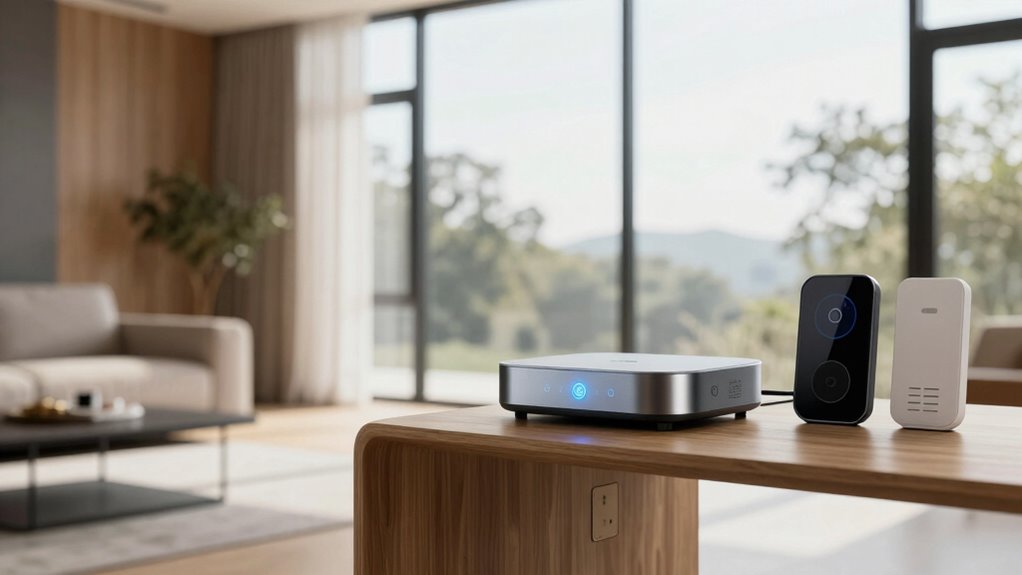

By using Matter over Thread, you improve your smart home’s reliability and security. These standards act as a common language, allowing your devices to communicate seamlessly regardless of brand or protocol. Thread’s mesh network minimizes fragility by ensuring devices stay connected even if some go offline or face interference. This setup reduces communication failures, making your smart home more resilient and user-friendly. Keep exploring how these standards can make your system even more stable and secure.

Get the latest gadgets delivered free — and shop member deals
- Fast, free delivery on millions of items
- Access to Prime Big Deal Days deals on October 6–7
- Prime Video, Amazon Music and more included
Key Takeaways
- Matter provides a universal communication standard that ensures device compatibility across brands, reducing fragmentation and connection issues.
- Thread’s mesh networking enhances network reliability, allowing devices to communicate efficiently even if some are offline or disrupted.
- Combining Matter and Thread simplifies device setup, maintenance, and pairing, leading to more resilient smart home networks.
- Standard adoption minimizes communication failures and security vulnerabilities, making smart homes more robust and secure.
- These technologies promote a cohesive, stable ecosystem that resists common fragility points in smart home environments.
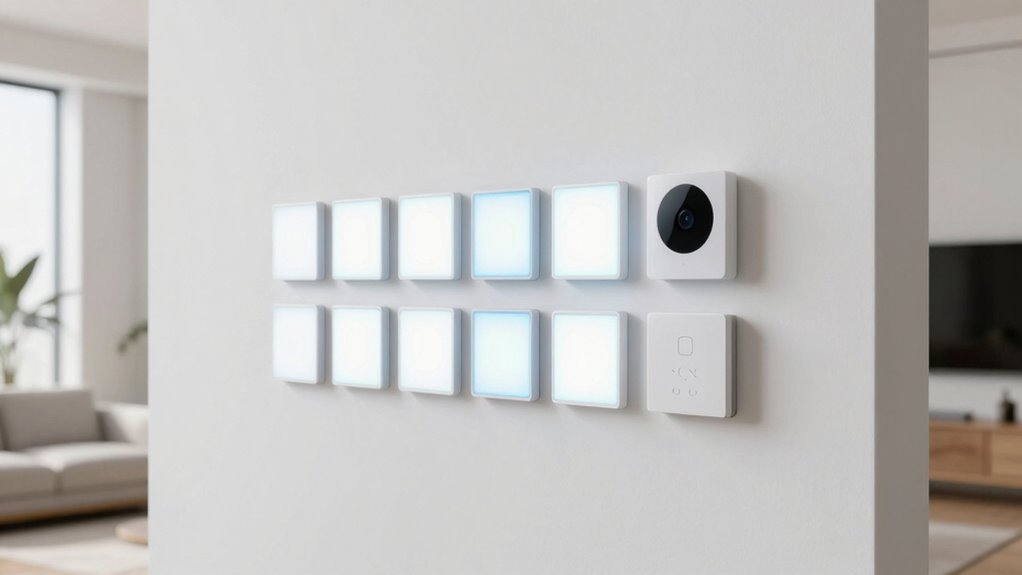
As smart homes become more complex, their reliability often feels threatened by compatibility issues and fragile connections. You might have experienced moments where your devices refuse to communicate or suddenly stop working, leaving you frustrated and uncertain. That’s where the importance of interoperability standards comes into play. These standards act as a universal language, allowing different smart devices—regardless of brand or protocol—to work seamlessly together. By adopting these standards, manufacturers ensure that your smart home isn’t just a collection of isolated gadgets but a cohesive system that responds reliably and effortlessly.
One of the key concerns in smart home technology is wireless security. When devices communicate over Wi-Fi, Zigbee, or Z-Wave, they must be protected against hacking and unauthorized access. Interoperability standards often include security protocols that safeguard your data and prevent breaches. This means that as your smart home grows, you can be confident that your devices aren’t just compatible but also protected. The integration of security features within these standards ensures that the data transmitted between devices remains encrypted and private, reducing vulnerabilities that could be exploited.
The shift towards standards like Matter over Thread is revolutionizing how your smart home functions. Matter is an open-source, royalty-free standard designed to unify device communication. It creates a common platform, making it easier to add new devices without worrying about compatibility issues. Thread, on the other hand, is a low-power mesh networking protocol that enhances the reliability of device connections. When paired, these technologies minimize the fragility of your network, ensuring that your smart home remains responsive even if some devices go offline or face interference. This combination simplifies setup and maintenance, giving you a more resilient and user-friendly experience. Additionally, interoperability standards are crucial for building a more secure and resilient smart home ecosystem, promoting connected device safety and stability.
Matter compatible smart home devices
As an affiliate, we earn on qualifying purchases.
As an affiliate, we earn on qualifying purchases.
Frequently Asked Questions
How Does Matter Improve Smart Home Security?
Matter improves smart home security by addressing interoperability challenges, making devices communicate seamlessly. This reduces vulnerabilities caused by incompatible systems or manual setups. With a unified platform, you experience enhanced user experience, allowing easier management of security devices like cameras and locks. As a result, you can confidently monitor and control your smart home, knowing that security is more reliable and less prone to hacking or malfunctions.
Can Matter Integrate With Existing Smart Home Devices?
Yes, Matter can integrate with your existing smart home devices, turning your tech chaos into a harmonious symphony. Thanks to widespread device compatibility and standard adoption, your stubborn old gadgets won’t be left to gather dust. Instead, they join the party seamlessly, making your smart home more cohesive and less fragile. So, you can keep enjoying your current devices while upgrading to a more reliable, unified system.
What Is the Timeline for Widespread Matter Adoption?
Widespread Matter adoption is expected within the next few years, likely by 2024 or 2025. As more manufacturers prioritize device compatibility, you’ll notice a smoother user experience across your smart home devices. This shift will make it easier to connect and control your devices seamlessly, reducing frustration and enhancing overall convenience. Keep an eye on industry updates, as rapid advancements will continue to improve how effortlessly smart homes operate.
How Does Matter Handle Device Privacy Concerns?
Matter handles your device privacy concerns by implementing strict privacy protocols and data encryption standards. When you connect new devices, the protocol guarantees that your data remains secure through end-to-end encryption. It also limits data sharing, giving you control over what information gets transmitted. By prioritizing privacy protocols and data encryption, Matter aims to safeguard your smart home environment and keep your personal information protected from unauthorized access.
Will Matter Increase the Overall Cost of Smart Home Setup?
The cost implications of adopting Matter might feel like planting seeds in a garden—initially more effort and expense, but promising a richer harvest later. While setup complexity could increase slightly as you navigate new standards, the overall cost of smart home setup is likely to stabilize over time. In the long run, Matter aims to make device compatibility smoother, potentially lowering costs and simplifying your smart home experience.
Conclusion
As you walk through your smarter home, it’s like watching a web of seamless connections weaving itself into everyday life. With Matter over Thread, your devices work in harmony, reducing frustration and fragility. It’s as if a gentle breeze has smoothed out the kinks, making everything feel more reliable and resilient. Soon, you’ll realize that this quiet revolution isn’t just about technology—it’s about creating a space where comfort and simplicity effortlessly come together.
Fall Picks
fall essentials
As an affiliate, we earn on qualifying purchases.