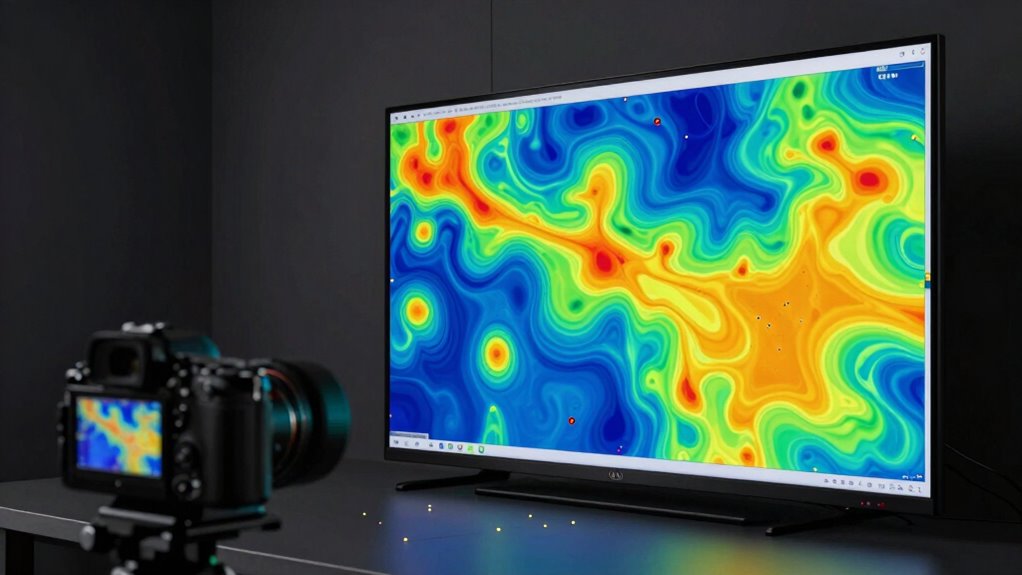

You’ll find that good sensor placement matters more than just adding more sensors because it guarantees you get accurate, consistent data. Proper positioning considers environmental factors like temperature, obstacles, and interference, which can skew results if ignored. Even a few well-placed sensors outperform many poorly placed ones. Focusing on the right spots reduces costs and increases data relevance. Keep exploring to discover how strategic placement can make all the difference in your sensor setup.
Key Takeaways
- Proper placement ensures sensors accurately capture relevant environmental data, reducing noise and false readings.
- Strategic positioning minimizes interference from obstacles, machinery, and environmental factors.
- Well-placed sensors provide comprehensive coverage with fewer devices, lowering costs and complexity.
- Correct placement accounts for environmental conditions, maintaining sensor calibration and data integrity over time.
- Thoughtful sensor location enhances data relevance, enabling better decision-making and system performance.

When it comes to sensor deployment, simply increasing the number of sensors doesn’t guarantee better coverage or data quality. The key lies in where you place those sensors, because environmental factors can significantly influence the data you collect. Even with a high sensor count, if you overlook the importance of strategic placement, you risk gathering inaccurate or inconsistent data. You need to consider the environment you’re monitoring—things like temperature fluctuations, humidity, obstacles, and interference can all impact sensor performance and data accuracy. For example, placing sensors too close to machinery or electronic devices might introduce noise into your readings, while placing them in areas prone to extreme weather could result in skewed data. Additionally, understanding the environmental factors that can affect sensor readings enables more informed placement decisions. Your goal should be to understand the environment thoroughly before deploying sensors. This involves analyzing environmental factors that could affect sensor readings and adjusting placement accordingly. For instance, if you’re monitoring air quality, situate sensors where airflow isn’t obstructed by walls or furniture, and avoid placing them in corners where stagnation might occur. Similarly, in outdoor settings, consider factors like sunlight, rain, and wind. Direct sunlight can heat sensors and distort temperature data, while rain may cause corrosion or damage. Wind can carry pollutants or dust, affecting particulate measurements. By accounting for these environmental factors, you ensure that your sensors operate optimally and provide data that truly reflects the conditions you’re trying to measure. Data accuracy hinges on thoughtful placement. It’s not just about covering more ground; it’s about covering the right ground. Strategic placement minimizes environmental interference and maximizes the relevance of collected data. For example, in a greenhouse, placing sensors at different heights and locations within the space gives a comprehensive picture of temperature and humidity variations. In industrial environments, positioning sensors away from electromagnetic interference or vibration sources helps prevent false readings. The more you understand the specific environmental conditions of your site, the better you can position sensors to mitigate potential issues and improve data reliability. Conducting a thorough site assessment beforehand can reveal potential environmental hazards that might compromise sensor accuracy. Recognizing interference sources in your environment can help you avoid placing sensors in areas where external signals or vibrations could distort readings. Furthermore, understanding sensor calibration needs ensures that sensors remain accurate over time and under different environmental conditions. Ultimately, sensor placement is a critical element in ensuring your data is accurate and meaningful. Instead of focusing solely on increasing sensor count, prioritize understanding environmental factors and selecting strategic locations. Doing so saves you from redundant data, reduces costs, and enhances the overall quality of your insights. Remember, a few well-placed sensors outperform dozens placed haphazardly. Your goal is to capture precise, consistent data—something only achievable when you give careful thought to where your sensors are positioned.

Throttle Position Sensor (TPS) Adjustment and Test Tool, All adapters Version
- Complete all-adapters kit: Includes 6 adapters for various vehicles
- Universal compatibility: Suitable for motorcycles, snowmobiles, outboards, and cars
- Enhances throttle response: Improves low-speed throttle and engine performance
As an affiliate, we earn on qualifying purchases.
As an affiliate, we earn on qualifying purchases.
Frequently Asked Questions
How Do Environmental Factors Influence Sensor Placement Decisions?
Environmental factors like variability, temperature, and humidity greatly influence where you place sensors. You need to take environmental variability into account to guarantee sensors capture accurate data across different conditions. Proper sensor calibration is vital to account for these factors and maintain data integrity. By strategically placing sensors in locations that reflect the environment’s changes, you ensure reliable readings, making your data more meaningful and useful for analysis.
What Tools Are Best for Optimizing Sensor Locations?
Research shows that poorly placed sensors can lead to data errors of up to 50%. To optimize sensor locations, you should use tools like GIS mapping and simulation software, which help visualize environmental factors. These tools assist in sensor calibration and data integration, ensuring accurate readings. By pinpointing ideal spots, you enhance data quality, reduce costs, and improve overall system performance. Proper tools make all the difference in strategic sensor deployment.
Can Improper Placement Lead to Data Inaccuracies?
Improper sensor placement can definitely lead to data inaccuracies. When sensors aren’t positioned correctly, you risk poor sensor calibration and unreliable readings. This can cause gaps in data, making it harder to interpolate accurate results. You might end up with skewed insights or missed critical changes. Ensuring proper placement allows you to collect consistent data, maintain calibration, and improve data interpolation, ultimately leading to better decision-making and system performance.
How Does Sensor Placement Affect Maintenance and Longevity?
You can’t just toss sensors in and hope for the best—that’s like putting all your eggs in one basket. Proper sensor placement guarantees accurate data collection, which helps with timely sensor calibration and reduces unnecessary wear. It also minimizes data redundancy, preventing overloads that can strain your system. By strategically placing sensors, you extend their lifespan and maintain reliable performance, saving you money and headaches down the line.
Are There Industry Standards for Sensor Positioning?
Yes, there are industry standards for sensor positioning, emphasizing ideal placement for accurate data. Proper sensor calibration depends on correct positioning to guarantee reliable readings. While standards vary by industry, they often recommend strategic placement to reduce data redundancy and improve coverage. Following these guidelines helps you minimize false alarms, streamline maintenance, and extend sensor longevity. Always consult specific industry standards to enhance your sensor deployment effectively.
Conclusion
You stand in a vast, echoing room where a single, perfectly placed sensor catches every whisper and movement, while dozens scattered randomly miss the subtle cues. It’s the same with sensors—you don’t need many if they’re thoughtfully positioned. When you prioritize placement, you create a web that seamlessly captures the heartbeat of your environment. It’s not about the quantity but the art of knowing exactly where to listen, transforming chaos into clarity with just a few well-placed eyes.