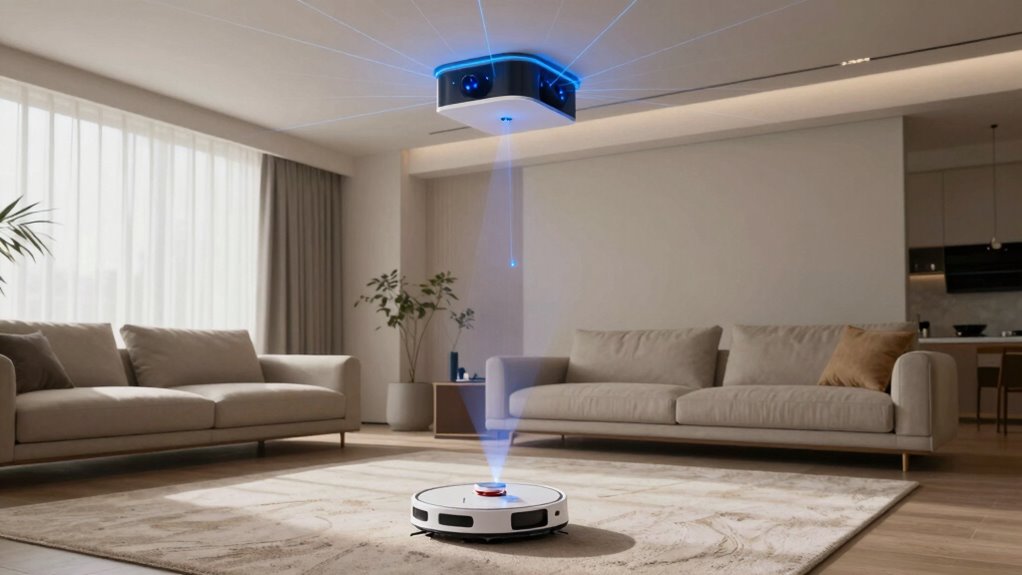

LiDAR in consumer tech does much more than power robot vacuums. It enables your smartphone or tablet to create detailed 3D maps, supporting features like facial recognition, immersive AR, and precise measurements. It also enhances virtual overlays and interaction in smart home devices. As technology advances, LiDAR is becoming smaller, more affordable, and more integrated into everyday gadgets. If you want to discover how this innovation is reshaping your digital experience, keep exploring further.
Key Takeaways
- LiDAR enhances AR experiences by enabling realistic virtual overlays and precise spatial understanding in smartphones and headsets.
- It improves device navigation and object detection, making daily gadgets smarter and more intuitive.
- Miniaturized, affordable LiDAR sensors are increasingly integrated into consumer electronics beyond robotics.
- LiDAR supports accurate measurements and environmental mapping for improved user interaction and immersive applications.
- The technology’s expanding capabilities are transforming everyday devices into more perceptive and responsive tools.
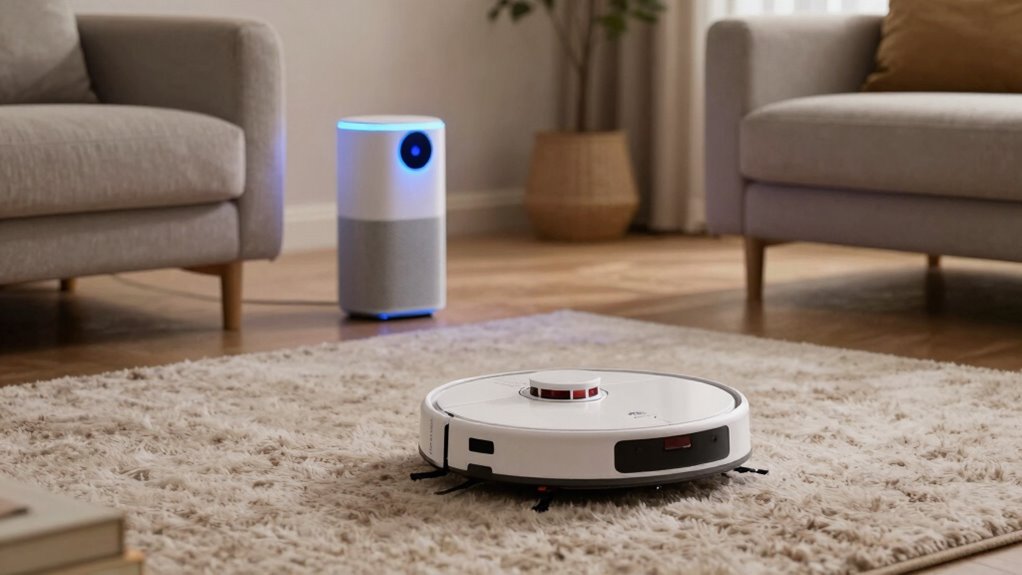
LiDAR, short for Light Detection and Ranging, works by emitting laser pulses and measuring the time it takes for them to bounce back from objects. This creates a detailed 3D map of your environment in real time. In smartphones and tablets, LiDAR enables faster and more accurate scene understanding, making features like facial recognition, object detection, and immersive augmented reality experiences possible. When you use an AR app to preview furniture in your living room or play interactive games that seamlessly blend virtual objects with real-world surroundings, LiDAR is likely behind the scenes, providing spatial awareness that was once only available in specialized equipment.
Autonomous vehicles are perhaps the most striking example of LiDAR’s potential. These cars rely on LiDAR sensors to navigate complex environments, detect obstacles, and make split-second decisions. The technology creates a precise, real-time 3D map of the surroundings, allowing the vehicle to identify pedestrians, other vehicles, and road features with high accuracy. This capability is what makes autonomous driving feasible and safe, but it’s also inspiring innovations in consumer devices that aim to mimic some of these functions. As the sensor technology continues to develop, these advancements will make LiDAR more accessible and versatile for everyday use. Additionally, ongoing research into miniaturized sensors is making it possible for these devices to be integrated into smaller gadgets without sacrificing performance. Furthermore, improvements in power efficiency are helping to extend the battery life of portable LiDAR-enabled devices, making them more practical for daily use.
In consumer tech, LiDAR isn’t just about making apps smarter; it’s about enhancing user interaction. For instance, in smart home devices or augmented reality headsets, LiDAR provides depth sensing that helps create more realistic virtual overlays. You can expect more precise measurements, better spatial understanding, and smoother interactions as this technology becomes more integrated into everyday gadgets. As LiDAR continues to advance, it will likely enable even more sophisticated AR experiences, blurring the line between digital and physical worlds.
Furthermore, ongoing developments in LiDAR sensor technology are making these devices more affordable and compact, which will accelerate their adoption across a broader range of consumer products. This ongoing innovation is driven by the need for more compact and affordable sensors that do not compromise performance, making LiDAR accessible to a wider audience. In essence, LiDAR is a game-changer across multiple domains. It’s not just for robots or self-driving cars anymore; it’s shaping the future of how you interact with technology daily. From making your smartphone smarter to paving the way for autonomous vehicles, this technology’s reach is expanding fast. And as it does, you’ll find your devices becoming more intuitive, perceptive, and capable of understanding the world around you with remarkable precision.

Raven LiDAR Scanner (Standard / 1 Camera), 3D Laser Scanner 50m Range, 2cm Accuracy, Dual 12MP Fisheye Cameras, 4K True Color Scanning, SLAM Mapping, RGB Point Cloud & Gaussian Splatting
50m Long-Range LiDAR Scanning: Capture large indoor and outdoor environments with a powerful 50-meter scanning radius. Ideal for…
As an affiliate, we earn on qualifying purchases.
As an affiliate, we earn on qualifying purchases.
Frequently Asked Questions
How Does Lidar Compare to Other Sensing Technologies in Consumer Devices?
You’ll find LiDAR outperforms other sensing technologies in sensor accuracy, especially in low-light or complex environments. It provides precise 3D data, making it ideal for detailed mapping and obstacle detection. Compared to cameras, LiDAR isn’t affected by lighting variations, and unlike ultrasonic sensors, it offers more reliable distance measurements. Its efficient data processing guarantees quick, accurate results, enhancing the overall performance of your consumer devices.
What Are the Privacy Concerns Related to Lidar Data Collection?
You should be aware that lidar data collection raises privacy concerns because it captures detailed spatial information about your environment. This data needs strong data security measures to prevent misuse or breaches. Privacy regulations often require companies to be transparent about how they collect and use lidar data. By understanding these concerns, you can better advocate for your privacy rights and guarantee your data is handled responsibly.
How Affordable Is Lidar Technology for Mainstream Consumers?
Think of LiDAR as a hidden compass guiding tech innovation. Right now, its cost analysis shows prices are dropping, making it more accessible. As market adoption grows, affordability improves, like a sunrise breaking dawn. You can find consumer-friendly options in smartphones and cars, transforming everyday devices into smart companions. While not yet cheap as a budget phone, LiDAR’s evolution hints that it’ll soon be within your reach, making tech smarter and more intuitive.
Can Lidar Improve Smartphone Augmented Reality Experiences?
Yes, LiDAR can considerably improve your smartphone’s augmented reality experiences. It enhances depth mapping and spatial awareness, allowing virtual objects to interact more realistically with your environment. This results in more accurate placement, better object detection, and smoother interactions. As a user, you’ll notice AR apps become more immersive and responsive, making gaming, navigation, and creative projects more engaging and seamless.
What Are the Future Trends for Lidar in Consumer Electronics?
The future of LiDAR in consumer electronics is bright, and it’s clear that the writing’s on the wall. You’ll see expanding LiDAR applications in smartphones, wearables, and smart home devices, making them smarter and more intuitive. Consumer adoption will grow as technology becomes more affordable and reliable, transforming everyday experiences. Expect faster, more accurate sensing, and seamless integration, turning LiDAR from a niche feature into a necessity in your tech arsenal.

Retevis EHK012 Foldable Two Way Radio Headset with Mic,Noise Reduction,Volume Adjust, Compatible with Baofeng UV-5R BF-F8HP PRO AR-5RM Pxton PX-888S, for RT22 RT68 RT86, 2 Way Radio Headset(1 Pack)
K head 2 pin; for Retevis RT21 H-777H RT68 RT68H RT22S H777S RB29 RT86 RB26H RT22 MateTalk B4and…
As an affiliate, we earn on qualifying purchases.
As an affiliate, we earn on qualifying purchases.
Conclusion
As you explore the evolving world of consumer tech, you’ll find LiDAR quietly becoming a trusted companion, subtly enhancing your daily life in ways you might not immediately notice. Its gentle touch helps devices understand their surroundings more clearly, making your experiences smoother and more intuitive. While it’s often behind the scenes, LiDAR’s quiet contributions are shaping a smarter, more responsive future—one that’s just beginning to reveal its full potential, softly guiding you toward tomorrow.

Dxtvate D500 LiDAR Kit with 360° Laser Scanning, 12m Range, High Precision for SLAM, Robotics, UAV and 3D Mapping Applications
【360° High-Speed Laser Scanning】:Equipped with advanced DTOF (Direct Time-of-Flight) technology, the D500 LiDAR performs 360° rotating laser scanning…
As an affiliate, we earn on qualifying purchases.
As an affiliate, we earn on qualifying purchases.

MakerFocus TF-Luna LiDAR Range Finder Sensor Module, Single-Point Micro Ranging Module 0.2 to 8m Compatible with Pixhawk, Arduino and Raspberry Pi with UART / I2C Communication Interface
Working Principle: TF-Luna is a single-point ranging LiDAR, based on TOF principle. With unique optical and electrical design,…
As an affiliate, we earn on qualifying purchases.
As an affiliate, we earn on qualifying purchases.