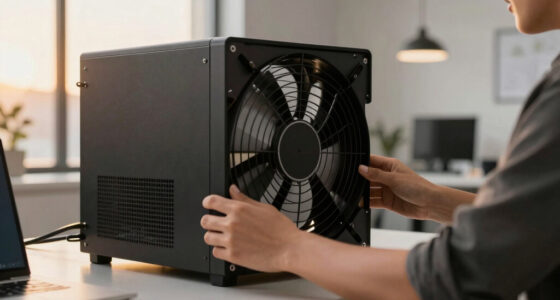
Before starting your laser engraving projects, you need a solid ventilation plan to stay safe and comply with health standards. Proper ventilation clears out harmful fumes and airborne particles from plastics, woods, and metals, protecting you from respiratory issues. Setting up local exhaust systems and monitoring air quality are key steps. Developing this plan early guarantees your workspace remains safe and efficient. Keep exploring to learn how to create an effective ventilation strategy that works for your setup.

Get the latest gadgets delivered free with Prime
- Fast, free delivery on millions of items
- Prime Video, Amazon Music and more included
- Member-only deals all year
Key Takeaways
- Proper ventilation ensures safety by removing harmful fumes before starting design and operation.
- Planning ventilation early prevents health risks associated with inhaling airborne particles.
- Integrating ventilation systems during workspace design enhances overall air quality management.
- Adequate ventilation allows designers to work safely with various materials like plastics, woods, and metals.
- Prioritizing ventilation in planning reduces the need for costly modifications after setup.

If you’re operating a laser engraver, having a proper ventilation plan isn’t just recommended—it’s indispensable for safety. The fumes and airborne particles generated during engraving can considerably impact air quality, posing health risks if not properly managed. Without adequate ventilation, you risk inhaling harmful chemicals, which can lead to respiratory issues or other health complications over time. Implementing a ventilation system isn’t just about compliance; it’s about protecting yourself and anyone nearby. Good air quality is essential, especially when working with materials like plastics, woods, or metals that release toxic fumes when heated. Developing a ventilation plan means understanding the specific safety protocols tailored to your equipment and workspace. You need to determine whether a local exhaust system, such as an exhaust hood, or a more all-encompassing setup like a room ventilation system, fits your needs best. Local exhaust systems capture fumes directly at the source, preventing contaminants from dispersing into your workspace. Meanwhile, general ventilation systems help dilute and remove airborne particles from the entire room, maintaining a healthier environment overall. Whichever system you choose, it’s critical to ensure it’s properly rated for your laser engraver’s output and the materials you work with. Safety protocols should include regular maintenance and filter replacements to keep your ventilation system functioning efficiently. Dirty or clogged filters reduce airflow and compromise air quality, risking the buildup of hazardous fumes. Furthermore, monitoring air quality with sensors can provide real-time feedback, alerting you when levels reach unsafe thresholds. This proactive approach ensures you don’t unknowingly expose yourself to dangerous airborne contaminants. It’s also wise to establish a clear workflow that prioritizes safety. Keep the workspace well-ventilated, especially during prolonged engraving sessions, and ensure that all safety equipment, like masks or respirators, are accessible and used appropriately. Educate yourself on the specific fumes produced by different materials, and always follow safety protocols recommended by manufacturers and occupational health guidelines. Incorporating proper ventilation into your workspace design is essential for health and safety. A comprehensive ventilation plan should also consider air quality monitoring to ensure continuous safety during operation. Remember, a well-thought-out ventilation plan is your first line of defense against potential health hazards. Proper ventilation systems are a crucial part of air quality management in a safe engraving workspace. In essence, before you even start designing, focus on your ventilation strategy. It’s the backbone of a safe, efficient workspace. Protect your air quality, adhere to safety protocols, and maintain your equipment to ensure your laser engraving projects are both successful and safe. Proper ventilation isn’t an afterthought; it’s a fundamental part of responsible laser engraving.
laser engraver ventilation system
As an affiliate, we earn on qualifying purchases.
As an affiliate, we earn on qualifying purchases.
Frequently Asked Questions
What Are Common Ventilation System Options for Laser Engravers?
You should consider options like exhaust fans, ducted ventilation, or fume extractors to manage laser engraver emissions. These systems optimize airflow, ensuring contaminants are effectively removed. Regular filter maintenance is essential to keep the ventilation efficient and safe. By choosing the right system and maintaining it properly, you prevent hazardous fumes from building up, protecting both your workspace and your health.
How Often Should Ventilation Filters Be Replaced?
You should replace ventilation filters regularly to guarantee ideal air quality and maintain your ventilation system’s lifespan. Typically, air filter maintenance involves checking filters every 1 to 3 months, depending on usage and material buildup. If you notice reduced airflow or increased odors, it’s time to change the filters sooner. Regularly replacing filters keeps your ventilation system functioning efficiently, prolongs its lifespan, and keeps your workspace safe and healthy.
Can DIY Ventilation Solutions Ensure Safety Standards?
Think of your DIY ventilation setup like a sturdy bridge—if it’s not built right, safety’s at risk. DIY solutions can guarantee safety standards if you prioritize proper air quality and follow proven guidelines. Research and quality parts matter. Making sure good airflow, using appropriate filters, and regular maintenance help protect your health. When done correctly, DIY ventilation can provide a safe environment, but cutting corners risks serious health hazards.
Are There Legal Regulations for Laser Engraver Ventilation?
Yes, there are legal regulations for laser engraver ventilation to guarantee laser safety and maintain air quality. You must follow local and national standards that specify proper ventilation systems to control fumes and airborne particles. These regulations protect you from harmful emissions, making sure safe working conditions. It’s essential to research and implement compliant ventilation plans before operating your laser engraver, preventing health hazards and legal issues.
What Are Signs of Inadequate Ventilation in a Workspace?
You’ll notice signs of inadequate ventilation through poor air quality and lingering odors in your workspace. If you experience headaches, dizziness, or eye irritation, it’s a clear sign your air isn’t circulating properly. Unpleasant odors that persist even after cleaning indicate insufficient odor control. These issues suggest your ventilation system isn’t effectively removing fumes, making it essential to improve airflow to protect your health and maintain a safe working environment.
Conclusion
Remember, a ventilation plan isn’t just a detail — it’s your shield against hazards lurking behind the laser’s glow. Without it, you’re sailing uncharted waters where danger could strike unexpectedly. Think of it as your silent guardian, silently working to protect your health and your workspace. Don’t wait until it’s too late; prioritize ventilation now. Because, in the world of laser engraving, safety isn’t just a step — it’s the foundation upon which your craft stands.
Halloween Picks
halloween
As an affiliate, we earn on qualifying purchases.