
📊 Full opportunity report: How to Reduce Heat and Noise in a High-Power AI Workstation on ThorstenMeyerAI.com — validation score, market gap, and execution plan.

Get the latest gadgets delivered free — and shop member deals
- Fast, free delivery on millions of items
- Access to Prime Big Deal Days deals on October 6–7
- Prime Video, Amazon Music and more included
TL;DR
High-power AI workstations generate significant heat and noise due to sustained GPU loads. Effective cooling requires targeted approaches like undervolting, optimizing airflow, and component choices. This guide explains confirmed methods and what remains uncertain.
High-power AI workstations produce excessive heat and noise due to sustained GPU loads, impacting workspace comfort and hardware longevity. Experts confirm that targeted cooling strategies, including undervolting and improved airflow, can significantly mitigate these issues, making AI setups more efficient and quieter.
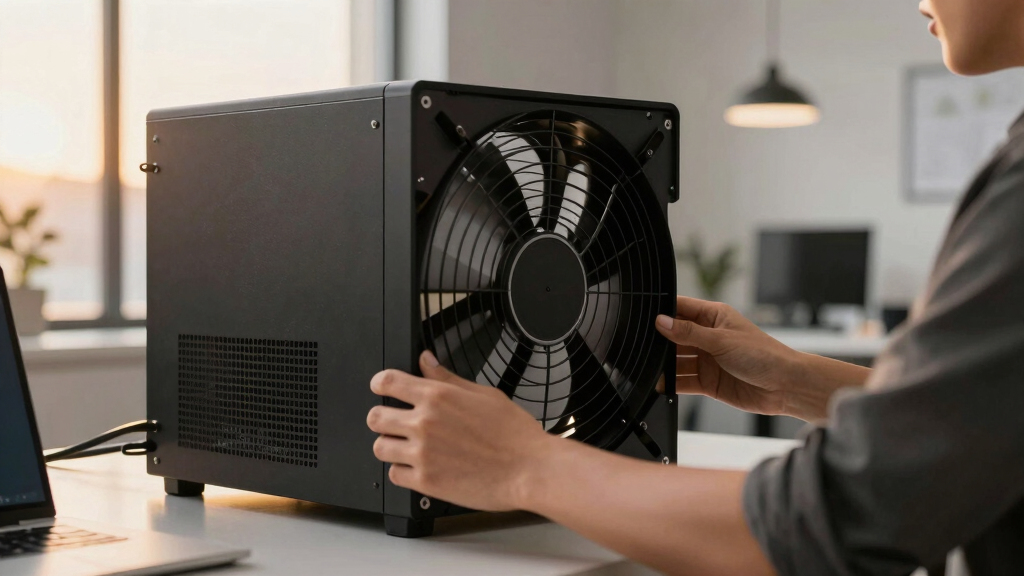
AI workstations operating under continuous high load generate more heat than gaming PCs because they run GPUs at or near full capacity for hours, with no idle periods. This results in higher thermal output and louder fan noise. The main heat source is the GPU, which often accounts for over 70% of the thermal load, and its fans are typically the loudest component during sustained operation. Other contributors include the CPU, power supply, VRMs, and case airflow. Confirmed effective measures include undervolting GPUs to reduce power draw and heat, optimizing case ventilation, and selecting components designed for high thermal efficiency. Experts from ThorstenMeyerAI.com emphasize that the key is understanding the distinct thermal profile of AI workloads compared to gaming, enabling targeted solutions.
An AI workstation isn’t a gaming PC —
and that’s why it runs hot.
Local inference is a sustained load: the GPU sits near full power for hours with no loading screens, so the heat never dissipates and the fans never get a break. Here’s where the heat comes from — and the five levers that reduce it.
Impact of Effective Cooling on AI Workstation Performance
Implementing proven cooling strategies directly benefits AI practitioners by extending hardware lifespan, reducing operational costs, and creating quieter work environments. Lowering heat and noise also improves hardware stability during long inference tasks, which is critical for productivity and reliability in AI development. As AI workloads grow more demanding, these measures become increasingly vital for maintaining optimal performance and workspace comfort.
As an affiliate, we earn on qualifying purchases.
Understanding the Thermal Challenges of AI Workstations
Unlike gaming PCs, AI workstations sustain maximum GPU loads over extended periods, causing continuous heat buildup. This leads to thermal throttling, increased fan noise, and potential hardware stress. Historically, cooling solutions for gaming PCs are insufficient for AI workloads, necessitating specialized approaches. Recent developments include better undervolting techniques and airflow management, but the core challenge remains: managing heat generated by high power draw during prolonged inference tasks.
“Understanding that AI workloads generate sustained thermal output is key. Undervolting and airflow optimization are the most effective, proven strategies.”
— Thorsten Meyer, AI hardware expert
Remaining Uncertainties in Cooling Optimization
While undervolting and airflow improvements are proven, the optimal configurations for different hardware models and workload types are still being refined. The effectiveness of liquid cooling versus air cooling, and the long-term impacts of aggressive undervolting, require further testing and validation. Additionally, the influence of case design and component placement varies between setups, leaving some variability in results.
Next Steps for Improving AI Workstation Cooling
Future research will focus on developing standardized undervolting profiles, advanced cooling solutions, and smarter fan control algorithms tailored for AI workloads. Hardware manufacturers are also expected to release more thermally efficient components. Users should stay informed about these developments and experiment within safe parameters to optimize their setups further.
Key Questions
Can undervolting GPU significantly reduce heat and noise?
Yes, undervolting reduces the power consumption and heat output of the GPU, which in turn decreases fan noise and thermal stress, often without noticeable performance loss in inference tasks.
What are the best cooling practices for high-power AI workstations?
Effective cooling includes optimizing case airflow, choosing high-quality fans, undervolting GPUs, and ensuring adequate ventilation around components. Using high-efficiency power supplies and managing cable clutter also help.
Is liquid cooling worth the investment for AI workstations?
Liquid cooling can provide lower temperatures and quieter operation but involves higher costs and maintenance. Its benefits depend on workload intensity and noise sensitivity.
How do I know if my workstation is running too hot or loud?
Monitor component temperatures using software tools and listen for excessive fan noise or vibrations. If temperatures approach or exceed manufacturer limits, or if noise levels are disruptive, cooling improvements are needed.
Are there risks associated with undervolting or aggressive cooling modifications?
Yes, improper undervolting can cause system instability, and modifications should be performed carefully following manufacturer guidelines. Always test settings incrementally to ensure system stability.
Source: ThorstenMeyerAI.com
Fall Picks
fall essentials
As an affiliate, we earn on qualifying purchases.